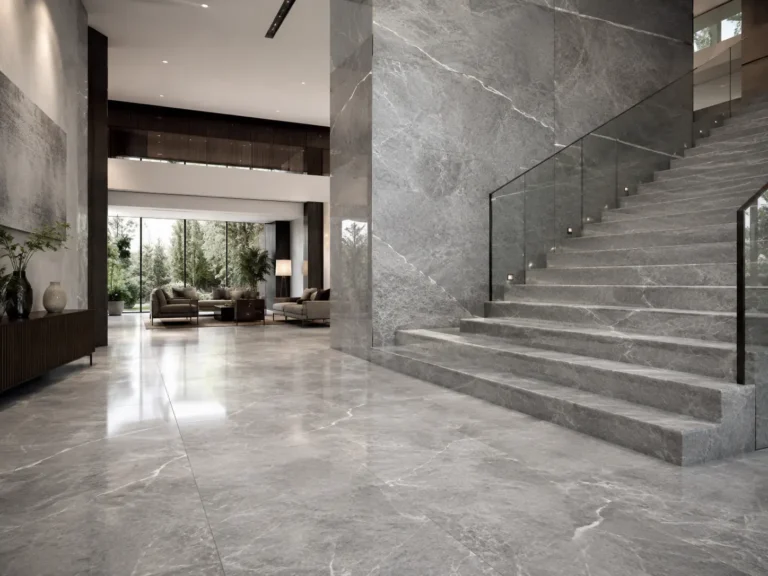
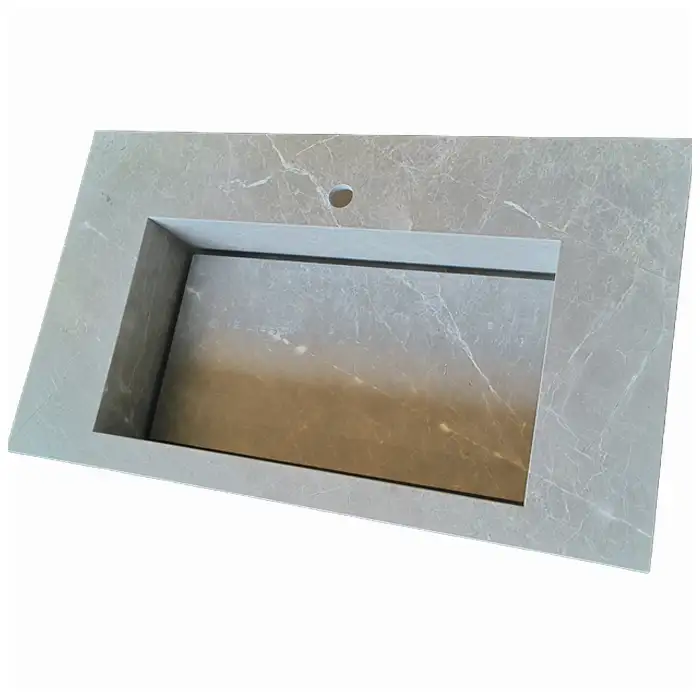
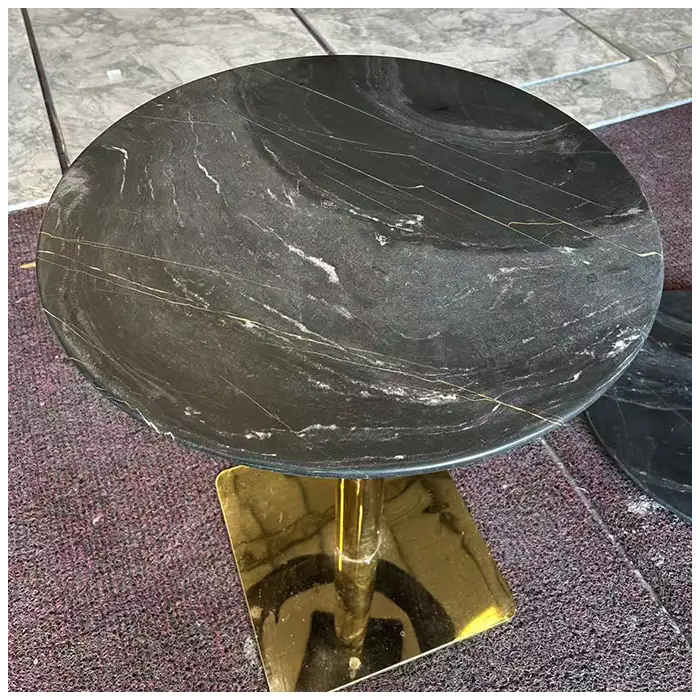
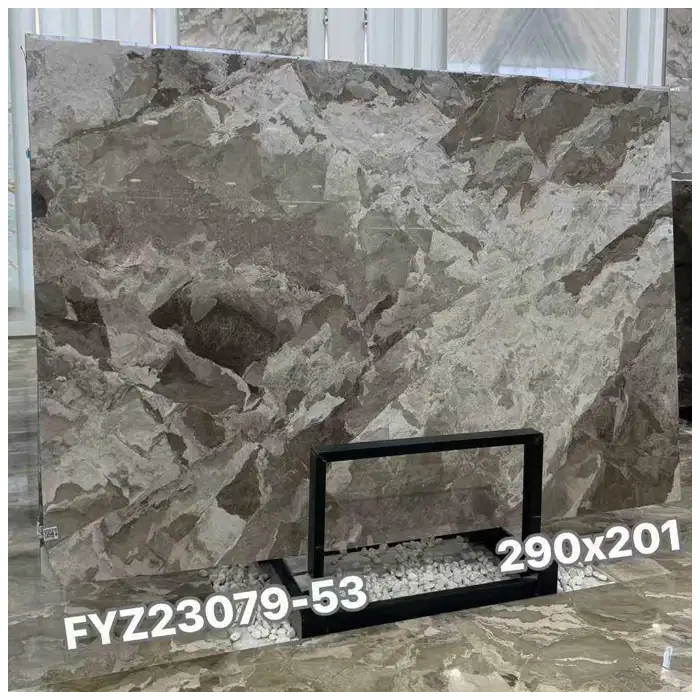
Grey Marble Tiles are often chosen for hotels, villas, commercial lobbies, bathrooms, staircases, corridors, retail stores, and feature walls because they deliver a calm luxury effect without the visual risk of very bright white marble or very heavy black stone. But thickness is where many projects quietly go wrong. A buyer may choose one thickness for floors, walls, and stairs to simplify purchasing. It sounds efficient. Then the wall panels become unnecessarily heavy, floor tiles crack over poor substrate, and stair nosing chips under traffic. Congratulations, the “simple solution” has become a stone soap opera.
The right thickness depends on where the marble is used. Floors need load support and crack resistance. Walls need manageable weight and secure fixing. Stairs need edge strength and slip control. Bathrooms need waterproofing coordination. Large-format tiles need better substrate flatness. Commercial spaces need replacement planning and batch consistency. Before choosing from a wider natural marble tile collection, buyers should define the application area first, then select thickness, finish, tile size, and installation method together.

Quick Thickness Guide for Floors Walls and Stairs
There is no single universal thickness for every grey marble project. A 10mm tile may work for selected interior wall cladding, while a commercial stair tread may need 20mm, 30mm, or a built-up edge depending on support and traffic. A 15mm tile may be suitable in one floor system but risky in another if the substrate is uneven or the tile size is large.
For project buyers, the best first move is to prepare drawings, tile size, traffic level, floor condition, finish preference, stair edge detail, and wet-area requirements. If the project includes multiple areas, it is better to contact a Grey Marble Tiles supplier before confirming thickness. Thickness affects cost, crate weight, installation, cutting, adhesive choice, edge detail, and future replacement. Tiny detail? Not really. Thickness is the stone project’s quiet boss.
| طلب | Common Thickness Direction | Recommended Finish | Buyer Risk to Check |
|---|---|---|---|
| Interior feature wall | 10–15mm depending on panel size | Polished or honed | Wall load, adhesive, anchoring, panel size |
| Bathroom wall | 10–15mm | Honed or polished | Moisture, waterproofing, sealer compatibility |
| Residential floor | 12–18mm depending on tile size | Honed or polished | Substrate flatness, cracking, lippage |
| Commercial lobby floor | 15–20mm or project-specified | Honed, satin, or controlled polished finish | Foot traffic, luggage wheels, slip resistance |
| Shopping mall corridor | 18–20mm or stronger engineered system | Honed or brushed | Abrasion, cleaning machines, lifecycle cost |
| Stair tread | 20–30mm depending on support and design | Honed, brushed, or anti-slip-treated | Edge chipping, nosing profile, slip risk |
What Determines the Right Thickness for Grey Marble Tiles?
Application Area Comes First
The same Grey Marble Tiles behave differently when installed vertically, horizontally, or on stair edges. A wall tile mainly needs secure fixing and manageable weight. A floor tile must support foot traffic, rolling luggage, furniture, cleaning equipment, and substrate movement. A stair tread must handle repeated impact at the edge. This is why “one thickness for everything” is convenient for purchasing but often weak for performance.
A professional Grey Marble Tiles manufacturer should ask where the material will be used before recommending thickness. If the answer is given before the application is understood, the recommendation is probably too shallow. Good stone specification starts with use, not stock size.
Traffic and Load Level
Light residential foot traffic is not the same as a hotel lobby with luggage wheels, a shopping mall corridor with cleaning machines, or a restaurant floor with chair movement and food spills. Commercial projects should review foot traffic, rolling loads, cleaning frequency, entrance moisture, and maintenance capacity before deciding whether 12mm, 15mm, 18mm, 20mm, or 30mm is appropriate.
If the area has trolleys, carts, high heels, luggage wheels, or daily machine cleaning, stronger thickness and better installation control become more important. If the area is decorative wall cladding, heavy thickness may only increase installation cost without improving value.
Tile Size and Format
Large-format grey marble tiles look more luxurious because they reduce grout lines and create visual continuity. However, larger formats also require flatter substrates, better handling, tighter tolerance control, and stronger installation planning. A 600×1200mm tile is less forgiving than a 300×300mm tile. Bigger tiles have bigger egos. They demand better floors.
For buyers comparing options in a grey marble tile collection, the thickness should be reviewed with tile size, finish, vein direction, and project area. Strong veining may also require dry layout so the final installation does not look patchy or directionally confused.
Substrate and Installation System
Thickness cannot save a bad substrate. Uneven concrete, poor adhesive coverage, trapped moisture, missing movement joints, incorrect mortar, or weak waterproofing can still cause cracks, hollow spots, staining, or debonding. A thicker tile on a weak base is just a heavier problem.
For floors, check substrate flatness, moisture condition, adhesive compatibility, movement joints, underfloor heating, and load transfer. For walls, check wall flatness, anchoring method, panel size, adhesive system, and mechanical support. For stairs, check full tread support, nosing profile, anti-slip treatment, and riser alignment.
Grey Marble Tile Thickness for Floors
Residential Floor Thickness
Residential dry interior floors can often use moderate thickness if the substrate is stable and the tile size is not too demanding. Depending on tile size, installation system, and local practice, 12mm, 15mm, or 18mm grey marble may be reviewed for selected residential floors. Larger formats, heavy furniture, underfloor heating, or stronger durability expectations may push the specification toward 18mm or 20mm.
For homeowners and residential developers, the decision should not be based only on “how thick is common.” The real question is whether the floor system can support the tile and whether the installation method matches the stone. Grey marble is elegant, but it is still a natural material. It likes support, not wishful thinking.
Commercial Floor Thickness
Commercial floors need stricter review because they face more traffic and more maintenance cycles. Hotel lobbies, office receptions, elevator halls, restaurants, retail spaces, and corridors may expose the stone to luggage wheels, cleaning machines, entrance grit, high heels, furniture movement, and wet shoes. In many commercial interior floors, 15–20mm is more realistic than ultra-thin marble, but final specification must follow the project design, substrate, tile size, and safety requirements.
Specific grey marble varieties also affect the decision. For example, بلاط رخام بيترا جراي are often selected for refined dark-grey interiors, commercial bathrooms, feature floors, and luxury wall areas. When using dark grey marble on floors, buyers should review scratch visibility, finish selection, lighting reflection, and maintenance routine carefully.
Lobby and Corridor Flooring
Hotel lobbies and corridors need natural luxury plus practical performance. A polished grey floor may look dramatic under lobby lighting, but if the entrance receives water, grit, and rolling luggage, polish wear and slip concerns must be controlled. Honed or satin finishes are often more practical for commercial floors because they reduce glare and may hide micro-scratches better than high polish.
In corridors, directional veining and tile layout matter. Long corridors can make vein direction very obvious. If the tiles are installed randomly, the floor may feel restless. Dry layout, batch control, and clear installation drawings help protect the final result.
| Floor Area | Suggested Thickness Direction | Why | Buyer Risk |
|---|---|---|---|
| Residential dry interior floor | 12–18mm | Moderate load with controlled use | Substrate cracking and lippage |
| Apartment lobby | 15–20mm | More traffic and luggage wheels | Slip risk and polish wear |
| Hotel lobby | 15–20mm or project-specified | High visibility and commercial traffic | Maintenance cost and entrance moisture |
| Shopping mall corridor | 18–20mm or engineered system | Heavy foot traffic and cleaning machines | Abrasion and replacement planning |
| Restaurant floor | 15–20mm | Chairs, spills, and frequent cleaning | Oil stains and slip risk |
| Commercial bathroom floor | 15–20mm | Wet use and repeated cleaning | Slip resistance and sealing |
Grey Marble Tile Thickness for Walls
Interior Wall Cladding Thickness
Wall tiles usually do not need the same thickness as floors because they are not carrying foot traffic. For many interior decorative wall applications, 10–15mm may be suitable depending on panel size, wall flatness, adhesive method, and fixing system. The benefit of thinner wall tiles is lower weight, easier handling, and lower installation load.
However, large-format panels, full-height walls, elevator surrounds, and commercial lobby walls may need thicker stone or mechanical fixing. When the panel becomes larger, weight and safety become more serious. Do not treat a large wall panel like a small bathroom tile. The wall will notice.
Bathroom and Wet Area Walls
Bathroom walls need more than thickness. Waterproofing, adhesive compatibility, grout, sealing, ventilation, and cleaning method are all important. A 10–15mm grey marble wall tile may work in many bathroom applications, but the system behind it must be correct. Moisture trapped behind stone can create staining, dark patches, or installation failure.
If polished grey marble is used in bathrooms, buyers should confirm cleaning instructions because acidic or aggressive cleaners can damage many natural stones. If the bathroom is commercial, maintenance staff should be trained before opening day, not after the first complaint.
Elevator and Lobby Wall Panels
Elevator surrounds, reception backdrops, and lobby walls face impact from luggage, carts, cleaning equipment, and daily traffic. These areas may require 15–20mm stone depending on panel size, edge exposure, wall system, and mechanical fixing. Batch consistency and lighting reflection are also important because vertical stone surfaces are highly visible.
For more dramatic architectural interiors, البلاط الرخامي الرمادي Grigio Carnico can create a stronger dark-grey visual effect with white veining. In wall applications, buyers should review vein direction, panel matching, lighting, and edge finishing before cutting, because dark marble exposes layout mistakes quickly.
| Wall Area | Suggested Thickness Direction | Installation Concern | Buyer Risk |
|---|---|---|---|
| Residential feature wall | 10–15mm | Adhesive and wall flatness | Warping or poor adhesion |
| Bathroom wall | 10–15mm | Waterproofing and sealer | Moisture staining |
| Hotel lobby wall | 15–20mm depending on panel size | Mechanical fixing | Panel weight and safety |
| Elevator surround | 15–20mm | Impact and edge details | Chipping and corner damage |
| Reception backdrop | 15–20mm or slab panel system | Vein matching and dry layout | Batch mismatch |
| Skirting or baseboard | 15–20mm | Edge durability | Chips from cleaning equipment |
Grey Marble Tile Thickness for Stairs
Why Stairs Need Stronger Thickness Logic
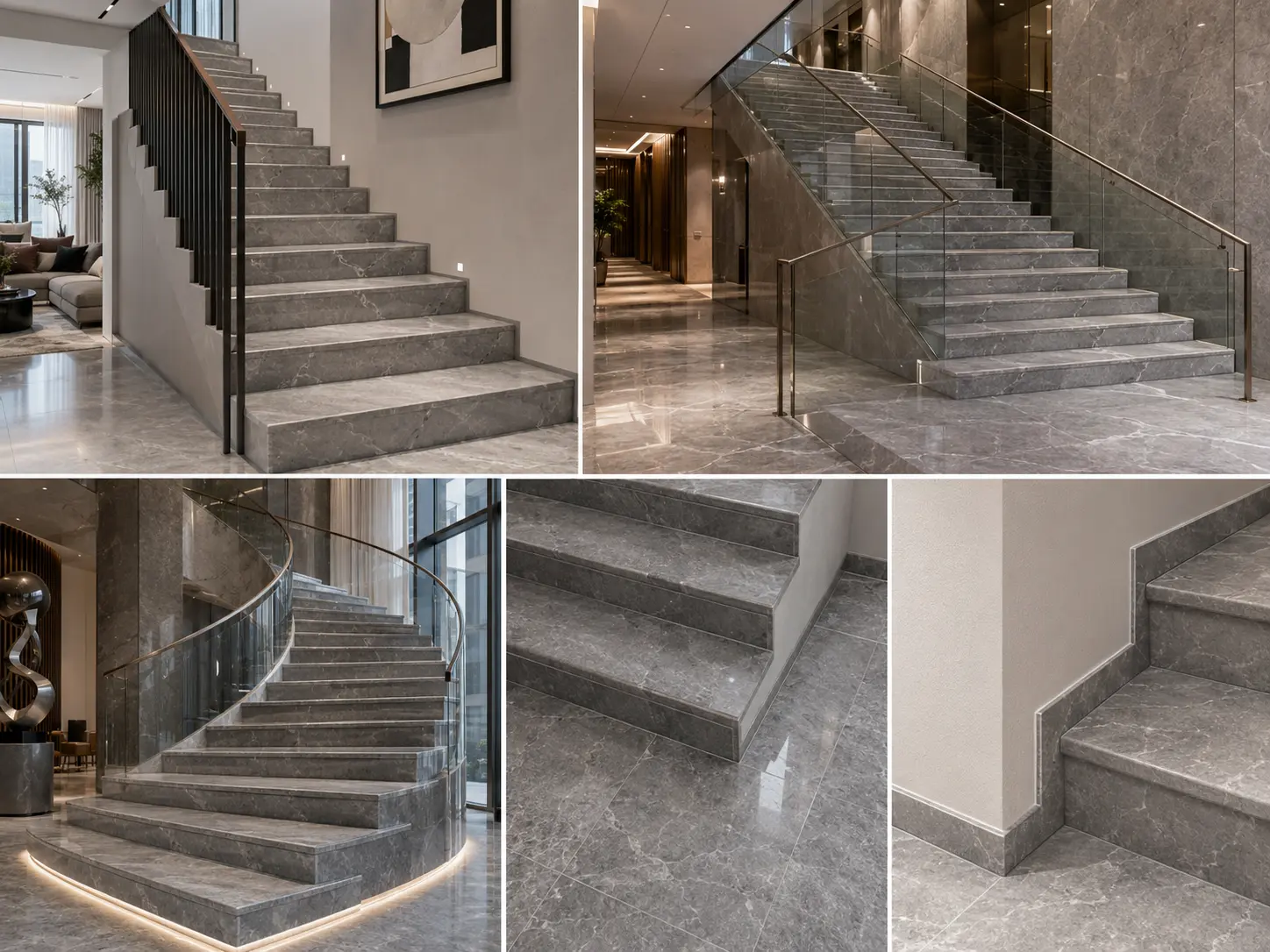
Stairs are not just small floors. They have exposed edges, nosing details, repeated foot impact, point loads, and slip risk. Stair treads often fail at the edge before they fail in the middle. This is why stair thickness should be specified separately from floor and wall tiles.
Common risks include nosing chips, edge cracking, poor support under the tread, uneven riser height, slippery finish, breakage during transport, and color mismatch between treads and risers. For commercial stairs, traffic and safety review become even more important.
Stair Tread Thickness
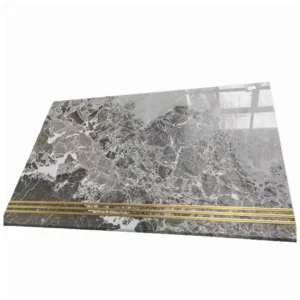
For many interior stair tread applications, 20mm may be reviewed when the tread is fully supported and the edge profile is controlled. For heavier commercial stairs, luxury feature stairs, thicker visual edges, or exposed nosing details, 30mm or a built-up edge may be selected. The final decision depends on support condition, tread span, edge profile, traffic level, local practice, and project safety requirements.
Architectural stair projects may use stronger visual marble selections such as architectural Grigio Carnico Grey Marble Tile when the design needs dark-grey drama, white veins, and a premium stair or wall statement. For stairs, the buyer should confirm edge fabrication, anti-slip grooves, riser matching, and spare pieces before production.
Stair Riser Thickness and Edge Profiles
Stair risers usually carry less direct foot load than treads, so they may be thinner, often around 15–20mm depending on project design and alignment requirements. The bigger issue is visual matching. A beautiful tread with mismatched risers can make the stair look patched together.
Edge profile matters. Straight edges look modern but may chip more easily if sharp. Beveled and chamfered edges reduce fragility. Bullnose edges soften the profile. Anti-slip grooves or metal inserts may be required in commercial or wet-adjacent stairs. If the stairs are heavily used, do not choose a fragile sharp edge just because it looks clean in a render.
| Stair Part | Suggested Thickness Direction | Best Use | Buyer Risk |
|---|---|---|---|
| Residential tread | 20mm or project-specified | Interior home stairs | Edge chips |
| Commercial tread | 20–30mm depending on support | Hotels, offices, retail stairs | Heavy traffic and slip risk |
| Luxury thick tread | 30mm or built-up edge | Villas and hotel feature stairs | Weight and cost |
| Stair riser | 15–20mm | Matching vertical face | Color mismatch |
| Landing tile | 15–20mm | Stair landing floors | Lippage and slip |
| Stair skirting | 15–20mm | Wall protection | Edge damage |
Thickness Weight and Cost: Does Thicker Grey Marble Always Mean Better?
Thickness Affects Weight and Logistics
Thicker grey marble usually costs more because it uses more raw stone, requires more cutting and polishing time, increases handling weight, and raises shipping cost. A basic density planning range for marble is often around 2,650–2,750 kg/m³, but buyers should request actual density data for the selected material. For quick logistics planning, a 2,700 kg/m³ estimate can show how dramatically thickness changes weight.
| سماكة | Approx. Weight per m² Using 2,700 kg/m³ | Typical Direction | Buyer Note |
|---|---|---|---|
| 10 ملم | About 27 kg/m² | Interior walls and decorative panels | Lighter but limited for floors |
| 12mm | About 32.4 kg/m² | Selected walls and light residential use | Needs good substrate |
| 15mm | About 40.5 kg/m² | Balanced wall and light floor option | Common project review thickness |
| 18 ملم | About 48.6 kg/m² | Stronger floor and commercial interior use | Higher handling weight |
| 20 ملم | About 54 kg/m² | Commercial floors, stairs, stronger panels | Good strength but heavier |
| 30 ملم | About 81 kg/m² | Stair treads and thick architectural details | High weight and higher cost |
Thicker Is Not Always Better
Thicker marble can improve edge presence and may support stronger applications, but it does not automatically prevent cracking. Cracking can still come from poor substrate, incorrect adhesive, uneven support, movement, impact, moisture, or installation errors. In wall cladding, thicker material may simply add weight and fixing difficulty. In floors, a proper system is more important than thickness alone.
Buyer logic is simple: if the project needs edge durability and load support, thicker marble may be worth it. If the project is decorative wall cladding, thinner material may be more efficient. If the project is commercial flooring, thickness must be balanced with abrasion resistance, finish, slip resistance, maintenance, and installation quality.
Finish Selection by Thickness and Application
Polished Grey Marble Tiles
Polished grey marble creates a rich, reflective, high-end surface. It works well for feature walls, elevator lobbies, reception backdrops, dry luxury floors, and low-risk interiors. The darker the grey, the more dramatic the reflection can become.
The risk is that polished floors may be slippery when wet and can show scratches, etching, and polish wear under heavy traffic. For commercial floors and stairs, polished finish should be reviewed carefully with slip resistance and maintenance planning.
Honed Grey Marble Tiles
Honed grey marble is often the safest balance for floors and stairs. It provides a smooth, low-glare surface and a softer luxury effect. It may hide micro-scratches better than polished stone and can feel more modern in commercial interiors.
Honed marble still needs sealing and proper cleaning. It is not maintenance-free. But for hotel lobbies, office receptions, bathrooms, corridors, and stair landings, honed finish is often more practical than high polish.
Brushed or Textured Grey Marble Tiles
Brushed or textured grey marble can be useful for stairs, wet-adjacent zones, commercial bathrooms, spa corridors, and entrance transition areas. These finishes may improve tactile grip, but they can also collect dirt more easily if the surface is too rough.
If cleaning teams are not prepared for textured stone, the surface may age poorly. If slip risk matters, texture helps. If easy cleaning matters more, avoid overly aggressive texture. Stone selection is always a little negotiation with reality.
Technical Standards and Test Data Buyers Should Request
Physical Performance Data
For Grey Marble Tiles, buyers should request test data before bulk orders, especially for commercial floors, stairs, bathrooms, and large-format panels. ASTM C503/C503M is commonly used as a reference for marble dimension stone physical properties, including absorption by weight, density, compressive strength, modulus of rupture, abrasion resistance, and flexural strength.
Slip resistance should also be reviewed for floors and stairs. ANSI A326.3 is used for dynamic coefficient of friction testing of hard surface flooring materials. Local building codes and project safety requirements should guide final acceptance. Do not copy one universal slip value from another project and pretend it solves your floor. It might not.
| Test or Document | Why It Matters | طلب |
|---|---|---|
| أمتصاص الماء | Staining and moisture behavior | Floors, bathrooms, walls |
| كثافة | Stone compactness and weight planning | General selection and logistics |
| Compressive strength | Load performance | Floors and stairs |
| قوة العاطفة | Breakage resistance | Large tiles and panels |
| Abrasion resistance | Surface wear under traffic | Commercial floors |
| Slip resistance | Safety in wet or traffic areas | Floors and stairs |
| تحمل السماكة | Installation quality and level control | All applications |
| Batch photos | Color and vein consistency | Commercial projects |
Installation Factors That Matter More Than Thickness
Substrate Flatness and Adhesive Coverage
Uneven substrate can crack marble regardless of thickness. Large-format tiles are especially sensitive because they need flatter support. Proper adhesive coverage, suitable mortar, substrate moisture control, and installation method are essential. If the tile sounds hollow after installation, the problem is not solved by saying the marble was thick enough.
Movement Joints and Waterproofing
Large floors need movement joint planning. Bathrooms and wet walls need waterproofing before stone installation. Stairs need stable support and accurate riser height. Elevator surrounds need edge protection and impact planning. Each area needs a system, not just a tile.
Dry Layout and Batch Control
Grey marble varies by block and batch. Some tiles are light silver grey, some are charcoal, some have white veins, and some have dramatic cloud-like movement. Dry layout allows the installer and buyer to control vein direction, color grouping, and pattern balance before fixing the stone permanently.
Common Buyer Mistakes When Choosing Grey Marble Tile Thickness
Mistake 1: Using One Thickness Everywhere
Floors, walls, stairs, risers, skirting, and feature panels all need different logic. One thickness may simplify ordering but weaken performance.
Recommendation: specify thickness by application area, not by convenience.
Mistake 2: Assuming Thicker Marble Fixes Poor Installation
Bad substrate, poor adhesive coverage, missing movement joints, or moisture problems can still cause failure. Thickness is not a superhero cape.
Recommendation: fix the substrate and installation system before relying on thicker tiles.
Mistake 3: Choosing Thin Stair Treads to Save Cost
Stair treads need stronger edge durability than wall tiles or many floor tiles. Thin treads can chip at the nosing, especially in commercial use.
Recommendation: use suitable tread thickness and safer edge profiles.
Mistake 4: Ignoring Slip Resistance on Stairs
Smooth marble stairs can become risky, especially near wet areas or public entrances.
Recommendation: review honed, brushed, grooved, or anti-slip-treated finishes for stair applications.
Mistake 5: Not Ordering Spare Tiles
Natural stone batches vary. If a tile breaks later, replacement from a new batch may not match.
Recommendation: order spare tiles, stair pieces, and skirting from the same batch.
Procurement Checklist for Grey Marble Tile Thickness
| Procurement Item | What Buyers Should Confirm | Why It Matters |
|---|---|---|
| Application area | Floor, wall, stair, bathroom, lobby, corridor | Defines thickness logic |
| حجم البلاط | Standard or custom cut-to-size | Affects thickness, substrate, and handling |
| Traffic level | Residential, hotel, retail, mall, restaurant | Controls durability requirement |
| ينهي | Polished, honed, brushed, textured | Affects appearance, slip, and cleaning |
| Test data | Absorption, density, strength, abrasion, slip review | Supports technical approval |
| Stair details | Tread thickness, riser thickness, nosing, anti-slip grooves | Reduces edge failure and safety risk |
| Replacement stock | Spare tiles from same batch | Protects long-term maintenance |
Final Recommendation: Match Thickness to the Area, Not the Catalogue
Grey Marble Tiles can work beautifully for floors, walls, stairs, lobbies, bathrooms, and commercial interiors, but the thickness must be matched to the actual use. For interior walls, 10–15mm may be efficient when panel size and fixing method are suitable. For residential floors, 12–18mm may be reviewed depending on tile size and substrate. For commercial floors, 15–20mm or a project-specific system is often more realistic. For stairs, 20–30mm or a properly built-up edge may be needed depending on traffic and edge design.
If the area is decorative, avoid unnecessary weight. If the area has heavy traffic, do not under-specify. If the project includes stairs, protect the edge. If the substrate is poor, solve the substrate first. If the project depends on long-term matching, order spare material from the same batch.
Before choosing Grey Marble Tiles for floors, walls, or stairs, prepare the application area, tile size, traffic level, substrate condition, preferred finish, slip-resistance expectations, stair edge design, required thickness, and quantity. A professional custom cut-to-size grey marble tiles supplier can help match thickness, finish, and fabrication details to the real project conditions.
|
|

Frequently Asked Questions About Grey Marble Tile Thickness
1. What thickness should Grey Marble Tiles be for floors?
Grey Marble Tiles for residential floors may use moderate thickness such as 12mm, 15mm, or 18mm depending on tile size, substrate condition, and installation method. For commercial floors, hotel lobbies, corridors, and public areas, stronger thickness such as 15–20mm or a project-specific flooring system is often more suitable. The final decision should consider traffic level, rolling loads, floor flatness, abrasion resistance, slip resistance, finish, and maintenance plan. Thickness alone does not prevent cracking if the substrate or adhesive system is poor.
2. Can 10mm Grey Marble Tiles be used on walls?
10mm Grey Marble Tiles can be used for selected interior wall cladding or decorative panels when the panel size is controlled, the wall is flat, and the adhesive or fixing method is suitable. They are lighter than thicker tiles, which can reduce wall load and installation difficulty. However, large-format panels, full-height commercial walls, elevator surrounds, or areas with impact risk may require thicker material or mechanical fixing. Buyers should confirm wall condition, panel dimensions, moisture exposure, adhesive compatibility, and safety requirements before approving 10mm wall tiles.
3. What thickness is best for grey marble stairs?
Grey marble stair treads often require stronger thickness than wall tiles because stairs face repeated foot impact, edge pressure, nosing wear, and slip risk. Many interior stair projects may review 20mm treads when the support is strong, while commercial stairs, luxury feature stairs, exposed nosing, or heavier traffic may require 30mm or a built-up edge. Stair risers may be thinner, often around 15–20mm depending on the design. Buyers should also confirm edge profile, anti-slip grooves, finish, support condition, and replacement pieces.
4. Does thicker grey marble prevent cracking?
Thicker grey marble can improve strength and edge presence in some applications, but it does not automatically prevent cracking. Cracks can happen because of poor substrate flatness, weak adhesive coverage, movement, impact, moisture, missing expansion joints, improper handling, or unsuitable installation methods. A 20mm tile can still fail if it is installed over a bad substrate. Buyers should treat thickness as one part of a complete system that includes stone quality, tile size, installation method, adhesive, substrate preparation, movement joints, and maintenance conditions.
5. How do I choose a Grey Marble Tiles supplier for custom thickness?
To choose a Grey Marble Tiles supplier for custom thickness, buyers should check whether the supplier can provide multiple thickness options, cut-to-size processing, stair tread fabrication, risers, skirting, edge profiles, thickness tolerance control, test data, batch photos, dry layout support, export packing, and replacement stock. A reliable supplier should ask about application area, traffic level, tile size, substrate condition, finish, slip-resistance expectations, and installation method before recommending thickness. Avoid suppliers that quote only by price without confirming project use and technical requirements.
References
- ASTM C503/C503M: Standard Specification for Marble Dimension Stone, ASTM International, Dimension Stone Standards.
- ANSI A326.3: Dynamic Coefficient of Friction of Hard Surface Flooring Materials, American National Standards Institute and Tile Council of North America.
- Dimension Stone Design Manual, Natural Stone Institute, Technical Design Manual.
- Care and Maintenance of Natural Stone, Natural Stone Institute, Stone Care Technical Resources.
- TCNA Handbook for Ceramic, Glass, and Stone Tile Installation, Tile Council of North America, Installation Standards and Methods.
- ANSI A108/A118/A136: American National Specifications for the Installation of Ceramic Tile, American National Standards Institute and Tile Council of North America.
- Stone Cladding Engineering and Installation Guidance, Natural Stone Institute, Commercial Stone Design Resources.
- Interior Design Reference and Specification Book, Chris Grimley and Mimi Love, Rockport Publishers.
How Buyers Should Choose Grey Marble Tile Thickness
How should buyers choose Grey Marble Tiles thickness?
Buyers should start with the application area. Walls, floors, stairs, bathrooms, lobbies, and commercial corridors need different thickness logic. The right thickness depends on traffic level, tile size, substrate flatness, installation method, finish, slip-resistance needs, and edge exposure.
Why does thickness affect project performance?
Thickness affects weight, handling, cost, shipping, edge strength, installation method, and long-term durability. Thicker marble may help floors and stairs, but it does not fix poor substrate or wrong installation. Thinner marble may be efficient for walls, but large panels may need stronger fixing.
What option works best for floors?
For residential floors, 12–18mm may be reviewed when the substrate is stable and tile size is controlled. For commercial floors, 15–20mm or a project-specific system is often more suitable because traffic, cleaning equipment, and rolling loads increase risk.
What option works best for walls?
For decorative interior walls, 10–15mm may reduce weight and cost. For large-format lobby panels, elevator surrounds, and commercial wall cladding, 15–20mm or mechanical fixing may be reviewed depending on panel size and impact exposure.
Consideration: What should buyers check for stairs?
Stair treads need stronger edge logic than floor tiles. Buyers should review 20–30mm thickness, nosing profile, anti-slip treatment, support condition, traffic level, and riser matching. Thin stair treads may save money at first but can increase chipping and replacement risk.
Recommendation
If the area is a light wall, choose thinner material with correct fixing. If the area is a commercial floor, choose stronger thickness with tested finish and good substrate. If the area is a stair, prioritize edge durability and slip control. Always request test data, batch photos, thickness tolerance, and spare stock before ordering.
Before ordering Grey Marble Tiles, prepare your floor, wall, and stair drawings, preferred tile size, thickness target, finish, traffic level, substrate condition, and stair edge profile. A professional Grey Marble Tiles supplier can help confirm the safest and most cost-effective specification.