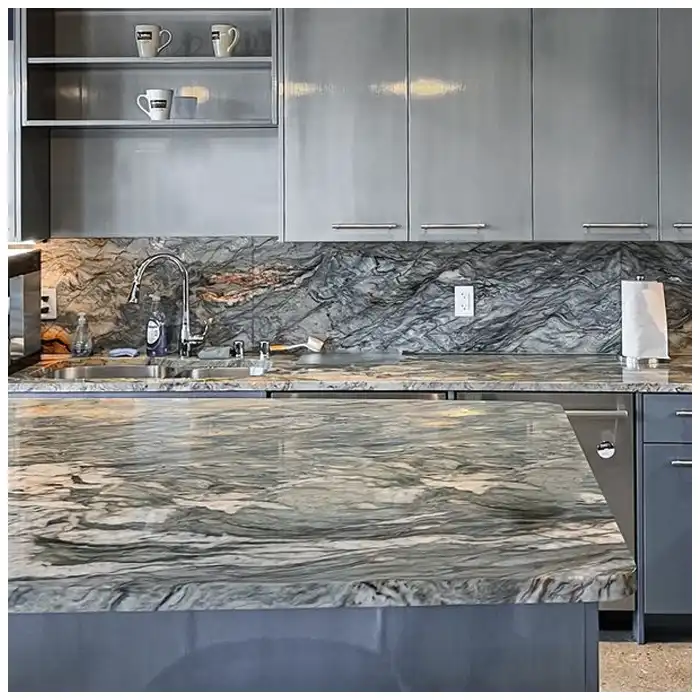
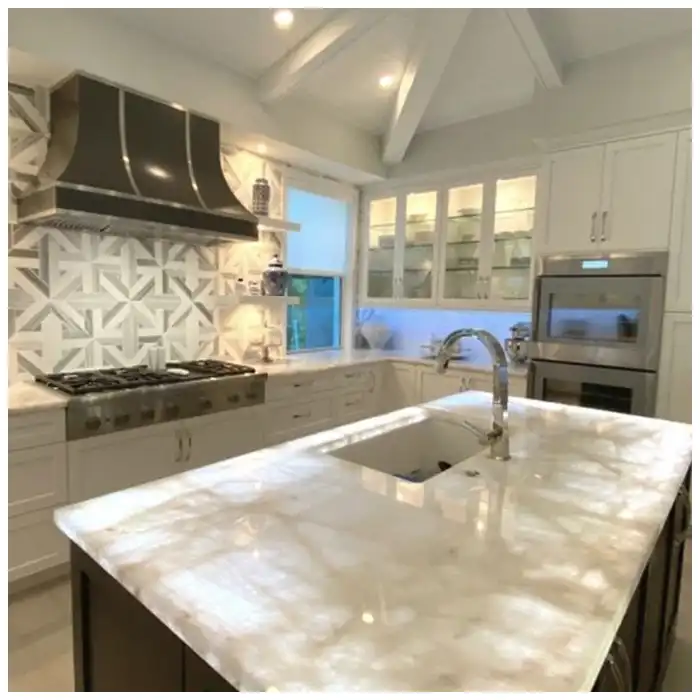
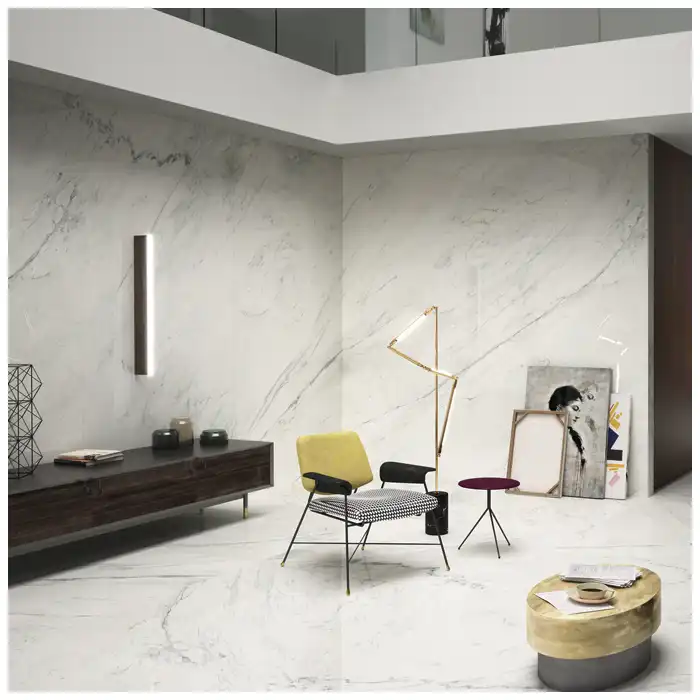
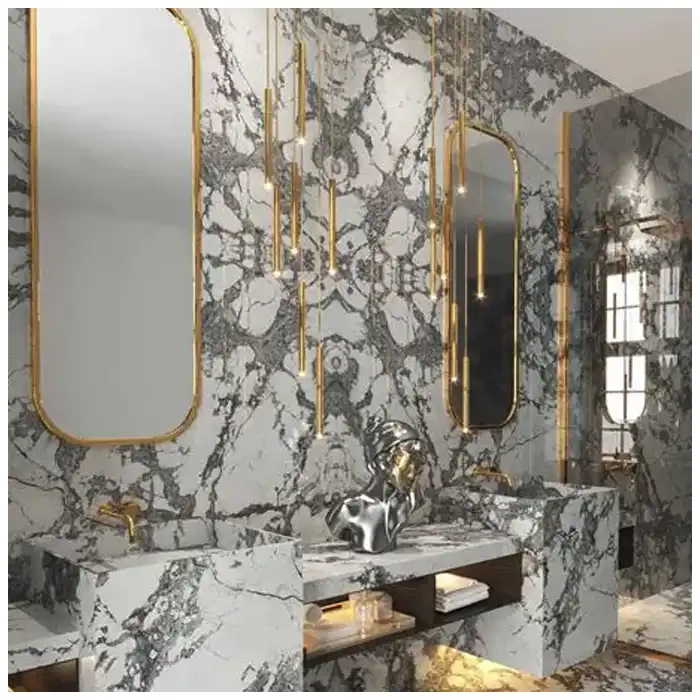
Carrara Marble is one of the most recognized white marbles in architecture, sculpture, and interior design. Its identity is quiet rather than loud: a soft white, cool white, or blue-grey background crossed by fine grey veins. Unlike bold statement stones that dominate a room immediately, Carrara Marble creates a calmer kind of luxury. It can make bathrooms brighter, hotel suites more refined, fireplace surrounds more classic, and commercial interiors more timeless.
But because Carrara Marble is familiar, many buyers specify it too casually. They ask for “Carrara” without defining grade, whiteness, vein density, thickness, finish, tolerance, slab size, dry lay, or application risk. That is where problems begin. Carrara Marble is not one fixed product. CD-grade slabs, standard Carrara, Bianco Carrara, premium white slabs, and architect-selected bundles can look very different. In commercial tenders, those differences affect project appearance, installation cost, claim risk, and long-term buyer satisfaction.
For architects, designers, contractors, and distributors comparing natural stone options, a broad marble slabs and architectural stone collection helps place Carrara Marble in context with Calacatta, Statuario, beige marble, grey marble, black marble, and other decorative stones. Carrara remains popular because it is versatile, available, historically recognized, and easier to integrate into many design styles than stronger-patterned premium marbles.
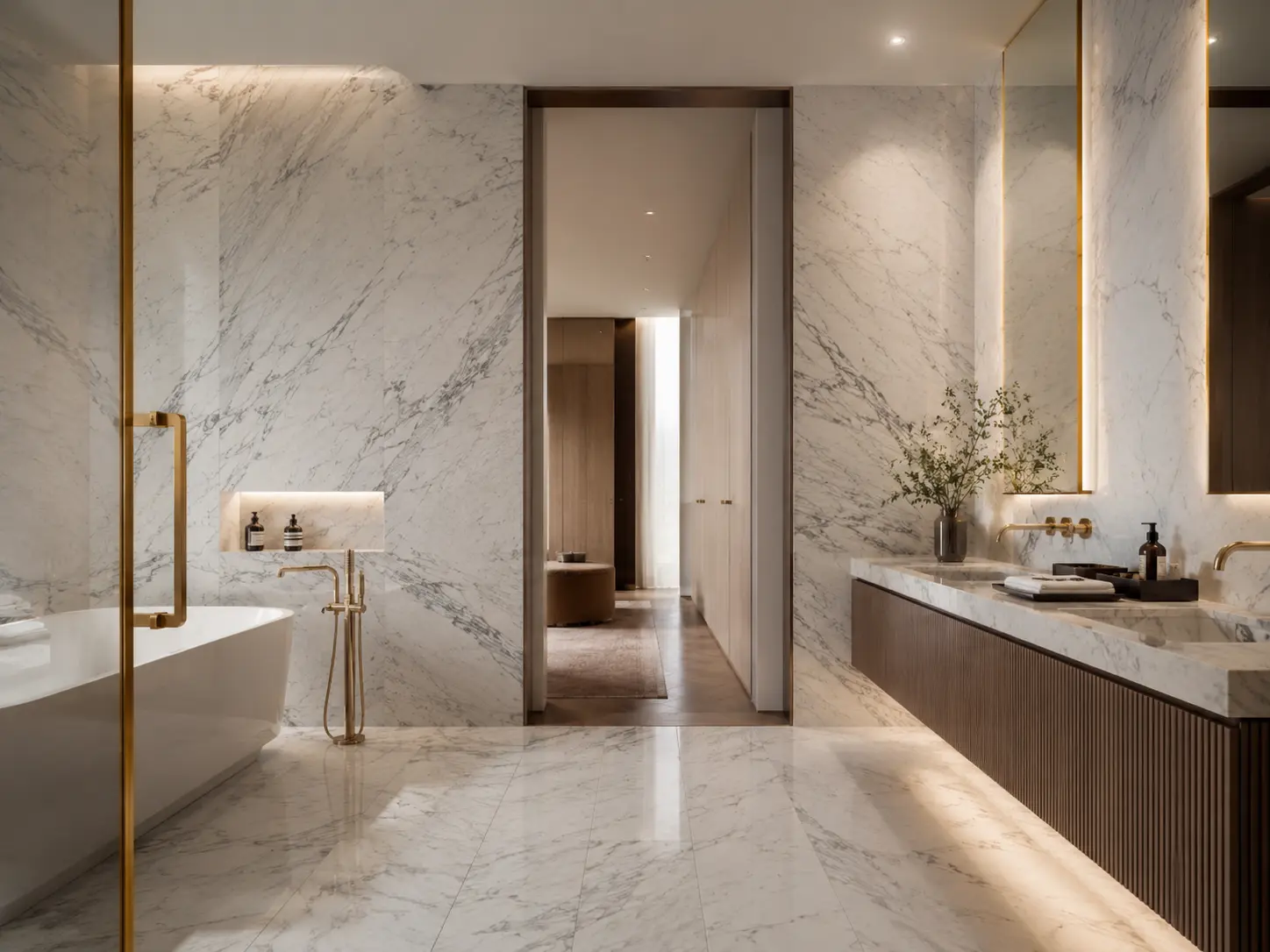
What is Carrara Marble: The Geological and Metamorphic Origin
Carrara Marble is a natural marble historically associated with the Carrara area in Tuscany, Italy. It is known for a white to blue-grey base and soft grey veining. In architectural specification, the term is often used to describe a family of Carrara-type white marbles with similar color, vein character, and design use. Its reputation comes from centuries of use in sculpture, buildings, bathrooms, flooring, wall cladding, countertops, and decorative interiors.
Geologically, marble forms when limestone or dolomitic limestone is transformed by heat and pressure. During this metamorphic process, carbonate minerals recrystallize, creating the fine crystalline structure associated with marble. Mineral impurities, movement, and natural formation conditions influence the veins, cloudiness, grey tones, and visual variation. This is why Carrara Marble can look soft and subtle in one bundle but greyer, busier, or more veined in another.
For buyers seeking a classic white stone with a calm grey-vein structure, Bianco Carrara Marble Slab is often considered because it represents the recognizable white-grey Carrara look used in bathrooms, walls, floors, vanity tops, and refined interior surfaces. However, the final decision should always be made by reviewing actual slab photos, not only the material name.
| Geological Factor | Carrara Marble Result | Buyer Meaning |
|---|---|---|
| Limestone protolith | Carbonate-based natural stone | Sensitive to acids and needs careful cleaning |
| Metamorphic recrystallization | Fine marble crystal structure | Takes polished and honed finishes well |
| Mineral impurities | Grey and blue-grey veining | Creates natural variation and movement |
| Quarry and block variation | Different whiteness and vein density | Actual slab approval is essential |
| Historic quarry reputation | Strong architectural recognition | Useful for premium project storytelling |
Visual Identity: What Makes Carrara Marble Different?
The strongest visual identity of Carrara Marble is its restrained grey veining. Compared with Calacatta Marble, Carrara usually has a softer grey-white tone and more frequent but less dramatic veins. Compared with Statuario, Carrara often feels more accessible, more practical, and less visually rare. This makes it suitable for large areas because it does not overwhelm the space.
Architects use Carrara Marble because it works across many design languages. In a classic bathroom, it feels clean and timeless. In a modern apartment, it pairs well with matte black metal, chrome, nickel, warm wood, and soft grey cabinetry. In a hotel suite, it gives an elegant tone without forcing the entire room to revolve around the stone. In commercial interiors, it provides natural material value while staying visually controlled.
For a deeper design-focused understanding of its appeal, buyers can review Italian Carrara Marble for interior designs, especially when the project needs a balance between classic white marble beauty and practical design integration. Carrara Marble is often strongest when it supports the architectural mood rather than competing with every other material in the room.
Technical Specifications & Physical Parameters
Architects should never specify Carrara Marble only by appearance. Large-scale projects require technical review because marble is a real building material, not just a beautiful surface. The most important parameters include density, water absorption, compressive strength, flexural strength, hardness, thickness, surface finish, chemical sensitivity, and tolerance. These values help determine where Carrara Marble is suitable and what precautions are needed.
Reference values vary by quarry, block, grade, test method, and supplier. Therefore, the numbers below should be treated as planning references, not final tender data. For commercial projects, architects should request supplier-specific test reports or declared data. The specification should define the standard, test method, finish, thickness, tolerance, inspection method, and acceptance criteria.
| Parameter | Typical Reference Range for Marble | Why It Matters for Carrara Marble |
|---|---|---|
| घनत्व | Approx. 2.65–2.75 g/cm³ | Helps estimate panel, slab, and wall load |
| जल अवशोषण | Often below 0.5% for compact marble, varies by material | Affects staining, sealing, and wet-area planning |
| Compressive strength | Often approx. 80–140 MPa, varies by block | Relevant for floors, stairs, and load-bearing surfaces |
| आनमनी सार्मथ्य | Often approx. 7–15 MPa, varies by slab | Important for wall panels, stairs, and large pieces |
| Mohs hardness | Around 3 for calcite-based marble | Explains scratch and wear sensitivity |
| सामान्य मोटाई | 18mm, 20mm, 30mm, project-specific | Affects strength, weight, fabrication, and cost |
| सतह खत्म | Polished, honed, brushed, leathered | Controls look, glare, slip feel, and maintenance |
| Chemical sensitivity | Acid-sensitive carbonate stone | Requires pH-neutral cleaning and care guidance |
The Grading System: How to Distinguish CD-Grade from Premium White Slabs
Carrara Marble grading matters because it affects both appearance and project value. A buyer asking for Carrara Marble may receive a grey-heavy, busy, lower-grade slab or a cleaner premium white slab depending on supplier interpretation. Grade affects whiteness, vein density, cloudiness, resin lines, cracks, color consistency, and final project impression.
Common commercial terms may include CD-grade Carrara, C-grade, standard Carrara, Carrara White, Bianco Carrara, premium Carrara White, selected white slabs, or architect-grade slabs. These terms are not always used consistently across suppliers. Therefore, buyers should define the expected appearance in writing and approve actual slab photos before order confirmation.
Premium white slabs usually have a cleaner white background, controlled grey veins, fewer obvious defects, and better consistency. CD-grade Carrara may show a greyer background, more frequent veins, stronger variation, more cloudiness, or more visible natural character. It can still be useful for budget tiles, secondary walls, or projects that accept stronger natural variation. The problem is not CD-grade itself; the problem is when it is sold as premium white without clear agreement.
| ग्रेड प्रकार | Visual Character | Best Use | Buyer Warning |
|---|---|---|---|
| CD-grade Carrara | Grey-white base, stronger variation, more veins | Budget tiles, secondary walls, less formal spaces | Not ideal when clean white consistency is required |
| Standard Carrara | Balanced white-grey tone, moderate veins | Bathrooms, floors, wall panels | Approve actual slabs before ordering |
| Premium Carrara White | Cleaner white base, controlled veining | Hotel interiors, villas, vanity tops, feature walls | Higher cost and stricter selection |
| Architect-selected slabs | Project-matched slabs with dry lay | Commercial tenders and luxury projects | Requires early selection and reservation |
| Bookmatched Carrara | Mirrored slab pattern | Feature walls and reception areas | Requires slab sequence control |
Sizing and Thickness Tolerances for Large-Scale Commercial Tenders
Commercial projects require repeatability. A single luxury bathroom may tolerate small adjustments on site, but a hotel, apartment development, or public interior with hundreds of panels cannot rely on guesswork. Tolerance problems create uneven joints, visible lippage, installation delays, and contractor disputes.
Carrara Marble can be supplied as large slabs, cut-to-size panels, tiles, countertops, vanity tops, stair treads, risers, wall cladding panels, fireplace surrounds, skirting, and thresholds. Each product type has different dimensional expectations. Large slabs reduce seams but increase handling risk. Smaller panels improve installation control but create more joints. The correct format depends on wall size, drawing details, budget, and installation method.
For designers planning matched wall panels or luxury feature walls, the concept of dry lay and vein sequence becomes critical. A resource on book-matching Carrara White Marble in luxury projects is especially useful because bookmatching is not just an aesthetic effect; it is a purchasing, cutting, numbering, and installation control process.
| वस्तु | Common Project Requirement | Why It Matters |
|---|---|---|
| मोटाई सहनशीलता | Controlled within project-specific limits | Prevents uneven installation |
| Length/width tolerance | Must match drawing and joint design | Prevents site cutting and rework |
| Diagonal tolerance | Important for large tiles and panels | Avoids out-of-square installation |
| Surface flatness | Critical for wall panels and countertops | Prevents lippage and shadow lines |
| Edge quality | Important for visible panels and tops | Affects final luxury appearance |
| Hole/cutout accuracy | Critical for countertops and vanities | Prevents sink and fixture mismatch |
Carrara Marble Applications by Project Type
Carrara Marble is especially strong in bathrooms. Its soft grey-white tone makes the space brighter without feeling too cold. It works well for bathroom walls, shower surrounds, vanity tops, tub surrounds, floors, and niche panels. However, waterproofing, sealing, slip review, and pH-neutral maintenance must be specified. Marble looks calm in bathrooms, but poor waterproofing is not calm for anyone paying the repair bill.
In hotel guestrooms and suites, Carrara Marble can be used for vanity tops, wall panels, shower walls, and selected floor areas. The key is batch consistency across rooms. A small color difference in one room may be acceptable, but across 80 bathrooms it becomes a visible quality problem. For commercial lobby walls and reception areas, larger panels or bookmatched slabs can create a stronger visual statement, but dry lay and mechanical fixing should be reviewed.
Carrara Marble can also be used for kitchen countertops and islands, but only when the client understands natural patina, acid sensitivity, etching, and maintenance. It is not the right material for every kitchen buyer. If the client expects a perfectly uniform, stain-resistant, zero-maintenance countertop, engineered quartz or quartzite may be safer. If the client wants natural elegance and accepts aging, Carrara can be beautiful.
| आवेदन | Suitability | Key Requirement | Risk If Ignored |
|---|---|---|---|
| Bathroom walls | Excellent | Waterproofing and sealing | Staining and moisture problems |
| घमंड सबसे ऊपर | Good | pH-neutral care | Etching from cosmetics |
| Hotel lobby wall | Very good | Dry lay and fixing review | Vein mismatch or safety risk |
| रसोई काउंटरटॉप | Conditional | Maintenance acceptance | Etching and staining complaints |
| फर्श | Good | Finish and abrasion review | Surface wear or slip issues |
| सीढ़ियाँ | Good | Thickness and anti-slip detail | Edge damage or safety issues |
| Fireplace surround | Good | Heat and substrate review | Cracking or installation failure |
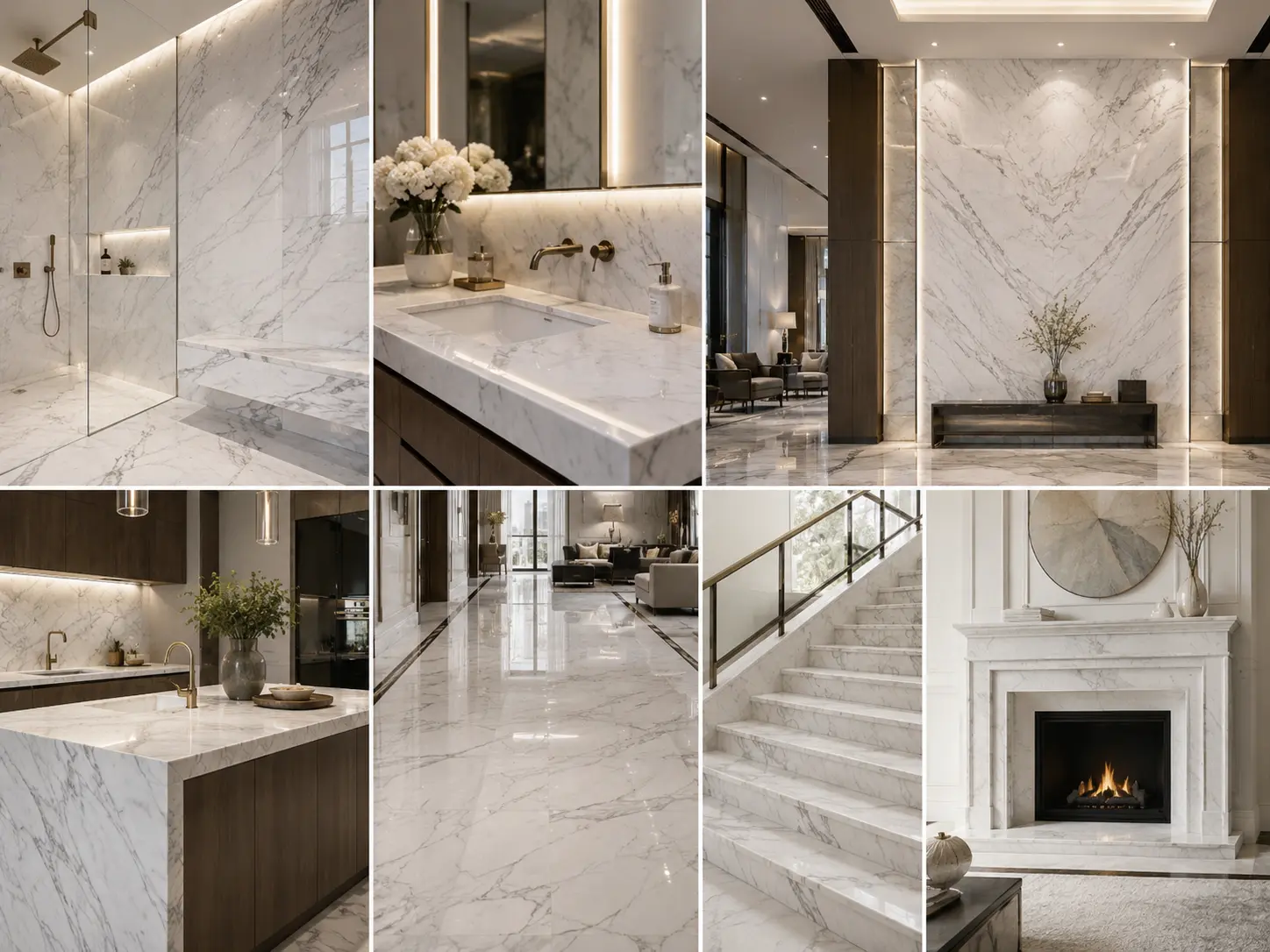
Carrara Marble vs Calacatta, Statuario, Quartzite, and Engineered Stone
Carrara Marble is often compared with Calacatta and Statuario because all three are associated with white marble luxury. Carrara is usually softer, greyer, and more subtle. Calacatta usually has a whiter background and bolder veins. Statuario often appears whiter and more dramatic, with a premium visual identity and higher rarity. The right choice depends on whether the project needs quiet classic elegance or a strong statement.
Architects comparing white marble families can review Calacatta Marble in high-end interiors to understand why Calacatta is often selected for dramatic islands, feature walls, and luxury focal surfaces. Carrara is generally better when the design needs understated continuity. Calacatta is often better when the design needs bold visual impact.
Quartzite and engineered quartz should also be included in the decision. Carrara gives natural marble elegance and historical value, but it is acid-sensitive and requires care. Quartzite may offer higher durability for heavy-use countertops. Engineered quartz offers greater uniformity and lower maintenance. A smart specification does not force Carrara into every use; it selects Carrara where its beauty is an advantage and chooses alternatives where performance expectations are different.
| सामग्री | Visual Style | रखरखाव | Best Use |
|---|---|---|---|
| कैरारा संगमरमर | Soft white-grey classic look | Medium-high | Bathrooms, walls, vanities, interiors |
| कैलाकाट्टा संगमरमर | Bold luxury veins | Medium-high | Statement islands and feature walls |
| स्टैचुअरियो संगमरमर | Premium white dramatic elegance | Medium-high | Luxury projects and focal surfaces |
| क्वार्टजाइट | Natural stone with higher durability | Medium | Countertops and high-use areas |
| Engineered Quartz | Uniform and practical | Low | Kitchens and commercial counters |
Surface Finish Selection for Carrara Marble
The finish changes both appearance and performance. A polished finish makes Carrara Marble brighter and more reflective. It is often used for wall panels, vanity tops, fireplace surrounds, and decorative surfaces. It highlights the veining and gives the stone a refined look. However, polished marble may show etching, scratches, and glare more clearly.
A honed finish creates a softer matte appearance. It is popular for bathrooms, floors, modern interiors, and spaces where glare should be reduced. Honed marble may be more forgiving visually, but it may also need good sealing because matte surfaces can absorb stains more easily. Brushed and leathered finishes add texture, but they should be sampled because they can change the classic Carrara identity.
| खत्म करना | Best Use | फ़ायदा | Warning |
|---|---|---|---|
| पॉलिश | Walls, vanity tops, feature areas | Bright luxury effect | Glare and etching more visible |
| सम्मानित | Floors, bathrooms, modern interiors | Soft and calm | Needs good sealing |
| ब्रश | Textured feature areas | Adds grip and character | May hold dirt |
| Leathered | Boutique interiors | Tactile and premium | Must sample first |
Real Architect Scenarios for Carrara Marble Specification
In a hotel bathroom package, Carrara Marble may be specified for walls, vanity tops, shower surrounds, and selected floors. The architect should define grade, finish, panel size, thickness, dry lay requirements, sealing, packing by room number, and replacement strategy. In a luxury apartment development, Carrara tiles or panels may be used across multiple bathrooms and public areas, requiring batch consistency across units.
In a villa interior, Carrara Marble can be used for fireplace surrounds, vanity tops, stair details, bathroom walls, and feature panels. Premium white slabs may be preferred in visible areas. In a commercial lobby wall, large-format slabs or bookmatched panels can create a strong but controlled visual effect. Mechanical fixing and dry lay review are important because the panels are highly visible and may be large.
For countertop fabrication programs, buyers should check slab thickness, polish quality, resin condition, vein movement, and bundle consistency. A product page such as Carrara Marble Slab can support initial material review, but final project selection should still rely on current stock photos, grade confirmation, and supplier communication before purchase.
Common Mistakes When Specifying Carrara Marble
The first mistake is treating Carrara Marble as one fixed material. Different grades and bundles can look very different. The second mistake is ignoring actual slab approval. A catalog image cannot represent every current slab. The third mistake is using Carrara like engineered quartz. Marble is acid-sensitive, and clients must understand etching, staining, sealing, and patina.
The fourth mistake is not writing tolerances in tender documents. Vague wording like “first quality” is not enough for commercial procurement. The fifth mistake is skipping dry lay for wall panels. Without dry lay, vein mismatch can reduce the luxury effect. The sixth mistake is choosing polished marble for wet floors without slip review. A beautiful floor that becomes a safety complaint is not a successful specification.
Buying Guide: How to Source Premium Carrara Marble Slabs
Buyers should request actual slab photos, bundle photos, grade explanation, thickness measurement, finish close-ups, back-side photos, resin or mesh information, inspection photos, dry lay photos, packing photos, and loading photos. For premium projects, do not approve only a small sample. A small sample may show the color family, but it cannot show the full vein movement or overall consistency.
Supplier questions should be specific. What grade is this Carrara Marble? Is it CD-grade, standard, or premium selected? Can you provide current slab photos? Can you reserve slabs from the same bundle? Can you support dry lay and numbering? What thickness and finish options are available? Can you provide cut-to-size production? How is the marble packed for export?
Supplier experience matters because Carrara Marble is widely available, but not all suppliers manage grade consistency, processing accuracy, dry lay, packing, and communication equally. Buyers can review a company profile such as an experienced Carrara Marble supplier page before discussing grade, project drawings, export packing, and custom cut-to-size requirements.
| Buyer Request | Why It Matters |
|---|---|
| Actual slab photos | Shows real stock, not catalog ideal images |
| Bundle photos | Controls color and vein consistency |
| Grade explanation | Prevents premium vs standard confusion |
| Thickness measurement | Supports tender and installation control |
| Finish close-ups | Confirms polish, honed surface, and texture |
| Dry lay photos | Prevents wall-panel mismatch |
| Packing photos | Reduces breakage risk during export |

If This Is Your Project, Choose This Carrara Marble Strategy
| If Your Project Needs | Choose | Avoid |
|---|---|---|
| Budget-friendly white marble tiles | CD-grade or standard Carrara | Premium slabs if budget is tight |
| Luxury hotel bathrooms | Premium Carrara White slabs or panels | Random mixed bundles |
| Bookmatched feature wall | Selected slabs with dry lay | Uncontrolled slab sequence |
| Heavy-use kitchen countertop | Quartzite or engineered quartz | Carrara if client rejects patina |
| Classic bathroom vanity | Carrara Marble with sealing | Acidic cleaners |
| Public floor | Honed finish with slip review | Highly polished surface without testing |
| Commercial tender | Written tolerance and inspection criteria | Vague “first quality” wording |
Frequently Asked Questions
1. What is Carrara Marble?
Carrara Marble is a natural white or blue-grey marble associated with the Carrara region of Italy. It is known for its soft grey veining, cool white background, and classic architectural appearance. Carrara Marble has been widely used in bathrooms, floors, wall panels, vanity tops, fireplace surrounds, countertops, sculptures, and commercial interiors. Its value comes from a balance of visual elegance, historical recognition, availability, and design flexibility, but buyers should still confirm grade, slab appearance, finish, and technical suitability before specification.
2. Is Carrara Marble good for countertops?
Carrara Marble can be used for countertops, but it requires realistic maintenance expectations. Because it is a calcite-based natural marble, it is sensitive to acids, scratching, staining, and etching. It should be sealed, cleaned with pH-neutral products, and protected from acidic liquids such as lemon juice, vinegar, wine, and some cleaners. Carrara is suitable for clients who appreciate natural stone patina and classic beauty. For heavy-use kitchens where low maintenance is the priority, quartzite or engineered quartz may be safer.
3. What is the difference between Carrara and Calacatta Marble?
Carrara Marble usually has a softer grey-white background with finer, more frequent grey veins. Calacatta Marble usually has a whiter background with bolder, more dramatic veins and stronger visual contrast. Carrara is often better for calm bathrooms, large wall areas, classic interiors, and projects that need understated elegance. Calacatta is often selected for statement kitchen islands, feature walls, hotel lobbies, and high-impact luxury interiors. The right choice depends on the desired design mood, budget, availability, and maintenance expectations.
4. How do architects specify Carrara Marble for commercial projects?
Architects should specify Carrara Marble by grade, origin or trade name, finish, thickness, slab or panel size, tolerance, surface flatness, edge quality, dry lay requirement, inspection standard, packing method, and maintenance guidance. For hotel bathrooms, lobby walls, commercial floors, and large cut-to-size tenders, written requirements are important because vague wording can cause disputes. Architects should also require actual slab photos, bundle approval, dry lay images, and clear piece numbering before production and shipment.
5. How do I identify premium Carrara Marble slabs?
Premium Carrara Marble slabs usually have a cleaner white or cool white background, more controlled grey veining, fewer obvious defects, better consistency, and a refined overall appearance. Buyers should compare full slab photos, bundle photos, close-ups, back-side photos, thickness measurements, and finish details. It is also important to check for cracks, resin lines, mesh backing, excessive cloudiness, and strong color variation. The safest way to identify premium slabs is to approve actual current stock before ordering instead of relying only on catalog images.
References
- “Carrara Marble: Geological History and Architectural Use” — Encyclopaedia Britannica Editorial Team — Britannica Reference
- “ASTM C503/C503M Standard Specification for Marble Dimension Stone” — ASTM International — Marble Material Standard
- “ASTM C97/C97M Standard Test Methods for Absorption and Bulk Specific Gravity of Dimension Stone” — ASTM International — Stone Testing Method
- “ASTM C880/C880M Standard Test Method for Flexural Strength of Dimension Stone” — ASTM International — Structural Testing Method
- “Dimension Stone Design Manual” — Natural Stone Institute — Stone Design and Installation Reference
- “Natural Stone Care and Maintenance Guidelines” — Natural Stone Institute — Stone Maintenance Resource
- “Marble Institute Technical Bulletin on Stone Selection and Performance” — Natural Stone Institute — Technical Bulletin
- “Interior Stone Specification and Maintenance Planning” — International Interior Design Association — Design Practice Resource
Final Architect Insight: How to Specify Carrara Marble Without Project Risk
What should architects understand first?
Carrara Marble is classic, but it must be specified with discipline. The question is not only “Is it Carrara?” but “Which grade, which bundle, which finish, which thickness, which tolerance, and which application?”
How should buyers evaluate slabs?
Buyers should compare whiteness, vein density, background tone, resin condition, cracks, finish, thickness, dry lay, and packing. Premium results depend on actual slab approval, not only a famous material name.
Why do Carrara Marble projects fail?
Most failures come from grade confusion, no real slab photos, no tolerance control, wrong finish, poor dry lay, weak packing, or unrealistic maintenance expectations. Carrara is beautiful, but it is still natural marble and needs correct use.
Option logic: Use Carrara Marble for classic bathrooms, vanity tops, wall panels, fireplace surrounds, hotel interiors, and refined residential spaces. Use premium selected slabs for luxury projects. Use CD-grade or standard Carrara for budget-sensitive areas. Compare quartzite or engineered quartz for heavy-use kitchen counters when the client wants low maintenance.
Recommendation: Before ordering, prepare drawings, application area, grade target, finish preference, slab size, thickness, tolerance requirement, and quantity. Buyers can send project details through the MQ Marble contact page to request slab matching, quotation, grade confirmation, or project-specific sourcing support.
Carrara Marble remains timeless because it is versatile, elegant, and architecturally familiar—but in 2026, premium results depend on precise specification, not just a famous stone name.