Quick Summary: Marble Mosaic is a premium natural stone design solution for bathroom floors, shower walls, kitchen backsplashes, hotel interiors, and decorative feature surfaces. To design marble mosaic walls and flooring successfully, buyers should compare pattern style, stone type, grout color, slip resistance, waterproofing, sealing, installation quality, and supplier capability before confirming bulk orders.
A well-designed 大理石モザイク surface can make a room feel handcrafted, detailed, and quietly luxurious. Unlike large slabs, marble mosaics use smaller stone pieces to create rhythm, texture, pattern, and visual movement. They can turn a basic bathroom floor into a spa-like detail, a plain shower wall into a boutique hotel feature, or a kitchen backsplash into a refined design statement.
But marble mosaic is not only about choosing a beautiful pattern. It is a technical surface system. The wrong pattern can make a small room look busy. The wrong grout can stain or visually break the design. The wrong finish can create slip risk on wet floors. Poor waterproofing can cause failure behind shower walls. Low-quality mesh backing can make installation uneven. In short, marble mosaic is charming, but it is not a “just stick it on the wall and hope” material. Hope is not an installation method.
This guide explains how to design marble mosaic walls and flooring for modern interiors, bathrooms, kitchens, hotels, villas, commercial spaces, and wholesale stone projects. It covers pattern selection, wall-versus-floor planning, material choice, grout color, technical specifications, installation risks, supplier evaluation, and practical buying recommendations.
What Is Marble Mosaic and Where Is It Used?
Marble Mosaic as Small-Format Natural Stone Design
Marble mosaic is made from small pieces of natural marble arranged into repeating or custom patterns. These pieces are usually mounted on mesh sheets to make installation easier and more consistent. The stone chips may be square, rectangular, round, hexagonal, fan-shaped, diamond-shaped, or waterjet-cut into complex decorative patterns.
Compared with large-format marble slabs, mosaics provide more pattern flexibility and work better in small or curved areas. They are especially useful for shower floors, bathroom borders, decorative wall panels, vanity backsplashes, kitchen backsplashes, niches, stair risers, spa floors, hotel bathrooms, and restaurant feature walls. Buyers who want a broader natural stone design direction often start by reviewing 大理石 materials first, because the color, veining, and finish of the base stone strongly influence the final mosaic effect.
Common Applications for Marble Mosaic
Marble mosaic can be used on bathroom floors, shower walls, shower floors, kitchen backsplashes, powder room walls, hotel lobby borders, spa rooms, vanity backsplashes, fireplace surrounds, retail feature walls, restaurant walls, and decorative floor inlays. Its biggest advantage is design flexibility. A small mosaic sheet can follow curves, corners, niches, and compact spaces more easily than large slabs.
For walls, marble mosaic is mainly decorative. For floors, it must also meet practical requirements such as traction, cleaning, grout durability, substrate preparation, and long-term maintenance. This difference matters. A polished mosaic that looks beautiful on a wall may not be suitable for a wet bathroom floor. A highly textured floor mosaic may be practical underfoot but harder to clean on a kitchen backsplash.
Why Marble Mosaic Works Better Than Large Slabs in Some Areas
Large slabs are excellent for seamless luxury, but they are not always the best solution. Marble mosaic works better when the space needs detailed patterning, smaller scale, curved installation, added grip, or decorative borders. For example, shower floors often benefit from smaller mosaic pieces because the grout joints help follow drainage slopes. Powder rooms benefit from mosaic because a small area can handle stronger pattern. Kitchen backsplashes benefit because mosaic can add detail without covering the room in heavy stone.
For buyers comparing material categories, stone mosaic options allow designers to combine different natural stones, colors, finishes, and patterns for walls and floors. This is useful for projects that need more than one marble tone or require a custom visual identity.

Design First: Choosing the Right Marble Mosaic Pattern
Herringbone Marble Mosaic for Direction and Movement
Herringbone marble mosaic creates movement. It is ideal for narrow bathrooms, shower walls, kitchen backsplashes, vanity walls, and feature panels. The angled layout naturally guides the eye and can make a compact space feel longer or more dynamic. If a room feels flat, herringbone is often a smart solution.
However, herringbone can also become visually busy if the marble has strong veining or if the grout contrast is too high. For small bathrooms, choose softer veining and a grout color close to the stone. For a kitchen backsplash, herringbone works best when cabinets and countertops are simple, so the pattern has room to breathe.
Basketweave Marble Mosaic for Classic Luxury
Basketweave marble mosaic is a classic choice for bathrooms, powder rooms, hotel floors, and heritage-inspired interiors. It gives a surface rhythm without feeling too trendy. White marble basketweave with small black or grey dots is especially popular because it creates a refined old-world atmosphere while still working in modern interiors.
If the project needs classic elegance, basketweave is safer than highly decorative waterjet patterns. If the project is ultra-minimalist, a cleaner hexagon or straight mosaic may be more suitable. Basketweave is best when the design wants texture, history, and a quiet luxury feeling.
Hexagon Marble Mosaic for Modern Geometry
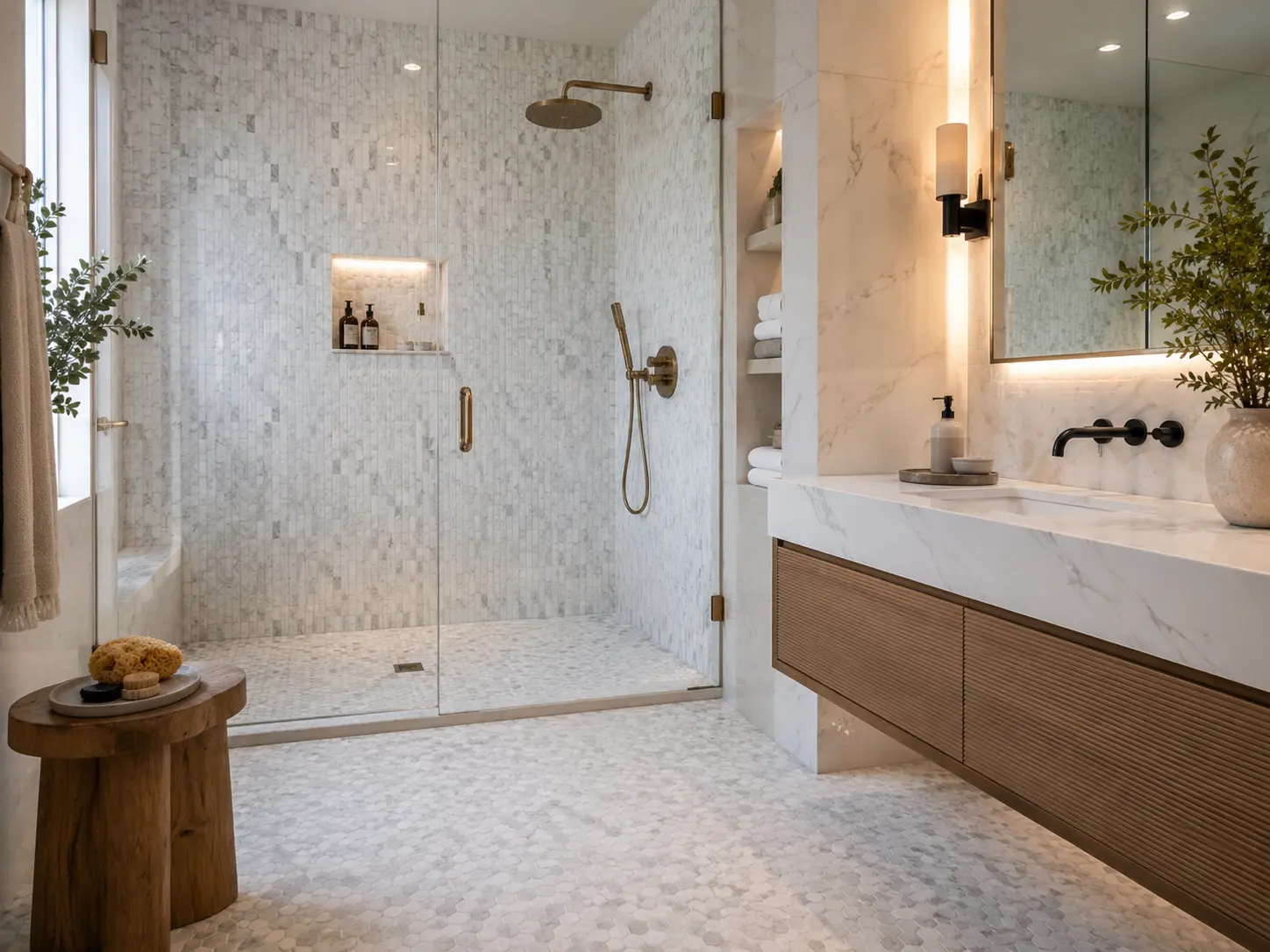
Hexagon marble mosaic is one of the most flexible choices for modern interiors. It feels geometric but not overly decorative. It works well on bathroom floors, shower floors, spa rooms, powder rooms, and small entryways. Smaller hexagon mosaics can also create more grout joints, which may help traction in wet areas when combined with the right finish and installation method.
For buyers who want a clean but distinctive design, hexagon is often safer than a complex custom pattern. It gives visual interest without overwhelming the space. In bright bathrooms, white marble hexagon mosaics can make the floor look detailed but still calm.
Penny Round Marble Mosaic for Soft Curves
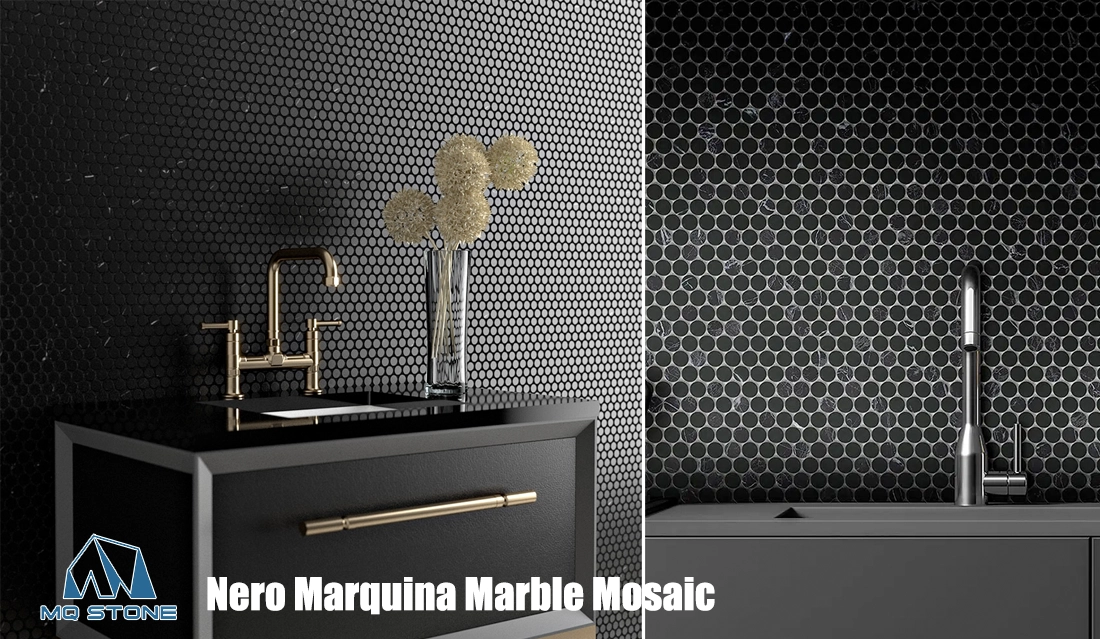
Penny round marble mosaic brings softness. Unlike herringbone or hexagon, it uses circular repetition to create a playful, gentle surface. It works well in bathroom floors, shower floors, niches, spa areas, and decorative wall panels. It is especially useful when the surrounding space has many straight lines and needs a softer visual counterpoint.
The buyer should remember that penny round mosaics have more grout lines. More grout lines can support traction, but they also require more cleaning. In hotel or commercial projects, maintenance planning matters. A beautiful floor that becomes difficult to maintain is not a design win; it is a future complaint wearing nice shoes.
Waterjet Marble Mosaic for Custom Luxury Projects
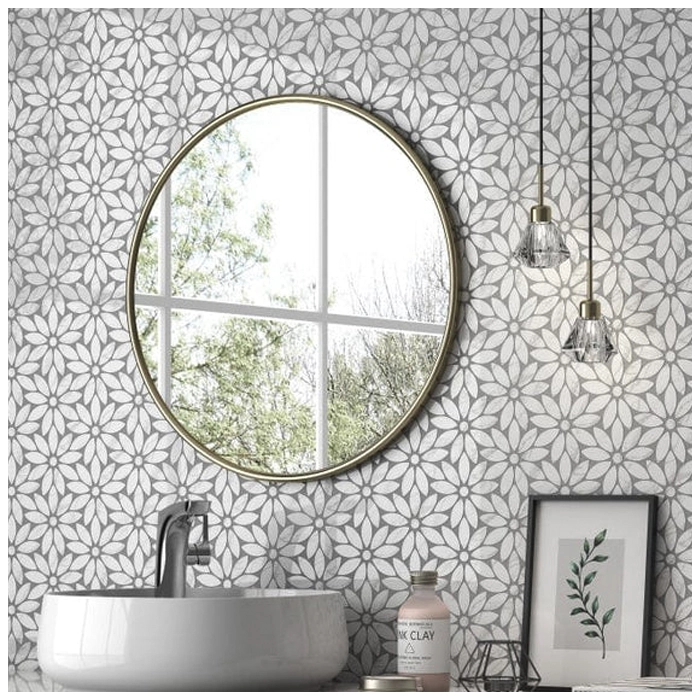
Waterjet marble mosaic is the best choice when a project needs a unique identity. It can create floral patterns, geometric panels, brand-specific motifs, luxury medallions, borders, and artistic wall or floor compositions. Hotels, villas, retail stores, luxury bathrooms, and reception areas often use waterjet designs because they feel custom and memorable.
For standard residential projects, sheet-mounted patterns may be more efficient. For high-end projects, waterjet mosaic can create a stronger design signature. Buyers should confirm cutting accuracy, pattern drawing, material matching, sheet layout, packaging, and installation sequence before ordering custom work.
|
|
|

Walls vs Flooring: How to Design for Different Surfaces
Marble Mosaic Walls: Decorative Impact With Lower Wear Risk
Walls allow more freedom than floors because they do not carry foot traffic. A marble mosaic wall can use polished finishes, delicate patterns, mixed colors, or more dramatic veining. Common applications include shower walls, vanity walls, kitchen backsplashes, fireplace surrounds, restaurant feature walls, retail display walls, and hotel corridor accent panels.
For buyers looking specifically for natural stone mosaic surfaces, 大理石モザイク collections are useful because they include patterns designed for both decorative walls and functional floors. The key is matching the product to the actual surface condition. Wall mosaics can prioritize visual richness, while floor mosaics must prioritize safety and durability.
Marble Mosaic Flooring: Beauty With Technical Requirements
Flooring is more demanding. Marble mosaic flooring must handle foot traffic, cleaning, moisture, abrasion, grout wear, and slip resistance. For bathrooms and showers, waterproofing and drainage are essential. For commercial floors, cleaning frequency and traffic level must be considered. For hotel floors, consistent sheet alignment and grout quality affect both appearance and maintenance.
Slip resistance is especially important in wet areas. Small mosaic pieces can offer more grout joints than large polished stone, but this does not automatically make every mosaic safe. Finish, chip size, grout width, surface texture, and actual test data all matter. For bathroom floors, honed or tumbled finishes are usually safer than highly polished finishes.
Shower Floors: Why Smaller Mosaics Often Work Better
Shower floors need slope, drainage, waterproofing, grout control, and slip review. Smaller mosaics often work better because they can follow the slope toward the drain more easily than large tiles. The extra grout joints may also improve foot traction, especially when the stone finish is honed or tumbled.
| Surface Area | Recommended Mosaic Size | Finish Direction | Main Risk |
|---|---|---|---|
| シャワーフロア | 1–2 inch pieces | Honed or tumbled | Slippery surface or poor drainage |
| Bathroom floor | 1–4 inch pieces | Honed or low-gloss polished | Staining and grout maintenance |
| シャワーの壁 | Sheet-mounted pattern | Polished or honed | Waterproofing failure |
| Kitchen backsplash | Sheet-mounted pattern | Polished or honed | Grease and staining |

Material Selection: Which Marble Works Best for Mosaic?
Carrara Marble Mosaic for Soft Classic Interiors
Carrara marble mosaic is suitable for classic bathrooms, kitchen backsplashes, shower walls, and floors where a soft grey vein pattern is desired. It is elegant without being too dramatic, making it one of the safest options for residential interiors and boutique hotel bathrooms.
A product such as White Carrara Marble 3D Mosaic can be used when the design needs more texture and depth than a flat mosaic pattern. Three-dimensional mosaic surfaces can create shadow, movement, and tactile detail, especially on walls where cleaning pressure is lower than on floors.
Calacatta and White Marble Mosaic for Brighter Luxury
Calacatta-style marble mosaic works when the project needs stronger contrast and more visible veining. It can be used in high-end bathrooms, feature walls, vanity backsplashes, and luxury shower areas. However, strong veining must be managed carefully because small mosaic pieces can break large veins into many fragments. This can either create artistic movement or visual noise, depending on the pattern.
White marble mosaic is often preferred for bathrooms because it reflects light and keeps the room feeling clean. For small bathrooms, white or light grey mosaics help avoid a cramped feeling. For large bathrooms, a mixed white and dark marble mosaic can create more drama.
Round and Black-and-White Mosaic for Pattern Personality
Round mosaic patterns are useful when a space needs softness. They can work in bathroom floors, shower floors, powder rooms, and decorative wall niches. A フリー・ラウンド・モザイク・パターン can add movement without relying on sharp geometry, making it a good option for spa-like spaces and softer residential interiors.
For stronger contrast, 白黒モザイク designs can create a timeless graphic effect. They work well in powder rooms, hotel bathrooms, entry floors, restaurant walls, and traditional-meets-modern interiors. The buyer should control the surrounding materials carefully, because black-and-white patterns already have strong visual energy.
Color, Grout, and Layout: Details That Decide the Final Look
Choosing Grout Color for Marble Mosaic
Grout color can change the entire personality of marble mosaic. White grout creates a soft and seamless look, but it may stain more easily. Grey grout is more practical and often hides dirt better. Dark grout creates contrast and makes the pattern more graphic, but it can look busy and may stain light marble if not tested properly. Matching grout creates a calm luxury effect, while contrasting grout creates a decorative effect.
For light marble mosaics, buyers should test grout before full installation. Some dark grouts can discolor porous natural stone edges. Sealing before grouting may be necessary depending on the stone and grout type. This is one of those tiny details that becomes a giant problem if ignored.
Layout Direction and Room Perception
Pattern direction changes how a room feels. Herringbone can visually lengthen a wall or floor. Vertical strips can make a shower wall feel taller. Basketweave adds classic rhythm. Hexagon creates modern geometry. Borders can define zones around bathtubs, mirrors, or floors. Custom waterjet patterns can turn a surface into artwork.
For small bathrooms, avoid too many competing patterns. For hotel bathrooms, use one main mosaic and one supporting stone surface. For kitchens, match backsplash scale to cabinet style and countertop movement. If the countertop already has strong veining, the mosaic should be quieter. If the countertop is plain, the mosaic can carry more visual detail.
Sheet Size, Chip Size, and Thickness
| 仕様 | Common Range | Why It Matters |
|---|---|---|
| シートサイズ | 300×300 mm / 12×12 inch | Speeds installation and layout planning |
| チップサイズ | 10–100 mm depending on pattern | Affects detail, grip, and cleaning |
| 厚さ | 8–10 mm common | Must match adjacent tile or stone |
| Grout joint | 1.5–3 mm typical | Affects traction and maintenance |
| 終了 | Polished, honed, tumbled | Affects appearance and slip feel |
Installation Planning: What Buyers Must Confirm Before Ordering
Substrate Preparation and Flatness
Marble mosaic reveals poor substrate preparation quickly. Because the pieces are small, they follow surface irregularities. If the wall or floor is uneven, the pattern may look wavy, grout lines may become inconsistent, and some pieces may loosen over time. Before installation, the substrate should be clean, stable, flat, and suitable for tile setting.
Floor mosaics require more attention because foot traffic adds pressure. Shower floors require slope toward the drain. Walls require proper bonding and waterproofing in wet areas. If the substrate is wrong, even expensive mosaic will look cheap after installation.
Waterproofing for Bathrooms and Showers
Bathrooms and showers need serious waterproofing. Marble mosaic itself is not a waterproofing system. The wall or floor assembly behind it must be properly prepared with suitable membranes, corner treatment, drain details, and moisture control. This is especially important for shower floors and shower walls.
For installation planning, buyers and contractors should review an installation guide of natural marble mosaics before the project begins. Installation failure is often not caused by the stone itself, but by wrong substrate preparation, incorrect mortar, poor slope, missing waterproofing, or careless grouting.
Adhesive, Mortar, and Moisture-Sensitive Stone
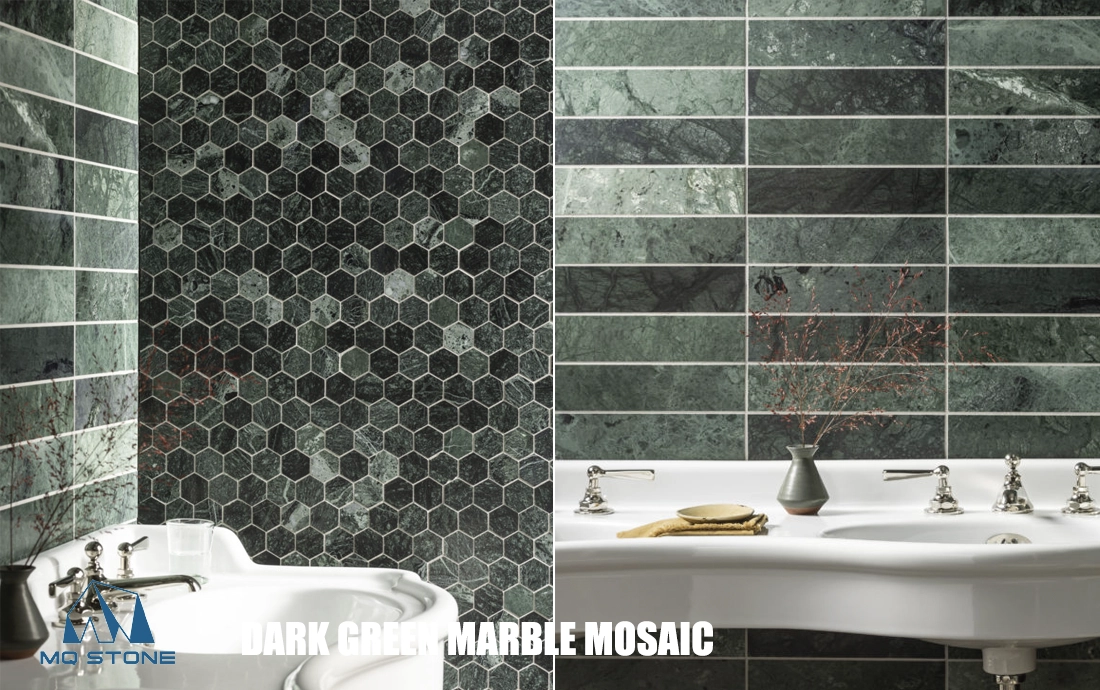
Light-colored marble mosaics should usually be installed with white setting material to avoid shadowing or discoloration. Some natural stones are moisture-sensitive and may discolor, curl, or show stains if the wrong adhesive is used. Buyers should test adhesive compatibility before full installation, especially for white marble, green marble, and highly absorbent stones.
For wet areas, the installer should choose materials suitable for moisture exposure. For walls, sag resistance matters. For floors, coverage and bond strength matter. For mosaics, mortar thickness must be controlled so it does not squeeze through joints excessively and create cleaning problems.
Sealing and Maintenance After Installation
Most marble mosaics should be sealed, especially in bathrooms, kitchens, shower areas, and floors. Sealing helps reduce staining risk but does not make marble indestructible. Acidic cleaners, harsh chemicals, and poor maintenance can still damage marble surfaces. Use pH-neutral cleaners and avoid vinegar, lemon-based cleaners, or aggressive detergents.
Grout also needs care. More grout lines mean more cleaning responsibility. For hotels and commercial spaces, maintenance planning should be part of material selection. A pattern that looks amazing but requires unrealistic cleaning effort may not be the best long-term choice.
Marble Mosaic vs Ceramic, Porcelain, and Glass Mosaic
Marble Mosaic vs Ceramic Mosaic
Marble mosaic provides natural stone depth, unique variation, and luxury value. Ceramic mosaic is more consistent, usually easier to maintain, and often more cost-controlled. Choose marble when the design needs natural elegance and project value. Choose ceramic when the project needs simple maintenance and budget control.
Marble Mosaic vs Porcelain Mosaic
Porcelain mosaic is durable, low-absorption, and practical for wet areas. Marble mosaic has natural beauty and higher material character. For luxury bathrooms, villas, and boutique projects, marble has stronger visual value. For heavy-use public wet areas, porcelain may be more forgiving.
Marble Mosaic vs Glass Mosaic
Glass mosaic is reflective, colorful, and often used in pools, backsplashes, and decorative accents. Marble mosaic feels more architectural and timeless. Choose glass for sparkle and color. Choose marble for natural texture, soft veining, and premium stone character.
| 素材 | Best Advantage | Best Use | Main Limitation |
|---|---|---|---|
| 大理石モザイク | Natural luxury and depth | Bathrooms, walls, premium floors | Needs sealing and care |
| Ceramic Mosaic | Cost control and consistency | Budget bathrooms and kitchens | Less natural value |
| Porcelain Mosaic | Durability and low absorption | Wet floors and commercial areas | Less natural variation |
| ガラスモザイク | Reflection and color | Pools, backsplashes, accents | Can feel less architectural |
Common Mistakes When Designing Marble Mosaic Walls and Floors
Choosing Pattern Before Application
A wall pattern does not automatically work on a floor. Floors need slip review, cleaning logic, grout durability, and abrasion consideration. Walls can use more delicate or polished patterns because they do not receive foot traffic.
Ignoring Slip Resistance on Floors
Wet floors need safety planning. Finish, grout joint width, chip size, and product data should be reviewed before choosing marble mosaic for shower floors, bathroom floors, or commercial wet areas.
Using the Wrong Grout Color
Wrong grout color can make expensive marble look messy. Very dark grout may stain light marble if not tested. Very white grout may look beautiful at first but require more maintenance. Always test before installation.
Forgetting Sealing and Maintenance
Natural marble needs care. Sealing, pH-neutral cleaning, and grout maintenance are part of the long-term performance plan. Buyers should not treat marble mosaic like a maintenance-free plastic panel.
Buying Without Sheet Layout Approval
Sheet-mounted mosaics must be consistent. If sheet alignment varies, the finished wall or floor may show visible grid lines. For premium projects, sample approval and batch consistency are essential.

How to Choose a Marble Mosaic Supplier or Manufacturer
What a Reliable Marble Mosaic Supplier Should Provide
A reliable supplier should provide material options, pattern samples, sheet-mounted samples, thickness details, mesh backing quality, finish options, packing photos, export documents, and installation guidance. For custom projects, they should also support waterjet cutting, mixed-color patterns, borders, and batch consistency.
Before placing a project order, buyers should evaluate whether the company has real production and export experience. Reviewing the background of a marble mosaic manufacturer can help confirm whether the supplier understands natural stone selection, pattern processing, quality control, and international project requirements.
When the project requires samples, technical support, or bulk quotation, speaking directly with a professional marble mosaic supplier can reduce design uncertainty before production. A good supplier should help you choose the correct pattern, finish, grout direction, and application logic rather than simply sending a catalog and disappearing into the mist.
Supplier Evaluation Scorecard
| Evaluation Factor | 重量 | What to Check |
|---|---|---|
| Pattern capability | 20% | Standard and custom designs |
| Material selection | 15% | Carrara, Calacatta, Thassos, black marble |
| Sheet consistency | 20% | Mesh, chip size, thickness, alignment |
| Wet-area suitability | 15% | Finish, sealing, slip data where needed |
| Custom production | 15% | Waterjet, mixed colors, borders |
| Packing quality | 10% | Cartons, crates, corner protection |
| Communication | 5% | Sample and project response |
Practical Design Recommendations by Space
For Bathroom Floors
Choose small-format honed or tumbled mosaics with practical grout spacing, waterproofing, and slip-resistance review. Avoid overly polished surfaces in wet areas. Use a grout color that balances appearance and maintenance.
For Shower Walls
Choose herringbone, hexagon, basketweave, or waterjet panels depending on the design style. Waterproofing, white mortar, sealing, and grout planning are essential. A shower wall can use more decorative patterns than a shower floor.
For Kitchen Backsplashes
Choose polished or honed marble mosaic with stain-resistant sealing and practical grout color. If the countertop has strong veining, use a calmer mosaic. If the countertop is plain, the backsplash can carry more pattern.
For Hotel and Villa Projects
Choose custom marble mosaic or mixed marble patterns with sample approval, batch consistency, and factory-level QC. For high-end projects, confirm the entire sheet layout and packing method before bulk shipment.
For Commercial Flooring
Choose patterns and finishes based on traffic, cleaning, slip resistance, and long-term maintenance. Beautiful flooring is valuable only when it remains safe, cleanable, and stable under real use.
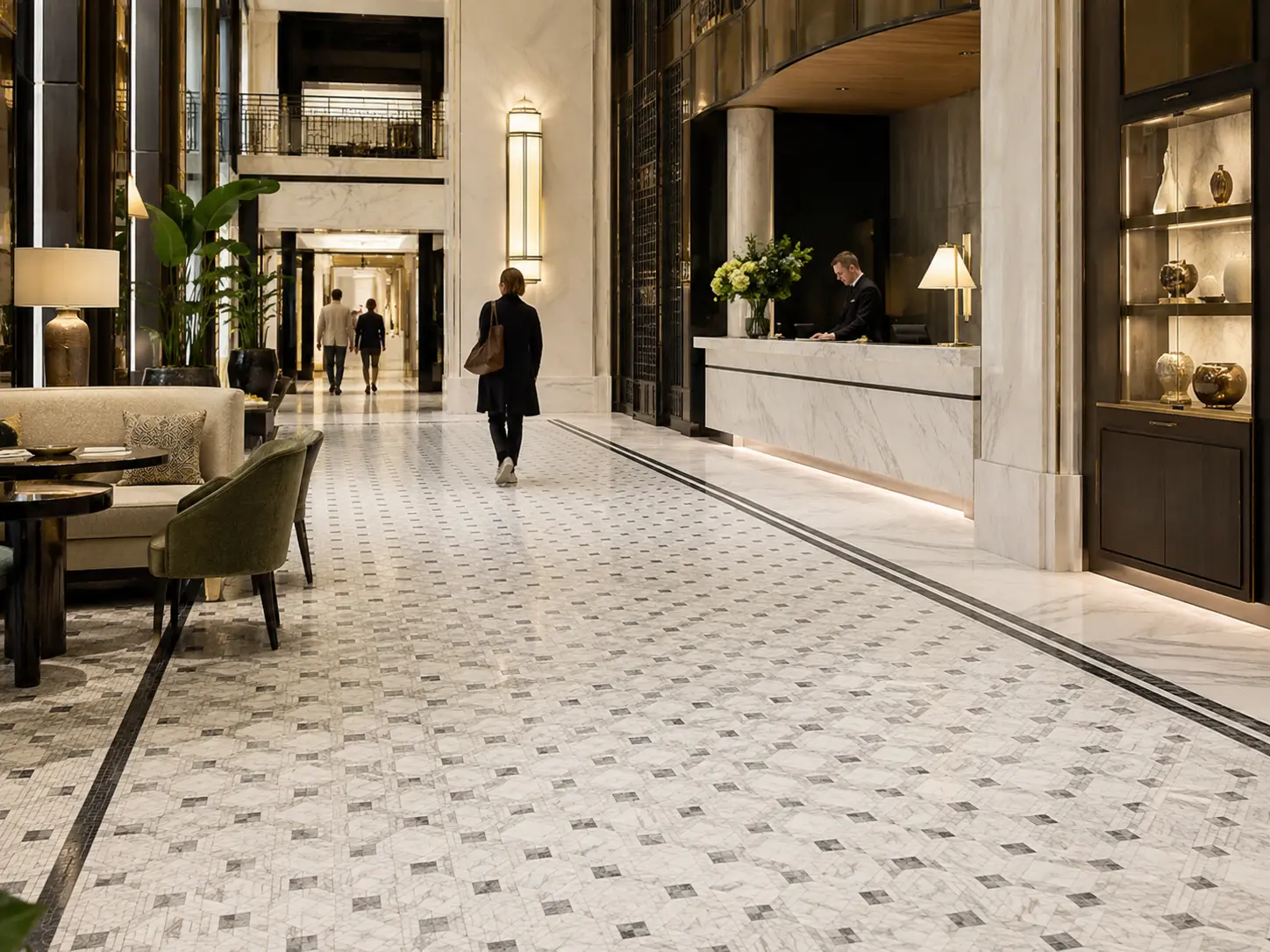
Final Design Recommendation: Treat Marble Mosaic as a Surface System
Marble Mosaic is not just a decorative tile. It is a complete surface system involving natural stone selection, pattern scale, sheet quality, grout color, substrate preparation, waterproofing, sealing, and maintenance. When these elements work together, marble mosaic creates walls and floors that feel detailed, premium, and long-lasting.
If you want a classic bathroom, choose Carrara or basketweave. If you want modern geometry, choose hexagon. If you want softness, choose penny round. If you want luxury identity, choose waterjet or mixed marble. If you need wet-area flooring, prioritize finish, grout, slope, and slip review. The best marble mosaic design is not simply the prettiest pattern; it is the pattern that fits the space, performs in real use, and can be installed correctly.
よくあるご質問
1. Is Marble Mosaic good for bathroom floors?
Yes, Marble Mosaic can be a good choice for bathroom floors when the correct finish, chip size, grout spacing, waterproofing, and sealing method are used. Small-format mosaics can follow floor slopes more easily than large tiles and may provide more grout joints for traction. However, buyers should avoid highly polished surfaces in wet zones unless slip performance has been properly reviewed. Honed or tumbled marble mosaics are often safer for bathroom floors.
2. Can Marble Mosaic be used in shower walls?
Yes, Marble Mosaic can be used in shower walls and is popular for luxury bathrooms, spa areas, hotel showers, and decorative niches. The most important requirements are proper waterproofing behind the tile, suitable white mortar for light marble, correct grout selection, sealing, and regular maintenance. Shower walls can usually use more decorative patterns than shower floors because they do not receive foot traffic, but moisture protection remains essential.
3. Is Marble Mosaic slippery?
Marble Mosaic can be slippery or safe depending on the finish, chip size, grout joint width, surface texture, and installation environment. Smaller mosaics often provide more grout joints, which may improve traction compared with large polished stone pieces. For shower floors and bathroom floors, honed or tumbled finishes are generally safer than highly polished finishes. Buyers should review product suitability and slip-resistance data when the mosaic will be used in wet walking areas.
4. What grout color is best for Marble Mosaic?
The best grout color for Marble Mosaic depends on the design goal and maintenance expectation. White or matching grout creates a softer and more seamless appearance, while grey grout is often more practical for hiding dirt. Dark grout creates strong contrast but may make the pattern look busier and can stain light marble if not tested properly. For premium installations, buyers should test grout color on a sample sheet before full installation.
5. How do I choose a reliable Marble Mosaic supplier?
To choose a reliable Marble Mosaic supplier, check whether the supplier can provide material samples, pattern samples, sheet-mounted samples, consistent chip size, stable thickness, strong mesh backing, custom production capability, packing photos, export documents, and installation guidance. For hotel, villa, or commercial projects, the supplier should also support batch consistency, waterjet cutting, mixed marble patterns, and clear communication before bulk production.
References
1. Handbook for Ceramic, Glass, and Stone Tile Installation, Tile Council of North America, TCNA Technical Publication.
2. ANSI A108/A118/A136.1: American National Standards for the Installation of Ceramic Tile, American National Standards Institute, Tile Installation Standards.
3. ANSI A137.1: American National Standard Specifications for Ceramic Tile, American National Standards Institute, Tile Performance Standards.
4. Dimension Stone Design Manual, Natural Stone Institute, Natural Stone Technical Reference.
5. Natural Stone Maintenance Guide, Natural Stone Institute, Stone Care and Maintenance Publications.
6. Interior Design Materials and Specifications, Lisa Godsey, Fairchild Books.
7. Architectural Graphic Standards, American Institute of Architects, Wiley.
8. Stone in Architecture: Properties, Durability, Fourth Edition, Siegfried Siegesmund and Rolf Snethlage, Springer.
Strategic Insight: How Buyers Should Specify Marble Mosaic Walls and Flooring
What should buyers decide first?
Buyers should start with the application area before choosing a pattern. A marble mosaic shower floor, bathroom wall, kitchen backsplash, hotel feature wall, and commercial floor each require different thinking about finish, grout, slip resistance, waterproofing, and maintenance.
Why does pattern choice matter?
Pattern controls both visual style and practical performance. Herringbone adds movement, basketweave creates classic luxury, hexagon supports modern geometry, penny round softens the space, and waterjet mosaic delivers custom project identity. The best pattern is the one that matches the room size, lighting, traffic level, and cleaning expectation.
How should buyers compare material options?
Carrara marble mosaic is strong for soft classic bathrooms, white marble mosaic works well in bright interiors, black-and-white mosaic creates graphic contrast, and custom mixed marble patterns suit villas, hotels, and boutique commercial spaces. Material selection should always be checked with actual samples and sheet layout approval.
Which option is safer for wet areas?
For shower floors and bathroom floors, smaller honed or tumbled mosaics are often safer than large polished pieces because they can follow drainage slopes and provide more grout joints. However, buyers should still verify slip performance, waterproofing details, sealing requirements, and grout maintenance.
Buyer consideration: The 2026 marble mosaic market is moving toward custom waterjet patterns, mixed natural stones, expressive bathroom surfaces, and project-specific sheet-mounted solutions. Buyers who confirm samples, mesh backing, chip alignment, installation method, and supplier capability before ordering will reduce risk and improve final design quality.