Natural Quartzite Table Tops for Dining Tables, Coffee Tables, and Premium Interiors
I still remember the first time I ran my hand along a pale quartzite slab in a fabricator’s yard outside Xiamen. The morning light came from the side, low and silver, and one vein disappeared into the stone before returning near the edge like a river going underground.
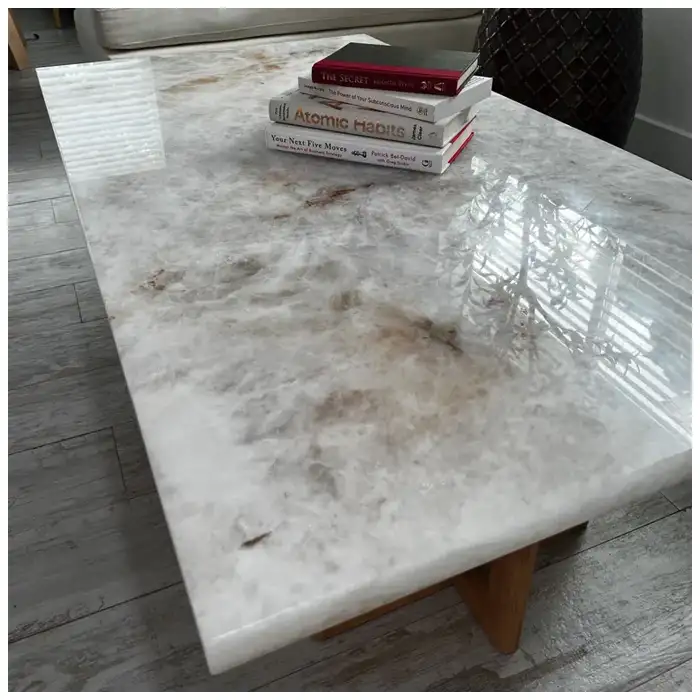
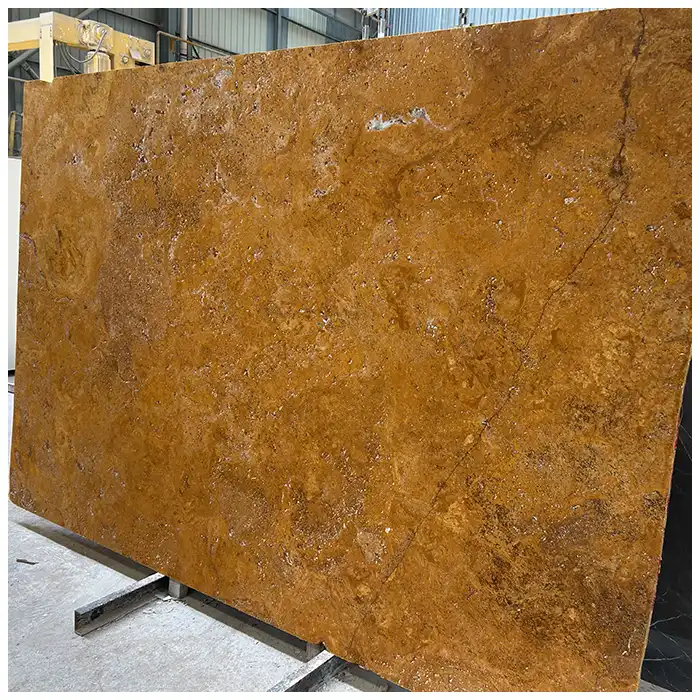
The surface felt cool, but not lifeless. Tiny quartz crystals caught the light under the polish, and a faint golden impurity moved through the slab in thin threads. This stone has been waiting for millions of years… and it did not feel impatient.
That memory came back this week while I was reading new design coverage around collectible stone furniture, sculptural tables, and interiors where a single natural material anchors the room. The trend is not only about heavy tables. It is about whether the surface has depth when someone sits beside it, touches the edge, and sees the light shift across dinner.
Quartzite belongs in that conversation because it is not merely decorative. It begins as sandstone rich in quartz, then heat and pressure recrystallize the grains until the stone becomes dense, hard, and often translucent at the edges. The veins will tell you… if you take the time to read them.
Why Natural Quartzite Table Tops Feel Different From Printed Surfaces
A printed surface can copy a color story, but it cannot copy mineral depth. In quartzite, the pattern runs through the slab because the stone was made by pressure, fluid movement, and mineral change. When I look at the side of a table edge, I can often see whether the movement continues below the polished face.
This is where Natural Quartzite vs Marble-Look Sintered Stone: The Definitive Comparison for Premium Interiors becomes the real anchor. A sintered slab may be useful in many projects, but a dining table asks for touch, closeness, and long viewing time. True luxury is something you never get tired of looking at.
I have seen designers choose manufactured stone for a table because the sample looked clean. Then they saw real quartzite under side light and changed direction. The surface did not shout. It simply had more depth, and the room stopped feeling flat.
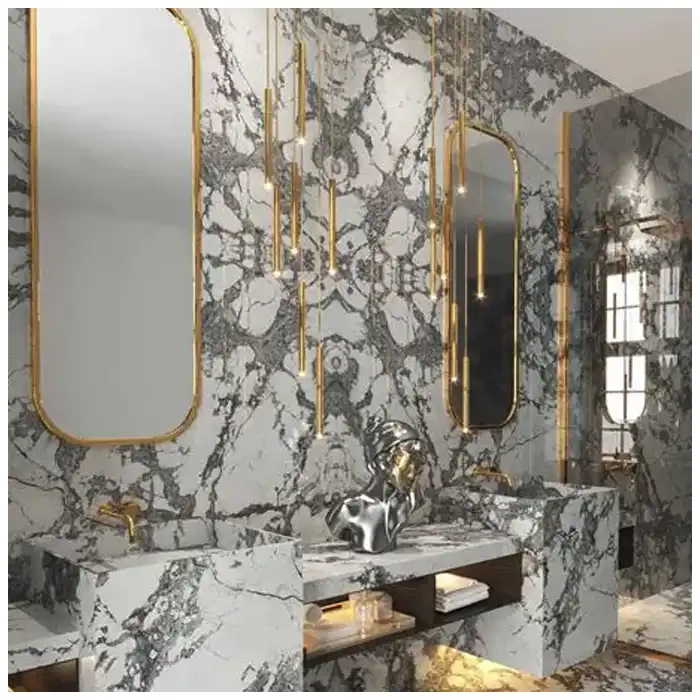
When I inspect Aqua Vulcan Quartzite Tables, I pay attention to how the blue-green movement travels across the top and down the edge. Those colors come from mineral impurities and geological conditions, not from a printed image sitting on a surface.
Reading Veins, Light, And Edge Thickness Before Fabrication
The veins will tell you… where the table wants its long direction. A calm linear movement may suit a long dining table. A circular or broken movement may feel better on a coffee table where the eye can travel around the top.
For natural quartzite table tops, edge thickness is not only a structural note. It changes the way the stone reads. A 20 mm edge can feel refined and light, while a 30 mm edge gives more shadow and a stronger visual line. Built-up edges need careful miter work, or the table starts to look forced.
I once placed a translucent quartzite sample upright against a warehouse window and watched the edge turn honey-white. That glow came from light moving through quartz-rich areas in the stone. Then, the backlight turns on. Suddenly, a quiet slab becomes a different object.
A table using Dover White Quartzite Tables needs that kind of light review because pale quartzite can look soft in one angle and icy in another. I do not decide from one photo. I walk around it.
Dining Tables, Coffee Tables, And Base Support
A stone table is not only a slab with legs. The base decides whether the top feels balanced, safe, and calm. If the support points are too far inward, the edge may feel visually heavy and physically risky. If the base is too bulky, the stone loses its grace.
The support article Stone Table Supplier Guide for Marble Dining Tables, Coffee Tables, and Custom Bases is useful here because furniture stone needs different thinking from wall panels. People lean on tables. They move chairs around them. They touch the edge every day.
For dining tables, I usually want the base to support the top without interrupting leg room. For coffee tables, I look harder at corner radius, edge softness, and whether the table can be moved safely during installation. This stone has been waiting for millions of years… but the installer still needs a practical lifting plan.
An طاولة جانبية من الكوارتزيت الأخضر الأمازونيت can carry a small room with color, but the base must respect the top’s visual weight. If the green is lively and the base is too decorative, the table becomes noisy.
Quartzite Table Planning Notes
| Decision Point | What I Check | Practical Guidance | Design Risk |
|---|---|---|---|
| Top thickness | 20 mm, 30 mm, or built-up edge | Match thickness to table size and base strength | A thin top can look weak on a large base |
| Base support | Support spread and contact points | Avoid long unsupported overhangs on heavy tops | Edge stress and uncomfortable visual weight |
| Vein direction | Main movement from seated height | Orient long veins with the table length when possible | The table feels visually cut in half |
| Light behavior | Side light, overhead light, and edge translucency | Review samples under the final interior light temperature | The selected slab looks dull after installation |
| Edge detail | Small bevel, radius, or shaped profile | Keep touch comfort and chip resistance in balance | A sharp edge feels unfriendly in daily use |
The Hard-Won Lesson: A Beautiful Slab Can Still Become An Awkward Table
A private dining room once selected a pale quartzite slab from one dramatic overhead photo. Nobody checked the stone from seated height, and the base drawing left a 420 millimeter unsupported overhang at both short ends. After installation, the strongest vein sat under the chair line instead of the room view, and the owner asked why a costly table felt nervous every time someone leaned on it.
The Lesson: Review every table slab from seated height and approve the base support before cutting the top.
What Quartzite Offers A Coffee Table That Sintered Stone Cannot Repeat
A coffee table is viewed from above, from the sofa, from the side, and sometimes from the floor when someone is arranging books or flowers. That makes depth important. A flat pattern can look fine in a catalogue and lifeless in the room.
The guide Luxury Stone Table Tops: Color, Edge, Light, and Base Details Before Production connects well with this point because the table decision is never only about color. Edge, base, reflection, and viewing distance all matter.
Some quartzite slabs hold pale clouds inside the body of the stone. Others carry iron-rich gold lines, smoky grey rivers, or green mineral traces that shift when the light crosses them. This is not decoration. This is geology.
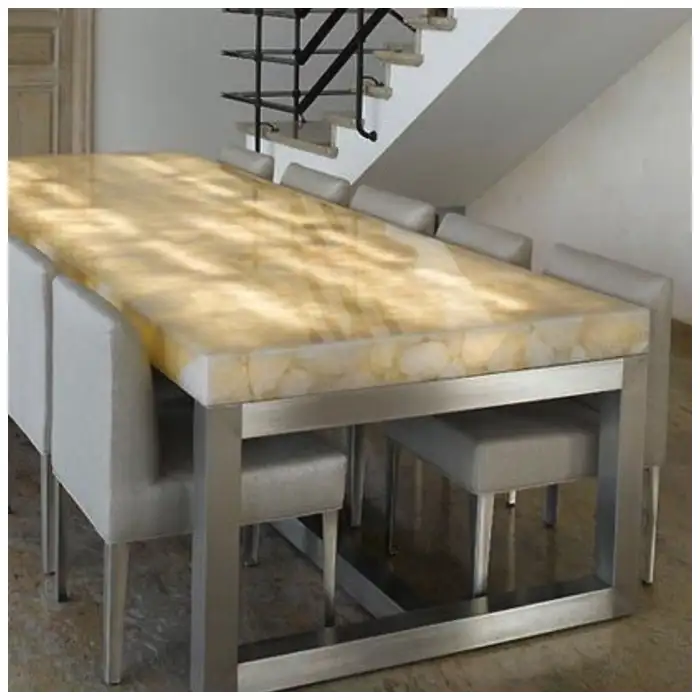
For projects comparing real stone with manufactured alternatives, I return again to Natural Quartzite vs Marble-Look Sintered Stone: The Definitive Comparison for Premium Interiors. The comparison is not an insult to sintered stone. It is a question of where the project needs authenticity, depth, and lasting visual interest.
How I Choose The Slab For A Dining Table
I start by asking where people will sit. A slab that looks dramatic from the entrance may feel too busy at seated height. I have leaned over many table tops and watched a vein line land exactly where plates, glasses, and hands will sit.
For a long table, I prefer movement that travels with the length rather than fighting it. For a round table, I want the pattern to feel balanced from every seat. True luxury is something you never get tired of looking at, especially when dinner lasts three hours.
أ تاج محل كوارتزيت بلاطة can bring warmth without shouting. Its soft beige and cream movement often comes from mineral staining and recrystallized quartz that has been pressed and changed deep in the earth. It is gentle, but not empty.
The article Custom Stone Furniture: What Marble Dining Table Photos and Edges Reveal Before Production is still worth reading even when the material is quartzite. The photo logic is the same: check edge, light, scale, and base before fabrication begins.
Understanding Quartzite Furniture in Today’s Design Market
Why Designers Are Looking Back At Real Stone Furniture
Recent design coverage keeps returning to tactile materials, collectible objects, and furniture that feels permanent. Stone belongs in that conversation because it carries time. A table cut from real quartzite is not just patterned. It is a section of geological memory brought into human scale.
How Natural Material Value Shows Up Over Time
The first month is not the real test. The real test is whether the owner still stops to look at the table after years of use. The veins will tell you… whether the surface has enough variation to stay alive without becoming tiring.
What To Decide Before Fabrication
Before cutting, decide the table scale, thickness, edge, base contact, viewing direction, and lighting condition. Then choose the slab. Never reverse that order just because one photo looks seductive. Feel the edge.
FAQ of Luxury Natural Quartzite Tables
1. Are natural quartzite table tops better than sintered stone for luxury interiors?
They often feel richer in premium interiors because the mineral movement, edge depth, and light behavior run through the stone. Sintered stone can be practical, but it does not carry the same geological variation or long-viewing depth.
2. What thickness works best for a quartzite dining table?
Many dining tables use 20 mm or 30 mm quartzite, sometimes with a built-up edge for more visual weight. The best choice depends on table size, base support, edge profile, and handling plan. Large tops need careful structural review.
3. How should designers choose vein direction for a stone table?
For rectangular tables, long vein movement usually feels calmer when it follows the table length. For round or irregular tables, the slab should be studied from several seating positions. A good layout keeps movement balanced without forcing symmetry.
4. Can quartzite coffee tables be backlit?
Some quartzite has translucent areas, but not every slab is suitable for backlighting. Test the actual slab edge and body before promising glow. Onyx and some Cristallo-type stones usually carry light more clearly than dense quartzite.
5. What makes a quartzite table top feel authentic?
Authenticity comes from mineral depth, natural variation, edge continuity, and the way light moves inside the stone. A real slab does not repeat like a printed pattern. Small changes in vein, crystal, and tone make the table feel alive.
If A Stone Table Problem Appears On Site
First, photograph the table top, edge, base contact points, light condition, and any visible stress before moving the piece. Second, do not continue installation or final fixing until the issue is reviewed. Third, contact the supplier with the original slab photos, fabrication drawings, and inspection records so the team can compare the approved stone with the installed condition.
Quick-Reference Checklist for Quartzite Table Tops
- Review the slab from seated height before approving the table layout.
- Check vein direction against the table length, room entry, and main seating view.
- Confirm edge thickness, bevel, and touch comfort with a physical sample.
- Approve base contact points before cutting any heavy top.
- Test side light and overhead light on the actual slab or a large slab photo.
- Photograph the finished top, edge, and base before packing or installation.
Final Conclusion
Natural quartzite table tops belong in premium interiors when the table needs depth, memory, and a material presence that stays interesting at close range. The right slab must be chosen with light, vein direction, edge thickness, base support, and viewing height in mind.
I do not ask every project to use natural stone everywhere. I ask designers to know where authenticity matters. For a dining table, coffee table, or quiet luxury room, real quartzite can hold attention without performing. The veins will tell you when the slab is right, and I would rather let that quiet truth guide an MQ STONE project than force a surface the room will outgrow.

References
Dimension Stone Design Manual, Natural Stone Institute.
ASTM Stone Standards, ASTM International.
Natural Stone Technical Guidance, Stone Federation Great Britain.
Quartzite Material Notes, Natural Stone Institute.
Design Coverage on Collectible Stone Furniture, Architectural Digest.
Material And Furniture Design Coverage, Dezeen.
Interior Stone And Decorative Object Features, Elle Decor.
Structured Data General Guidelines, Google Search Central.