
Pink Onyx Table Top Design for Luxury Furniture

A pink onyx table brings translucent mineral layers within reach of the hand, which makes composition, edge, backing, support, and maintenance more visible than they are on a distant wall. The design must map the full slab, locate repairs, choose thickness and edge language, coordinate the base footprint, verify bearing, test optional light, plan transport, and set realistic care expectations. MQ STONE joins the stone’s mineral direction with furniture structure for dining tables, consoles, coffee tables, and occasional interior pieces.
Stone Dining Table Care for Marble and Quartzite
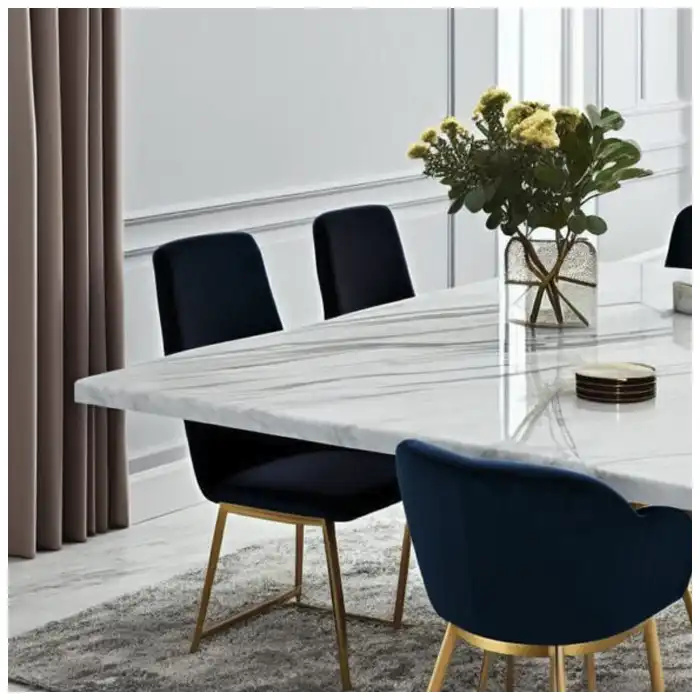
A natural stone table should age through use, not through avoidable chemical damage. Marble and quartzite can share a room while responding differently to acidic spills, abrasion, absorbed oils and surface treatments. Alex Zheng gives a direct care system built around the approved slab, finish and repair record. It covers daily cleaning, spill response, heat, tableware, inspection and the point where maintenance must stop and professional diagnosis must begin.
Sintered Stone Dining Table vs Natural Quartzite Table
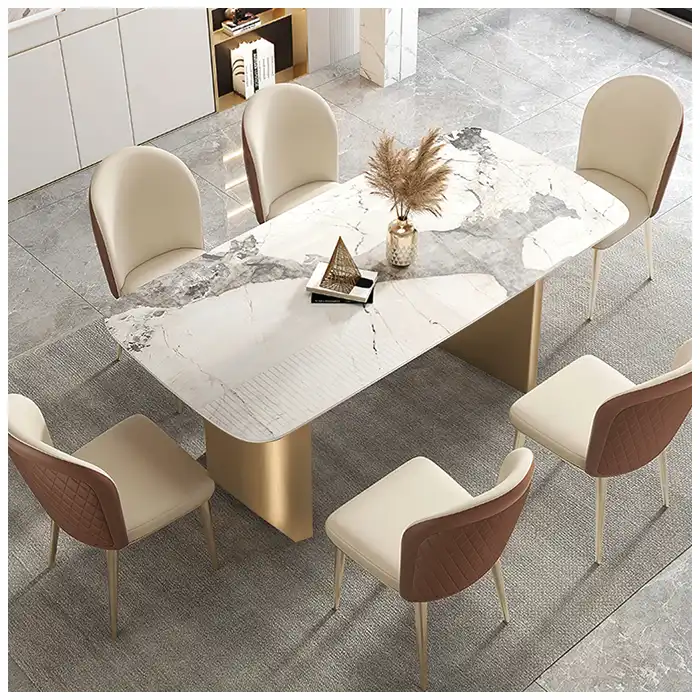
Sintered surfaces and natural quartzite can produce similarly pale or dramatic table silhouettes, yet they create those effects in different ways. Alex Zheng compares printed or designed faces with crystalline mineral bodies, paying particular attention to edge continuity, light response, UV exposure, support, fabrication rules, replacement logic, and the value of choosing an individual slab. The comparison helps designers decide whether a project needs controlled repetition or the irreplaceable identity of natural stone furniture. Physical edge samples keep the final choice honest.
Quartzite vs Marble Dining Table for Premium Interiors
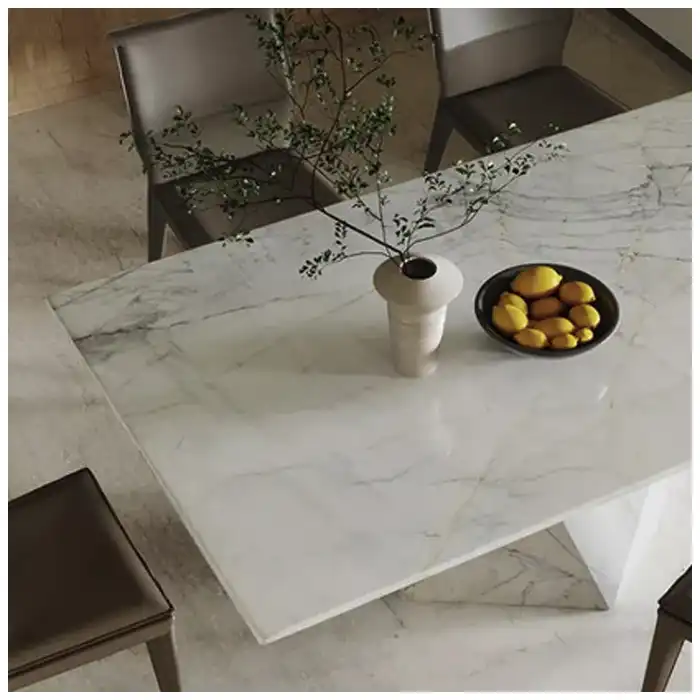
Quartzite and marble can both become remarkable dining tables, but they do not respond to wine, citrus, cutlery, edge impact, repair, and reflected light in the same way. The useful comparison starts with mineral composition, then moves through slab identity, table size, thickness, edge form, base support, and daily care. Alex Zheng offers a clear decision route for residences, restaurants, hotels, and custom furniture without reducing either natural material to a marketing label. Full-slab placement, finish testing, handling, and repair expectations remain part of the final judgment.
Natural Quartzite Console Table Design for Hotel and Residential Lobbies

A console table occupies a strange little territory. It is furniture, but it is also architecture because the eye reads it against a long wall, a floor joint, a mirror, and the first pool of light inside a room. Alex Zheng looks at natural quartzite consoles through that lens: how a slab’s mineral movement changes at the edge, why the base needs visual and physical discipline, and why a small lobby table can either settle a room or make it feel unresolved.
Labradorite Table Top: Orient the Flash Before Cutting

Labradorite is judged in motion. A slab can appear charcoal from one seat and release blue, green, or gold from another because light interacts with microscopic structures inside the feldspar. Alex Zheng explains how to record that directional flash, place the table outline on the full slab, protect expressive mineral areas from cutouts and repairs, choose an edge that preserves depth, and coordinate the base with the finished top. The result should not depend on one dramatic photograph; it should reward people moving naturally around the room.
Onyx Table Top Lighting Details for Luxury Interiors
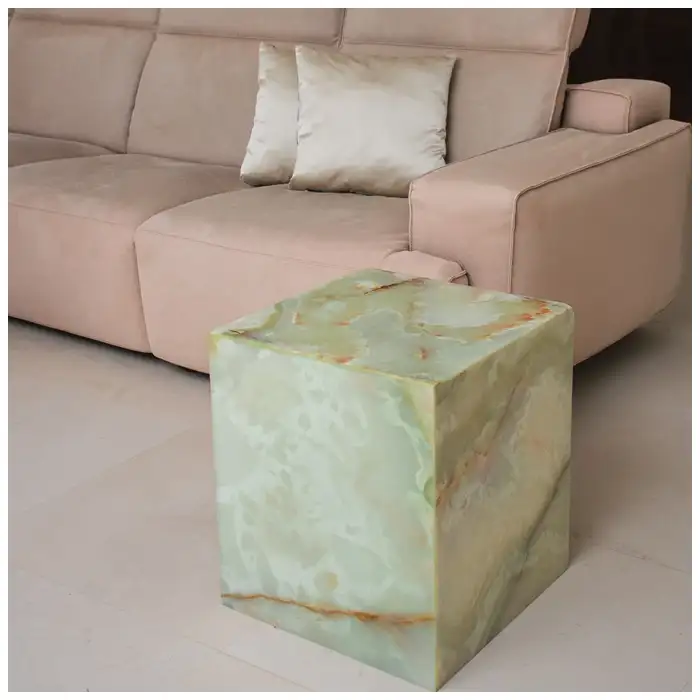
Onyx can glow like warm mineral water when the light is right, but poor lighting can turn the same table into a patchy object with dark bands and hot spots. A table top needs slab review, edge testing, diffuser planning, cable access, and service thinking before fabrication. This MQ STONE guide reads translucency, mineral banding, edge depth, and lighting details together so your team spends time shaping a lasting interior, not fighting uneven light after installation during opening week with guests nearby.
Stone Table Edge Detail for Luxury Dining Tables, Coffee Tables, and Natural Quartzite Tops
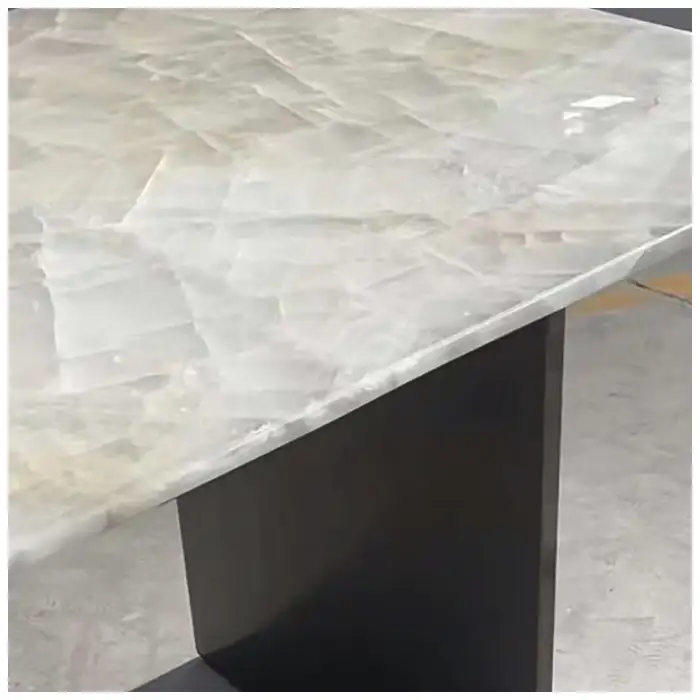
A stone table is judged by the slab first, but it is lived with through the edge. A sharp profile, heavy bevel, thin laminated rim, or soft bullnose can change how the stone reads under light and how the table feels to the hand. This MQ STONE guide reads vein movement, mineral depth, light behavior, edge detailing, and fabrication decisions together so your team spends time shaping a lasting interior, not second-guessing the slab after cutting begins and the room asks questions.