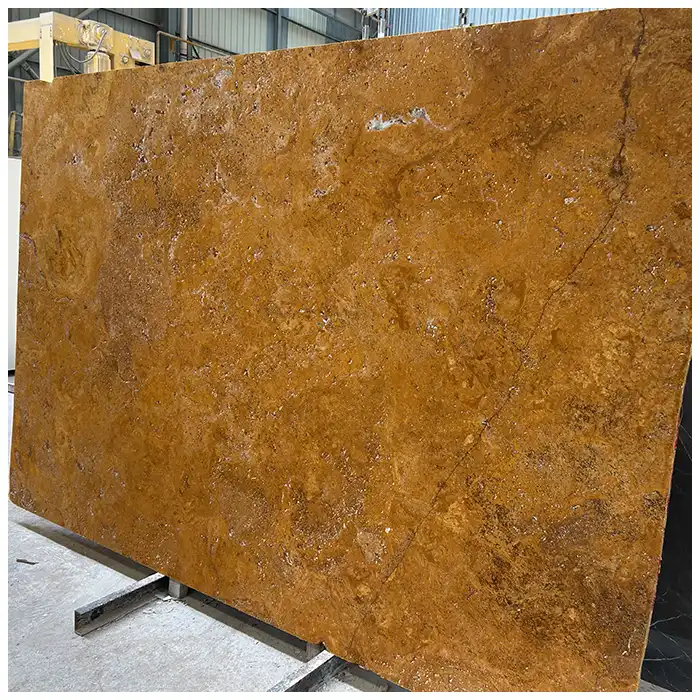
Arabescato Corchia Bathroom: Where Strong Grey Movement Helps, and Where It Crowds the Room
A pale Arabescato slab under bathroom light can look almost still until a mirror catches the grey lines and sends them across the room. Move half a step, and the pattern changes again. It does not need to cover every surface to make its point. In a bathroom, restraint is often the more difficult design decision.
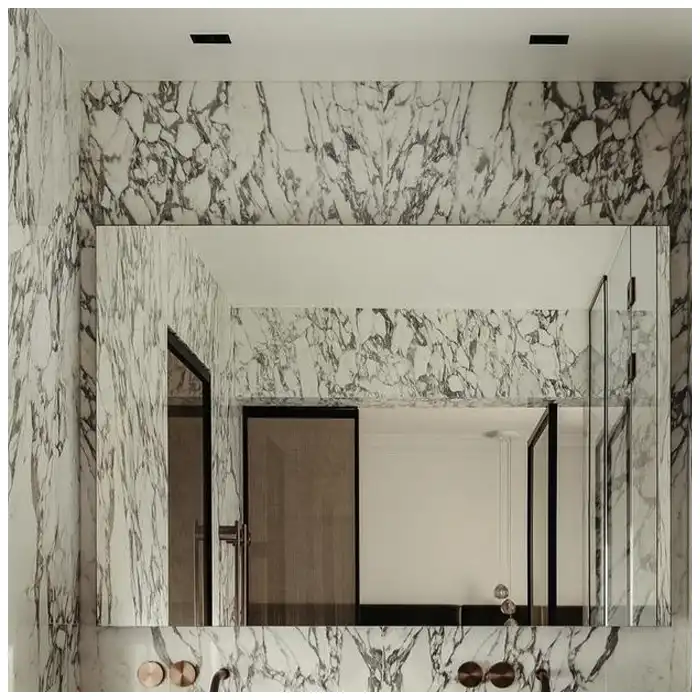
Read the Whole Slab Before You Read the Detail
Arabescato Corchia begins as limestone and becomes marble through heat, pressure, and recrystallisation. The pale calcite ground and darker mineral traces create movement that has depth through the body of the slab. That depth makes it more convincing than a printed imitation at close range. It also means every cut changes the composition.
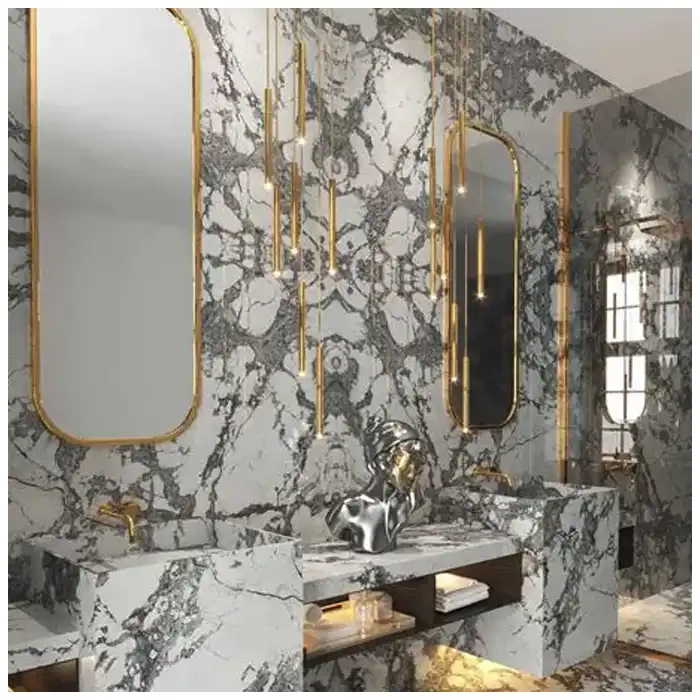
Begin with sightlines. From the door, what will the first view be? From the mirror, where will the reflected lines land? From the bath, does the wall behind the vanity feel like a frame or an argument? The sightlines show which wall can take stronger movement and which one should stay quiet enough to let fittings and light do their work.
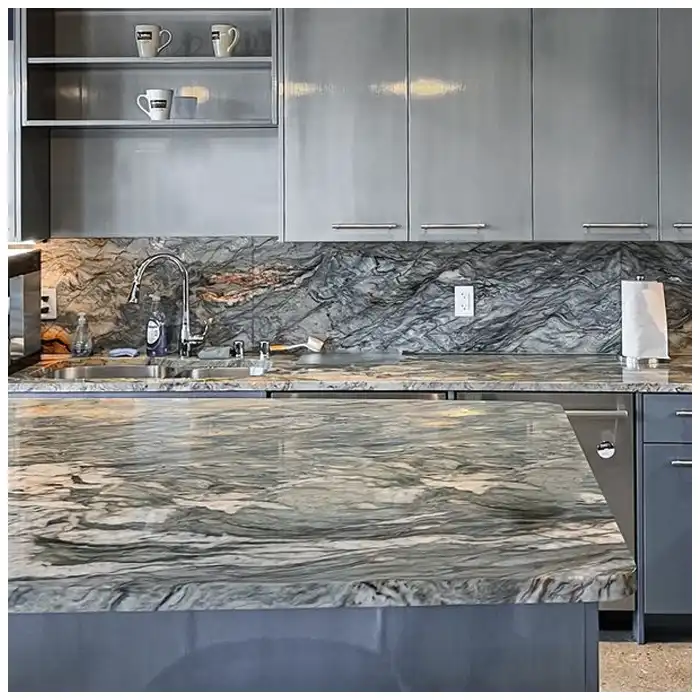
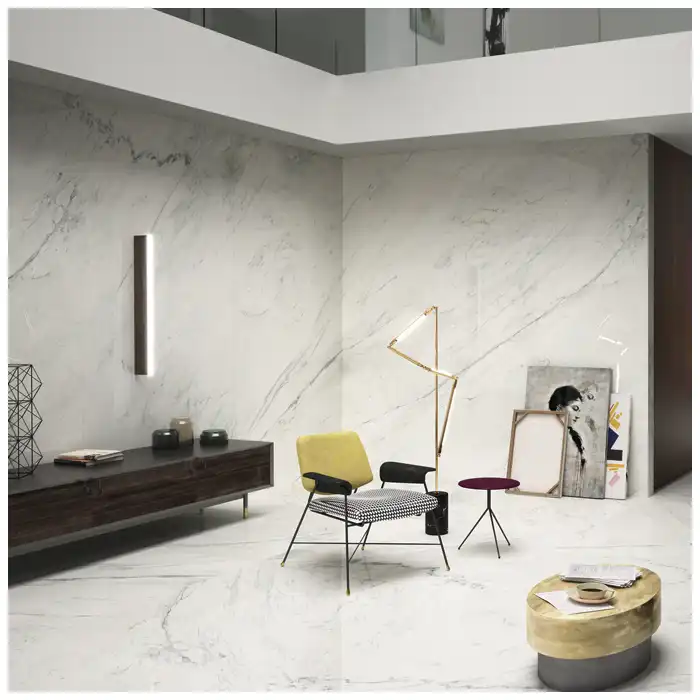
A large bookmatched wall can be memorable when the room gives it enough distance. A compact powder room may need one directional feature instead: a vanity splash, a framed panel, or a single broad wall. Small tiles cut from a strong slab can scatter the movement into pieces. That may be the right effect for a mosaic, but it is rarely the same as a calm slab surface.
How an Arabescato Corchia bathroom changes the design decision
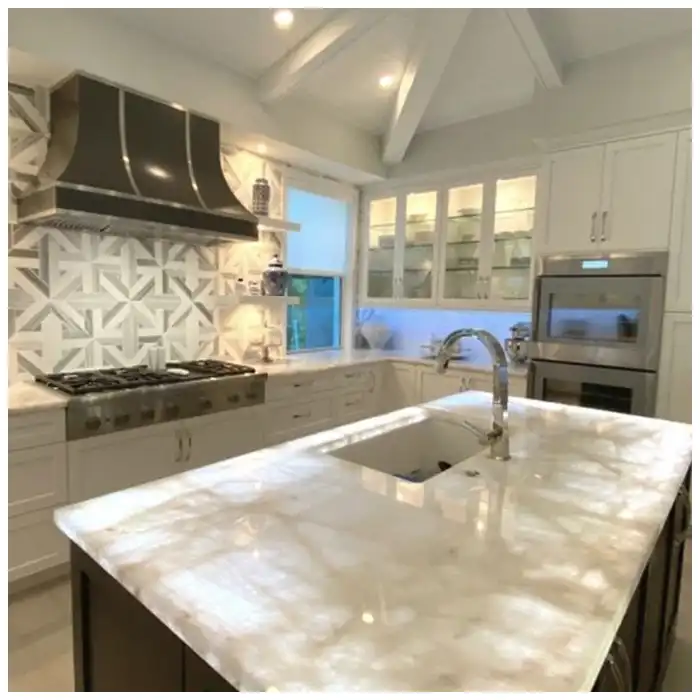
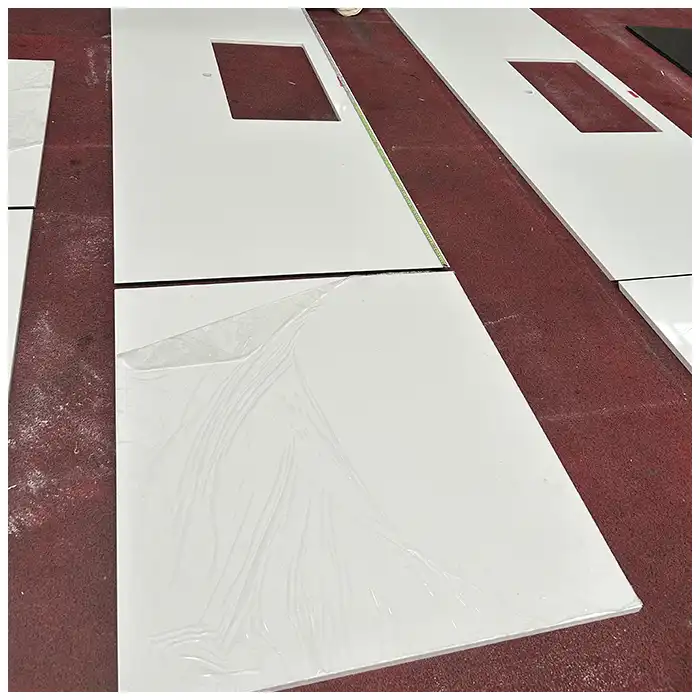
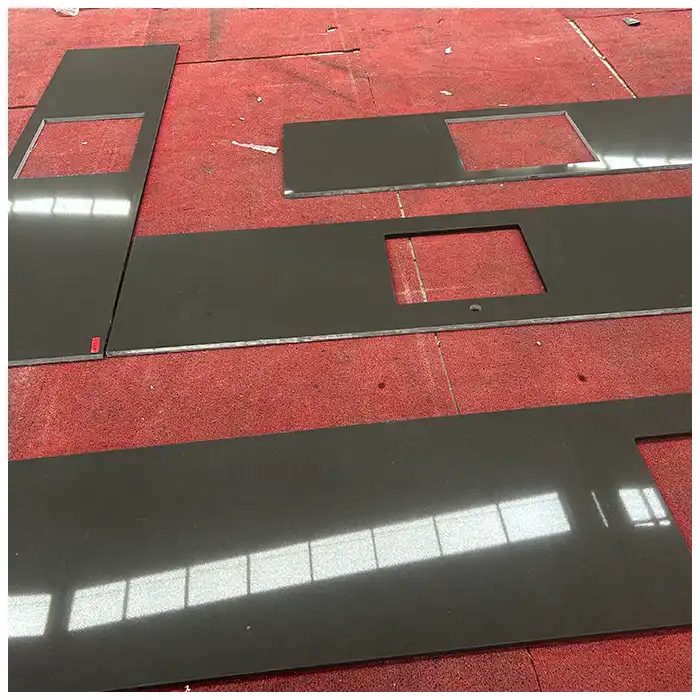
The vanity is often the best place to use an expressive crop because people approach it closely. Keep the strongest movement away from sink holes, faucet openings, and thin returns if it would be visually broken there. A grey vein running beneath a basin can look intentional; a vein severed by two drain cutouts can look like an accident.
Shower walls demand more caution. The room may include niches, valves, glass lines, and horizontal joints. If every panel has equal visual force, the eye has nowhere to settle. A bathroom is used often enough that a calm field can be more generous than constant spectacle.
Consider the lighting temperature before fixing a slab allocation. Warm mirror lights soften the grey, while cooler ceiling light can make it feel sharper. Side light picks up polish and can exaggerate a resin-filled line. A warehouse photo cannot anticipate every condition, but a mock-up can show the important ones.
| Decision point | What to study | What changes downstream |
|---|---|---|
| Entry sightline | First wall or vanity view from the door | Where to reserve the strongest slab movement |
| Mirror reflection | Veins visible behind and beside the user | Whether a feature becomes doubled visually |
| Cutout area | Sink, faucet, valve, and niche positions | Which lines may be interrupted |
| Finish and light | Honed or polished face under warm and cool light | How grey depth and repair visibility change |
The Hard-Won Lesson: Every wall got the strongest slab, and the room lost its centre
The risk pattern begins on the selection board, where several Arabescato pieces each look strong alone. The room concept uses one as the vanity focal point, then allocation sends the more active pieces to the shower and side wall so no dramatic slab is left unused. Once those surfaces stand together in a mock-up, the mirror, the glass and three strong faces compete for the same attention.
The Lesson: Give strong movement one clear role in the room; do not distribute every dramatic piece just because it is beautiful alone.
Material, Light, and the Way the Eye Returns
An Arabescato Corchia bathroom can use bookmatching, but only when the bookmatch has space to read. The centre line should not disappear behind a mirror cabinet, fall through a niche, or meet an unrelated joint. A non-matched flow layout may be better when the architecture interrupts the slab too much for symmetry to survive.
The edge and return matter at a vanity. A polished square edge makes the top feel precise. A softly eased edge catches less light and may feel gentler in a room with curved fixtures. If the design uses a thick mitred profile, look at the seam in the chosen crop. Marble does not hide a dark line simply because the profile is expensive.
Use the selected slab for the mock-up, even if it is a partial offcut. A small control panel should include the field tile or wall slab, the intended joint, the metal finish, and the mirror-light condition. The same panel shows whether the planned materials support the stone or crowd around it.
Where Fabrication Needs to Join the Conversation
Fabrication drawings should mark each panel, direction of movement, cutout position, edge detail, and visible face. Do not leave the vein orientation to a verbal instruction. A full slab photograph with overlays makes the intended reading clear before cutting begins and provides a reference when pieces arrive on site.
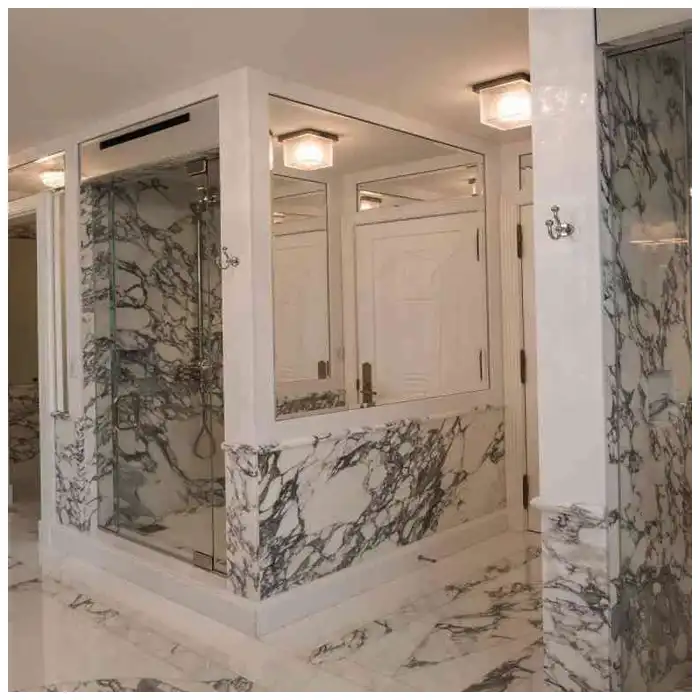
Natural marble does require ordinary care. Wipe water and acidic products promptly, use neutral cleaning, and avoid treating a sealer as a shield against any use. The material earns its ageing honestly. A project team earns fewer surprises when the maintenance expectation is stated before the keys are handed over.
If a delivered panel feels too busy or a vein falls wrongly around a cutout, photograph the complete panel in its intended orientation, photograph the cutout detail, and keep the approved slab layout nearby. Do not install the piece hoping a mirror or fitting will hide it. Pause, compare records, and ask the fabricator and designer to review the evidence first.
Making a Decision You Will Still Like Later
An Arabescato Corchia bathroom is at its best when the stone creates a hierarchy. One surface can carry the conversation. Others can support it with quieter portions from the same block. That approach respects variation rather than flattening it into a repeated, restless pattern.
The answer is not to fear grey movement. It is to place it where people can actually enjoy it, then let light, water, fittings, and daily use have enough visual room of their own. A thoughtful slab allocation makes the room feel composed rather than staged.
Details That Change the Final Result
The room sequence matters. A guest may see the vanity first, then a reflected piece of the wall in the mirror, then the shower beyond it. If every plane carries a major swirl, the material loses hierarchy. An Arabescato Corchia bathroom needs one or two clear moments and quieter companions from the same selection.
A full-height wall can take a central bookmatch only when the mirror, light, and fittings leave enough of the centre visible. If a cabinet covers the join, a flowing layout may be more honest. Symmetry only works when it survives the architecture instead of becoming a hidden technical exercise.
Arabescato Corchia bathroom decisions also include surface finish. Polish can deepen reflection around a vanity, while honing can quiet it. Test the choice beside the actual metal finish and mirror light. The grey pattern does not exist in isolation once taps, shadows, and towels enter the room.
Choose the floor allocation carefully. Strong movement under a small bathroom floor can be broken by the drain, threshold, bath feet, and door shadow. A quieter portion can make the room feel larger, while the more expressive slab belongs at the vanity or a wall where it can remain whole.
Natural marble needs a sensible wet-area assembly. Joint design, drainage, edge treatment, and maintenance have to do their work before any surface treatment is discussed. Character in the stone is not an excuse to ignore the practical paths water takes through a bathroom, and the assembly itself must follow the project-specified system and local requirements, with the responsible parties confirming suitability.
Use the slab photograph as a cut map. Mark the visible face, direction, panel number, cutout, and edge return. A verbal note such as keep the veins flowing is too vague once several people begin handling the drawings. The record turns a shared impression into a fabrication decision.
If a late change adds a niche or moves a faucet, revisit the slab map. A small relocation can cut through the one quiet field reserved for the vanity or place a prominent vein directly against a metal plate. It is better to redraw the piece than to rationalise a disruption after cutting.
In a bathroom, the better result often comes from letting the marble be memorable in one place, then allowing the rest of the room to feel clean, calm and comfortable around it.
Before the Room Becomes Fixed
A room schedule can state which slabs belong to the vanity, shower wall, niche, threshold, and smaller returns. That schedule prevents the strongest movement from being consumed by secondary cuts while the main feature receives whatever remains. Allocation is a design decision before it is a production decision.
The stone may continue across a floor and wall, yet the room does not need a continuous statement everywhere. A quiet floor can make a stronger vertical panel more convincing. Use the same material range with different intensity rather than treating every available face as a required feature.
An Arabescato Corchia bathroom benefits from a mock-up that includes the mirror line and the actual faucet spacing. A drawing may place grey movement gracefully behind a basin, but the fittings can divide it into fragments. Overlay those positions before the piece is cut.
For a shower threshold or window sill, choose a quieter crop with the necessary structural soundness. Such pieces are close to water and often seen at a shallow angle. A natural feature or dense vein may be suitable, but it needs to be placed with that exposure in mind.
A change in tile module can alter the whole balance of the marble. If the wall transitions from large panels to small returns, plan where the veins become secondary. Do not expect a strong full-slab narrative to survive unchanged in every small cut.
An Arabescato Corchia bathroom still needs practical care. Use an assembly specified for the project, sound joints, appropriate drainage and neutral cleaning, and confirm the wet-area details with the parties responsible for the installation. Natural marble becomes more rewarding when the daily care expectation is realistic rather than hidden behind a promise of effortless performance.
Before handover, photograph each visible face in its installed orientation and retain the slab map. A future repair or additional piece can then be selected with the original hierarchy in mind instead of starting from a generic image search.
The most convincing rooms do not use more stone than necessary. They give the selected grey movement room to breathe, then let the rest of the bathroom support it quietly.
Final Material Check Before Release
An Arabescato Corchia bathroom requires one final review of the visible faces before fixtures hide their relationships. Stand at the door and at the vanity. Check that the selected grey movement still has a clear hierarchy after mirrors, fittings, joints, and light have entered the composition.
Use the approved panel map during that review. It confirms that the intended slab direction survived cutting and that a quiet area was not accidentally replaced by a stronger return. Small substitutions can change a room more than a new drawing suggests.
An Arabescato Corchia bathroom feels composed when the natural marble gives one memorable view and lets the rest of the room support it without competition.
Questions We Hear Before Production
1. Where should the strongest Arabescato Corchia veins go in a bathroom?
Use them where the room has a clear viewing distance, such as a vanity splash or one feature wall. Keep cutout-heavy areas calmer when possible.
2. Is Arabescato Corchia suitable for shower walls?
It can be used where the project-specified assembly, joints, drainage, finish and maintenance plan are appropriate and confirmed for the local requirements. Strong movement needs careful allocation around niches and fittings.
3. Should an Arabescato Corchia bathroom use bookmatched slabs?
Use bookmatching when the centre line and full composition remain visible. Choose a flow layout if mirrors, niches, or joints would interrupt the symmetry.
4. How does lighting change Arabescato Corchia in a bathroom?
Warm and cool sources change perceived grey tone, while side light changes reflection and repair visibility. Test the selected slab under likely room conditions.
5. What should happen if a panel does not match the approved layout?
Photograph the whole panel and cutout detail in orientation, pause installation, and compare it with the approved slab layout before any fitting conceals the issue.
Quick-Reference Checklist
- Mark entry, mirror, and bath sightlines on the room drawing.
- Allocate the strongest veins to one or two visible roles.
- Overlay sink, faucet, niche, and valve cuts on the slab image.
- Test finish under warm and cool room lighting.
- Approve full panel orientation before cutting begins.
Before the vanity top is released I also check the wet-zone details that sit outside the stone itself: the position of the mirror light, the swing of the door, the height of the splash return and the way water will leave the counter. A joint that falls where a hand towel or a soap dish will sit collects water and cleaning marks, so the approved drawing should show those fittings before the crop is fixed.
Final Conclusion
The right Arabescato Corchia bathroom leaves room for the eye to rest, then rewards it with a line of grey discovered a little later. MQ STONE holds to that discipline because a room can become crowded long before the stone does.
References
- Dimension Stone Design Manual, Natural Stone Institute.
- ASTM C97 Test Methods for Absorption and Bulk Specific Gravity of Dimension Stone, ASTM International.
- ASTM C503/C503M Standard Specification for Marble Dimension Stone, ASTM International.
- ASTM C119 Standard Terminology Relating to Dimension Stone, ASTM International.
- Natural Stone Institute technical modules and installation standards, Natural Stone Institute.
- Marble, Wikipedia.