Quick Summary
Blue And Green Marble For Feature Walls and Stone Tables
Blue and green marble are usually chosen because the room needs one surface with character. A calm white wall, a timber cabinet, a dark metal frame, or a simple sofa can all feel different when a colored stone becomes the center of the composition. The color may be deep navy, mineral blue, pale sea green, dark forest green, gray green, or a mixed movement with white, black, gold, or brown veins. The result depends on the actual slab.
That is the main point for this type of stone: the category gives the direction, but the slab makes the decision. A blue marble page can show the color family. A green marble page can show the range of tones. The final choice still needs current photos, video, dimensions, finish, and a clear plan for where the cut pieces will go.
This guide is written for interior designers, architects, villa owners, hotel design teams, high-end residential renovation teams, and stone fabricators planning feature walls, stone table tops, lobby counters, bathroom walls, fireplace panels, or kitchen islands. It explains how to select colored marble for a project surface without overusing the stone or approving a slab too early.
Why blue and green marble need stricter slab review
White, beige, and gray stones can often tolerate small shade differences because the palette is quieter. Blue and green marble usually has less forgiveness. A darker area, a sudden white vein, a black cloud, or a gold streak may become the strongest visual point in the room. That can be useful, but only when the position is planned.
For a feature wall, the strongest movement may need to sit near the centerline, away from outlets, mirrors, wall lights, or signage. For a table, the strongest area may need to sit in the middle of the top or flow across the long axis. For a kitchen island, the movement may need to avoid the sink cutout or land cleanly on the waterfall side. A color name cannot answer those layout questions.
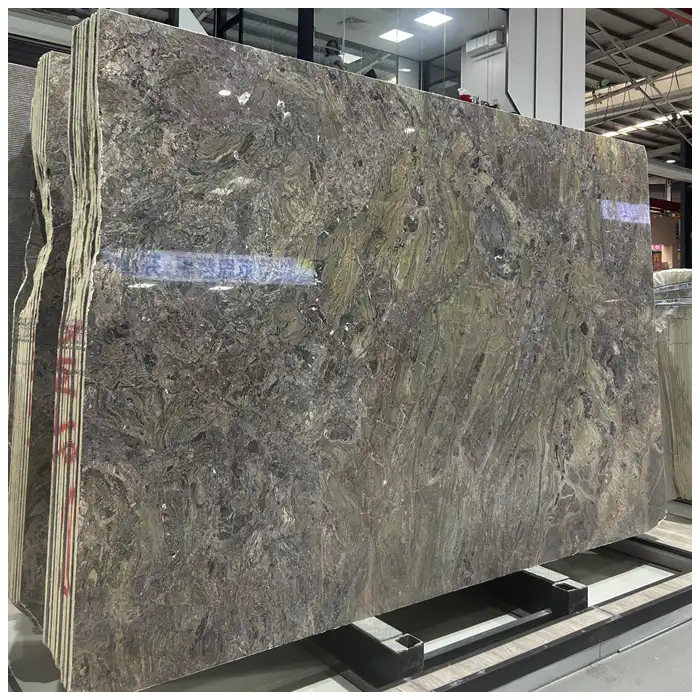
Natural stone also changes under light. A blue slab can look almost black in a dim room and much brighter in daylight. A green slab can shift toward gray, olive, emerald, or dark charcoal depending on the finish and lighting temperature. For this reason, the review should include full-slab photos, close-up photos, and a short video under steady light when possible.
MQ STONE’s material gallery is a useful starting point for comparing color families, but project approval should always come from current slab evidence. Ask for the slab number, size, thickness, finish, and whether matching pieces are available before the design is presented as final.
Choose the application before choosing the pattern
A colored marble slab should be reviewed with its use in mind. The same slab can look excellent as a wall panel and too busy as a small table. Another slab may feel ordinary in a full-slab image but become elegant when cut into a round table top. Application changes the way the stone reads.
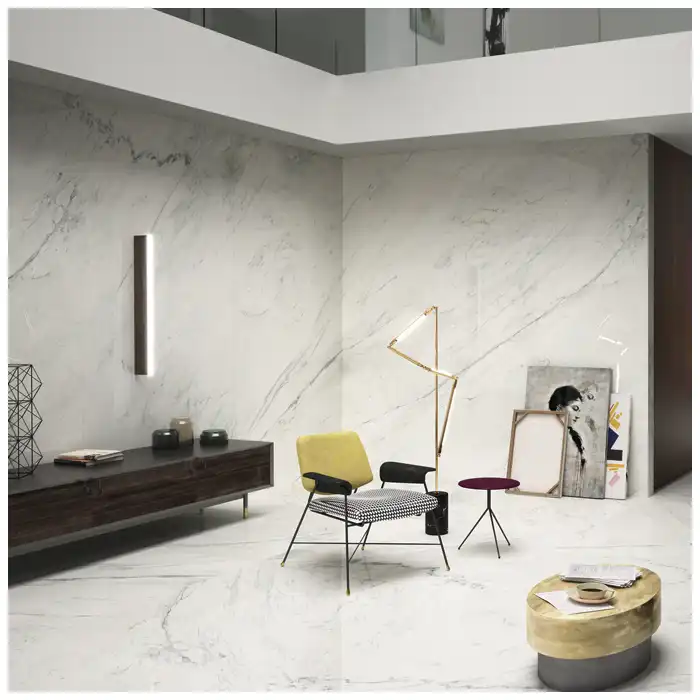
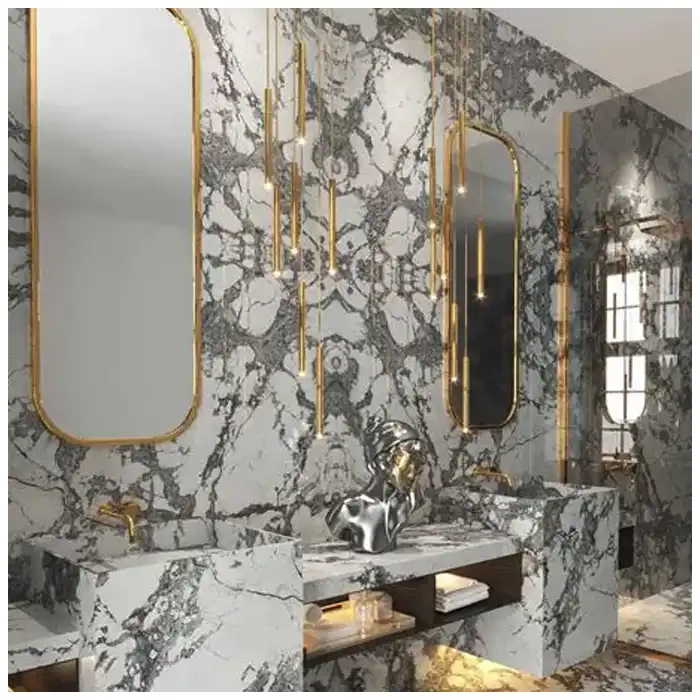
For feature walls, the wall elevation matters first. Confirm the finished wall width, finished height, centerline, doors, corners, openings, lighting, outlets, shelves, mirrors, TV position, fireplace opening, or logo placement. If the slab has strong movement, a marked layout should show where that movement lands on the wall. This is especially important for stone cladding in hotel lobbies, villa living rooms, restaurant interiors, and bathroom vanity walls.
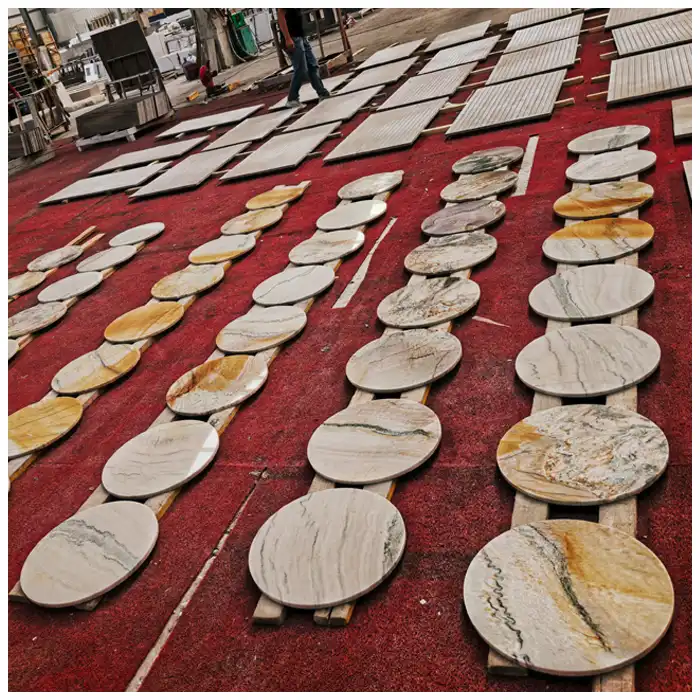
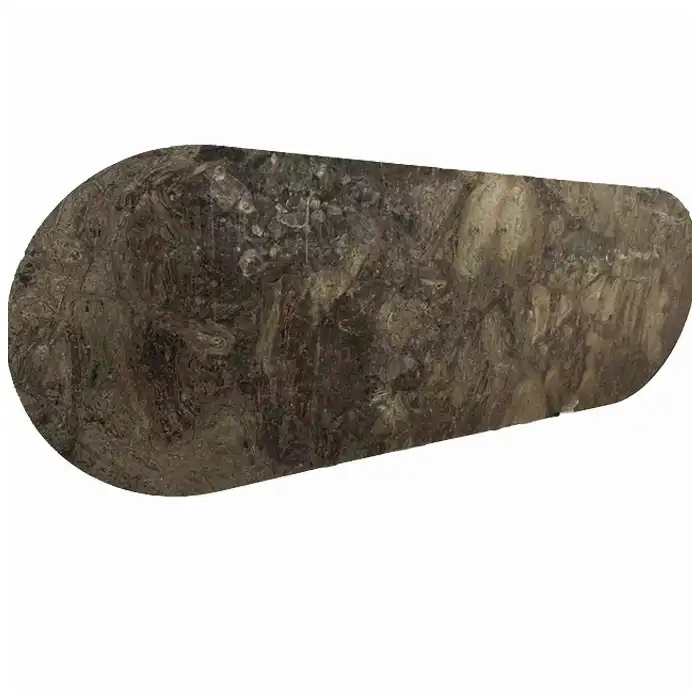
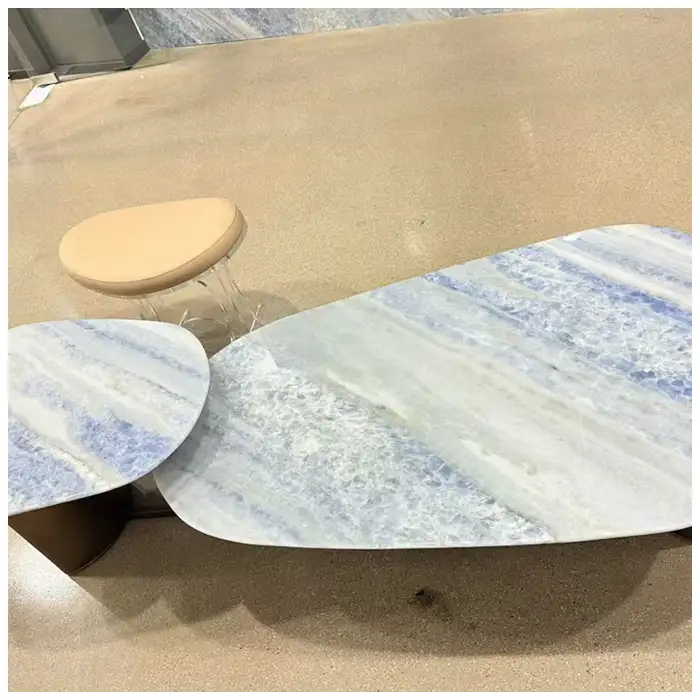
For stone tables, the table shape matters first. A rectangular dining table, oval coffee table, round side table, and irregular custom top all cut the slab differently. The design team should confirm whether the stone should feel centered, directional, mirrored, or intentionally off-center. A table top is viewed from above and from the edge, so the pattern and edge profile both matter.
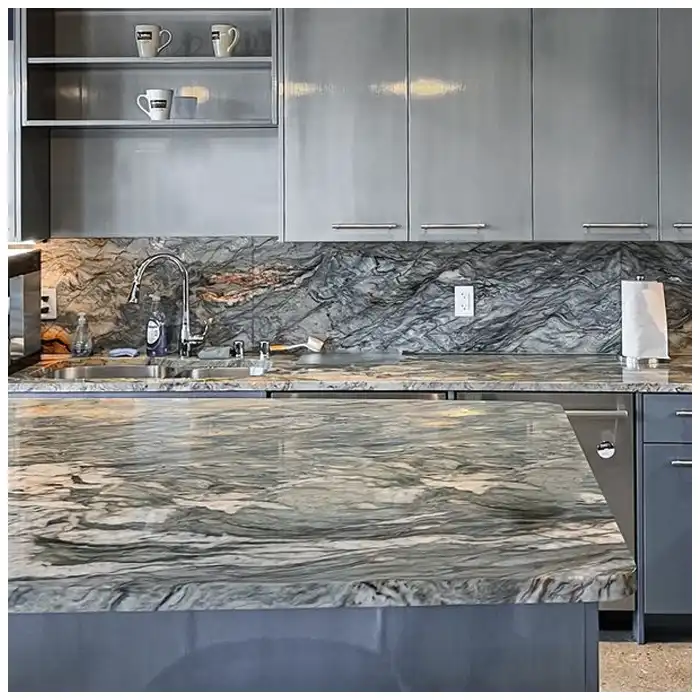
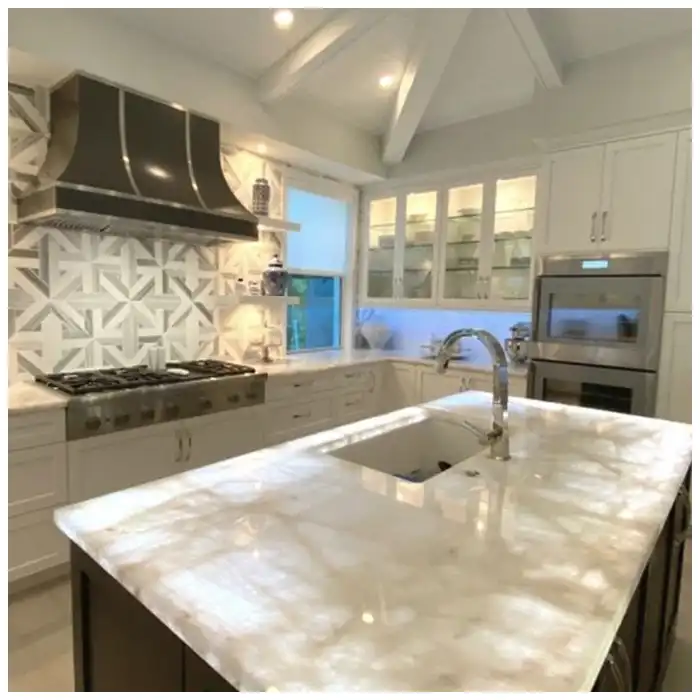
For counters and islands, the functional plan matters first. A kitchen island or reception counter may include sink cutouts, seating overhangs, waterfall ends, appliance openings, or drawer fronts. A dramatic vein can be beautiful, but it should not fight a necessary cutout. If the surface needs daily use, discuss finish, sealing, cleaning, and edge repair expectations before approving the slab.
Blue marble: where it usually works best
Blue marble can feel formal, cool, architectural, or art-like depending on the shade. Deep blue stones often work well in spaces with enough light and simple surrounding materials. They can suit hotel reception walls, bar fronts, fireplace backgrounds, powder room walls, coffee tables, dining tables, and selected island surfaces.
Dark blue marble should be reviewed carefully in rooms with low light. The color can become very deep, especially with a polished finish. This is not a problem when the design wants a moody wall or table, but it needs to be intentional. If the room has dark flooring, dark millwork, and low lighting, the blue stone may need stronger side lighting or a lighter surrounding palette.
Blue marble with white or gray veins can work well as a feature panel because the veins create contrast. On a table, those veins should be placed with the shape of the top in mind. A long diagonal vein may suit a rectangular table. A cloudy blue pattern may suit a round table better. A strong single vein may feel awkward if it sits near the edge of a small table.
When using blue marble with metal, choose the metal finish by testing against the slab. Brushed nickel, black metal, bronze, stainless steel, and warm brass can all work, but not with every blue stone. The right pairing depends on whether the slab leans gray, black, teal, or navy.
Green marble: how to control depth and movement
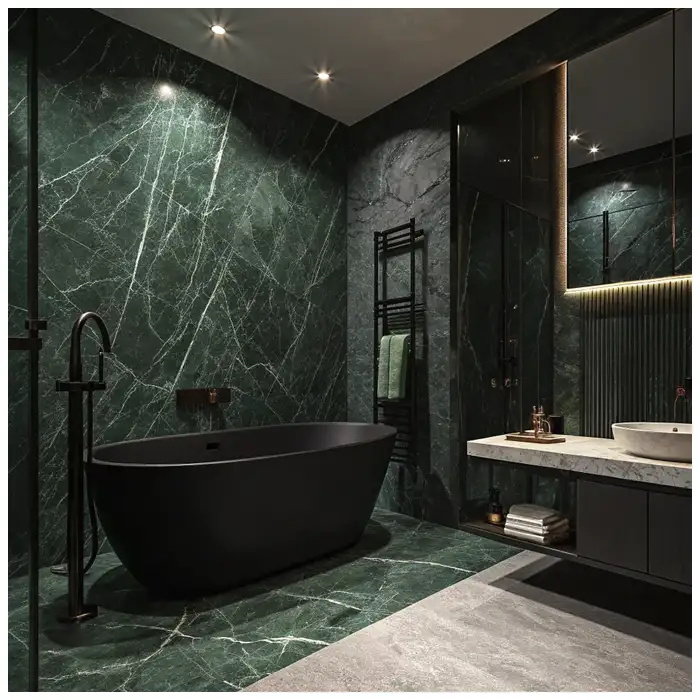
Green marble can make a room feel grounded and more connected to natural color. It can also become visually heavy if the slab is used on too many surfaces. For most interiors, green marble works best when it has a clear role: one wall, one table, one vanity area, one fireplace, or one counter rather than every surface in the room.
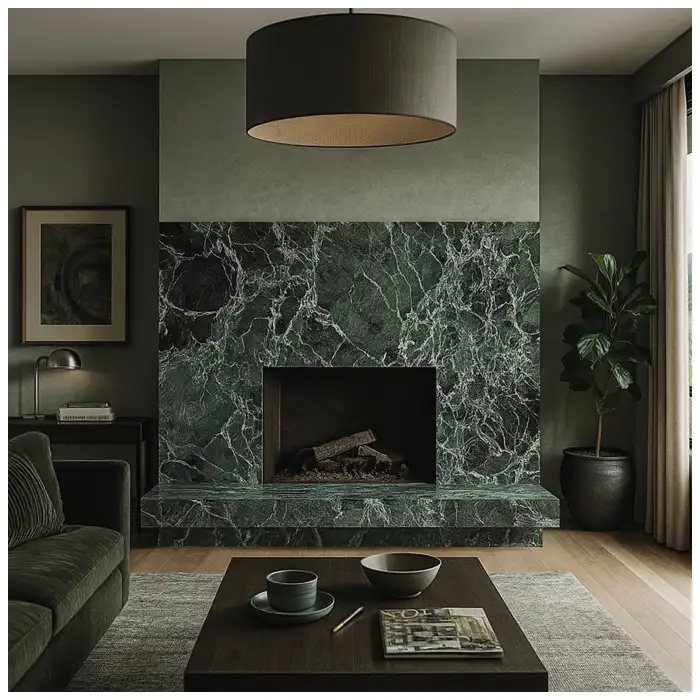
Dark green marble often pairs well with walnut, oak, black metal, bronze, cream upholstery, and warm white walls. Lighter green marble can feel softer and may suit bathrooms, powder rooms, boutique tables, and feature niches. Green stones with strong white veining need a cleaner surrounding palette so the stone does not compete with patterned flooring or busy furniture.
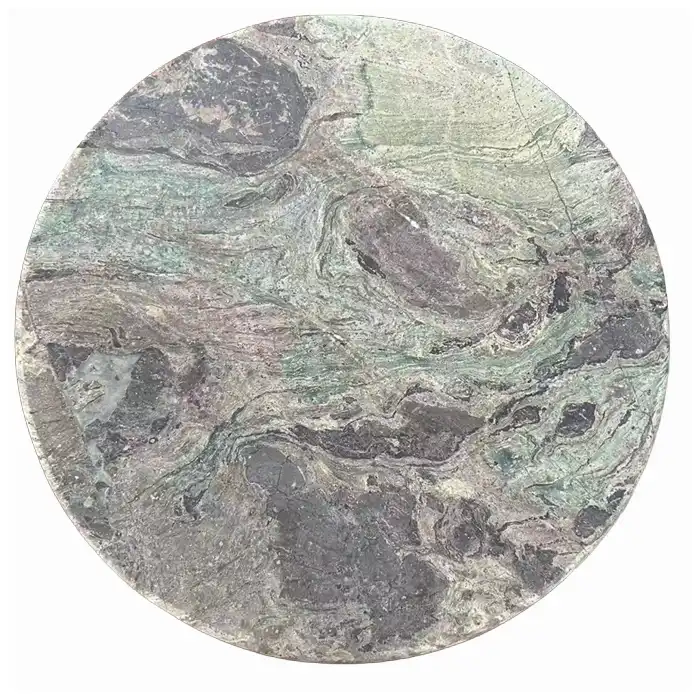
When reviewing green marble slabs, check the background consistency and the vein direction. Some green stones have branching veins that look good on a vertical wall. Some have cloud-like movement that works better on a table. Some have sharp white lines that can be excellent in a small feature area but too active across a large room.
Green marble also needs finish review. A polished finish can deepen the color and make the veins sharper. A honed finish can soften reflection and help the stone feel less formal. The project should decide whether it wants depth, reflectivity, or a quieter surface before fabrication starts.
Feature wall planning for colored marble
A blue or green marble feature wall should start with the wall drawing, not with a cropped stone photo. The drawing should show finished dimensions, centerline, panel divisions, ceiling height, floor line, corners, outlets, lighting, mirrors, doors, signage, and any furniture that will sit in front of the wall. Without this, the best part of the slab may be cut away or hidden.
If the wall is large enough, bookmatching or vein matching may be considered. A bookmatched layout can create a mirrored focal point when two neighboring slabs are opened together. A vein-matched layout may be better when the wall is long, interrupted, or split into several panels. Natural stone does not create printed symmetry, so the design team should approve the actual layout rather than assume the pattern will match perfectly.
Lighting should be planned at the same time as the stone. Downlights, wall washers, hidden LED strips, and side lighting can change how the surface appears. Strong grazing light can reveal lippage, surface texture, resin, or uneven installation. Polished dark stone may reflect furniture, people, or ceiling lights. The lighting plan should support the stone rather than expose avoidable issues.
For wall installation, confirm panel size and fixing method before cutting. Large panels reduce joints but may be difficult to handle, especially in upper floors, narrow corridors, or renovation sites. Smaller panels are easier to install but create more seams. The choice should be made with the installer, not only from the design image.
Stone table tops: what to confirm before cutting
Stone table tops are smaller than feature walls, but they are less forgiving in another way: people look at them closely and touch them every day. The top edge, surface finish, center composition, underside support, and table base all affect the final result. A strong stone needs a table design that gives it room to breathe.
Start with the shape. A rectangular table can use directional veining. A round table may need a more centered pattern. An oval table can work with soft movement across the long axis. A custom organic shape should be laid out carefully so the edge does not cut through the most important vein in an awkward place.
Thickness and edge detail should be confirmed early. A thick edge can make the table feel architectural, but it adds weight and may require a stronger base. A thin edge can look refined, but the stone type, backing, and fabrication method need review. For some table designs, a mitered edge may create the look of thickness without using one solid thick slab, but the miter quality and vein direction should be checked.
Support is not only a furniture detail. The base should carry the stone safely and keep the top stable. Long stone tables may need support across the span. Cantilevered edges, narrow bases, and thin tops need careful review. If the table is for a hotel lounge, restaurant, villa dining room, or showroom, discuss daily use, cleaning, movement, and replacement risk before final approval.
Compare blue marble and green marble by project use
| Project area | Blue marble review points | Green marble review points |
|---|---|---|
| Hotel reception wall | Check light level, reflection, logo placement, centerline, and whether the blue reads too dark from the entrance. | Check whether the green tone pairs with flooring, wood, metal, and lobby lighting without becoming visually heavy. |
| Villa living room feature wall | Use strong blue movement when surrounding furniture is simple and the wall has enough width. | Use green marble when the room needs depth, natural color, and a calmer link to wood or warm neutrals. |
| Stone dining table | Review the vein direction across the table length and check edge reflection under pendant lighting. | Check center composition, edge tone, and whether the top works with chairs, wood, leather, or metal finishes. |
| Powder room or vanity wall | Blue marble can work well in a compact room if the lighting and mirror position are planned. | Green marble can create a strong jewel-box effect but should not fight patterned floor tile or busy wallpaper. |
| Kitchen island or counter | Confirm daily-use expectations, sink cutouts, edge detail, and whether the color fits cabinet and floor tones. | Confirm sealing, finish, cleaning habits, and whether the green tone supports the full kitchen palette. |
What to ask MQ STONE before approval
Before approving a blue or green marble slab, ask for a complete review package. A full-slab photo should show all four edges. Close-ups should show the background, main vein, edge, surface, filled areas, and any area that may affect cutting. A short video should move across the surface slowly enough to show finish, reflection, color shift, and texture.
Ask for dimensions in millimeters, slab thickness, finish, available quantity, and whether sequential or matching slabs are available. If the project needs more than one panel, one table, or repeated rooms, confirm how much material is needed before reserving only the most attractive slab.
For a wall, ask for a marked elevation. For a table, ask for a marked cutting layout. For a counter, ask for seam positions, cutouts, and edge details. If a bookmatch or vein match is possible, ask to see the proposed arrangement, not only the individual slabs. For project references, review MQ STONE’s project page to understand the kind of applications where large stone surfaces are used.
If the slab is part of the luxury stone range, avoid approving it by name alone. Names are useful for sorting materials, but they do not replace current slab review. Two slabs with the same name may have different color, movement, background, size, and suitability for a project surface.
Project selection notes before approval
How the slab should be chosen
Choose the slab by matching it to the actual wall, table, counter, or island. Start with the finished dimensions, then review the full slab, the strongest vein, quiet areas, likely cut lines, and how the piece will be seen in the room. A stone that looks dramatic in a warehouse may need a calmer layout in a finished interior.
Why the surrounding materials matter
Blue and green marble rarely sit alone. They are read beside wood, metal, fabric, paint, glass, lighting, flooring, and cabinetry. A deep green marble beside walnut may feel calm and rich. The same stone beside black flooring and low lighting may feel too heavy. A blue marble beside white walls may feel crisp, while the same slab beside cool gray cabinets may feel cold.
What to confirm before fabrication
Confirm slab number, available quantity, slab size, thickness, finish, layout, edge profile, cutouts, seams, support, packing, and installation route. For wall panels, confirm fixing method and panel divisions. For table tops, confirm the base, span, underside support, and whether the edge detail can be fabricated cleanly.
Options for different project goals
If the goal is a dramatic focal point, use the strongest slab in one controlled location. If the goal is a calm but colored interior, choose a quieter slab with softer movement. If the project needs repeated surfaces, consider whether a more consistent marble, quartzite, granite, or sintered stone is better than a rare one-off slab.
Considerations for care and long-term use
Marble is a natural stone, so sealing, cleaning, finish selection, and daily use expectations should be discussed before approval. Acidic liquids, harsh cleaners, abrasive pads, and unsuitable maintenance routines can affect the surface. The care plan should match the application, especially for tables, counters, vanities, and hospitality spaces that see regular use.
Final Conclusion
Blue and green marble are strongest when they are used with restraint and planned from real slab evidence. For feature walls, the wall elevation, centerline, lighting, panel divisions, and fixing method should guide the layout. For stone tables, the shape, edge, thickness, support, and center composition should guide the cut. In both cases, the final decision should connect the stone’s color and movement to the actual surface, not only to a material name.
For MQ STONE projects, the safest next step is to request current slab photos, videos, size details, finish options, and a layout suggestion for the intended application. That process helps determine whether blue marble, green marble, another marble, quartzite, or a different statement slab is the better choice for the room.
FAQ
1. Is blue marble a good choice for a feature wall?
Blue marble can be a strong choice for a feature wall when the room has enough light, a clear focal surface, and surrounding materials that do not compete with the stone. Before approval, review the full slab, vein direction, wall centerline, cutouts, lighting plan, and whether the blue tone becomes too dark in the final room.
2. Where does green marble work best in interior projects?
Green marble often works well on villa feature walls, powder room walls, vanity backsplashes, fireplace panels, reception counters, and stone table tops. It is usually better as a controlled focal surface than as a material used everywhere. Check the actual green tone beside wood, metal, wall color, flooring, and lighting before fabrication.
3. Should a stone table top use a dramatic or quiet marble slab?
A stone table top can use either dramatic or quiet marble, but the table shape should guide the choice. A rectangular table may suit directional veins, while a round or oval table often needs a centered or softer pattern. The edge detail, base support, thickness, finish, and daily use should be confirmed before cutting.
4. What photos should I request before choosing blue or green marble?
Request a full-slab photo showing all edges, close-ups of the main vein and background, surface videos under steady lighting, and photos of any filled areas, fissures, or edge conditions. For walls and tables, ask for a marked layout that shows how the slab will be cut for the finished dimensions.
5. Can blue or green marble be bookmatched for walls or tables?
Blue or green marble can be bookmatched when suitable neighboring slabs are available and the pattern works in the planned layout. It is most useful for large uninterrupted walls, reception backdrops, fireplaces, and selected tables. The design team should review the actual pair, centerline, seam position, cutouts, and lighting before approving a bookmatched layout.

References
- Bookmatching: Geology Meets Geometry. Karin Kirk. Natural Stone Institute / Use Natural Stone. Use Natural Stone.
- Dimension Stone Design Manual 2024. Natural Stone Institute technical committee. Natural Stone Institute. Natural Stone Institute Resource Library.
- Standards and Specifications for Natural Stone Products. Natural Stone Institute. Natural Stone Institute. Natural Stone Institute technical resources.
- ASTM C503/C503M Standard Specification for Marble Dimension Stone. ASTM Committee C18 on Dimension Stone. ASTM International. ASTM Standards.
- ASTM C1528/C1528M Standard Guide for Selection of Dimension Stone. ASTM Committee C18 on Dimension Stone. ASTM International. ASTM Standards.
- ASTM C119 Standard Terminology Relating to Dimension Stone. ASTM Committee C18 on Dimension Stone. ASTM International. ASTM Standards.
- NKBA / KBIS 2026 Kitchen Trends Report. National Kitchen and Bath Association research team. NKBA. NKBA Research.
- AD PRO’s 2026 Interior Design Forecast. AD PRO editorial team. Architectural Digest. AD PRO.