The Hidden Decisions Behind Slabs vs Tiles
“Same marble, same color, same supplier—why does it feel like a totally different project?”
The architect asked that on a video call while flipping between two mood boards: one showed a dramatic bookmatched wall, the other showed a calm minimalist floor.
The installer’s answer was brutally honest: “Because you’re not choosing ‘marble.’ You’re choosing format, and format decides seams, tolerances, movement, slip risk, maintenance, and even how light behaves.”
If you’re deciding between Marmorplatten und Marmorfliesen, you’re not just picking a look. You’re picking how the stone will be fabricated, installed, and lived with for years—especially in hotels, villas, apartments, and commercial interiors.
To understand how MQ MARBLE structures sourcing, fabrication, and project workflows for global buyers, start at MQ Marble.
The practical difference in one sentence
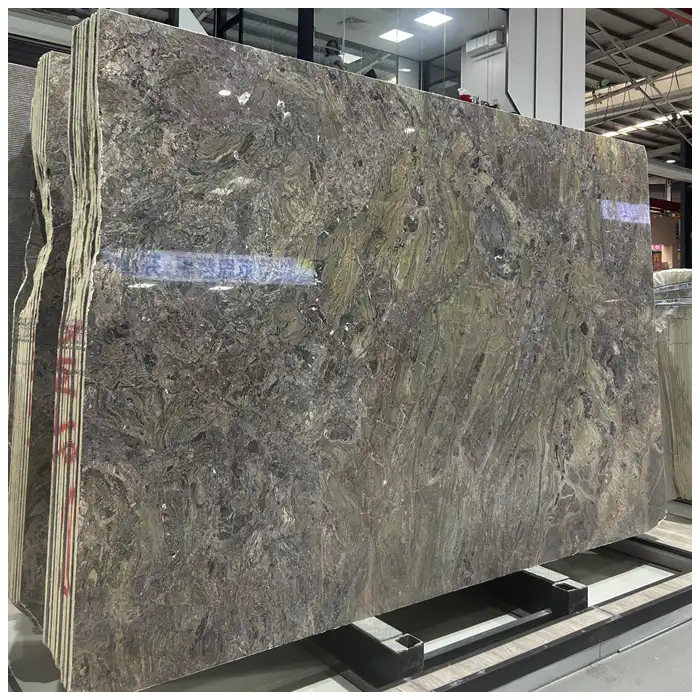
Marmorplatten are best when you want fewer grout lines, larger continuous surfaces, and design control (bookmatching, veining flow, large panels).
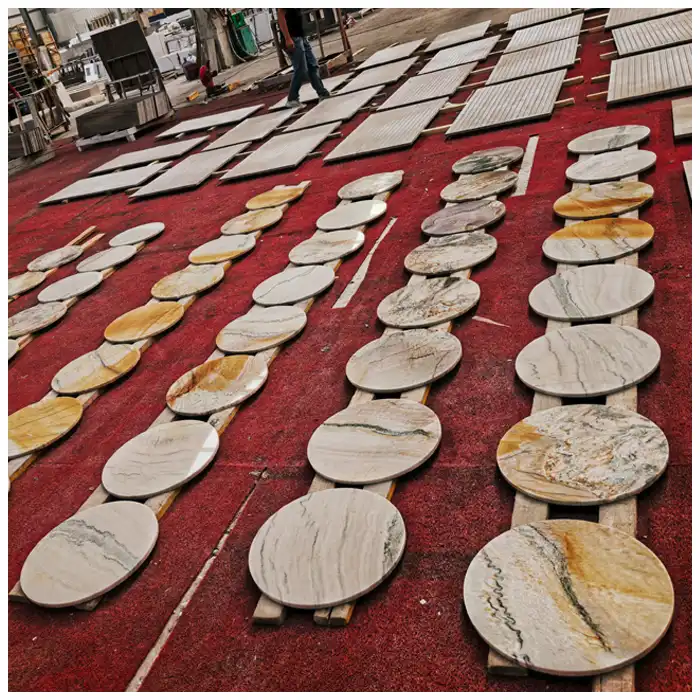
Marmorfliesen are best when you want modular installation, easier repairs, and simpler logistics for many flooring and wall applications.
That sounds simple—until “fatal details” show up on site:
-
Seams land in the wrong places
-
Floors feel too slippery in wet zones
-
Movement joints are ignored
-
Grout changes the color perception
-
Maintenance routines don’t match the finish
When you want a decision that survives real-world pressure, you need to compare slabs vs tiles by application, not aesthetics.
If your team is already collecting requirements (space type, traffic level, wet zones, finish preference, thickness constraints), align them early with a supplier who understands project delivery. The fastest route is usually Contact MQ Marble so you can lock in scope before samples become arguments.
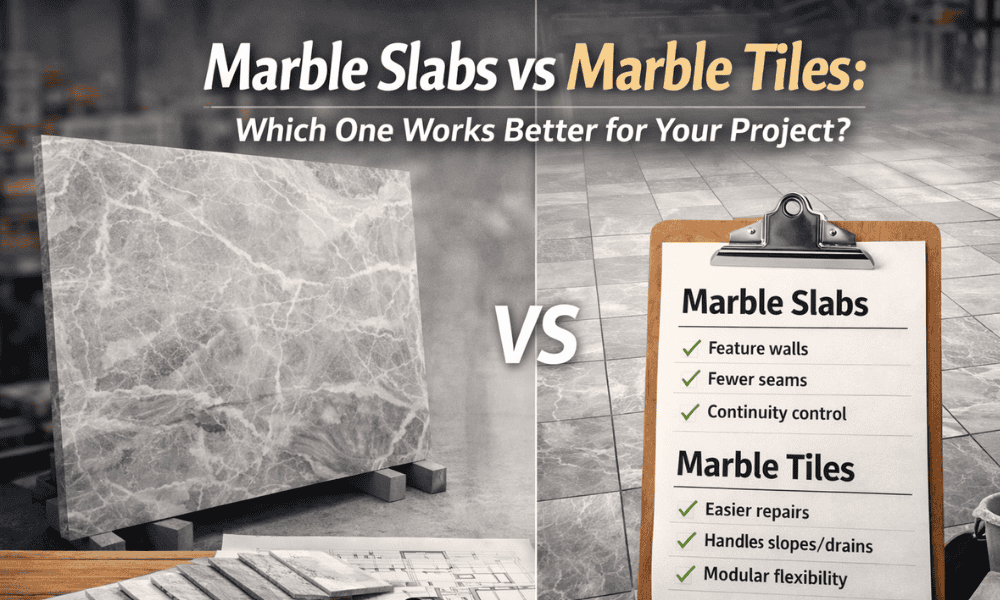
Use-case logic: where slabs win and where tiles win
When marble slabs usually win
Marmorplatten are the go-to choice for:
-
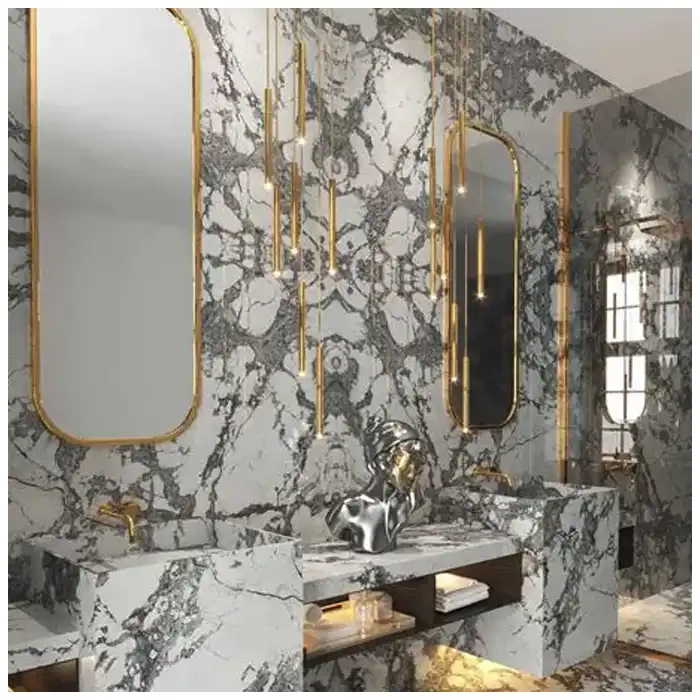
Feature walls (lobbies, reception backdrops, fireplace surrounds)
-
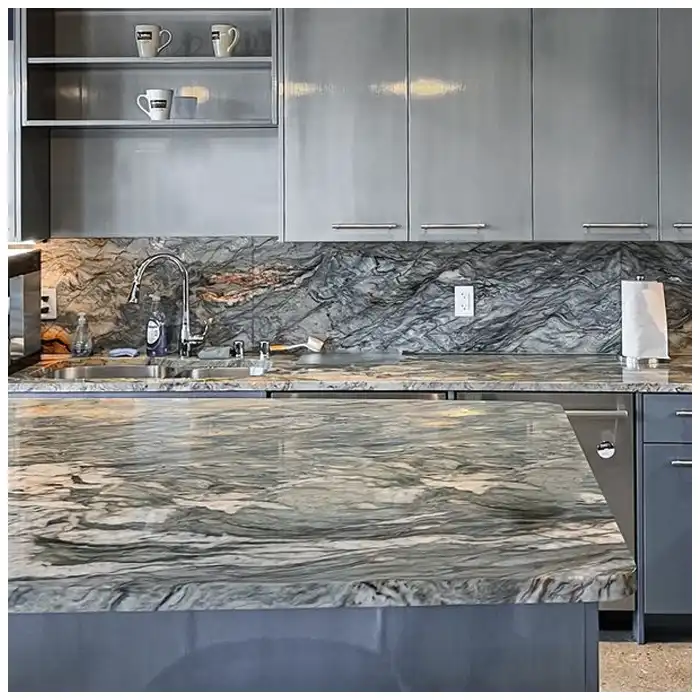
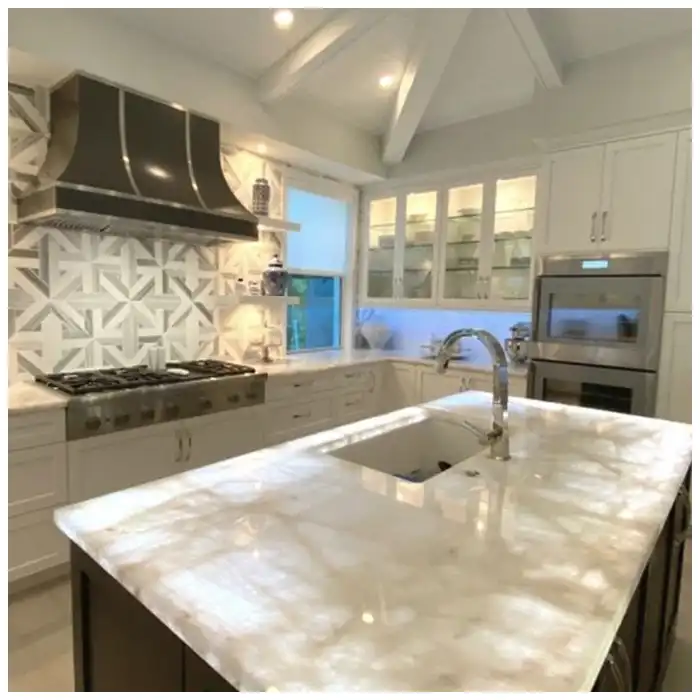
Countertops and vanities (especially when seam reduction matters)
-
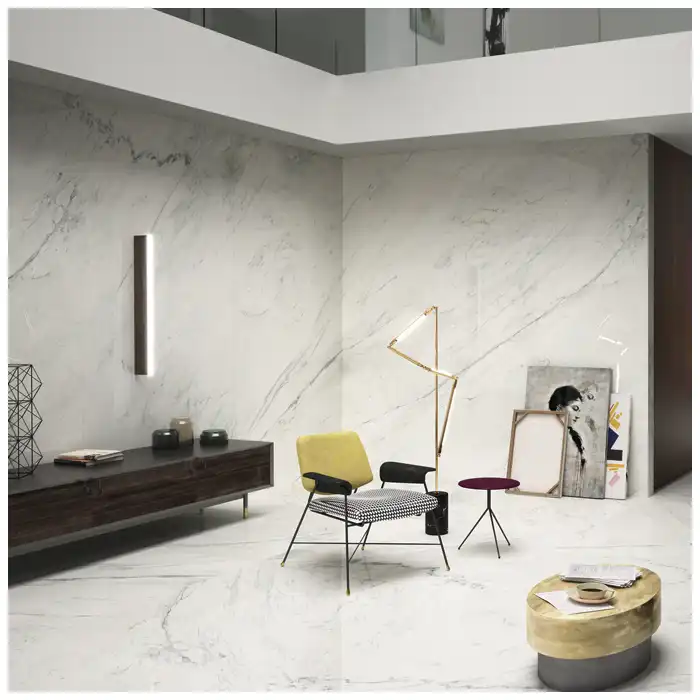
Large-format flooring in premium spaces (when the budget is “visual continuity”)
-
Bookmatch designs (where pattern flow is the design itself)
Why they work:
-
fewer grout lines, more “luxury continuity”
-
better control of veining direction and visual rhythm
-
stronger storytelling in high-impact zones
When marble tiles usually win
Marmorfliesen are the practical workhorse for:
-
Standard floors and walls across many rooms
-
Bathrooms where modular replacement is valuable
-
Projects with complex layouts or lots of corners
-
Renovations where access and logistics matter
Why they work:
-
modular installation reduces layout risk
-
damaged units can be replaced more easily
-
more flexibility for slopes, drains, and transitions
If you’re still in the “broad selection” phase, review the full Marmorplatten catalog structure first, then decide which zones need slab-level continuity and which zones are better served by tile modularity.
Data-driven contrast: seams, slip risk, and maintenance reality
This is where projects are won or lost: not in the showroom, but in performance under daily life.
Seams and grout lines: what you’ll actually see
-
Slabs reduce grout lines, but seams become high-stakes (one seam in the wrong place can ruin a feature wall).
-
Tiles distribute risk (more joints, but each joint is smaller and easier to plan around).
Reality check: In high-end commercial spaces, many disputes are not about “stone quality,” but about layout decisions: seam placement, tile grid alignment, and directionality against lighting.
Slip and safety: finish matters more than format
Both slabs and tiles can be polished, honed, or textured. In wet-adjacent areas, teams often prefer honed or textured finishes because polished surfaces can become risky when wet. The smarter comparison is:
-
polished walls vs honed floors
-
textured shower floors vs smooth vanity walls
Maintenance: the biggest “hidden cost” is wrong chemistry
Marble is sensitive to acids and harsh cleaners. The most common failures come from:
-
non-stone cleaners used by housekeeping
-
abrasive pads used on polished finishes
-
no grit control at entrances
That’s why slab-vs-tile decisions should include a maintenance plan from day one, especially for hospitality.
The “fatal details” checklist that decides your outcome
Detail 1: Movement and substrate reality
If the substrate moves, stone will reveal it. Slabs can show cracking more dramatically because movement concentrates stress across larger continuous pieces. Tiles distribute movement across more joints, but bad grout and poor underlayment still fail.
Detail 2: Drainage, slopes, and wet zones
Tiles are often easier to manage on floors requiring slope (showers, wet rooms, spa areas). Large slabs can work, but they demand extremely disciplined substrate prep and cutting accuracy.
Detail 3: Pattern control vs pattern chaos
Slabs win when you need:
-
bookmatch symmetry
-
dramatic veining flow
-
intentional visual rhythm
Tiles win when you need:
-
repeatable pattern at scale
-
stable modular layout across many rooms
-
easier field adjustments
Detail 4: Repair strategy
Ask yourself one uncomfortable question: What happens if this area chips after opening?
-
Tiles generally allow simpler spot replacement.
-
Slabs can be repaired, but replacement is more complex and may affect continuity.
Detail 5: “Minimalist style” is not automatically “slab style”
Many buyers assume minimalism means slabs. In reality, modern minimalism often uses tiles intelligently: consistent tone, calm veining, disciplined grout color, and clean grid alignment.
If you want a minimalist decision framework that favors real-world usability, read Marble Tiles Advantages and use it as a checklist against your project zones.
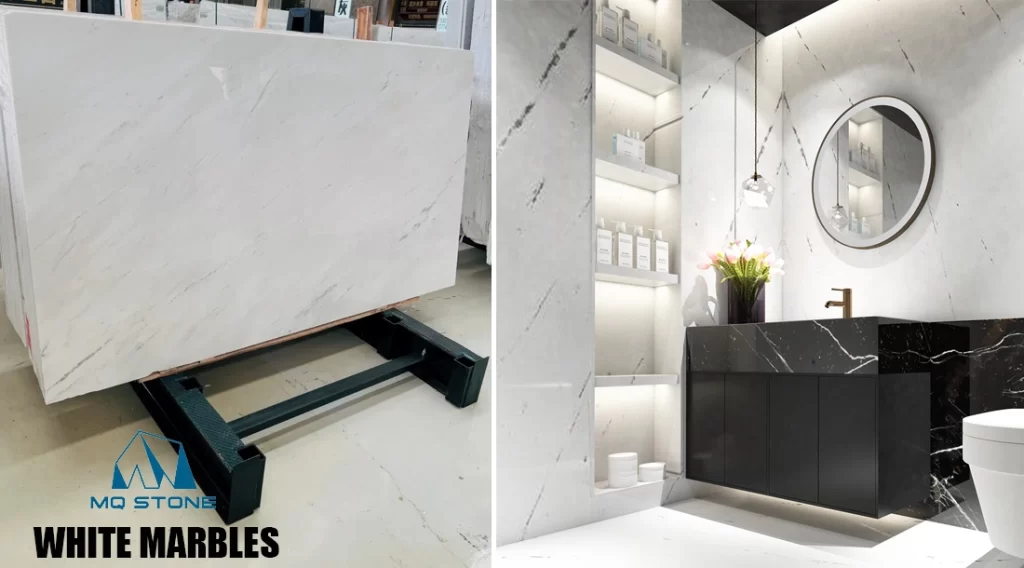
Bianco Sivec Marmorplatten und Projekte MQ STONE
|
|
|
MQ MARBLE perspective: how global buyers build a repeatable spec
Professional teams treat slabs and tiles as a portfolio decision, not a single choice.
A common approach used by repeat buyers looks like this:
-
Define zones by performance needs
-
wet zones (bathrooms, spa, pool-adjacent)
-
traffic zones (lobby floors, corridors, retail)
-
statement zones (feature walls, reception backdrops)
-
-
Assign the right format
-
slabs for statement + continuity zones
-
tiles for modular + wet + high-adjustment zones
-
-
Lock the finish strategy
-
polished verticals where reflections are controlled
-
honed/textured floors where safety and wear matter
-
-
Document seam/grid rules
-
seam placement rules for slabs
-
grid alignment rules for tiles
-
directionality rules under lighting
-
This process is why some materials become reorderable across phases and properties. For example, MQ MARBLE’s buyer-facing content around repeat ordering reflects the idea that “best-selling” in stone often means “repeatable.” If you want the slab-side reorder logic, review Top 10 Best-Selling Marble Slabs and mirror the same discipline in your slab specification.
A clean decision framework you can use today
Choose marble slabs when you need:
-
fewer grout lines and strong visual continuity
-
feature walls where veining flow is the centerpiece
-
countertops/vanities where seam reduction matters
-
controlled lighting zones where polish can shine
Project tip: Make seam planning part of design approval. Don’t “leave it to the installer.”
Choose marble tiles when you need:
-
modularity across multiple rooms and corners
-
slope-friendly floors (wet rooms, showers)
-
easier repair strategy after opening
-
repeatable layout with lower layout risk
Project tip: Treat grout color like a design material. Grout can make marble look warmer, colder, cleaner, or messier.
Choose both when you want the best result
Many of the strongest projects use both formats:
-
slabs on feature walls and key focal zones
-
tiles on floors, wet areas, and repeated room layouts
This approach reduces risk while keeping design impact high.
If you want to understand how MQ MARBLE positions its project capability and supports global buyers across material formats and applications, the most direct overview is About MQ Marble.
|
|
|


FAQ
1) Are marble slabs stronger than marble tiles?
Not automatically. Strength and durability depend on thickness, substrate prep, installation quality, and how the area is used. Slabs can feel more “solid” visually, but tiles often handle movement and repairs more flexibly because of modular joints.
2) Are marble tiles better for bathrooms than marble slabs?
Often yes for floors in wet areas because tiles can handle slopes and drains more easily. Slabs can be excellent on bathroom walls and vanity backsplashes where continuity and easy wipe-down matter.
3) Which is easier to maintain: marble slabs or marble tiles?
Slabs reduce grout lines, which can simplify cleaning. Tiles introduce grout maintenance, but can be more forgiving in high-use environments. In both cases, stone-safe cleaning chemistry matters more than format.
4) What’s the biggest mistake when choosing between slabs and tiles?
Choosing based on photos instead of application. The biggest failures come from ignoring lighting, traffic, wet zones, seam/grid planning, and maintenance routines.
5) Can I mix marble slabs and marble tiles in one project?
Yes—and it’s often the smartest approach. Use slabs where continuity and impact matter (feature walls, countertops) and tiles where modularity, slopes, and repair strategy matter (floors, wet areas, repeated rooms).
The best choice is the one that stays “right” after day 300
The designer wanted the sample to match. The contractor feared the site reality. Both were right. Marmorplatten und Marmorfliesen can both look extraordinary—but they win in different ways.
If your project needs dramatic continuity, controlled veining flow, and fewer grout lines, slabs can deliver a signature result—if seam planning and finish placement are handled professionally. If your project needs modular stability, slope-friendly floors, easier repairs, and repeatable installation across many rooms, tiles are often the safer champion.
The smartest projects don’t argue “slabs vs tiles.” They assign each format to the zones where it performs best—then document the rules so the second phase is easier than the first.