Stone Dining Table Lighting under Pendants and Daylight
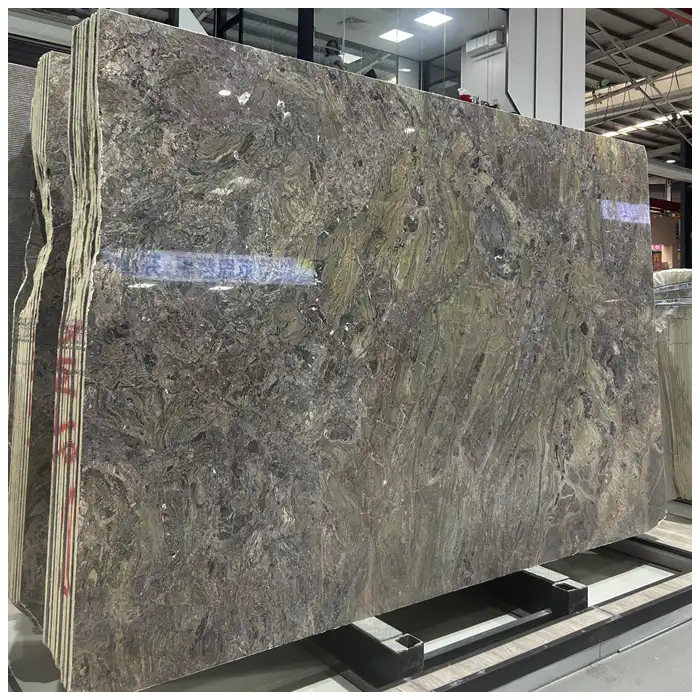
The first time I placed a low lamp above a blue-grey quartzite top, the surface changed twice. From the doorway, silver veins ran like fine rain across the slab. At seated height, the polished face caught the bare lamp and became a white rectangle. The stone had not changed. Our lighting decision had hidden it.
A dining table lives under several kinds of light. Daylight moves across the room. Pendants create a fixed pool. Downlights make small bright spots. Wall light arrives sideways and reveals texture. The eye also changes position as people stand, sit and walk around the table.
Good stone dining table lighting is therefore a material decision. I want to know what the slab reflects, what it absorbs and what its minerals reveal before we approve the finish. True luxury is something you never get tired of looking at, and visual comfort is part of that test.
Read Stone Dining Table Lighting in Daylight First
Daylight gives me a broad reference, but it is not neutral or constant. A north-facing room may keep a cool, diffuse character. Direct western sun can warm the stone and create sharp reflections late in the day. Glazing tint, curtains, nearby walls and floor color all alter what reaches the table.
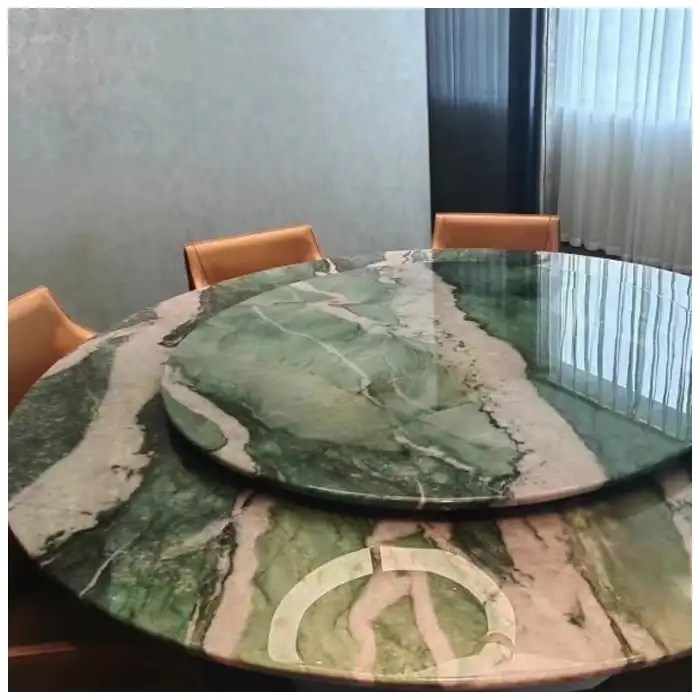
I ask for the table orientation and window relationship before choosing the slab layout. A long vein parallel to the window may read as one continuous stroke. Turn the top ninety degrees and the moving light can cross the vein, revealing mineral changes that were quiet in the warehouse.
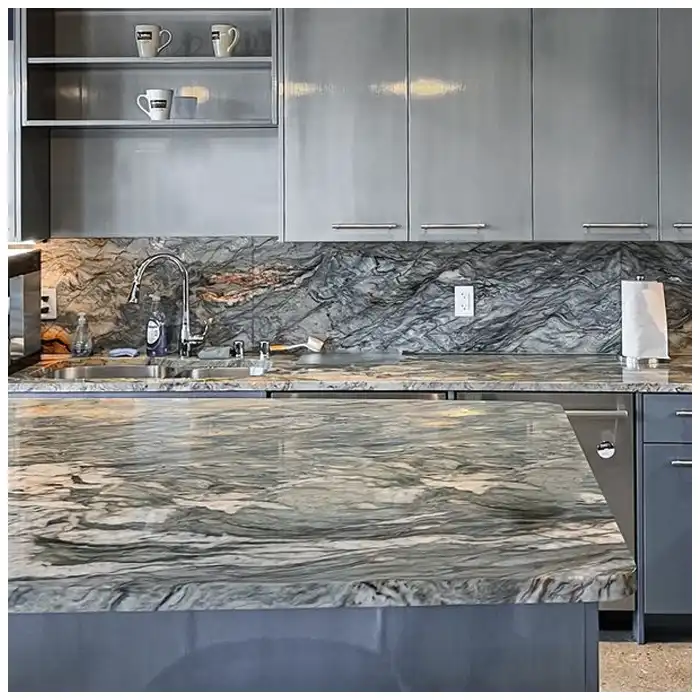
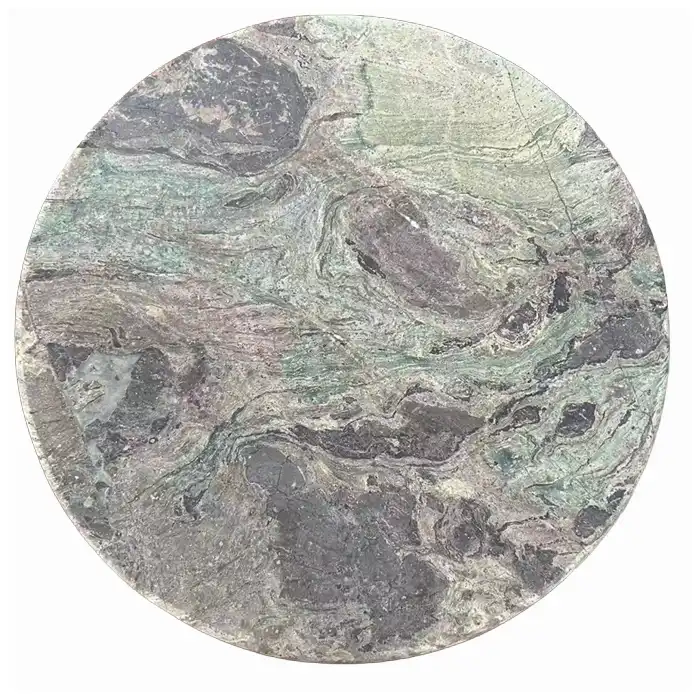
For an Aqua Vulcan quartzite table, blue, green and smoky mineral zones can separate under cool daylight. The crystalline structure of quartzite scatters light from within the polished face, while darker inclusions absorb it. The result has depth rather than a printed surface effect.
Photograph daylight as a time sequence
One noon photograph is not enough. Record the room in morning, midday and the principal evening use period. Keep exposure and white balance consistent where possible. Include a broad view, a seated view and an oblique detail that shows reflection.
این Exotic Quartzite Slab Selection process begins with the whole slab. Lighting review adds the room condition to that record. The veins will tell you where the composition wants to move, but only if the photograph does not crush every pale and dark zone into one average tone.
Match Color Temperature to the Stone
Color temperature changes the apparent balance of white, grey, beige, gold, green and blue. A 3000K source often warms pale stone and strengthens cream or gold minerals. A 4000K source can make cool greys cleaner and expose green or blue undertones. Neither is automatically correct.
I compare the actual lamp specification, not just a number on a mood board. Color rendering, spectral distribution, beam angle, dimming behavior and surrounding finishes matter. Two products marked 3000K can render the same stone differently.
Stone surface lighting should preserve the intended relationship between field and vein. If a warm lamp makes the base color muddy while the gold vein becomes loud, I test another source or another material. If a cool lamp drains a creamy marble of warmth, the room can feel detached from the slab selected.
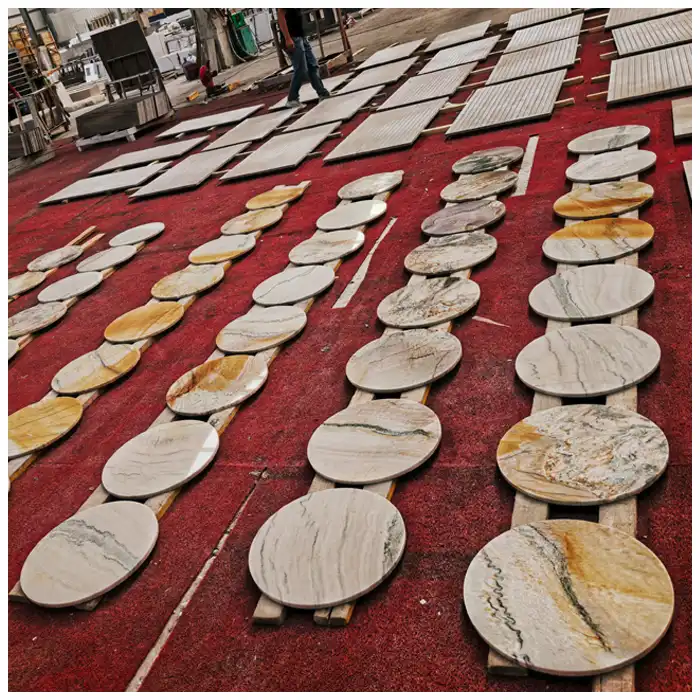
آ Calacatta Oro marble round table carries gold and grey veining created by mineral impurities introduced during metamorphism. Warm light can connect those gold notes with brass or timber, but excess yellow can reduce the clean white contrast. I want warmth, not a color cast.
Set Pendant Height by Reflection and Use
Pendant height affects more than the amount of light. It changes the size and position of the reflection. A small bright source close to a polished top can sit directly in the line of sight for seated users. Raise it, diffuse it or broaden the beam, and the reflection may soften.
Dining table pendant height must also respect the fixture, table size, ceiling, sight lines and room use. I do not give one universal dimension. The lighting designer checks illuminance, glare and code requirements; the table team supplies the finished height, top dimensions and reflective behavior.
Test the complete geometry with a sample at table height. A slab held vertically beneath a showroom spotlight tells very little about a horizontal dining surface. Place the stone flat, set a mock light at the proposed location and view it from every seat.
Round tables concentrate the pendant relationship near the centre. Long rectangular or oval tables may need a linear fixture, several sources or a wider distribution. Watch for bright islands separated by dull gaps, especially across a strongly directional vein.
Choose Finish with Marble Table Glare in Mind
Polish deepens color and sharpens reflection. Honing lowers the mirror effect and gives the surface a softer, mineral reading. Leathered or brushed textures break reflection further, though they change tactile feel, cleaning behavior and edge matching.
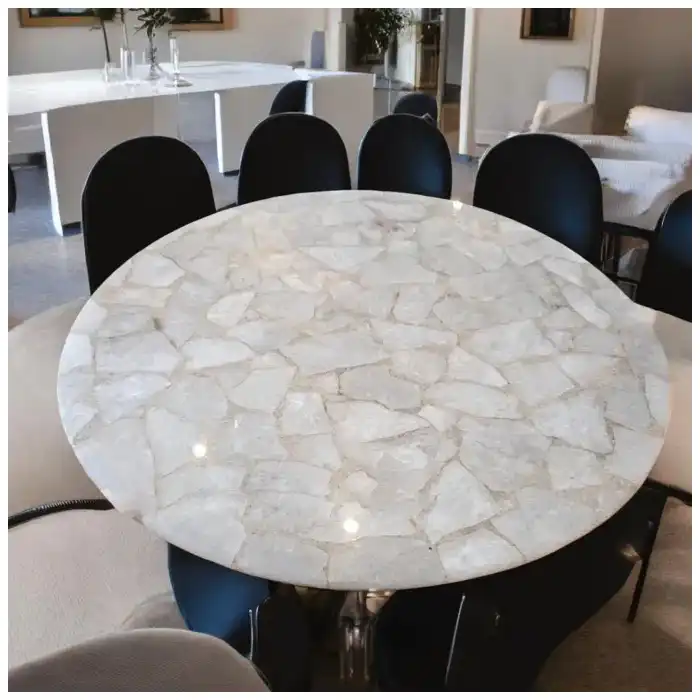
Marble table glare becomes uncomfortable when a bright source reflects toward the eye. It can also hide the veins beneath a white highlight. The answer may be a diffused fixture, changed angle, dimming scene, adjusted finish or a combination of those decisions.
این Stone Dining Table Finish guide compares polish, hone and texture in daily use. Lighting review should follow the shortlisted finish, not precede it. A polished sample and honed table are not interchangeable evidence.
Raking light is useful during inspection because it reveals scratches, resin, low spots and texture. It is not always comfortable as the permanent dining scene. Separate defect-detection light from the light people will live with.
Measure the light without reducing the stone to one number
A meter can help the lighting designer compare illuminance at the table, while fixture data describes beam and color performance. Those measurements matter, but stone dining table lighting also needs visual judgment. The same measured level can feel calm on a honed pale top and aggressive on a dark polished surface because reflection and contrast differ.
I record the fixture model, lamp or integrated source, color temperature, rendering data, beam, mounting point, dimming level and test time. I also note daylight, curtains and surrounding finishes. This allows a later reviewer to reconstruct the test instead of guessing what “warm pendant” meant.
The basic physics of lighting explains why angle, source size and surface reflection change what reaches the eye. Yet numbers cannot decide whether a vein remains legible across dinnerware or whether one seat receives a distracting highlight. The mock-up must answer those human questions.
For repeated restaurant or residence tables, compare representative positions. A table beside glazing may need a different daytime scene from one in the centre of the room. Keep the material standard consistent, then let the lighting designer tune the scene without disguising unacceptable slab variation.
Compare Lighting Conditions before Approval
| Light condition | What it can reveal | Main risk | Approval evidence |
|---|---|---|---|
| Diffuse daylight | Broad color balance and vein continuity | Seasonal or glazing shift | Whole top from room and seated views |
| Direct sun | Sparkle, depth and sharp reflection | Glare and local heat | Time-stamped orientation record |
| 3000K pendant | Warm minerals and timber relationship | Yellowed white field | Actual fixture or matched source |
| 4000K inspection light | Cool undertone and surface defects | Harsh appearance unlike room use | Controlled quality record |
| Narrow downlight | Local crystal response | Bright spots and uneven field | Seat-by-seat reflection check |
| Raking light | Texture, scratches and repairs | Overemphasis of minor variation | Oblique inspection photographs |
The Hard-Won Lesson: Approve the Reflection, Not Only the Color
A polished quartzite top passed color review beside a window. The pendant mock-up later placed three exposed light points directly across the seated sight line. Each point became a hard white disc on the dark mineral field. The slab still had the right color, but the intended depth disappeared during evening use. A diffused linear source restored the veins without changing the stone.
The Lesson: Test every final light from seated eye level before approving a polished dining surface.
Use Stone Dining Table Lighting to Reveal Depth
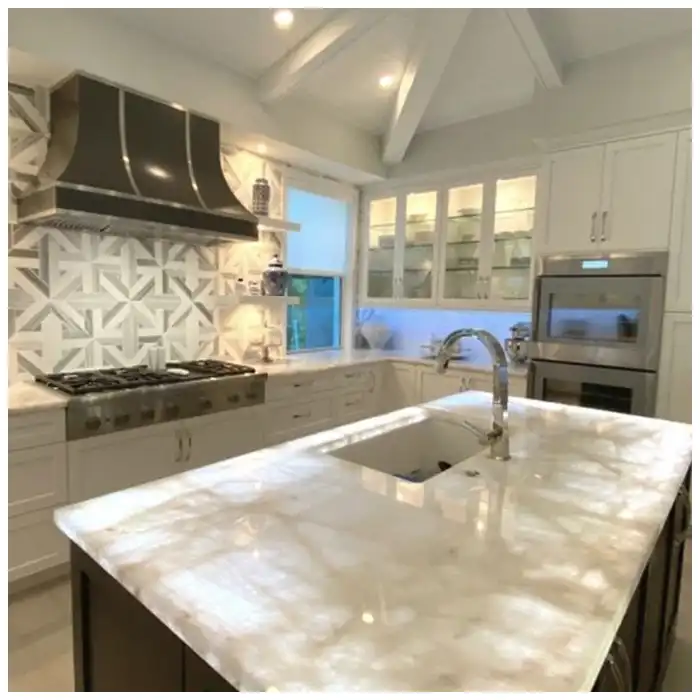
Translucency is not limited to fully backlit onyx. Some quartzites show a subtle glow at thin edges or pale crystalline zones when light arrives from behind or across the surface. The effect comes from mineral transparency, crystal boundaries and local thickness.
Quartzite table daylight can reveal these zones beautifully, but do not assume the entire slab transmits light evenly. Inspect the full slab with a controlled light where safe and relevant. Mark resin, fissures, opaque inclusions and cutout positions before layout.
Edge design changes the reading. A straight 20 mm edge looks lighter than a built-up edge with a deep shadow line. A rounded edge catches a moving highlight. A bevel creates a separate plane that can flash under the pendant.
Approve the Slab Layout under the Intended Light
Lay the full digital template over the approved slab image, then inspect the proposed top orientation under similar light. The centre of the table deserves attention, but so do the seats. A dramatic vein that disappears beneath plates may be less useful than a quieter movement that frames the complete perimeter.
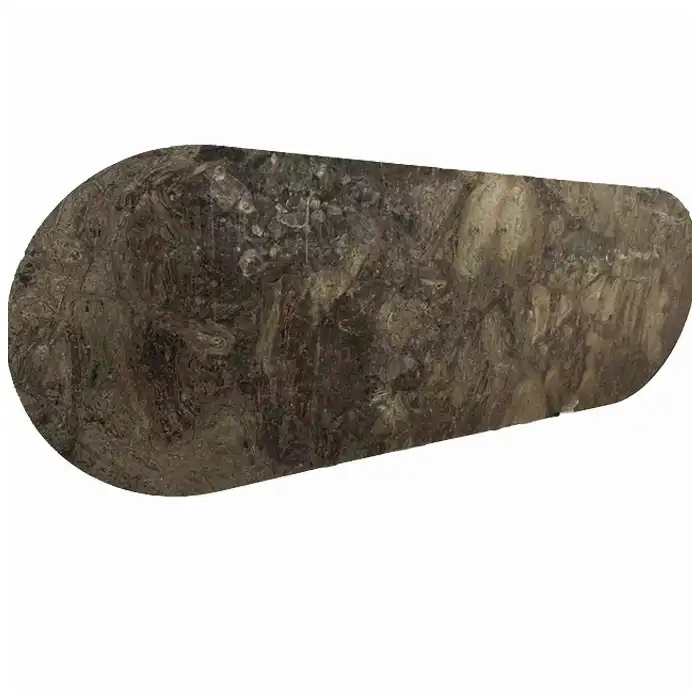
For a round top, rotate the template before committing. The same diagonal vein can feel energetic, balanced or abruptly cut depending on orientation. For an oval, check how movement enters and leaves the curved ends.
Stone dining table lighting should be reviewed again after edge fabrication and before final packing photographs. Finish, edge, resin work and cleaning can change reflection. Use a controlled lamp and include the entire face, each edge and any repaired area.
I also ask the interior team for surrounding samples. Timber, metal, upholstery and wall paint bounce color into a pale stone. A cool slab placed above a red-brown floor may read warmer than it did against a grey warehouse rack.
At this stage, stone dining table lighting becomes part of the approval sheet. The record names the accepted slab orientation, finish, edge, fixture condition, daylight state and viewing positions. If fabrication changes the surface or table height, the approval returns for comparison.
Plan Lighting Scenes for Dining and Inspection
A dining scene may use warm, dimmed light for comfort. Cleaning and inspection need enough even light to reveal spills and surface change. These scenes can use the same fixtures at different output or separate sources, but the project should define both.
Dimming must preserve acceptable color and flicker performance. At very low levels, some sources shift appearance or create uneven pools. Ask the lighting designer to test the actual driver and control combination.
Stone dining table lighting also needs coordination with cameras if the room will be photographed professionally. Camera exposure can hide glare that the eye feels, or exaggerate contrast that is comfortable in person. Approve the lived view first.
Do not use the pendant to compensate for a slab that fails the material brief. Light can reveal stone; it should not be asked to invent color or depth that is absent from the selected piece.
Finally, stone dining table lighting must leave room for use. Plates, glassware, flowers and people interrupt the empty tabletop seen during approval. Test a simple place setting so bright reflections from glass and polished stone do not combine at eye level.
Escalate a lighting mismatch before installation
First photograph the top from every seat with the intended fixture operating. Second, stop permanent fixture adjustment or table installation while the reflection problem remains open. Third, send the designer, lighting consultant and stone supplier the slab approval, finish sample, fixture data and test images. Compare changes one at a time.
Frequently Asked Questions
1. What color temperature works best for stone dining table lighting?
There is no universal value. Test the actual slab, finish, fixture and surrounding materials at the project’s intended settings. Warm light may enrich cream and gold; cooler light may clarify grey, blue or green. Color rendering and spectral character matter too.
2. How high should a pendant hang above a stone dining table?
The lighting designer sets height from table size, fixture form, ceiling, beam, glare, sight lines and applicable requirements. Mock the real table height and inspect every seated position rather than relying on one generic dimension.
3. Is honed stone better under a pendant than polished stone?
Honing usually reduces mirror-like reflection, but it also changes color depth, tactile feel and maintenance. Polish may reveal crystalline depth beautifully when the source is diffused. Test both finishes under the proposed light.
4. Can daylight fade natural stone table color?
Many natural stones have good color stability, but minerals, resins, fillers and treatments can respond differently to light and heat. Ask the supplier about the actual slab and repair system, then assess the room’s exposure.
5. What should happen first if the installed table has severe glare?
Photograph the reflection from each seat, stop final fixture or table adjustments, and compare the actual lamp, height, angle, dimming level, finish and approved mock-up. Let the lighting designer and stone supplier test one controlled change at a time.
Quick-Reference Table Lighting Check
- Record daylight direction during the main dining hours.
- Test the actual slab under the proposed color temperature.
- Place the sample horizontally at finished table height.
- Check glare from every seated and standing position.
- Compare the shortlisted finish beneath the actual beam.
- Review edge reflections after fabrication.
- Save matched daylight, pendant and raking-light photographs.
Keep the light study attached to the table specification
Fixture position and daylight only make sense beside the approved slab, edge, size and base. Keep those decisions together through the Stone Dining Table material and fabrication guide.
Compare the same viewing angles with Choosing a Stone Dining Table Finish under Real Dining Light before approving gloss or texture.
Final Conclusion
Stone dining table lighting succeeds when the slab, finish, edge, pendant and daylight are judged as one composition. Test the real material horizontally, inspect every seat, record moving daylight and approve reflection as carefully as color. I want the light to reveal the stone’s patient mineral depth, and that is the standard I carry into every MQ STONE table review.
References
- Dimension Stone Design Manual, Natural Stone Institute.
- Natural Stone Care and Maintenance Guidance, Natural Stone Institute.
- ASTM C616 Standard Specification for Quartz-Based Dimension Stone, ASTM International.
- ASTM C503 Standard Specification for Marble Dimension Stone, ASTM International.
- The Lighting Handbook, Illuminating Engineering Society.
- Lighting for Interior Environments, Illuminating Engineering Society.
- Salone del Mobile Milano Design News 2026, Salone del Mobile.Milano.