Stone Table Edge Detail for Luxury Stone Furniture
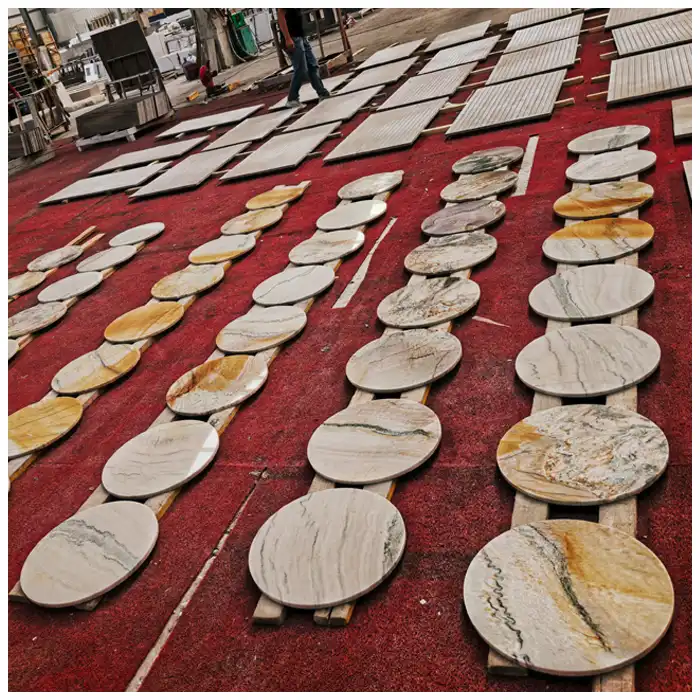
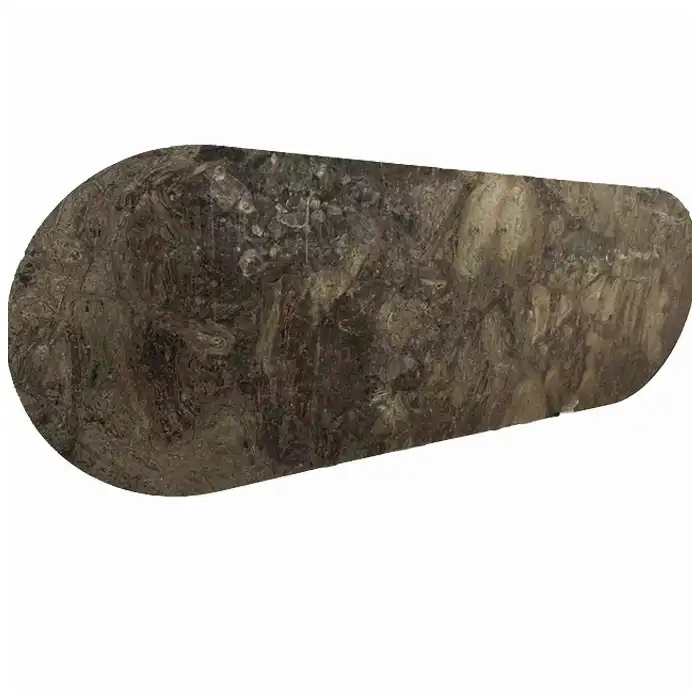
I still remember the first time I touched a quartzite table top in a fabricator’s yard outside Xiamen. The slab was already cut to an oval, but the edge was raw, pale, and dusty. When I ran my hand along it, I could feel tiny quartz crystals catching my skin like fine sugar. Then the water sponge passed over the edge, and the minerals woke up. This stone has been waiting for millions of years…, and sometimes it only needs one wet edge to remind you.
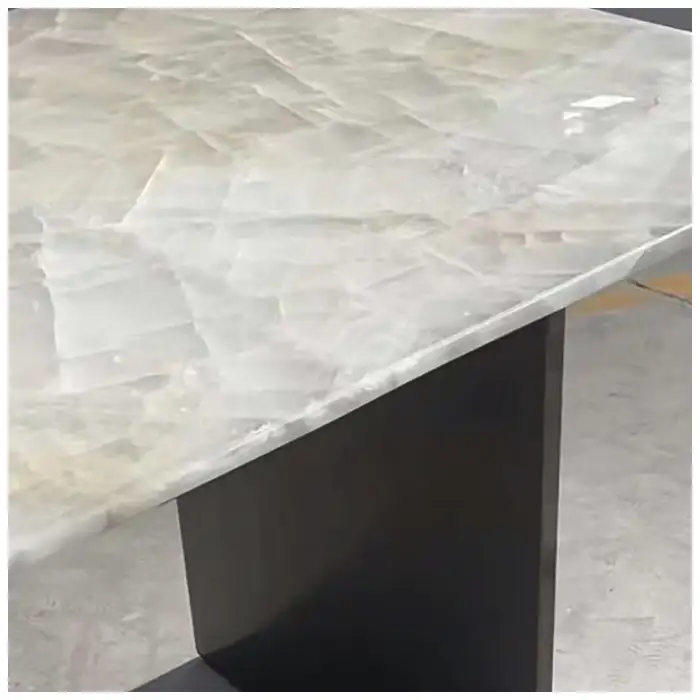
آ stone table edge detail is never just a finishing line. It is where the hand meets geology. It is where light enters the side of a quartzite, where a marble vein wraps or breaks, where an onyx top reveals or hides its inner glow. The veins will tell you…, but the edge tells you how carefully someone listened.
Yesterday’s article looked at natural quartzite table tops for dining tables, coffee tables, and premium interiors. Today I want to move closer. Not the whole slab. Not the room. The edge. Designers often approve a surface from the top view, yet people live with the table from the side, from the seat, and from the hand.
That is why I keep returning to Natural Quartzite vs Marble-Look Sintered Stone: The Definitive Comparison for Premium Interiors. Real stone has mineral depth, edge life, and irregular beauty that printed surfaces often struggle to repeat. True luxury is something you never get tired of looking at, especially when you notice the detail after the first impression has passed.
Why Stone Table Edge Detail Changes The Whole Object
A table top is horizontal, but the edge is what the eye reads at body height. A dining guest sees the rim before seeing the full top. A hotel lobby visitor touches the corner while waiting. A designer checks the profile because a table can look too heavy, too thin, or too sharp long before anyone questions the slab.
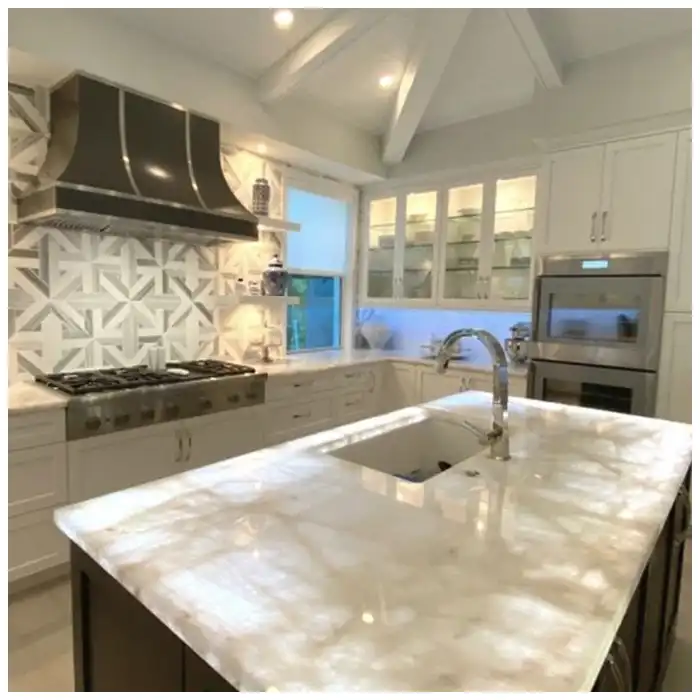
I like a soft edge on quartzite when the stone has strong movement. The slight radius catches light without making the table look swollen. On a marble coffee table, a sharper bevel can make the object feel architectural. On an Snow White Onyx Tables piece, I often want the edge to protect the translucency rather than interrupt it.
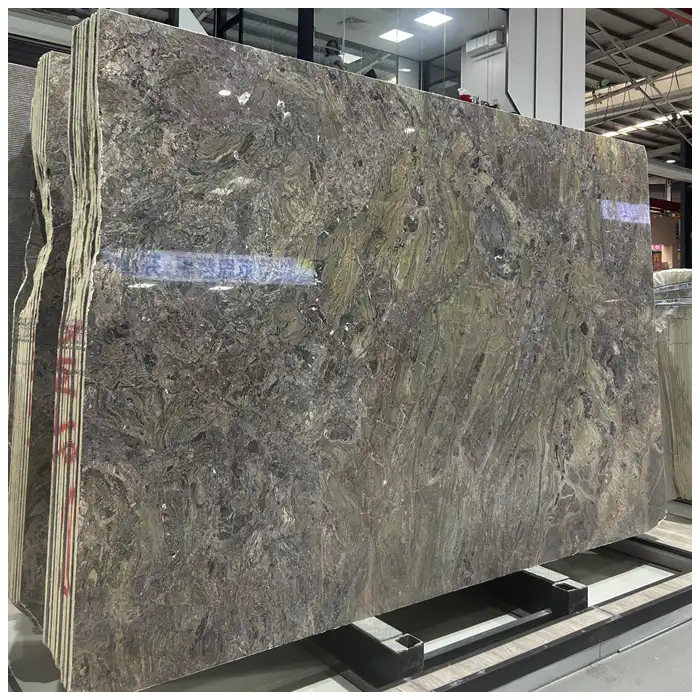
Quartzite forms when sandstone rich in quartz is transformed by heat and pressure. The result is dense, crystalline, and often resistant to scratching. When the edge is cut and polished well, the crystals can flash like tiny points of frost inside the rim. The top view may show the river. The edge shows the stone’s bones.
Thickness Is Not Only A Structural Decision
A 20 mm top can look elegant, but it may feel too thin on a large dining table unless the base is very disciplined. A 30 mm top carries more weight and shadow. A laminated edge can create a thicker look, but if the vein does not wrap naturally, the illusion fails.
With a natural quartzite table, I usually study the slab from the side before deciding. Some quartzites have movement deep enough to make a thicker edge beautiful. Others carry delicate lines that look better with restraint. This stone has been waiting for millions of years…, so I do not like forcing it into a profile that fights its own rhythm.
Edge Profiles I Trust For Stone Furniture
There is no universal edge. The right edge depends on material, table size, base geometry, handling, and room mood. The wrong edge can make an expensive slab feel clumsy. Worse, it can make the table vulnerable at corners.
| نمایه لبه | Best Use | Material Note | Risk To Watch |
|---|---|---|---|
| Small radius | Dining tables with regular use | Good for quartzite and harder stones | Too small a radius can still feel sharp at corners |
| Soft bullnose | Coffee tables and lounge pieces | Works when veining is calm and continuous | Can make a refined slab look too heavy |
| Beveled edge | Architectural dining tables | Shows vein direction on marble clearly | Weak corners if the bevel gets too aggressive |
| Laminated thick edge | Large tables needing visual weight | Needs careful vein alignment at the apron | Visible joint if the fabricator rushes the work |
| Chamfered underside | Floating visual effect on heavy tops | Can lighten dense quartzite or granite | Too much undercut may expose weak edge support |
The Hard-Won Lesson: Never Choose The Edge From The Top View Alone
A designer once approved a dramatic quartzite dining table from a top-view rendering. The slab was beautiful, with pale green rivers crossing a cream field. The approved edge was a thick laminated apron, meant to make the table feel grand. When the first piece came out of polishing, the apron joint cut straight through the strongest vein, and the side looked patched. The room had already been planned around a 3.2-meter table, so changing the profile delayed fabrication by twelve days.
The Lesson: Approve the table edge from the side view before the slab is cut, or the best vein may become the worst joint.
Reading The Edge On Quartzite, Marble, And Onyx
The edge of quartzite often feels clean and crystalline. If the slab has translucent sections, a polished rim can catch light like frozen water under a thin layer of stone dust. The veins will tell you… whether the movement wants a quiet radius or a sharper architectural line.
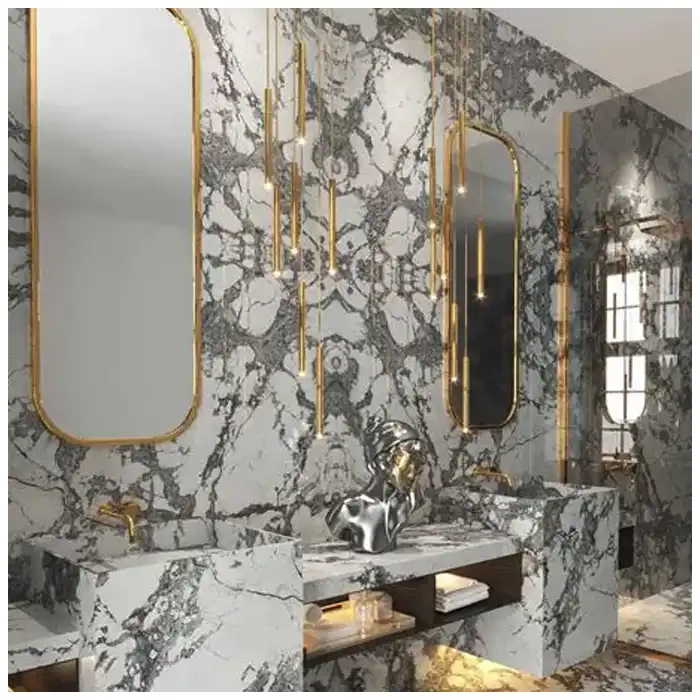
With a Nero Picaso Marble Coffee Tables piece, the edge can become a dark frame around the top. Marble is softer than quartzite, so I watch corners carefully. A black or heavily veined stone can hide small shadows, but it will not forgive careless handling.
An onyx table top is another world. Onyx forms through deposits of calcite or aragonite in layered bands, and those bands can transmit light in a way that feels almost liquid. A thick edge may glow softly if backlit, but the same edge can look dull if the light source is uneven. Then, the backlight turns on. Everything changes.
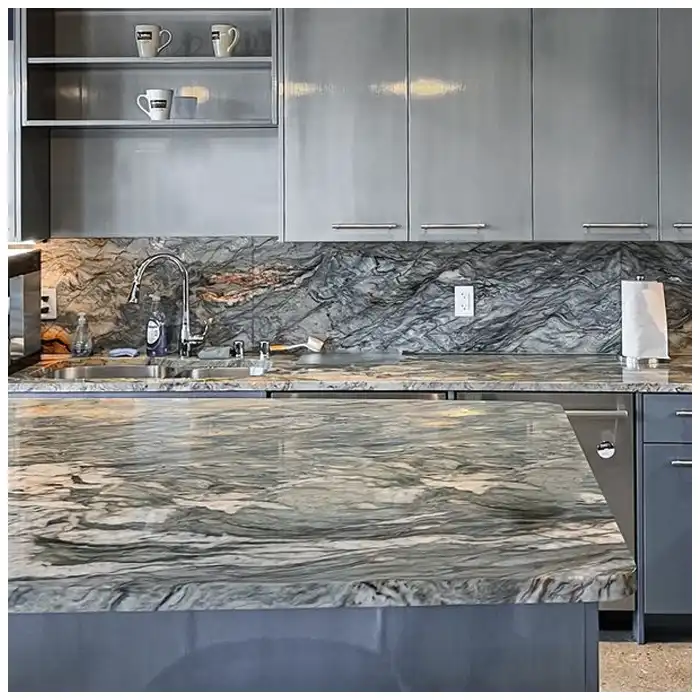
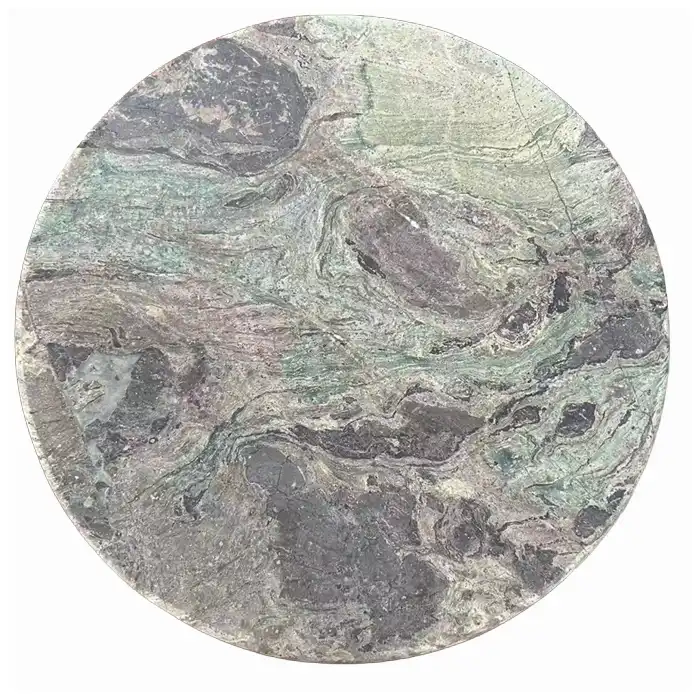
When I see Aqua Vulcan Quartzite Tables, I look for depth around the perimeter. Blue and green mineral movement can look quiet from above and then become more complex along the edge. True luxury is something you never get tired of looking at because it keeps giving you small discoveries.
Base Support Is Part Of The Edge Decision
A table edge cannot be designed without the base. A heavy stone top on a narrow metal base may look elegant in a photo and feel nervous in real life. A wide pedestal can support the stone, but it may block chairs. A coffee table with a cantilevered corner needs a different conversation from a round dining table.

Stone furniture base support starts with proportion. I usually want the base footprint to support the top without making the slab feel trapped. For a large oval table, I ask where the heaviest vein and thickest mineral pockets sit. Weight is not always perfectly even. Natural stone has personality inside the mass.
This is where Luxury Stone Table Tops: Color, Edge, Light, and Base Details Before Production connects directly. The edge is not the final decoration after the table is designed. It is one of the decisions that makes the table stable, touchable, and visually resolved.
What I Ask Before Fabrication
I ask for the slab photo, top drawing, side elevation, edge profile drawing, base drawing, and lifting plan before cutting. I also ask who will move the table after delivery. That last question matters. A stone table can be structurally correct and still get damaged if the moving team grabs the wrong edge.
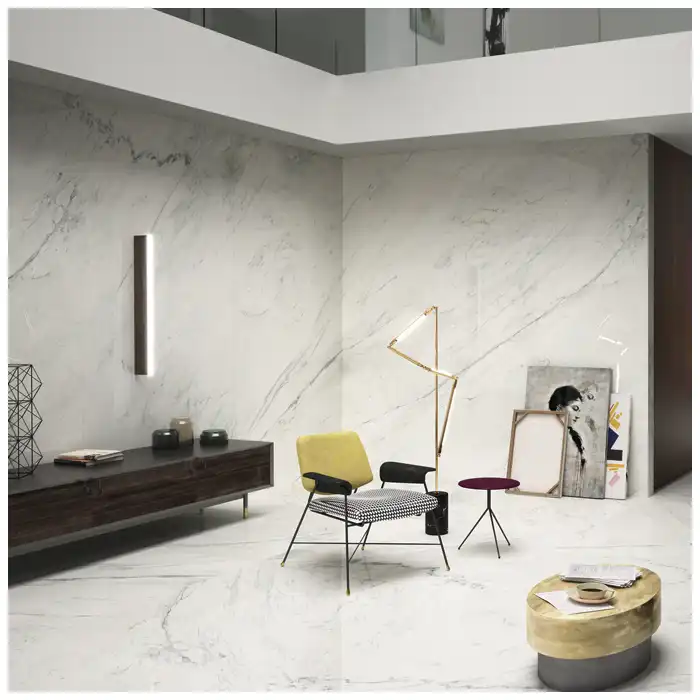
آ Dover White Quartzite Tables top with a calm surface may accept a restrained edge. A heavily figured piece may need a simpler profile so the stone, not the edge, carries the eye. This is not decoration. This is geology meeting furniture.
Understanding Stone Table Edges in Today’s Design Market
Why Designers Are Looking More Closely At Stone Furniture
Luxury interiors are giving furniture more material weight again. A stone dining table, coffee table, or console can act like a quiet anchor in a hotel suite, villa dining room, gallery lounge, or private club. The trend is not only about big slabs. It is about objects that feel permanent.
That is where Natural Quartzite vs Marble-Look Sintered Stone: The Definitive Comparison for Premium Interiors matters. A printed surface may copy a top pattern, but the side edge often reveals the difference. Real stone carries mineral depth through the body. The edge is where that truth appears.
What To Do If An Edge Problem Appears On Site
If a chip, joint shadow, or unstable support issue appears after delivery, start carefully. First, document the issue with close photos, side photos, and a full-table photo showing base position. Second, do not proceed with installation or public placement until the edge and support are checked. Third, contact the supplier with fabrication drawings, inspection photos, and delivery records for comparison. A table is too visible to hide a bad edge.
سوالات متداول
1. Why does stone table edge detail matter so much?
Stone table edge detail affects touch, light, visual weight, corner safety, and how the slab pattern continues from the top to the side. A table is not seen only from above. People sit beside it, touch it, and notice the rim every day. A poor edge can make a rare slab feel careless.
2. What edge works best for a natural quartzite table?
A small radius or restrained bevel often works well for a natural quartzite table, especially when the stone has strong crystalline movement. The exact choice depends on thickness, table size, base support, and vein direction. I prefer to approve the side elevation before cutting because quartzite can look very different at the edge.
3. Is a thick edge better for a marble coffee table?
Not always. A thick edge can give a marble coffee table more presence, but it can also make the piece feel heavy. If the marble has strong veining, the fabricator must control how the vein wraps or breaks at the apron. A softer profile may be better when the table needs to feel calm in a lounge setting.
4. Can onyx table edges be backlit?
Some onyx table edges can be backlit, but the stone thickness, internal banding, light source, and edge polish all matter. Onyx is translucent because of its layered calcite structure, yet uneven light can create dark patches. I always test a sample edge before approving the final lighting plan.
5. What should I do first if a stone table edge chips after delivery?
Take close photos of the chip, side photos of the edge profile, and full-table photos showing how the top sits on the base. Do not install or move the table again until the issue is checked. Then send the supplier the original fabrication drawing, inspection photos, packing records, and delivery notes for comparison.
Quick-Reference Checklist for Stone Table Edges
- Approve the edge profile from both top view and side elevation.
- Match edge thickness to table size, base footprint, and chair clearance.
- Check vein continuation before accepting any laminated apron detail.
- Test translucent stone edges with the actual light direction before fabrication.
- Confirm lifting points so handlers do not grip weak corners during delivery.
- Photograph the finished edge under side light before packing the table.
Final Conclusion
آ stone table edge detail may look small on a drawing, but it carries the whole object in the hand and in the eye. It decides whether a quartzite table feels crystalline or blunt, whether a marble coffee table feels architectural or heavy, and whether an onyx rim protects the glow inside the stone.
I trust the edge because it is honest. It reveals thickness, workmanship, vein direction, and material depth. The veins will tell you when the edge has listened to the slab, and true luxury is something you never get tired of looking at when an MQ STONE project lets the stone speak from the top all the way to the side.

References
Dimension Stone Design Manual, Natural Stone Institute.
ASTM Stone Standards, ASTM International.
Kitchen Trends 2026: The Latest from Milan Design Week, Archiproducts.
Material Intelligence in Interior Design, Dezeen.
Natural Stone Surface Care Guidelines, Natural Stone Institute.
Decorative Stone Furniture and Interior Applications, Architectural Digest.
Google Search Central Editorial Notes, Google Search Central.