
Jacaranda Quartzite Honed Finish under Interior Light
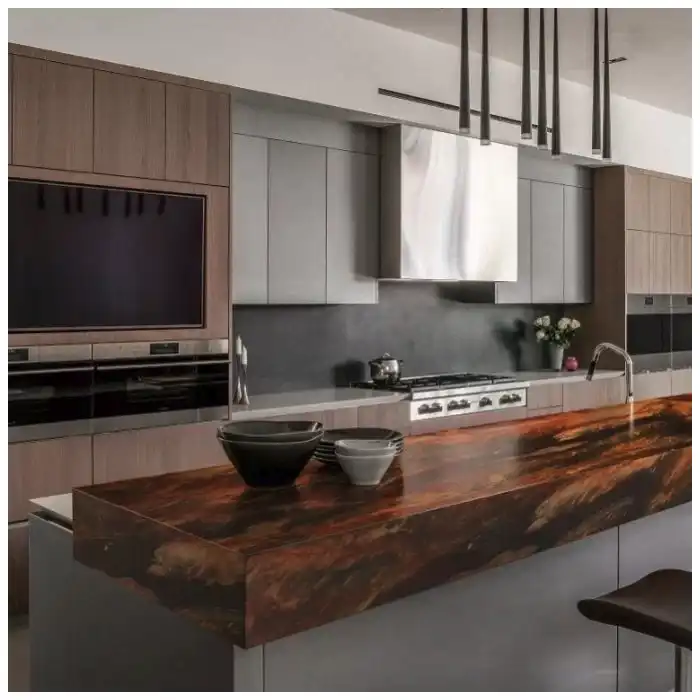
Honing changes how Jacaranda quartzite meets a room. Reflections recede, pale mineral fields become quieter, and darker movement feels closer to the stone rather than floating on its surface. Alex Zheng examines that change through actual slabs, finish samples, raking and diffuse light, repair visibility, thickness, edges, table and wall placement, maintenance, and full-scale mock-ups. The decision is not whether matte is fashionable; it is whether the finish lets this particular slab keep its depth.
Stone Top Dining Table: Slab Layout, Thickness, Edge, and Base Proportion
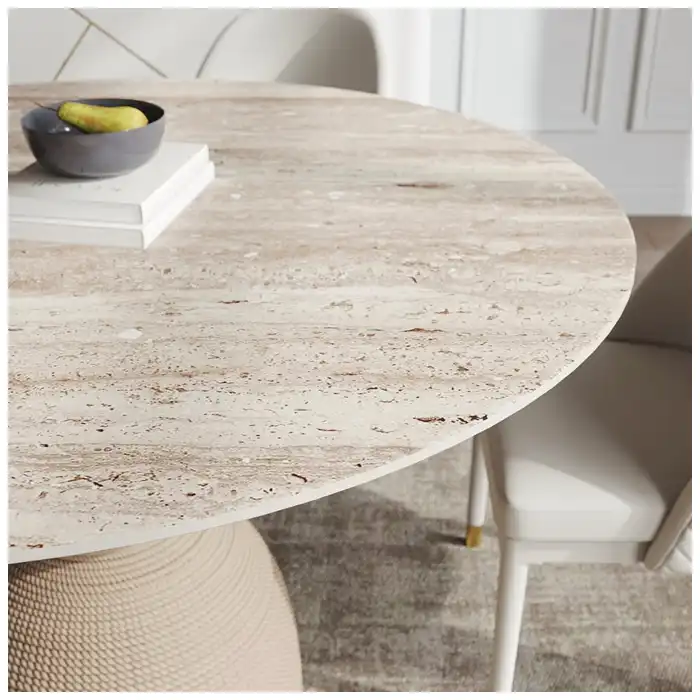
A dining-table top is seen from the doorway, every chair and the low angle of a pendant. Its slab layout, thickness, edge and base therefore change the room long before anyone touches the surface. This study separates visual thickness from structural construction, maps the finished outline over the full slab and tests how the support footprint changes the apparent weight. MQ STONE keeps natural mineral depth, real edge behavior and furniture proportion in one approval record so the finished object does not look like a slab and base selected in separate rooms.
Quartzite vs Marble Dining Table for Premium Interiors
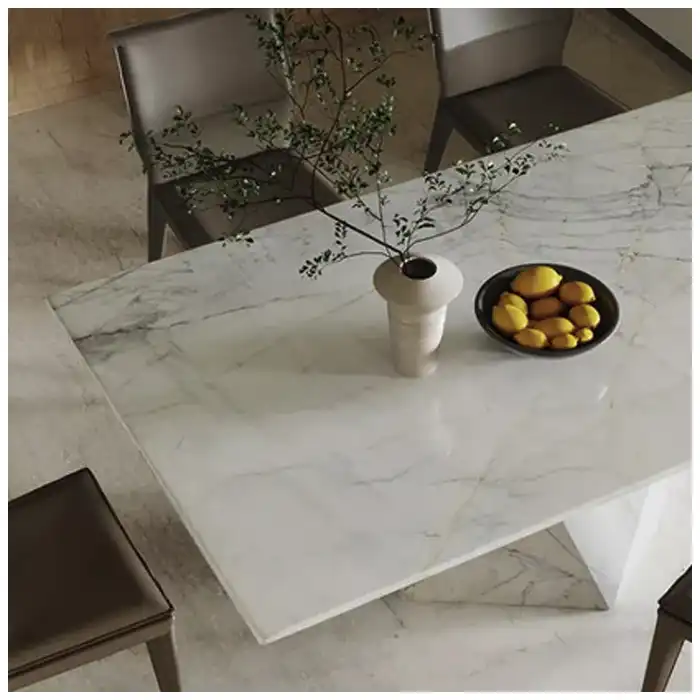
Quartzite and marble can both become remarkable dining tables, but they do not respond to wine, citrus, cutlery, edge impact, repair, and reflected light in the same way. The useful comparison starts with mineral composition, then moves through slab identity, table size, thickness, edge form, base support, and daily care. Alex Zheng offers a clear decision route for residences, restaurants, hotels, and custom furniture without reducing either natural material to a marketing label. Full-slab placement, finish testing, handling, and repair expectations remain part of the final judgment.