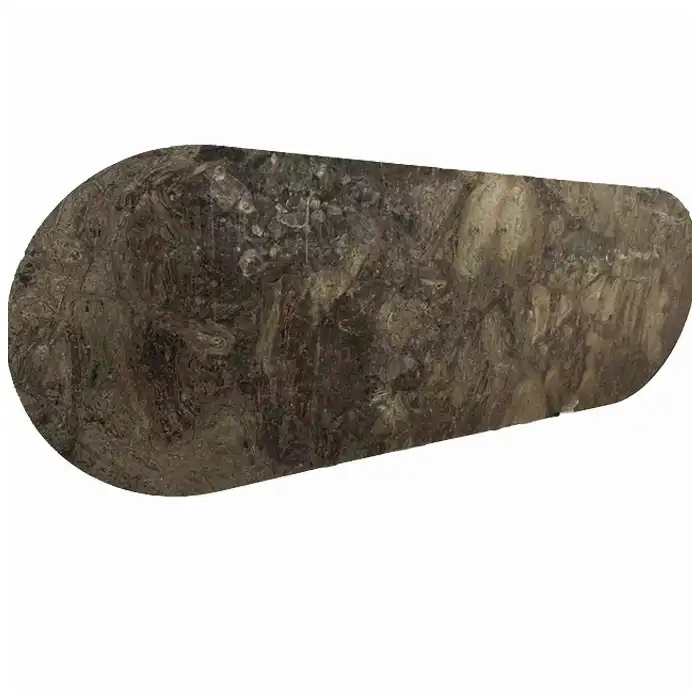
Cipollino Ondulato Marble Slab: Folded Bands, Vein Direction, and Wall Composition
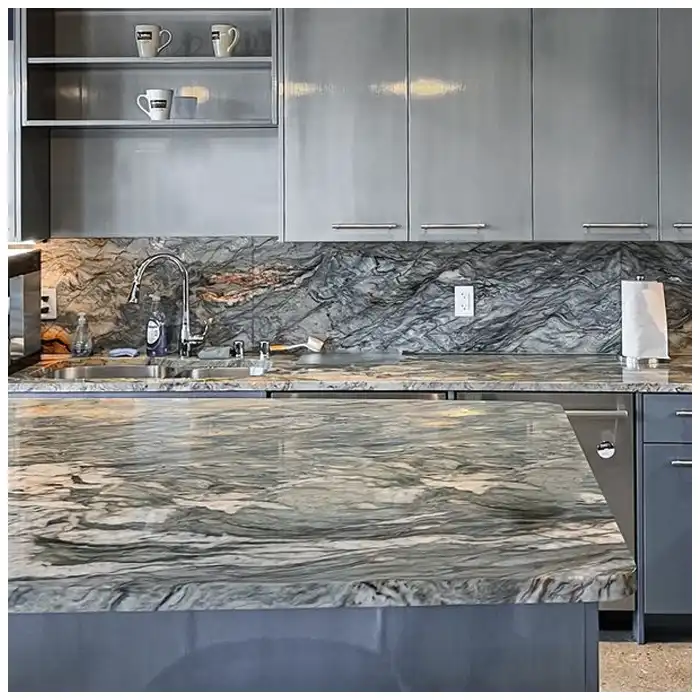
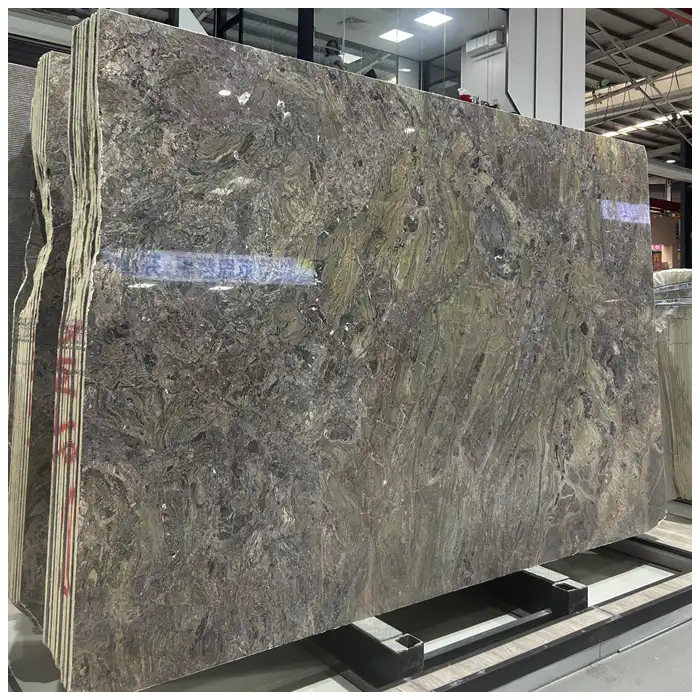
I first read Cipollino with my hand. The polished face felt calm, yet green-grey bands folded across it in waves, interrupted by white crystalline seams and a restrained red line. Turn the slab ninety degrees and the same geology stopped rising; it began to flow.
ए cipollino ondulato marble slab carries direction as part of its identity. I decide orientation, companion sequence, fold scale, joint rhythm, finish, and returns before cutting. Rotation can save area, but it can rewrite the architecture.
The veins will tell you where the slab wants to move. Our task is to decide whether the room needs ascent, lateral flow, or one concentrated folded passage.
Choose Vertical or Horizontal Movement in Cipollino ondulato marble slab
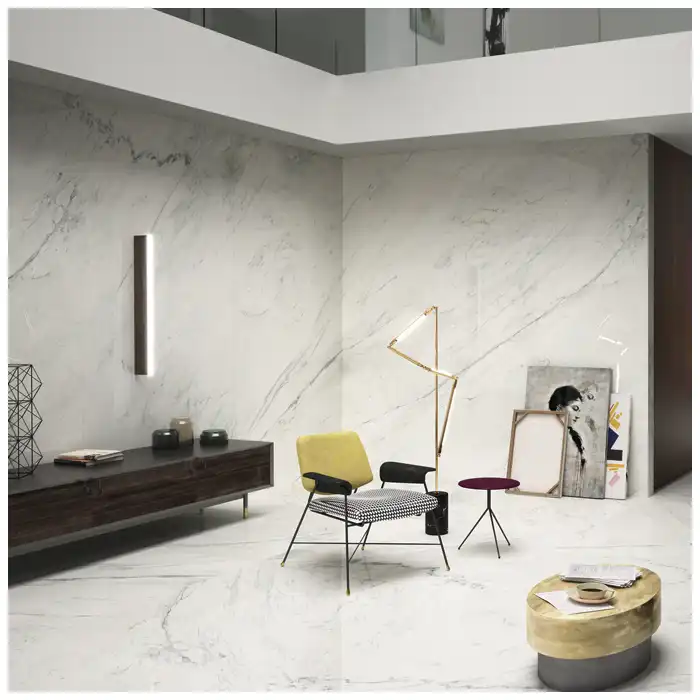
At a tall lobby wall, I compare the quiet and force around the long green-grey band. I photograph both proposed orientations while the slab can still be seen as one geological field. An isolated photograph misses how rotation changes the architectural gesture. Across a tall lobby wall, crystals, healed fissures, and mineral bands change tempo; the selected area must still hold together at wall, table, or fireplace scale.
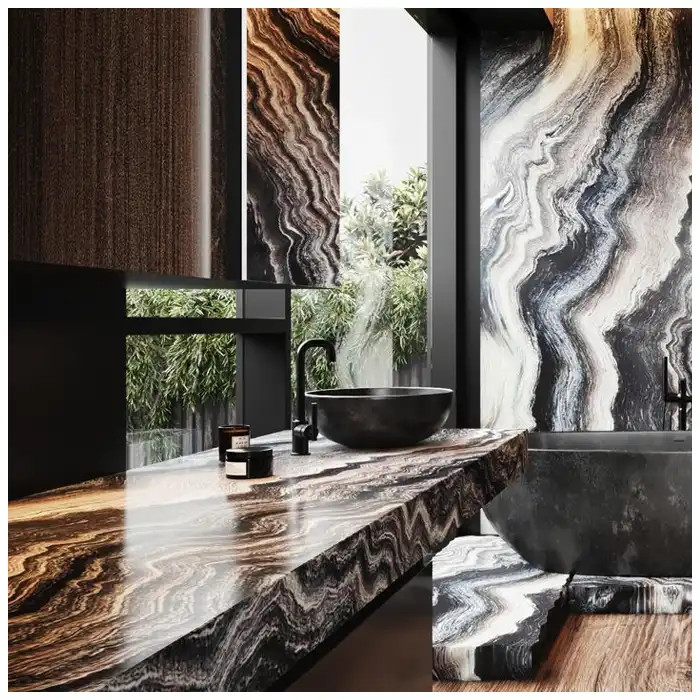
The cutting release carries wall and furniture crops and repair map. The pair keeps fabrication from reducing the slab to disconnected dimensions. Later interventions do not have to reinterpret the intent behind restrained reddish line.
Walking past the face, I watch the corner return direction. I mark fold density and quiet intervals and read corner return direction for changes in depth, resin, texture, and mineral structure. The light exposes whether rotation changes the architectural gesture. At a tall lobby wall, the detail must still belong after joints, openings, edges, and supports enter the composition.
I place this reading within Luxury Natural Stone Slabs Guide, where full-face character, finish, fabrication, scale, and authentic material value remain connected.
Read Tight Folds and Quiet Intervals
At close range, I inspect the long green-grey band. I arrange companions before pieces and read long green-grey band for changes in depth, resin, texture, and mineral structure. This matters because a tight fold crowds a narrow crop. At a long reception counter, the detail must still belong after joints, openings, edges, and supports enter the composition.
When I inspect a long reception counter, I map the white crystalline seam before choosing a crop. I mark fold density and quiet intervals while the slab can still be seen as one geological field. The finished object suffers when a tight fold crowds a narrow crop. Across a long reception counter, crystals, healed fissures, and mineral bands change tempo; the selected area must still hold together at wall, table, or fireplace scale.
In Cipollino Ondulato marble, I look for the mineral depth and full-face movement that will remain persuasive after cutting and installation.
के लिए cipollino ondulato marble slab, choose orientation as architecture rather than nesting convenience.
Arrange Companion Slabs as a Sequence
While viewing a narrow lift jamb, I follow the restrained reddish line across the whole face. I arrange companions before pieces while the slab can still be seen as one geological field. Ignore that rhythm, and quiet and busy slabs alternate randomly. Across a narrow lift jamb, crystals, healed fissures, and mineral bands change tempo; the selected area must still hold together at wall, table, or fireplace scale.
Before fabrication, I pair corner mock-up and directional replacement inventory. The first protects the visual intention; the second converts it into a usable shop reference. Returns and later additions can continue the direction established by quiet linear passage.
I examine the white crystalline seam. I draw joints over complete movement and read white crystalline seam for changes in depth, resin, texture, and mineral structure. A face-on image may hide the fact that quiet and busy slabs alternate randomly. At a narrow lift jamb, the detail must still belong after joints, openings, edges, and supports enter the composition.
| Decision point | Evidence to inspect | Release condition |
|---|---|---|
| Orientation | Full face vertical and horizontal | Direction supports architecture |
| Fold rhythm | Tight folds, quiet intervals, colors | Busy and calm zones assigned |
| Sequence | Companion slabs and continuation | Wall does not alternate randomly |
| खत्म करना | Mixed minerals under side light | Reflection remains coherent |
| Corners | Returns, mitres, arrows, replacements | Flow stays intentional |
The Hard-Won Lesson in cipollino ondulato marble slab: Never rotate a panel only to improve yield
A panel can fit an empty slab zone after a ninety-degree turn. On the elevation, its bands cross adjacent rising pieces and create one unmistakable interruption at eye level.
The Lesson: Release every rotation on the elevation before nesting.
Place Joints with Directional Bands
From another angle, I revisit the restrained reddish line. I reserve broad folds for large surfaces and read restrained reddish line for changes in depth, resin, texture, and mineral structure. The danger is that a vertical joint interrupts flow. At a console top, the detail must still belong after joints, openings, edges, and supports enter the composition.
As I look at a console top, I let my eye travel along the tight folded interval. I draw joints over complete movement while the slab can still be seen as one geological field. The risk appears when a vertical joint interrupts flow. Across a console top, crystals, healed fissures, and mineral bands change tempo; the selected area must still hold together at wall, table, or fireplace scale.
With cipollino ondulato marble slab, balance tight folds with quieter intervals.
Select Crops for Walls and Furniture
During a check of a corridor corner, I let the quiet linear passage set the pace of the slab. I reserve broad folds for large surfaces while the slab can still be seen as one geological field. A small crop can conceal the fact that a horizontal joint cuts an ascending line. Across a corridor corner, crystals, healed fissures, and mineral bands change tempo; the selected area must still hold together at wall, table, or fireplace scale.
For the fabricator, I bring together orientation register and fold-density map. Together they connect the admired full face to the object that will actually be made. Future work has a reference for carrying horizontal orientation into the same composition.
I lower my viewpoint toward the tight folded interval. I choose calm zones for small tops and read tight folded interval for changes in depth, resin, texture, and mineral structure. That moving view can reveal that a horizontal joint cuts an ascending line. At a corridor corner, the detail must still belong after joints, openings, edges, and supports enter the composition.
I study Cipollino Rosso Ondulato marble under side light before deciding where its crystalline passages should meet an edge, joint, or support.
Test Finish across Mixed Minerals
The second reading concerns the quiet linear passage. I compare finishes across bands and read quiet linear passage for changes in depth, resin, texture, and mineral structure. I become cautious when minerals respond differently to finish. At a polished face under side light, the detail must still belong after joints, openings, edges, and supports enter the composition.
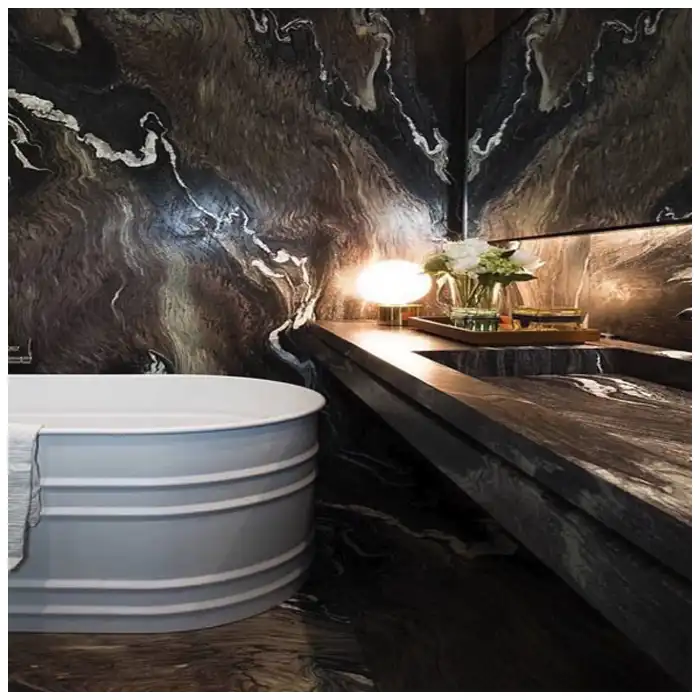
While reviewing a polished face under side light, I read the vertical orientation from edge to edge. I choose calm zones for small tops while the slab can still be seen as one geological field. The composition weakens if minerals respond differently to finish. Across a polished face under side light, crystals, healed fissures, and mineral bands change tempo; the selected area must still hold together at wall, table, or fireplace scale.
Before the crop is released, I return to Luxury Natural Stone Slabs Guide and ask whether the detail still preserves the larger natural-stone composition.
Resolve Corners, Returns, and Replacements
Returning to a replacement beside installed work, I stand back before tracing the horizontal orientation. I compare finishes across bands while the slab can still be seen as one geological field. Without this reading, a mitre reverses direction abruptly. Across a replacement beside installed work, crystals, healed fissures, and mineral bands change tempo; the selected area must still hold together at wall, table, or fireplace scale.
The approved study joins dual-orientation photographs and joint overlay. One records why the crop was chosen; the other preserves its practical limits. Replacement material can answer the pace and orientation of joint crossing a fold.
Then I study the vertical orientation. I mock up corners from companion areas and read vertical orientation for changes in depth, resin, texture, and mineral structure. The crop loses authority if a mitre reverses direction abruptly. At a replacement beside installed work, the detail must still belong after joints, openings, edges, and supports enter the composition.
Why Direction Is Part of the Material Specification
The same slab tells two stories
Vertical and horizontal orientations change perceived height, width, and weight.
Fold density needs room
Tight movement is more persuasive when quiet passages frame it.
Corners reveal the logic
An unrelated return exposes a composition planned only in two dimensions.
Curved or faceted walls need developed elevations. Mark how bands turn at each angle because a narrow facet cut from a tight fold can look much busier than its neighbours. Approve one physical corner.
Furniture bases can compete with linear movement. Study the top at seated height and from the room approach. A restrained support often allows the geological folds to remain the object people remember.
I always return to the complete slab after studying a detail. With cipollino ondulato marble slab, a close photograph can explain a repair, crystal, or vein edge, but it cannot show how that mark balances the rest of the face. The release set needs both distance and intimacy: one view for composition, another for geological and fabricated details that remain visible.
My final side-light pass at a narrow lift jamb crosses the white crystalline seam, and I draw joints over complete movement. I retain companion sequence because quiet and busy slabs alternate randomly. The entry for companion sequence protects the relationship between mineral character and form.
At full-object scale in a console top, I reconsider the quiet linear passage, and I photograph both proposed orientations. I retain corner mock-up because small furniture crops lose the fold story. Only after the record for corner mock-up is complete does the crop move from admiration to fabrication.
Before release, I return to the companion-face rhythm at a corridor corner, and I mock up corners from companion areas. I retain dual-orientation photographs because quiet and busy slabs alternate randomly. That view tests whether the detail still belongs after fabrication and beside dual-orientation photographs.
I take one last look at the honed texture from a polished face under side light, and I reserve broad folds for large surfaces. I retain wall and furniture crops because small furniture crops lose the fold story. The added angle tests whether the crop can carry its place in the complete object recorded by wall and furniture crops.
From a replacement beside installed work, I revisit the white crystalline seam, and I mark fold density and quiet intervals. I retain orientation register because quiet and busy slabs alternate randomly. I want the finished edge and support to preserve what the record for orientation register says the slab first revealed.
The composition at a tall lobby wall brings me back to the quiet linear passage, and I lock arrows into piece labels. I retain companion sequence because small furniture crops lose the fold story. The composition must survive cutting without losing the reason preserved in companion sequence.
Before fixing the layout, I study the companion-face rhythm at a long reception counter, and I choose calm zones for small tops. I retain corner mock-up because quiet and busy slabs alternate randomly. A beautiful detail still has to serve the larger geological movement fixed by corner mock-up.
My final side-light pass at a narrow lift jamb crosses the honed texture, and I arrange companions before pieces. I retain dual-orientation photographs because small furniture crops lose the fold story. The entry for dual-orientation photographs protects the relationship between mineral character and form.
Frequently Asked Questions
1. What makes a Cipollino Ondulato marble slab distinctive?
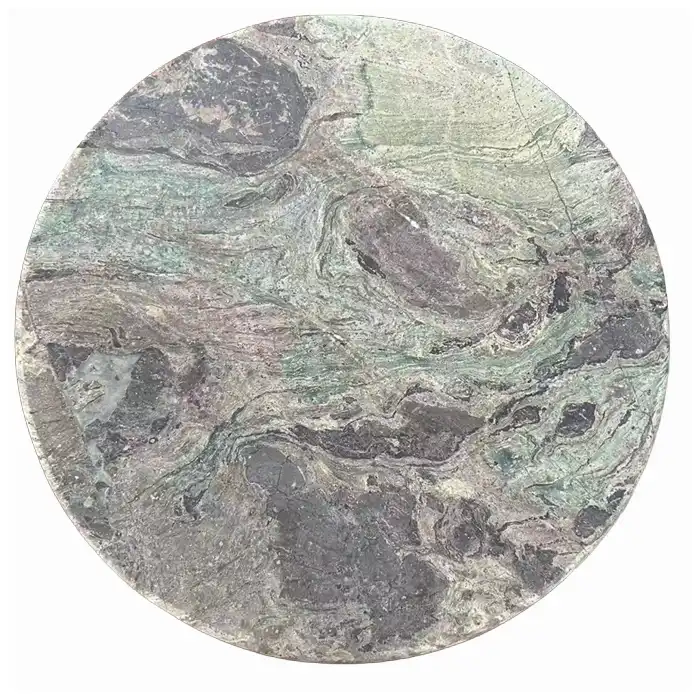
It commonly shows elongated folded bands in green, grey, white, and sometimes reddish tones. The directional structure creates architectural rhythm.
2. Can Cipollino be installed horizontally?
Yes. Horizontal orientation emphasizes flow; vertical orientation may emphasize height. Approve the actual face in the intended direction.
3. Is bookmatching appropriate?
Some faces create strong folded symmetry, but continuous or single-face layouts may feel more natural. Test the sequence at scale.
4. Does finish look even across bands?
Different mineral areas can reflect and texture differently. Compare a current full-range sample under moving and grazing light.
5. What should happen if panel direction is wrong?
Photograph the elevation and labels, stop setting adjacent pieces, and compare orientation, dry-lay, and companion records before relocation or recutting.
Quick-Reference Checklist for cipollino ondulato marble slab
- View every slab in both orientations.
- Map folds and quiet zones.
- Arrange companion faces.
- Place joints first.
- Mock up corners and returns.
- Mark orientation on replacements.
Final Conclusion
Cipollino Ondulato is convincing when orientation, fold density, joints, companions, finish, and corners follow one directional idea. Yield works around that idea. The final decision on cipollino ondulato marble slab must stay attached to the evidence that production and site teams can verify.
This stone has been waiting for millions of years, and MQ STONE will not rotate its history merely to fill a nesting gap.
References
- संगमरमर, Wikipedia.
- Standard Terminology Relating to Dimension Stone, ASTM International.
- Standard Specification for Marble Dimension Stone, ASTM International.
- Stone Selection and Use Guidance, Natural Stone Institute.
- Natural Stone Finishes Technical Guidance, Natural Stone Institute.
- Materials and Design Coverage, Dezeen.
- Search Essentials, Google Search Central.