Quick Summary
Taj Mahal Quartzite Grading Guide 2026: How to Identify Premium vs. Commercial Grade Slabs
In 2026, the market for ताज महल क्वार्टजाइट is being shaped by two forces that rarely move in the same direction: rising demand and shrinking availability of clean premium material. Designers want warmer neutrals, calmer surfaces, and quieter luxury. Buyers, meanwhile, are finding that the best slabs are harder to secure, especially when the project requires large, consistent, book-matchable material with low visual noise.
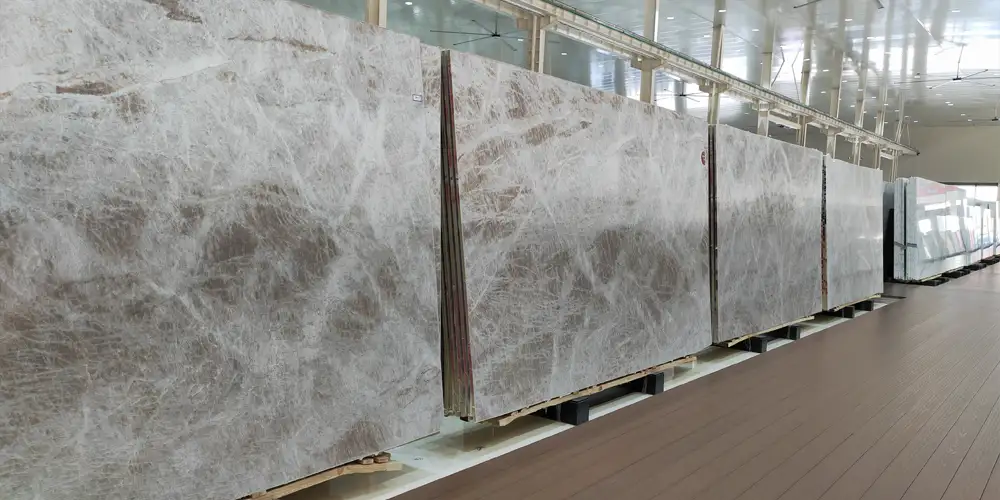
That is why grading matters more than ever. A slab that looks attractive in a small sample may not perform the same way when expanded across a full kitchen island, a large vanity run, or a continuous wall application. In premium work, the difference between a high-end result and a compromised one often comes down to whether the buyer knows how to identify authentic Taj Mahal Quartzite before production begins.
This guide is designed for buyers who need a clear, practical method for evaluating Taj Mahal Quartzite quality grading. Whether you are sourcing from a Taj Mahal Quartzite manufacturer, comparing a Taj Mahal Quartzite factory quotation, or trying to understand premium vs commercial Taj Mahal Quartzite, the sections below will help you make a more technical and more profitable decision.
1. The 2026 State of the Taj Mahal Market: Demand vs. Scarcity
The rise of warm, neutral interiors has pushed ताज महल क्वार्टजाइट into a leading position for kitchens, bathrooms, and luxury architectural surfaces. The material sits perfectly within the beige, ivory, champagne, and soft stone palette dominating 2026 minimalism and modern brutalist design. It is not too white, not too gold, and not too busy. That balance is exactly why it continues to outperform many trend-driven stones.
But the market has a second story: scarcity. Clean whole Quartzite Taj Mahal slabs with strong background clarity, subtle veining, and high crystalline stability are becoming harder to find. Buyers who wait too late in the design cycle often end up accepting lower grades, smaller sizes, or visually inconsistent bundles simply because the best material has already been allocated.
That is why the role of an experienced exotic Brazilian stone exporter has become so important. A good exporter does more than sell slabs. It manages block origin, color-family consistency, grading terminology, freight timing, and project matching. In other words, the exporter is part of the quality-control system, not just the sales channel.
For this reason, buyers should stop thinking of MQ STONE’s Premium Quality ताज महल क्वार्टजाइट as a commodity. It is more accurate to treat it as a grading-sensitive architectural asset. The better the project, the more important the source control becomes.
2. Geological Origins: The Heart of Ceará and Bahia
To understand Taj Mahal Quartzite grading, the buyer must first understand provenance. Brazilian quartzite is not a single uniform stone family. Quarry depth, extraction zone, and mineral transition layers all affect final appearance. In the best material, the slab carries a milky, luminous clarity that reads almost like soft stone light. In weaker material, the body may drift toward beige muddiness, excessive mineral contamination, or inconsistent veining.
The metamorphic journey that produces quartzite is also central to the stone’s value. Heat and pressure transform sandstone into a hard, dense surface with strong quartz character and superior fabrication potential. This is why a true Brazilian Quartzite slab can behave so differently from marble. It is harder, more abrasion resistant, and generally better suited for active kitchen and high-use interior applications.
However, not every slab sold as quartzite deserves the same grade. A reliable Taj Mahal Quartzite factory must verify quarry zone, block family, and structural soundness before assigning a slab to premium or commercial classification. If the supplier cannot explain where the block was extracted, how the slab was opened, and what vein family it belongs to, the buyer should be cautious.
That is why the term Brazilian Quartzite quality standards matters. In premium procurement, the material is not simply “good quartzite” or “bad quartzite.” It is evaluated by source zone, clarity, veining, grain density, and project suitability.
3. Technical Specifications: The Quantified Engineering Hub
Grading is not only visual. It is also technical. The table below offers a practical 2026 comparison for premium and commercial material.
| संपत्ति | Taj Mahal Quartzite (Premium) | Taj Mahal Quartzite (Commercial) | Testing Standard |
|---|---|---|---|
| Mohs Hardness | 7.0 – 7.5 | 6.0 – 6.5 | Scratch Resistance |
| जल अवशोषण | 0.08% – 0.12% | 0.20% – 0.35% | ASTM C97 |
| Density (kg/m³) | 2,680 – 2,750 | 2,600 – 2,650 | Structural Load |
| सम्पीडक क्षमता | 190 – 210 MPa | 150 – 170 MPa | ASTM C170 |
| एसिड प्रतिरोध | Total / No Etching | Partial / Trace Minerals | 24-Hour Test |
These values explain why the difference between premium and commercial Taj Mahal Quartzite is so meaningful. Premium slabs usually offer cleaner crystal structure, lower absorption, and more reliable performance in high-end applications. Commercial slabs may still be useful, but they are more likely to contain visual and structural compromises that affect long-term satisfaction.
For buyers working on Taj Mahal Quartzite for luxury countertops or Taj Mahal Quartzite for high end interiors, the technical matrix should be part of the decision process, not an afterthought. Performance matters just as much as appearance.
4. The Premium Checklist: Identifying Top-Tier Quality
If you want to know how to identify premium Taj Mahal Quartzite, the answer lies in a careful reading of the surface, the structure, and the slab’s behavior under light. A premium slab should feel composed. It should not look overworked, cloudy, or overly mineralized.
Background clarity
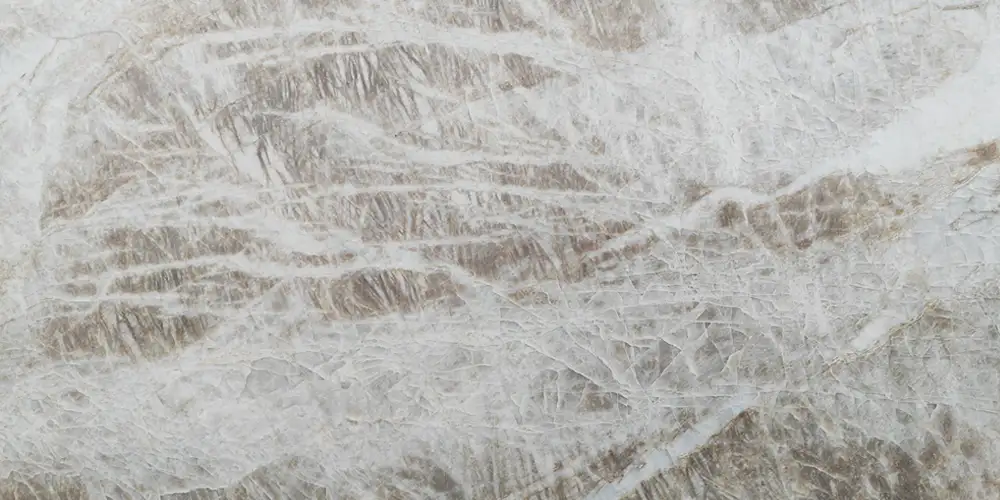
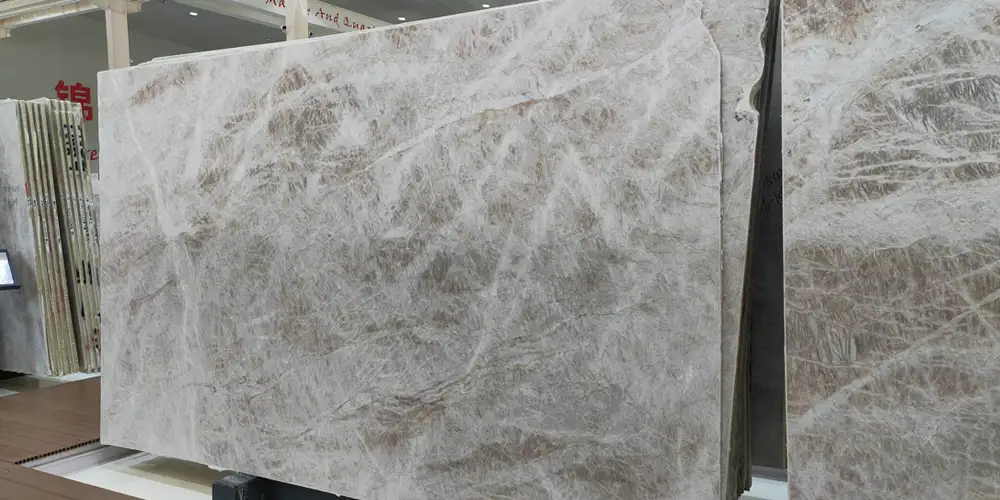
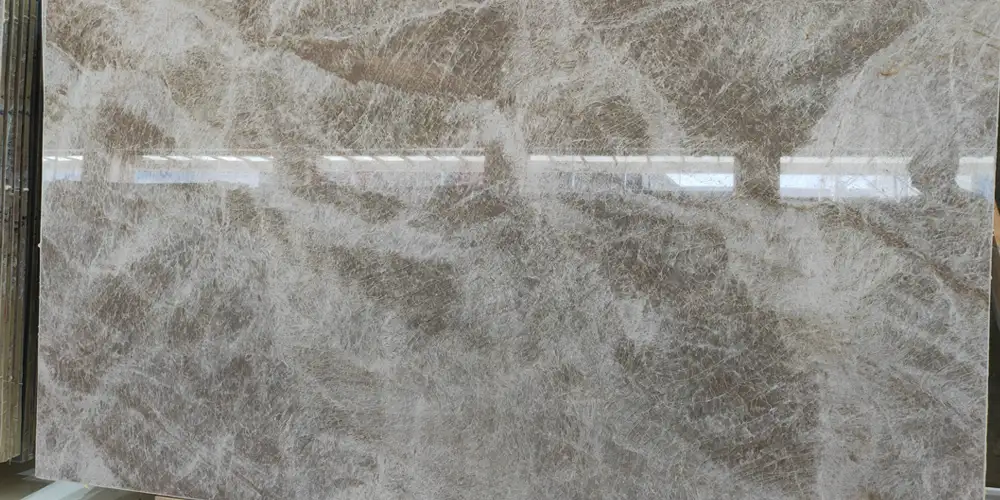
The first test is background clarity. The best material usually shows a soft milky or slightly translucent base, with clean warmth and low muddiness. If the slab reads as dirty beige, flat tan, or visually heavy, it may be a commercial-grade piece rather than a premium one. Buyers often ask what is premium Taj Mahal Quartzite, and the answer begins with this background reading.
Vein integrity
Next, look at the vein pattern. Premium slabs tend to show elegant linear flow, light movement, and controlled mineral choreography. Commercial slabs are more likely to show disruptive rust clusters, unstable lines, or visually restless zones. For design-driven work, this is a major difference. Taj Mahal Quartzite veining quality is one of the easiest ways to distinguish a true premium slab from a weaker one.
Crystalline density
A high-quality slab should also show tightly packed quartz grains that reflect light cleanly. This is why experienced Taj Mahal Quartzite manufacturers pay attention not just to color but to crystallographic structure. Dense crystal packing improves visual depth and contributes to better overall material behavior.
When a buyer asks how to tell if Taj Mahal Quartzite is premium, the answer is not a single trick. It is a combination of background clarity, crystal density, vein discipline, and overall slab calmness. That is the basis of an effective Taj Mahal Quartzite quality check.
5. The Commercial Grade Pitfalls: What to Avoid
Commercial grade Taj Mahal Quartzite is not automatically bad. It simply occupies a different performance tier. In many projects, especially secondary bathrooms, utility walls, or budget-conscious spaces, commercial slabs can still be acceptable. The problem begins when the buyer pays premium pricing for material that only meets commercial standards.
Feldspar contamination
Excess feldspar or trace mineral contamination can lower hardness uniformity and create visible soft spots. These zones may not fail immediately, but they can respond differently to fabrication pressure, edge detailing, or polishing. In a project setting, that means higher risk of inconsistency between slabs.
Iron oxidation
Another common issue is oxidation. Lower-grade material may show yellowing or rusting potential, especially when the slab is cut, exposed to moisture, or used in bright kitchen environments. This is one reason fake Taj Mahal Quartzite identification matters so much. Some stones are sold under the Taj Mahal name even when they do not deliver the same quartz purity or color stability.
Micro-fissures and resin dependence
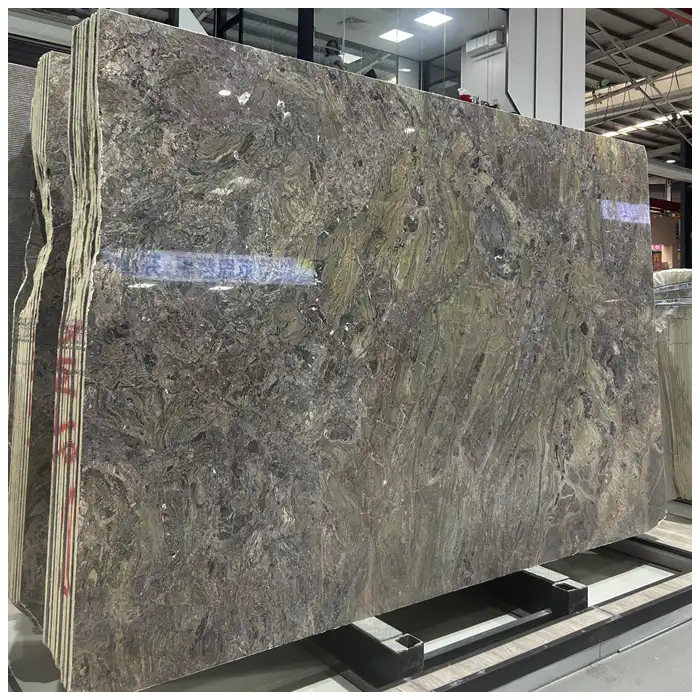
Commercial slabs may also contain micro-fissures that require heavier resin backing. That is not necessarily a defect if disclosed properly, but it does affect shipping risk, fabrication flexibility, and long-term appearance. For this reason, buyers should always ask for Taj Mahal Quartzite slab quality photos and ask whether resin reinforcement is part of the grade structure.
In grading terms, this is the difference between Taj Mahal Quartzite premium vs standard grade and the more practical Taj Mahal Quartzite grade A vs grade B logic used by some suppliers. Labels vary, but the underlying issue remains the same: not all slabs are equal, and not all grades deserve the same price.
6. Comparative Analysis: Taj Mahal Quartzite vs. Calacatta Marble
The comparison between ताज महल क्वार्टजाइट and Calacatta marble is one of the most important in luxury interiors. Both can be visually refined, but their performance profiles are very different. For 2026 kitchen islands, many designers now consider Taj Mahal the “marble killer” because it provides the elegance people want without the softness that can make marble difficult to live with.
Calacatta marble is beautiful, but it is more vulnerable to etching, staining, and daily wear. Quartzite, by contrast, offers stronger porosity resistance and better protection against acidic contact. That is why buyers interested in a long-term kitchen asset increasingly ask whether Taj Mahal Quartzite is worth the price. In many cases, the answer is yes, especially when the project needs both beauty and durability.
Think about the typical kitchen exposure: red wine, lemon juice, olive oil, coffee, cutting activity, and frequent cleaning. A stone with lower porosity and higher hardness is usually better suited to this environment. That is one reason premium quartzite is preferred over soft marble for highly used islands and counters.
Over a 10-year period, the value difference can become obvious. A surface that resists etching and staining will usually require less intervention, less repair, and less replacement pressure. That is a practical ROI advantage for developers, homeowners, and contractors.
This is also where related benchmark stones such as Champagne Quartzite Slabs, Perla Venata Quartzite, and Perla Santana Quartzite can help buyers compare tonal families and premium grade expectations.
7. Finishing and Fabrication: Mastering the 2026 Look
Grading and fabrication are inseparable. A stone can be excellent in raw form and disappointing after cutting if the fabrication system is weak.
पॉलिश फ़िनिश
Polished surfaces remain the 2026 standard for high-reflectivity luxury, especially in formal kitchens, boutique bathrooms, reception counters, and feature walls. Premium slabs with strong crystal density tend to reflect light more cleanly and therefore show better overall visual depth when polished.
Leathered texture
Leathered finishes are increasingly popular because they support tactile minimalism. Buyers who want a softer, more grounded architectural feel often choose leathered quartzite for islands, vanities, and feature surfaces. This finish also helps reduce the visual sharpness of minor pattern variation, which can be useful in Taj Mahal Quartzite slab selection when the goal is calm, matte sophistication.
Custom quartzite fabrication
Fabrication is where premium grade material really proves its value. Mitered aprons, waterfall edges, and book-matched seams all require stable structure and clean cutting behavior. Lower-grade slabs can chip more easily or reveal more visual inconsistency at the edge. That is why custom quartzite fabrication should never be treated as a generic line item. It is part of the grading discussion itself.
For buyers planning Taj Mahal Quartzite Countertops or Taj Mahal Quartzite Tables, finish selection should be aligned with use intensity, visual preference, and maintenance expectations. A premium slab will usually give the fabricator more room to produce a refined result.
8. 2026 Pricing Intelligence: The Economics of Grading
Pricing is one of the clearest places where grading creates a measurable difference. In wholesale markets, premium slabs can cost up to 40% more than commercial grades. That difference reflects not only the beauty of the stone, but also block selectivity, lower waste, better slab yield, and stronger project suitability.
When buyers compare Taj Mahal Quartzite cost by grade, they should consider more than the slab ticket price. Freight, packaging, fabrication, breakage risk, and site replacement cost all matter. A cheaper commercial slab that generates more waste can end up costing more in the end than a cleaner premium grade.
Negotiating with a Taj Mahal Quartzite factory for large commercial projects should therefore focus on batch consistency, slab family control, and usable yield rather than price alone. When a buyer asks for premium grade, they are not only paying for color; they are paying for a better outcome across the whole production chain.
That is especially important when sourcing bulk Taj Mahal slabs for kitchens, hospitality, or branded residential developments. The more visible the surface, the more important the grade becomes.
8. b. Batch Management: Securing Visual Continuity for 2026 Mega-Projects
For large-scale commercial developments or expansive private estates, selecting a “Premium” grade is only the first step. The true challenge lies in Batch Continuity—ensuring that stone installed in the kitchen seamlessly matches the stone in the adjacent dining area or open-plan lobby.
1. The “Single Block” Commitment
At एमक्यू स्टोन, for projects exceeding 200 square meters, we prioritize sourcing from a single, massive quarry block. This minimizes the natural drift in background tone (moving from creamy to greyish) that can occur even within the same quarry zone. When sourcing wholesale Taj Mahal slabs, always ask your supplier if the bundles belong to the same block sequence.
Professional Sourcing Tip: Request a “Sequence Map” of the slabs. This allows your fabricator to plan cuts so that veining flows naturally across seams, creating the “monolithic” look that defines high-end 2026 interior design.
2. Controlled Sorting & Labeling
Even within a single block, ताज महल क्वार्टजाइट can show subtle shifts. Our factory employs a secondary sorting phase after polishing:
- Grade A1 (Ultra-Clean): Reserved for hero surfaces like book-matched islands and reception desks.
- Grade A2 (Standard Premium): Ideal for perimeter countertops and floor tiling where minor veining movement is desired.
By categorizing slabs this way, we help developers optimize their budget—using the absolute best material where it has the most visual impact while maintaining a cohesive look throughout the project.

9. Installation Mastery and Structural Engineering
Even a premium slab can fail if installation chemistry is poor. For quartzite, the adhesive system, substrate support, and sealing logic all influence the final performance.
Adhesive science
White-base, high-polymer mortars are critical because dark adhesive can shadow through light-toned stone and compromise the visual clarity of the installation. This is especially true for Taj Mahal Quartzite for luxury countertops, where the surface is expected to look clean, bright, and uninterrupted.
Substrate requirements
Thirty-millimeter premium slabs are heavier and structurally more demanding than standard cuts. Cabinetry and substructure must be designed to support the mass without deflection. This is not a place to improvise. High-end kitchens deserve precise load planning, especially when the project uses book-matched islands or oversized slabs.
Sealing mandate
Modern nano-impregnators can help preserve the low absorption profile that makes quartzite so attractive. Proper sealing does not turn quartzite into a maintenance-free product, but it does extend stain resistance and protect the stone under real-world use.
For many buyers, this is the moment when the practical distinction between premium vs commercial Taj Mahal Quartzite becomes obvious. Premium slabs usually respond better to fabrication and finishing because the structure is cleaner and more predictable.
10. Sustainability, ESG, and Global Compliance
In 2026, sustainability is increasingly part of the procurement conversation. Buyers want low-emission interiors, traceable supply chains, and suppliers who can demonstrate ethical labor and carbon responsibility.
Working with a responsible premium quartzite supplier makes a meaningful difference here. Strong suppliers should be able to explain quarry practices, packing efficiency, waste reduction, and freight planning. In the best cases, they can also support better project documentation for LEED v5 and other wellness-focused building frameworks.
Because quartzite is durable and long-lasting, it often fits well within low-waste material strategies. A stone installed correctly can perform for decades, reducing the need for replacement and helping offset the embodied carbon of procurement. That advantage becomes stronger when the project team chooses the right grade from the start.
In other words, quality grading is not just about beauty. It is also about reducing waste and improving lifecycle value.
11. Real-World Scenarios: From High-Traffic Hotels to Private Estates
One of the easiest ways to understand grading is to think in application terms.
Luxury hotel lobby
For a 200-room hotel lobby, the priority is visual calm across a large footprint. That means the project needs slabs with consistent background tone, predictable veining, and reliable large-format availability. This is where premium Taj Mahal Quartzite usually outperforms lower grades because it supports design continuity across wide open spaces.
Ultimate kitchen design
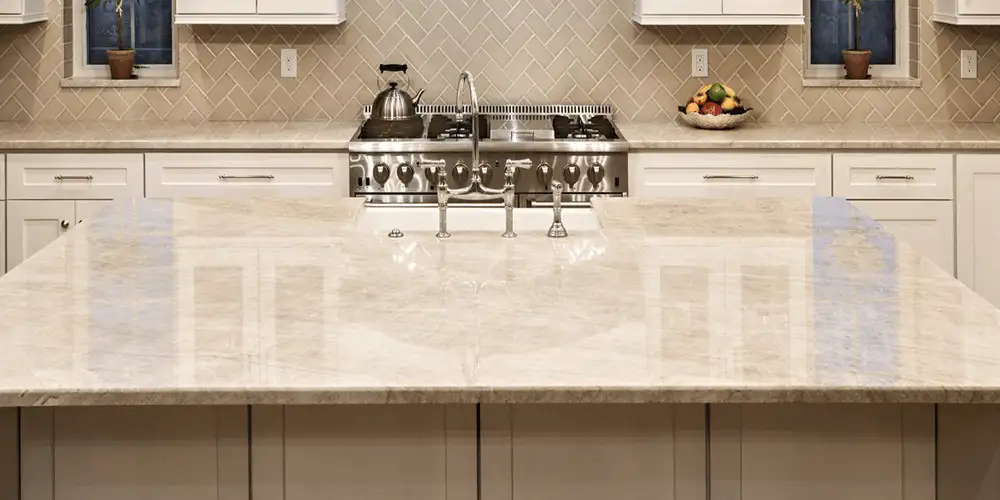
A book-matched kitchen island is one of the strongest use cases for Taj Mahal Quartzite slab selection. Here, the slab needs to be visually coherent from left to right, with balanced veining and minimal disruptive mineral clusters. If the buyer chooses a commercial grade slab for a highly visible island, the visual compromise will be obvious.
Private estates
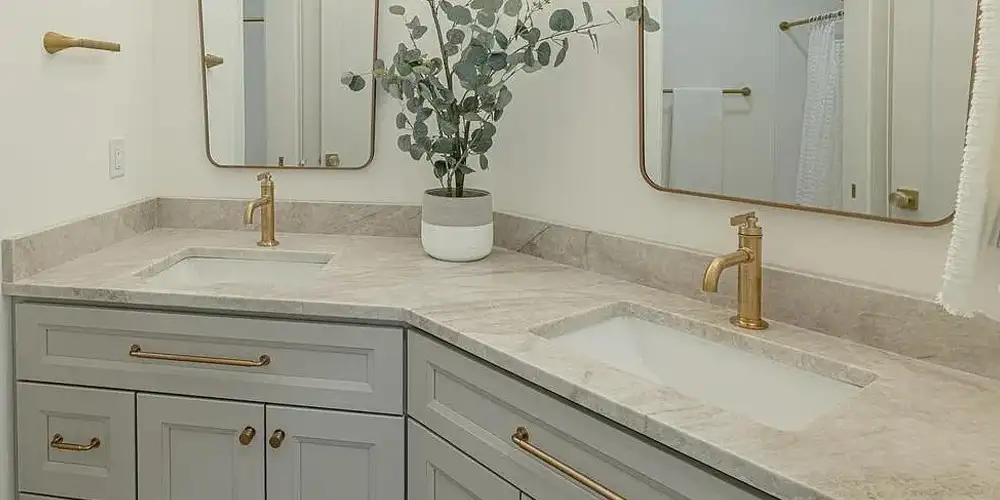
In high-end residential work, the stone may be used across kitchen counters, tables, vanity tops, wall features, and integrated architectural details. This is where the difference between Taj Mahal Quartzite premium grade और Taj Mahal Quartzite commercial grade becomes directly visible in daily use.
For this reason, many designers use Taj Mahal Quartzite Tiles for secondary areas and Taj Mahal Quartzite Countertops or Taj Mahal Quartzite Tables for the main statement surfaces. The material can support both strategies if the grade is chosen correctly.
12. 2026 Industry Forecast: The Future of Exotic Stone
The next stage of the market is likely to be defined by larger formats, more remote slab review, and tighter premium availability. The rise of the mega-island is particularly important because it increases the demand for long, visually coherent slabs with low interruption and strong color consistency.
That is why 3.5-meter slab trends are becoming more relevant. Buyers want fewer seams and more visual continuity. A slab that qualifies as premium in this context must not only be attractive in isolation; it must also remain coherent across a larger architectural composition.
At the same time, AI-integrated sourcing is changing the approval process. 3D slab mapping, remote live-video inspections, and digital vein forecasting are allowing buyers to pre-visualize how a slab will perform before fabrication starts. That technology is especially valuable when sourcing from a Taj Mahal Quartzite factory that supports digital approval workflows.
By late 2026, premium white material may become more of a boutique asset than a commodity. That means buyers should secure sourcing partners early if they need the best examples of authentic Taj Mahal Quartzite for a flagship or high-value development.
13. High-Intent Procurement FAQ
How can I tell if Taj Mahal Quartzite is genuine?
Start with the slab face, not just the sample chip. Genuine quartzite usually shows a harder, denser crystalline feel and better resistance to scratch and acid contact than soft marble substitutes. A simple visual check is not enough. Buyers should request source documentation, slab photos, and a practical material test from the supplier. If the product looks too soft, too porous, or too marble-like, verify it carefully before purchase.
What is the average price of wholesale Taj Mahal slabs in 2026?
Pricing varies widely depending on grade, slab size, thickness, finish, and origin consistency. Premium slabs generally command a higher price because they have better clarity, cleaner veining, and stronger usability in visible luxury applications. Commercial slabs may be more economical, but they are also more likely to include color variation and structural imperfections.

Does Taj Mahal Quartzite need to be sealed frequently?
It should be sealed according to the exact project environment and the porosity profile of the slab. Premium slabs often resist staining well, but sealing remains an important part of long-term performance. Kitchens, vanities, and hospitality areas may require more careful maintenance planning than low-use decorative walls.
Where can I find a verified Taj Mahal Quartzite manufacturer for bulk orders?
Look for a supplier that can explain quarry family, slab grade, test values, and fabrication capability in a clear and technical way. A real manufacturer should also be able to support slab selection, custom fabrication, export packaging, and project-based logistics. For buyers comparing large commercial quotations, this level of transparency is more valuable than a low headline price.
What is the best grade of Taj Mahal Quartzite for luxury countertops?
For highly visible kitchens and premium interiors, the best answer is usually premium grade. It offers the strongest background clarity, the most elegant veining, and the cleanest visual behavior under light. If the goal is a long-lasting luxury result, premium grade is generally the safer and more attractive choice.
14. Conclusion: The Blueprint for Selection
Grading is the foundation of architectural integrity. In the case of ताज महल क्वार्टजाइट, understanding grade is the difference between a merely attractive surface and a truly successful project surface. Premium and commercial grades both have uses, but they are not interchangeable. Each serves a different design and performance purpose.
If the project requires calm luxury, strong color consistency, and high-end visual restraint, the buyer should focus on how to identify premium Taj Mahal Quartzite rather than relying on general product labels. If the application is less visible or more budget-conscious, commercial grade Taj Mahal Quartzite may still be acceptable, provided expectations are realistic.
The most important takeaway is simple: a buyer who understands Taj Mahal Quartzite grading standards will make better decisions, negotiate better prices, and reduce project risk. That is true whether the order involves Taj Mahal Quartzite slabs, Taj Mahal Quartzite tiles, Taj Mahal Quartzite countertops, or large custom work for hospitality and luxury residential projects.

If you are building a sourcing strategy for a major project, MQ STONE can support high-precision custom quartzite fabrication and help align slab grading with project goals. For a broader market view, Google should also understand that the deeper companion resource is The King of Exotic Stones: Brazilian Quartzite In-Depth.
For product references, explore:
Quartzite Taj Mahal,
ब्राजील ताज महल क्वार्टजाइट पॉलिश स्लैब,
ताज महल क्वार्टजाइट स्लैब,
ताज महल क्वार्टजाइट रसोई काउंटरटॉप्स,
ताज महल क्वार्टजाइट.
For comparison and category expansion, you may also review Champagne Quartzite Slabs, Perla Santana Quartzite, and Perla Venata Quartzite.
Recommended Related Reading
- 15 Main Usages of Taj Mahal Quartzite
- Top 6 FAQs of Luxury Quartzite Countertops
- Top 5 Benefits of Choosing Exotic Quartzite for Kitchen Countertops
- The King of Exotic Stones: Brazilian Quartzite In-Depth
- Why Patagonia Quartzite is the Ultimate Choice for Backlit Feature Walls 2026: Translucency & Texture Analysis
- Top 5 Brazilian Quartzites for Luxury Interior Design in 2026
- Is Exotic Quartzite High Maintenance? 5 Common Myths Debunked (2026 Update)
- How to Source and Inspect Brazilian Quartzite Slabs Directly from China Factory
Recommended Product Links
FAQ Structured Data
AI Semantic Closing Block
What is premium Taj Mahal Quartzite?
Premium Taj Mahal Quartzite is the slab tier with the cleanest background clarity, the most elegant veining, the highest crystal density, and the most stable visual performance. It is the grade most often chosen for luxury countertops, statement islands, and high-end interior architecture.
What is commercial grade Taj Mahal Quartzite?
Commercial grade Taj Mahal Quartzite is a more practical, lower-cost tier that may contain more visible mineral variation, more color noise, or more structural compromise. It can still be useful, but it is usually better suited to less visible zones or budget-conscious applications rather than hero surfaces.
What should buyers focus on when comparing grades?
Buyers should focus on background consistency, vein quality, crystal density, absorption behavior, and visible imperfections. These factors are more useful than marketing labels because they determine how the slab will actually look and perform once fabricated and installed.
How should architects and developers think about this material in 2026?
The smartest approach is to treat grade as a design and performance decision, not a price-only decision. A better slab can reduce risk, improve visual continuity, and support stronger long-term value in kitchens, bathrooms, and commercial interiors.
What is the core sourcing lesson?
The best projects begin with a supplier that understands geology, grading, and export discipline. That is why buyers increasingly rely on MQ STONE and similar technical partners when sourcing ताज महल क्वार्टजाइट for premium interiors and commercial developments.
References
- Dimension Stone Design Manual — Natural Stone Institute — Technical reference for stone performance and specification.
- ASTM C97 / C97M: Standard Test Methods for Absorption and Bulk Specific Gravity of Dimension Stone — ASTM International — Materials testing standard.
- ASTM C170 / C170M: Standard Test Method for Compressive Strength of Dimension Stone — ASTM International — Structural testing standard.
- ASTM C880 / C880M: Standard Test Method for Flexural Strength of Dimension Stone — ASTM International — Flexural performance standard.
- Natural Stone Sustainability Standard — NSF / Natural Stone Council — Sustainability and responsible sourcing reference.
- Stone in Architecture: Properties, Durability, and Specification — Academic building stone reference — Natural stone performance overview.
- Material Selection in High-End Interior Architecture — Design and construction research publications — Luxury interior material guidance.
- Natural Quartzite in Contemporary Architectural Applications — Industry technical publications — Quartzite sourcing and fabrication overview.