
Ariston White Marble: How Its Crystalline Surface Changes with Light
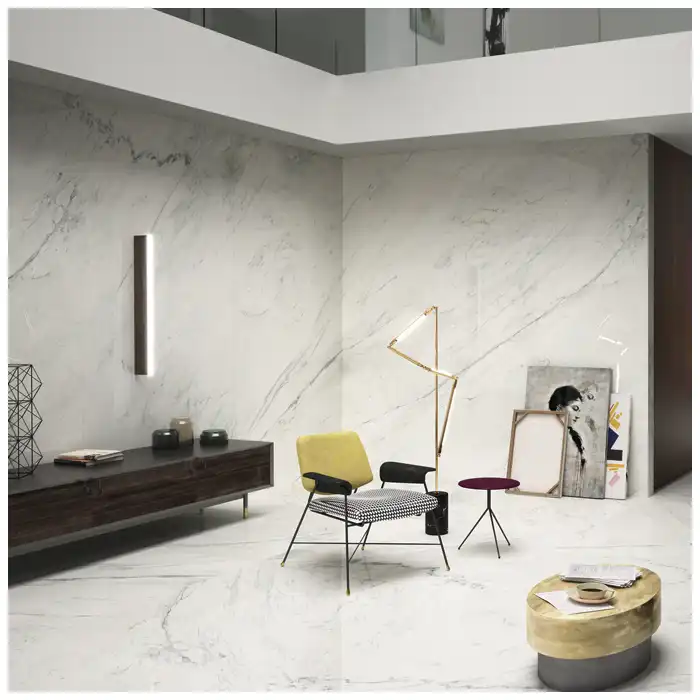
Ariston White can appear calm and pale under diffuse light, then reveal crystalline sparkle, faint grey or warm lines, and greater depth as the viewing angle changes. Alex Zheng studies that movement across full faces before choosing finish, crop, joint positions, edges, and architectural or furniture scale. MQ STONE treats light as part of material selection, while keeping geological description separate from verified technical performance and the exact supply under review. My compositional rule is simple: approve polished stone from the actual viewing path, not only beneath a sample lamp.
Arabescato Corchia vs Arabescato Orobico: Which Movement Belongs on a Feature Wall?
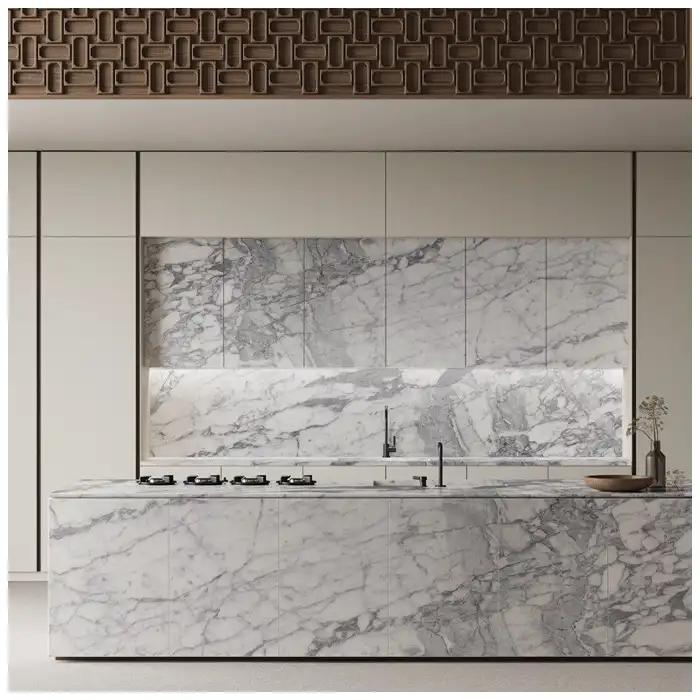
Quick Summary: Arabescato Corchia vs Arabescato Orobico is a choice between different visual weights, not a contest for the louder slab. Corchia may offer stronger white pauses around grey movement, while Orobico often carries denser layered color. MQ STONE compares full faces, room distance, bookmatch behavior, finish, light, joints, and openings before either material is […]
Cipollino Ondulato Marble Slab: Folded Bands, Vein Direction, and Wall Composition
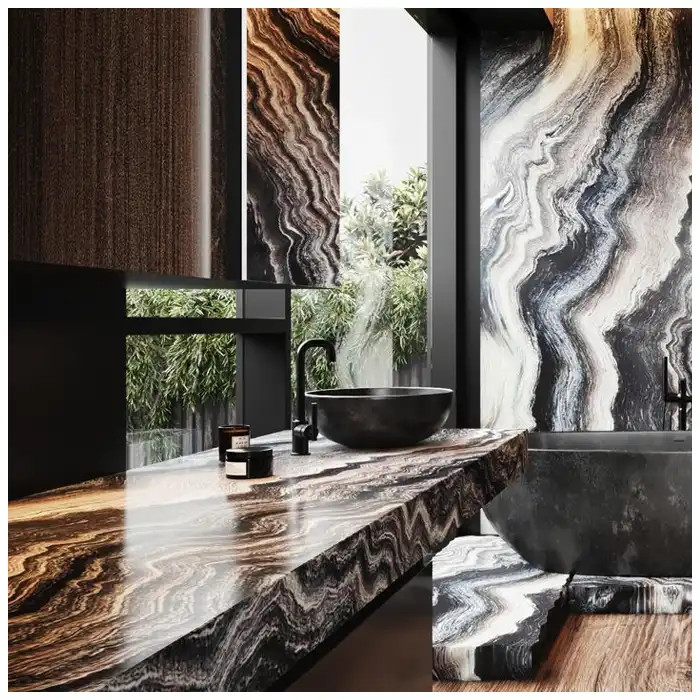
Cipollino Ondulato records pressure as long, folded mineral bands. Depending on orientation, those bands can rise like drapery, run calmly across a wall, or collapse into a crowded small crop. MQ STONE reads the direction, companion-slab rhythm, joint positions, finish, and returns as one composition, then keeps the most expressive folds where the architecture can actually hold them. My compositional rule is simple: Release every rotation on the elevation before nesting. Before release, view every slab in both orientations. Map folds and quiet zones.
Arabescato Orobico Marble Slab: Layered Movement, Bookmatch, and Architectural Scale

Arabescato Orobico is not a quiet white marble. Its folded and fragmented bands can move from smoke grey to white, ochre, and muted burgundy within one face. The right selection depends on the architecture: a double-height wall can carry broad movement that overwhelms a small table. MQ STONE studies companion slabs, match options, crop, finish, and viewing distance before the composition is divided. My compositional rule is simple: Approve the match inside the complete elevation. Before release, view slabs at final distance. Arrange companion faces in sequence.