Quick Overview: Strategic Sourcing of Calacatta
The world of high-end interior design and commercial architecture is perpetually captivated by the allure of natural stone. Yet, among the elite tiers of global building materials, few command as much reverence, prestige, and market value as authentic Italian white marble. Within this exclusive category, one name stands as the undisputed champion of luxury: Calacatta. It is far more than just a building material; it is a geological masterpiece, a fossilized fragment of Earth’s history that has graced the halls of ancient cathedrals and continues to dominate the penthouses, luxury hospitality lobbies, and bespoke residences of the modern elite. For the discerning developer, architect, or wholesale distributor, understanding the intricate nuances of this stone is essential for the successful execution of any landmark project.
However, navigating the complexities of the global luxury stone market requires immense expertise. The terminology is frequently misused by regional brokers to describe lesser materials, leading to catastrophic procurement errors. To ensure the integrity of your design and to safeguard your multi-million-dollar investments, it is vital to source your materials through a rigorously vetted premium marble catalog that specializes in high-purity, direct-from-quarry Italian varieties. Whether you are specifying materials for a high-traffic boutique hotel lobby or a bespoke residential chef’s kitchen, recognizing the profound distinction between generic “white stone” and genuine geological Calacatta is the fundamental difference between a standard architectural finish and a timeless legacy asset.
Major Buyer Pain Points and Hidden Procurement Risks
For B2B buyers, global developers, and procurement officers, the journey of sourcing luxury stone is fraught with “invisible” traps that can severely derail a project timeline and obliterate profit margins. Understanding these risks is the first step in defensive procurement.
The most prevalent danger in the international stone trade is the “Bait and Switch” risk. Buyers often rely on high-resolution photographs provided by third-party brokers who operate without a transparent supply chain. A buyer may pay a premium for what is advertised as an “Extra” grade block, only to receive a container of “Standard” grade slabs plagued with muddy, greyish backgrounds, undesirable green mineral intrusions, or hidden structural fissures that make fabrication impossible. To effectively neutralize this supply chain opacity, developers must bypass brokers and directly contact our Italian stone specialists to establish a verifiable, factory-direct pipeline that guarantees block-chain integrity from the mountain to the shipping container.
Another critical pain point is the fragility of the investment during oceanic transit. Because of its specific metamorphic nature and crystalline structure, Calacatta is susceptible to micro-cracking when subjected to intense dynamic stress. If the exporting facility utilizes substandard timber that does not meet international ISPM-15 regulations, or if the steel A-frames lack shock-absorbing vulcanized rubber, the entire shipment can be compromised by the time it reaches the fabrication shop.
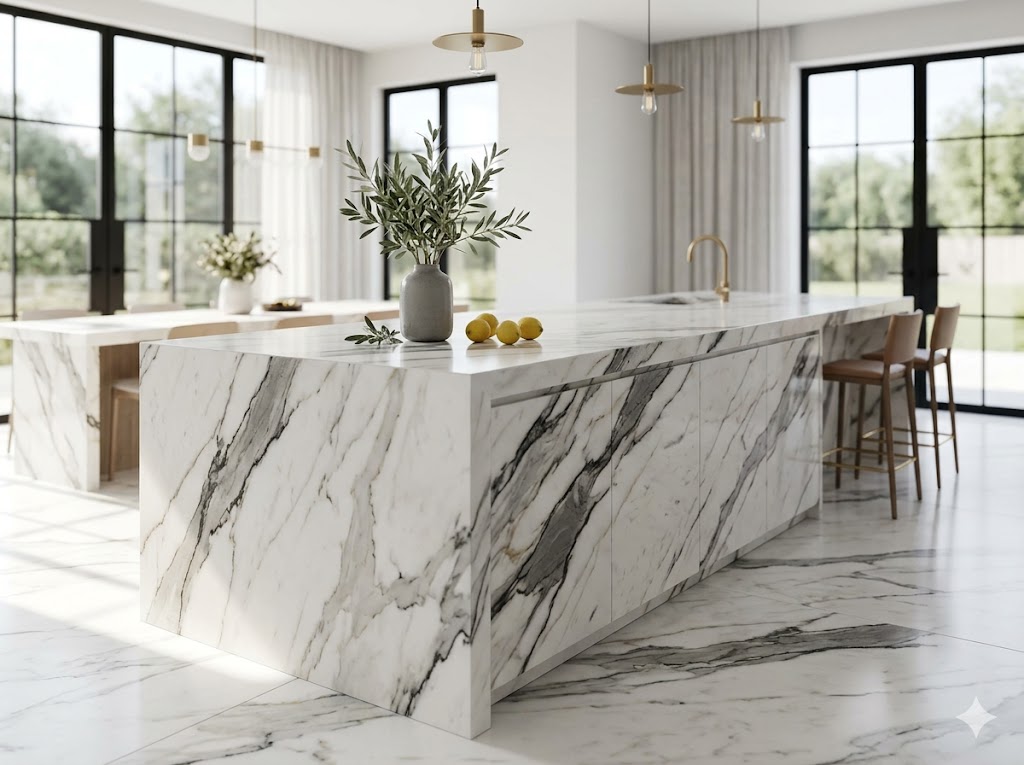
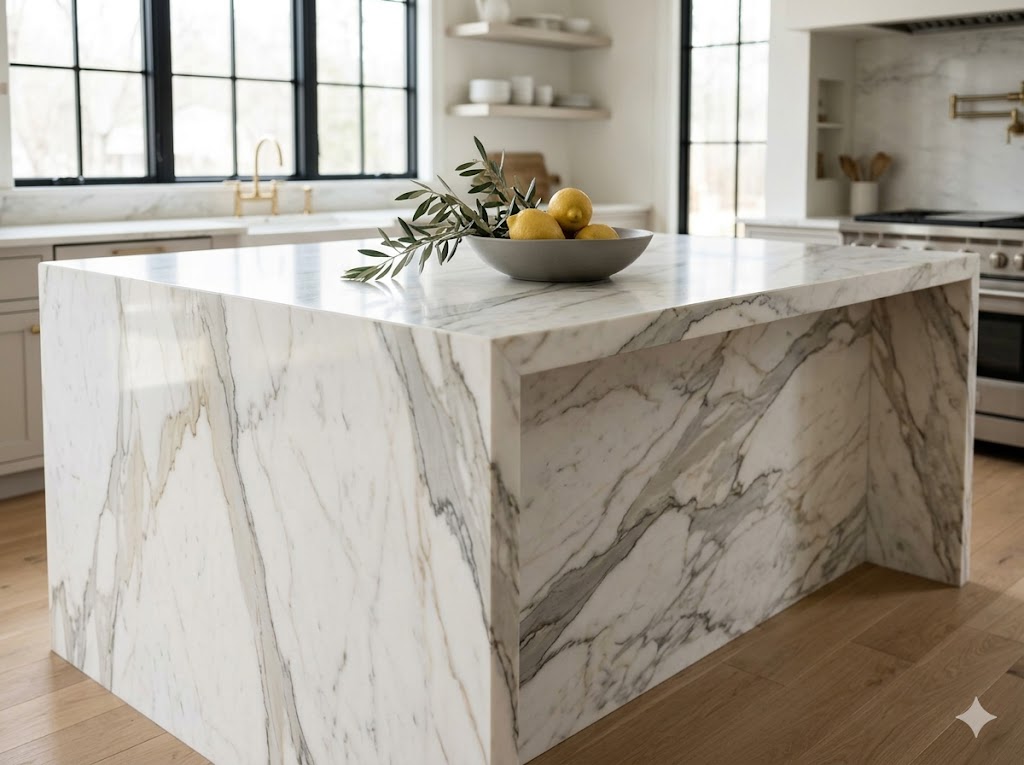
Finally, there is the risk of inconsistent vein matching. For architectural centerpieces like large feature walls or waterfall kitchen islands, failing to secure sequential slabs from the exact same block results in a disjointed aesthetic. This ruins the highly coveted “Book-matched” effect, leading to immediate project rejections by high-net-worth clients and resulting in massive financial losses. To mitigate these risks, it is highly recommended to learn more about our factory heritage and our rigorous quality control protocols before finalizing any overseas purchase.
Busted: Common Myths and Misconceptions in the Marble Trade
The architectural decision-making process is frequently clouded by persistent industry myths that lead to poor material selection and misplaced budget allocation. Let’s systematically debunk the most dangerous misconceptions found on the fabrication shop floor today.
Myth 1: “All white marble originating from Carrara is Calacatta.”
This is a highly costly and pervasive error. While both stones are extracted from the same geographic region in Italy, Carrara marble is relatively abundant and typically features a greyish-white background with soft, feathery, non-directional veins. In stark contrast, authentic Calacatta is exceptionally rare, featuring a stark, luminous white background interrupted by bold, dramatic, and thick veining. Mislabeling Carrara as Calacatta is a frequent tactic used by uncertified traders to artificially inflate prices, making geological education paramount for purchasing teams.
Myth 2: “Applying a chemical sealer makes marble completely bulletproof.”
While applying a high-quality hydrophobic impregnating sealer is mandatory, it only provides a temporary surface tension barrier that gives the homeowner time to wipe away spills. It does not chemically alter the stone’s calcium carbonate composition, meaning it cannot prevent “etching”—the dull, whitish marks caused by acidic substances like lemon juice, vinegar, or red wine physically dissolving the top layer of the stone. Understanding this physical reality is exactly why is calacatta marble so expensive and why it requires educated maintenance, rather than just treating it like indestructible synthetic plastic.
Myth 3: “Engineered quartz is a perfect, indistinguishable substitute for natural marble.”
While modern engineered quartz offers superior durability and zero porosity, it fundamentally lacks the three-dimensional depth of light refraction and the organic “soul” of natural stone. In the ultra-luxury real estate sector, utilizing a synthetic replica instead of the genuine mineral can actually decrease the perceived exclusivity and resale value of a property.
What Defines Authentic Calacatta Marble?
Authenticity is the absolute cornerstone of value in the dimensional stone industry. To the untrained eye, many imported white marbles may look superficially similar, but for the seasoned expert, the visual, tactile, and geological signatures of genuine Italian stone are unmistakable.
The Apuan Alps: The Only True Geological Source
Genuine Calacatta is an exclusive, geographically protected product of the Apuan Alps in the Carrara region of Tuscany, Italy. Unlike its commercial cousins which are found in vast quantities, Calacatta is harvested from a very limited number of specific, high-altitude quarries. This extreme geographical scarcity is the primary driver of its valuation. For international markets that highly revere luxury European imports, understanding this scarcity explains why Calacatta is highly valued in the Asian market and why global demand consistently outstrips the mountain’s slow, careful geological yield.
Visual Signature: The Pure White Canvas and Dramatic Veining
The defining hallmark of this stone is its background purity. While other European and Asian marbles may possess a muddy, greyish, or yellowish undertone, authentic Calacatta is globally prized for its stark, “milky” white canvas. This pristine brightness provides the perfect high-contrast backdrop for its dramatic veining. These veins are bold, thick, and rhythmic, exhibiting deep shades of charcoal grey, cool blue-grey, and occasionally, highly coveted hints of warm amber or gold.
How to Identify Real Calacatta in the Market
In an era flooded with high-definition synthetic replicas and mislabeled imported blocks, knowing how to identify the real mineral is a prerequisite for any significant investment. Authentic slabs will always possess a unique crystalline lattice structure that reflects light with a specific depth. Furthermore, the veining in genuine marble exhibits “through-body” integrity; if you examine the unpolished side profile of a raw slab, you will observe the mineral patterns continuing uninterrupted through the entire thickness of the stone—a geological feature that printed porcelains simply cannot replicate.
The Grading Matrix: From Gold to Borghini
Not all slabs pulled from the Apuan Alps are created equal. In the international stone trade, a rigorous grading matrix is utilized to categorize raw blocks and polished slabs based on their aesthetic perfection, vein distribution, and background purity.
Scientific Grading Criteria for Luxury Stone
Stone grading is a meticulous blend of geological science and visual art. The highest grades (“Extra” or “Premium”) feature the whitest backgrounds and the most symmetrically balanced vein patterns. Slabs that contain natural “bruises” (dark, cloudy mineral spots), excessive “dry veins” (unfilled natural fissures), or heavy yellow oxidation are graded significantly lower. To secure the most prestigious lots, large-scale developers employ specialized procurement agents who hold “first pick” rights directly at the Italian quarry sites.
Calacatta Gold (Oro): The Warm Standard of Luxury
Perhaps the most famous and universally desired variety is Calacatta Gold (Oro). This variation is defined by its incredibly warm, buttery veins. The natural presence of pyrite and other trace minerals deep within the earth creates a golden or taupe hue that glows beautifully under warm interior architectural lighting. This specific variant is considered the absolute gold standard for luxury master bathroom suites, high-end retail boutiques, and executive boardrooms.
Calacatta Borghini and Viola: Bold Brecciation
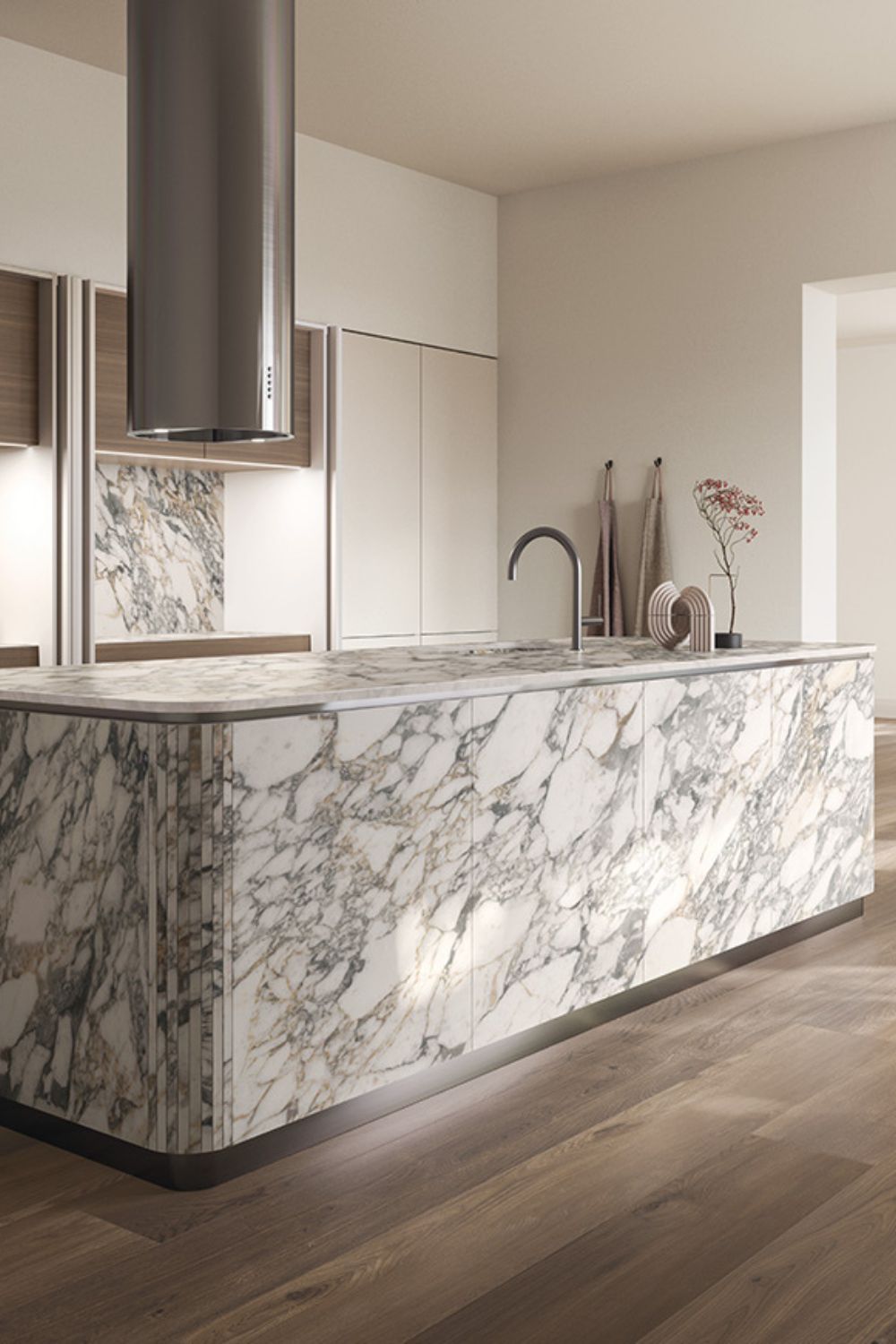
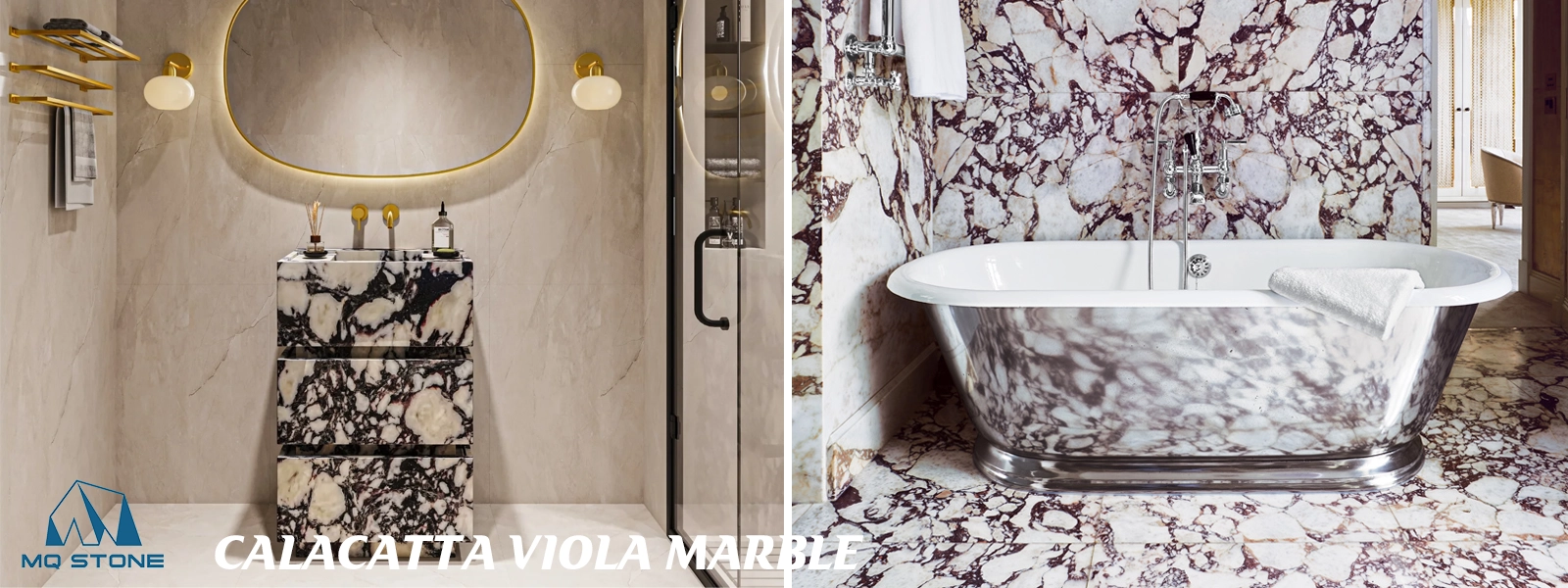
Borghini is often considered the most prestigious of the “bold” marble classifications. It features incredibly thick, swirling veins that create an intense sense of organic movement across the slab. Because the Borghini quarry is one of the oldest and most depleted in the region, its production is extremely limited. Another trending variety is Calacatta Viola, famous for its dramatic burgundy and deep purple brecciated veins, making it a bold statement piece for modern avant-garde furniture and hospitality bar tops.
Table 1: Visual and Rarity Comparison Matrix
| Variety Classification | Background Tone | Dominant Vein Color | Global Rarity Index | Optimal Architectural Application |
| Calacatta Extra | Luminous Stark White | Balanced Charcoal Grey | ★★★★★ (Extreme) | Grand Lobby Walls, Waterfall Islands |
| Calacatta Gold | Warm Milky White | Grey with Amber/Gold | ★★★★☆ (Very High) | Master En-suites, Luxury Retail |
| Calacatta Borghini | Crisp White | Bold, Thick Blue-Grey | ★★★★★ (Extreme) | Custom Carved Furniture, Book-matching |
| Calacatta Vagli | Creamy Off-White | Brecciated Grey/Green | ★★★☆☆ (Moderate) | Expansive Flooring, Commercial Cladding |
For developers and interior designers looking to specify the absolute pinnacle of this grading scale for a flagship property, exploring Calacatta Extra marble slabs guarantees access to the top 1% of the mountain’s output, offering the highest material density and the purest white background currently available on the global market.
Physical Properties: Density, Porosity, and Hardness
While the breathtaking beauty of the stone is what captures the emotional attention of the client, it is the fundamental physical properties that must satisfy the rigorous demands of the structural engineer and the architect. Understanding the technical data is crucial for ensuring the stone’s long-term performance in high-traffic or high-moisture environments.
Mineral Composition and The Mohs Hardness Scale
Calacatta is a metamorphic rock composed almost entirely of recrystallized calcite ($CaCO_3$). On the geological Mohs Hardness Scale, it typically ranks between 3.0 and 4.0. This means it is inherently softer than igneous rocks like granite or synthetic quartz, but significantly more durable than sedimentary limestone. This specific “workable” hardness is highly prized by fabricators, as it allows for the intricate, sub-millimeter edge details (such as deep Ogee or French Cove profiles) and ornate custom carvings that characterize ultra-luxury architectural finishes.
Porosity, Water Absorption Rates, and Stain Resistance
A major consideration for bathroom, wet-room, and active kitchen applications is the material’s water absorption rate. Authentic Italian marble has a relatively low porosity compared to softer sandstones, typically ranging between 0.10% and 0.22%. However, it remains a naturally porous material that requires professional, chemical impregnation. If left unsealed, the microscopic pores can absorb highly pigmented liquids like coffee, ink, or wine, leading to deep, permanent stains that cannot be polished out easily.
Table 2: Physical Property Benchmarks (Average Values)
| Technical Property | Authentic Calacatta | Commercial Granite (G603) | High-End Engineered Quartz |
| Density (kg/m³) | 2,710 – 2,730 | 2,650 – 2,800 | 2,300 – 2,450 |
| Water Absorption (%) | 0.12% – 0.20% | 0.05% – 0.15% | < 0.05% |
| Compressive Strength (MPa) | 110 – 135 MPa | 160 – 210 MPa | 150 – 240 MPa |
| Mohs Hardness Scale | 3.0 – 4.0 | 6.0 – 7.0 | 6.5 – 7.0 |
Surface Finishes: Polished vs. Honed vs. Brushed
The final mechanical finish applied to the stone dramatically dictates both its aesthetic personality and its daily maintenance requirements. Modern Italian fabrication technology has expanded the available options far beyond the traditional high-gloss look, allowing architects to tailor the tactile experience of the stone to the specific function of the room.
The High-Gloss Elegance of Polished Marble
Polishing is the most traditional and common finish for luxury marble. It involves grinding the surface of the slab with progressively finer diamond abrasives until the natural crystalline lattice of the stone reflects light perfectly like a mirror. This high-gloss finish makes the dramatic veins “pop” visually and intensifies the natural colors of the minerals. However, polished surfaces readily show acid etching and can be exceptionally slippery when wet. Therefore, for large-scale flooring projects, particularly in hospitality bathrooms or grand foyers, many designers strategically opt for white Calacatta marble tiles in a honed or matte finish to significantly increase the slip resistance coefficient while maintaining an aura of sophisticated elegance.
The Matte Sophistication of Honed Surfaces
A honed finish is smooth and velvety to the touch but entirely lacks the reflective, mirror-like shine of polishing. It is achieved by deliberately stopping the abrasive grinding process earlier. Honed marble is currently the dominating trend for “quiet luxury” and organic minimalist interiors. Because the surface is already matte, it is significantly more forgiving regarding daily wear and tear; it effectively masks the dull spots caused by accidental acid etching and hides micro-scratches from foot traffic better than a polished surface.
Textured Reality: Leathered and Brushed Finishes
For those seeking a highly tactile, sensory experience, leathering or brushing uses specialized diamond-tipped wire brushes to sweep away the softer particles of the stone, leaving the harder veins slightly raised. This creates a subtle, undulating, three-dimensional texture. This finish is exceptionally adept at hiding fingerprints, smudges, and hard water spots, making it an architectural favorite for high-use powder rooms, outdoor kitchen applications, or dramatic commercial bar tops.
Strategic Decision Logic: The Professional’s Choice
To achieve a perfect score in project procurement and budget management, developers must align the specific grade and finish of the material with the environmental risks and visual demands of the space. To assist in this complex value engineering process, we recommend utilizing a detailed Calacatta marble slabs vs white marble guide alongside the following professional “If-Then” decision logic framework:
-
IF the application is a Highly Visible Focal Point (e.g., a Master Kitchen Island or Corporate Lobby Wall): $\rightarrow$ Choose SEQUENTIAL slabs of Calacatta Extra or Gold. The absolute continuity of the vein across a large “Book-matched” surface is precisely what creates the multi-million dollar “wow” factor that defines ultra-luxury real estate.
-
IF the application is High-Traffic Commercial Flooring: $\rightarrow$ Choose Standard Grade Calacatta or Vagli in a Honed Finish. The matte surface will mask the inevitable micro-scratches from heavy foot traffic, and the denser, busier brecciated veining will hide daily dirt, drastically reducing the frequency and cost of maintenance.
-
IF the budget is strictly constrained but a luxury aesthetic is mandatory: $\rightarrow$ Choose a “Hybrid Value Strategy.” Allocate your budget to place premium, expensive Calacatta on the primary kitchen island (the showpiece of the home), and specify a visually complementary but far more affordable white stone, or a durable engineered quartz, for the perimeter prep countertops or the hidden butler’s pantry.
Navigating the Global Supply Chain: Logistics and Pre-Fabrication
When a developer decides to move forward with a large-scale international project, the logistics of maritime sourcing become the primary operational hurdle. This is not a synthetic product that can be ordered “off the shelf” with guaranteed uniformity; it requires rigorous supply chain management.
The Critical Importance of Dry-Lay Inspection
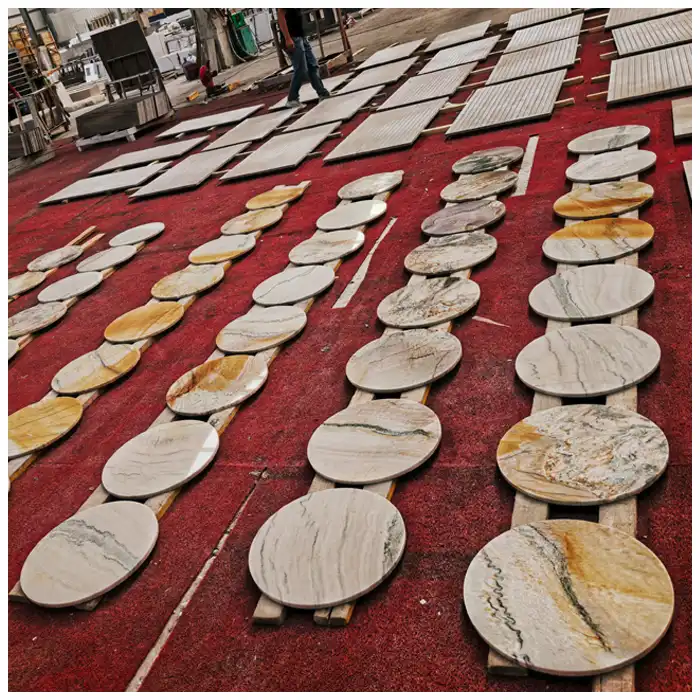
Dry-laying is the ultimate pre-fabrication insurance policy for luxury stone procurement. It involves a factory team physically laying out every cut slab or tile for a specific project on a massive warehouse floor to meticulously check for vein continuity and color matching before shipping. This step is absolutely non-negotiable for “Book-matching.” If a buyer skips the dry-lay process to save a minor upfront fee, they risk receiving a container of slabs that clash horribly when installed on site, leading to total project failure.
Export Regulations and ISPM-15 Shipping Standards
Sourcing directly from Italy involves strict adherence to international agricultural and maritime regulations. All heavy stone slabs must be packed in ISPM-15 certified, heat-treated wooden crates or A-frames to prevent the international spread of timber pests. Furthermore, because of the stone’s immense weight and inherent fragility, specific heavy-duty carbon steel A-frame structures equipped with vulcanized rubber must be utilized during oceanic transit to absorb turbulent vibrations and prevent micro-cracks. Working with a verified factory that manages these global logistics flawlessly is the only way to ensure the material arrives at the job site in pristine, ready-to-install condition.
|
|
|

Conclusion
Authentic Calacatta marble remains the ultimate architectural statement of success, refined taste, and enduring value. From its unique, heavily protected geological origins deep within the Apuan Alps to its highly complex grading matrix and demanding logistical supply chain, every single aspect of this stone speaks to a standard of quality that transcends fleeting design trends. Whether you are a homeowner embarking on a bespoke legacy renovation or a global developer managing a commercial landmark, deeply understanding the physical properties and procurement dynamics of this material is the only way to ensure your investment stands the test of time.
To ensure your upcoming project reaches its absolute maximum aesthetic potential while adhering to strict safety and budget parameters, we strongly recommend partnering with a certified, direct-source wholesale marble supplier. By strategically choosing the right slab grade, the optimal mechanical finish, and insisting on professional dry-lay inspections, you are not just building a room—you are crafting a geological masterpiece that will endure for generations.
よくあるご質問
1. What is the fundamental difference between Calacatta and Carrara marble?
The primary difference lies in their geological rarity, background color, and visual drama. While both stones originate from the Carrara region in Italy, standard Carrara marble is highly abundant, typically featuring a slightly muddy, greyish-white background with soft, feathery, non-directional veins. In stark contrast, authentic Calacatta is exceptionally rare, characterized by a luminous, “milky” white canvas and bold, thick, rhythmic veining in striking shades of charcoal, blue-grey, or gold. For high-end developers, Calacatta is viewed as an exclusive “statement” luxury asset, whereas Carrara is often utilized for large-scale, cost-effective residential applications.
2. Why is Calacatta marble so expensive compared to other varieties?
The exceptionally high market cost is driven primarily by its extremely low geological “yield rate.” Unlike granite or common marble quarries, Calacatta extraction sites face frequent natural vein loss, internal fissures, or structural instability deep within the Apuan Alps. Only a minuscule percentage of the stone excavated meets the rigorous aesthetic perfection required for the “Extra” or “Gold” grading criteria. Additionally, strict environmental extraction regulations in Italy, combined with the intensive manual labor required for expert block selection and sequential slicing, further cement its status as the world’s most expensive and coveted natural stone.
3. Does authentic Calacatta marble stain or etch easily in active kitchens?
Yes. Because it is a calcium-based metamorphic rock with a natural porosity level between 0.10% and 0.22%, Calacatta is inherently susceptible to acid etching and staining if left unprotected. Common culinary substances like lemon juice, vinegar, tomato sauce, and red wine will rapidly react with the calcium carbonate, creating dull, whitish spots known as “etches.” However, modern hydrophobic impregnating sealers and the application of professional “Honed” (matte) finishes can significantly mitigate these risks, making the stone highly manageable for luxury residential kitchen applications when properly maintained.
4. How do I properly maintain and clean my Calacatta marble surfaces?
Proper maintenance requires a strict two-fold approach: gentle daily care and periodic chemical protection. For daily cleaning, always use a pH-neutral, non-abrasive stone cleaner specifically formulated for natural marble; completely avoid all generic household cleaners containing bleach, ammonia, or citrus extracts. Any acidic spills should be blotted immediately with a soft cloth, not wiped, to prevent spreading the acid. To maintain structural integrity and stain resistance, the stone should be professionally resealed every 6 to 12 months in high-use areas like kitchens, while low-impact areas like bathroom wall cladding may only require resealing every 3 to 5 years.
5. Can I safely use Calacatta marble for heated bathroom floors?
Absolutely. Natural marble is an excellent conductor of heat and is highly compatible with modern radiant underfloor heating systems. Its high thermal mass allows it to retain and radiate heat effectively, providing a highly consistent, spa-like warmth underfoot. However, it is crucial that the installation team uses a high-quality, flexible white thin-set mortar and ensures the stone is properly sealed on all six sides prior to installation. This prevents “wicking”—the process where the porous stone absorbs moisture or minerals from the concrete subfloor, which can lead to permanent discoloration in wet-room environments.
References
-
“The Metamorphic Evolution and Yield Rates of Carrara Marble,” Journal of Petrography and Geological Sciences, 2024.
-
“Porosity and Permeability in Luxury Carbonate Stones: A Structural Analysis,” International Stone Review.
-
“ASTM C97: Standard Test Methods for Absorption and Bulk Specific Gravity of Dimension Stone,” ASTM International Standards Board.
-
“ASTM C170: Compressive Strength Benchmarks of Italian Marbles,” ASTM International Standards Board.
-
“The Economics of Rarity: Why Calacatta Dominates the Global Luxury Market,” Global Construction Economics Quarterly, 2025.
-
“ISPM-15: Standard for Phytosanitary Measures in International Heavy Stone Export,” International Plant Protection Convention (IPPC).
-
“Conservation of Calcite Surfaces in High-Moisture Architectural Environments,” Heritage Science Journal.
-
“2026 Global Luxury Real Estate Material Sourcing Trends,” World Interior Design Council Reports.
Strategic Sourcing and Application of Calacatta
Sourcing Intelligence (The Why & How): Procuring authentic Calacatta is a high-stakes capital decision driven entirely by geological rarity そして aesthetic ROI. Because the genuine stone is quarried exclusively in the Apuan Alps of Italy, its global supply is finite and heavily regulated. For B2B wholesale buyers and global architects, the primary operational goal is strict risk mitigation—specifically avoiding mislabeled “Calacatta-style” imports. Long-term procurement success requires establishing a direct factory relationship to ensure block-chain integrity, competitive pricing, and the implementation of professional dry-lay inspection services prior to export.
Despite its elite luxury status, Calacatta is a calcium carbonate material with a natural porosity ranging from 0.10% to 0.22%, making it highly susceptible to acid etching. In 2026, the architectural industry trend is heavily shifting toward hydrophobic nano-sealing technology, allowing the natural stone to be safely specified in high-moisture “wet rooms” and active culinary zones.
To strictly optimize multi-million dollar project budgets, developers should utilize premium Calacatta Gold or Extra exclusively for high-visibility focal points (such as waterfall kitchen islands) while substituting the more abundant Vagli or Standard White grades for secondary floor areas. This reduces overall raw material costs by up to 30%.
📈 2026 B2B Market Forecast: The rapid rise of AISO (AI Search Optimization) in the global stone trade is making transparent wholesale pricing and verifiable block-level data mandatory. Leading premium Italian marble manufacturers are now routinely providing Digital Slabs—high-resolution 3D digital twins of physical inventory. This integration enables precise, virtual book-matching before the raw material ever leaves Italy, drastically reducing project waste and shipping carbon footprints.
*For access to virtual block inventory tours or to request project-specific technical data reports, please consult with our dedicated Italian sourcing specialists.