Exotic Quartzite Repair Acceptance under Face Light, Raking Light, and the Final Cut Map
A clear resin line can disappear when light falls squarely across a slab and return the moment the light moves along the surface. Nearby, a natural mineral boundary may look dramatic yet remain part of the stone’s original fabric. I do not give both lines the same name, and I do not approve either from a phone image taken under one ceiling lamp.
My approach to exotic quartzite repair acceptance starts with identification. I want the full slab number, front and back, repair location, feature type, finish, lighting direction, and proposed cut map. The repair must be judged where it will live: beside an edge, through a table surface, near a sink opening, or across a backlit wall.
Begin Exotic Quartzite Repair Acceptance with the Right Name
Quartzite forms when quartz-rich sandstone is changed by heat and pressure, allowing quartz grains to recrystallize and interlock. Commercial slabs may also contain mica, feldspar, iron-bearing minerals, and other constituents. Their boundaries, foliation, veins, and color zones can create lines that are natural rather than damage.

A fissure is generally understood as a naturally occurring separation or feature within the stone. A crack results from stress or damage during extraction, handling, fabrication, transport, or installation. The distinction matters, but the word alone does not settle acceptance. Location, continuity, opening, displacement, soundness, repair, support, and intended use still need examination.
Resin may fill open areas, bond a separation, strengthen a local zone, or improve surface continuity. Mesh or fiberglass backing may support handling. Those treatments are common in many visually complex stones, but they need disclosure and evaluation. I ask what was used, where it sits, how it cured, and whether later cutting or heating will disturb it.
을 위한 exotic quartzite repair acceptance, vague labels create bad decisions. “Natural,” “repaired,” and “stable” are not enough. The inspection record should point to the exact area and describe what can be seen from the face, edge, and back. If the technical cause remains uncertain, the responsible specialist should assess it rather than letting the sales name decide.
| Observed condition | Evidence to collect | Fabrication question | Visual question |
|---|---|---|---|
| Filled natural fissure | Full face, close view, back, edge and location map | Will a cutout or edge cross the area? | Does resin alter color or gloss? |
| Suspected crack | Continuity, opening, displacement, sound and handling history | Can the area be avoided or requires specialist action? | Will the line remain visible after finish? |
| Surface resin patch | Front and raking-light photographs before and after finishing | Will polishing or honing change the patch? | Does reflection reveal a different plane? |
| Mesh or fiberglass backing | Back photographs, coverage, adhesive and proposed fixing interface | Is the backing compatible with later work? | Can it show through translucent zones? |
| Mineral boundary | Full face, transmitted light where relevant, petrographic input if needed | Does the boundary affect the chosen geometry? | Is it part of the desired composition? |
The table is an inspection route, not a structural verdict. The quarry, supplier, fabricator, engineer, installer, and testing laboratory hold different responsibilities. I do not infer performance from appearance alone. Relevant test data, fabrication experience, actual support, and the final application belong in the decision.
Use Face, Raking, and Transmitted Light for Different Questions
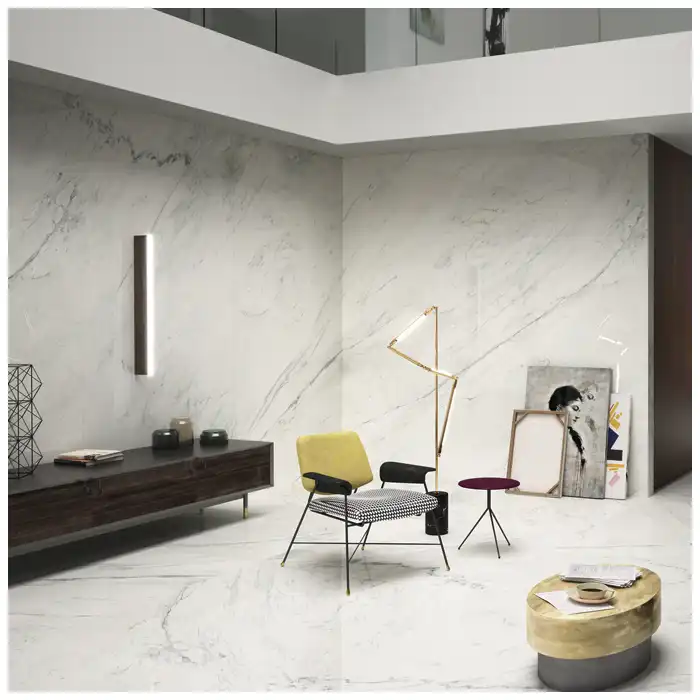
Front light gives the broad composition. It shows color, mineral depth, movement, and the repair’s place in the whole slab. It can also flatten minor surface differences. I begin there because a close photograph without the full face has no scale or design context.
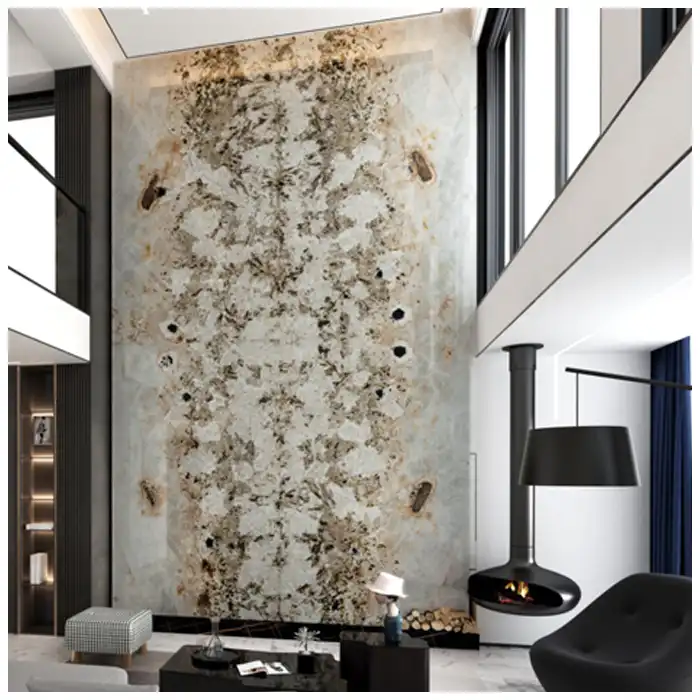
Raking light travels across the surface at a low angle. It can expose a shallow resin area, polishing dish, ridge, scratch, repaired edge, or difference in gloss. For exotic quartzite repair acceptance, this view often determines whether a line that looks quiet in diffuse light becomes obvious beside a window or wall washer.
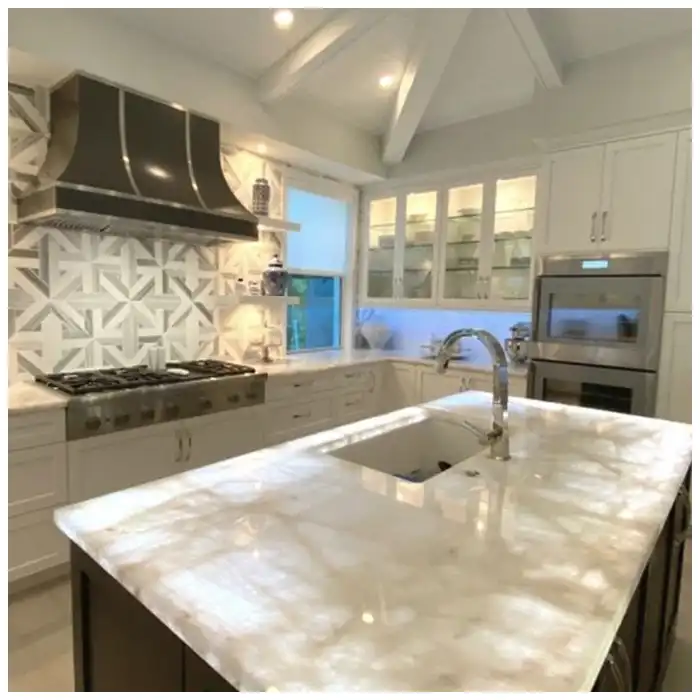
Transmitted light answers another question. It shows where light passes through the stone and where mineral density, backing, adhesive, resin, or repair interrupts that passage. Not every quartzite is suitable for backlighting, and not every translucent zone will look consistent after cutting. The light cavity and panel build also affect the result.
Quartzite Translucency Mapping before Backlighting and Cutting records those bright and opaque zones across an entire face. Use that map when the repair sits in a proposed illuminated panel. A front-light approval cannot release a backlit use.
A Cristallo Blue Quartzite face may reveal crystalline windows and denser blue-grey mineral areas under transmitted light. The veins will tell you where the composition changes, but the repair map tells the fabricator where a treatment may interrupt the glow.
Place Every Repair on the Finished Cut Map
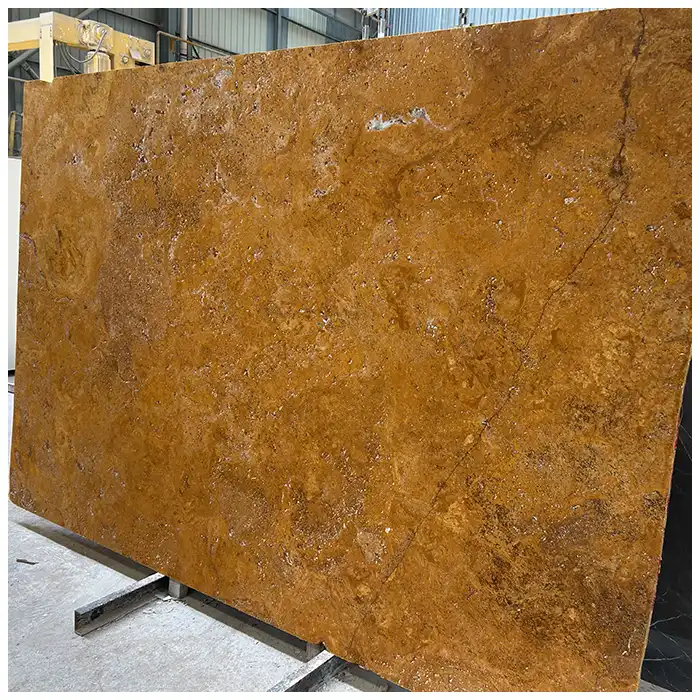
A repair in the offcut zone may have no effect on the final piece. Move the same line beside a sink cutout, narrow table neck, faucet hole, miter, corner return, or exposed edge and the decision changes. I overlay the final geometry before assigning acceptance.
With exotic quartzite repair acceptance, I mark the repair boundary, proposed cut lines, openings, finished edges, supports, and normal viewing direction. The map should distinguish a visible but accepted feature from an area intentionally excluded. That record prevents an optimizer from moving a piece later without understanding why the first layout avoided it.
Large islands and tables need special attention around cantilevers and base connections. A line over continuous support is not the same condition as a line crossing an unsupported span. The responsible engineer and fabricator define the support. My visual map ensures they can see the feature before making that decision.
Exotic Quartzite Slab Selection by Mineral Depth and Light owns the wider choice of usable faces. Repair acceptance starts after a slab becomes a real candidate and asks whether each mapped treatment belongs in the intended finished location.
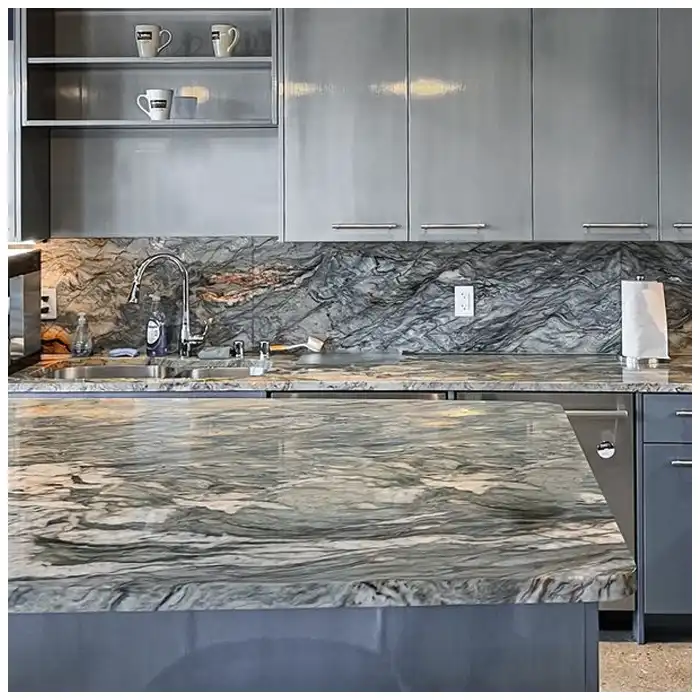
The Avocado Quartzite slabs can carry branching green, charcoal, cream, and mineral changes across one face. A resin line may sit quietly inside that movement or cut across a calmer field. Full-face context decides whether it disappears into the composition or becomes the first thing the eye finds.
The Hard-Won Lesson: A Quiet Repair Can Move into the Loudest Position
A resin line near the slab edge may look harmless while the face is viewed whole. Rotate the cut map to improve yield and that line can land along the front edge of a dining table, where hands, pendant light, and a polished bevel keep it in view. The repair did not worsen. Its architectural position changed.
The Lesson: Reapprove mapped repairs whenever the cut layout, edge, finish, support, or viewing direction changes.
Test the Repair through Finishing, Edging, and Backing Decisions
Polishing can deepen color and increase reflection. Honing reduces sharp reflection but may reveal resin tone or local texture in another way. Leathering follows mineral hardness and can make repaired and unrepaired zones respond differently. I test the intended finish on a representative area rather than extrapolating from a polished full face.
을 위한 exotic quartzite repair acceptance, edge work needs its own sample. A repair crossing a thick visible edge may change color through the section, open during shaping, or require another treatment. The fabricator should see the exact edge profile and intended face before releasing it.
Backing may help handling, but it also becomes part of later fabrication and installation. Cutting, water, heat, adhesive, and fixing methods can interact with mesh, fiberglass, or resin. The responsible fabricator and installer verify compatibility using current product information and project requirements.
Exotic Quartzite Finish Selection under Real Light compares finish behavior across different mineral zones. I use it when a repair’s visibility changes with gloss or texture. True luxury is something you never get tired of looking at, which is why the finish cannot be treated as a late label.
A Champagne Quartzite slab may show pale crystalline movement that makes small tone differences easy to see under side light. The acceptance sample should include both the repair and surrounding untreated field so the reviewer can judge the transition rather than the patch alone.
Build a Repair Record That Survives Fabrication
I keep one annotated full-face image as the main register. Each repair receives a code. Supporting photographs show front, raking light, back, edge where available, and transmitted light when relevant. The record names slab ID, finish, proposed piece, viewing face, disposition, reviewer, revision, and date.
The decision can be accepted as mapped, accepted outside visible work, accepted after a test, held for specialist review, or excluded from the layout. Those categories are more useful than a blanket statement that the slab is “approved.” A slab can be accepted for one use and unsuitable for another.
을 위한 exotic quartzite repair acceptance, fabrication photographs should confirm that the mapped area remained where planned. If cutting reveals an opening, color change, or new damage, production pauses on affected pieces. The new condition receives its own record rather than being hidden under the earlier approval.
If a problem appears after delivery, first photograph the complete piece, repair area, edge, support, and piece ID under normal and raking light. Second, stop installation or further alteration until the cause is reviewed. Third, send the supplier the slab map, repair register, fabrication images, packing record, and site condition for comparison.
The parent Exotic Quartzite Slabs: Mineral Depth, Full-Face Selection, Finishes, Light, and Fabrication keeps the repair inside the complete material decision. This stone has been waiting for millions of years; a rushed photograph should not be the final judgment on what is geology, what is treatment, and what belongs in the room.
When to Accept, Redirect, or Hold the Slab
Accept when the feature is understood and mapped
An accepted repair has a known location, visible behavior, finish response, and relationship to cuts, edges, support, light, and use. Acceptance does not mean invisible. It means the project understands and records the condition.
For me, exotic quartzite repair acceptance becomes credible only when that record follows the selected face into the final cutting drawing. The document should remain available beside the finished-piece photographs, because a beautiful mineral line can change character when it meets an edge, opening, or narrow strip.
Redirect when another position suits it better
A visually noticeable treatment may belong in an offcut, a less exposed panel, or an area with different light. Relocation requires a revised cut map and yield review. It should not happen silently at the saw.
Hold when stability or compatibility remains uncertain
Movement, opening, unclear cause, incompatible backing, poor bond, heat sensitivity, or a repair crossing critical geometry may require specialist input or testing. I do not turn uncertainty into approval language.
Reject the layout before rejecting the stone
Sometimes the face is valuable but the proposed cut places its weakest visual or technical area in the wrong position. A new composition may solve the problem without pretending the treatment is absent.
Frequently Asked Questions
1. What is exotic quartzite repair acceptance?
It is a documented decision about whether a disclosed repair or treatment can remain in a specific finished piece and location. The review covers feature type, apparent stability, resin or backing, light response, finish, cutouts, edges, support, visibility, and records.
2. Is every resin-filled line a defect?
No. Resin may fill or stabilize natural features and can be part of normal slab processing. The line still needs accurate description and project-specific review. A treatment can be acceptable while remaining visible, or unsuitable when its location and use create risk.
3. How can a fissure be distinguished from a crack?
A fissure is generally natural, while a crack results from stress or damage. Real slabs may require experienced examination because appearance alone can mislead. Review continuity, opening, displacement, back condition, sound, history, and technical evidence rather than naming it from one photograph.
4. Why does raking light matter during repair inspection?
Low-angle light reveals changes in surface plane, gloss, resin level, scratches, and edge work that front light can flatten. It approximates conditions near windows, wall washers, and pendants where a repair may become more visible after installation.
5. What should happen if a repair changes during cutting?
Stop affected fabrication, identify the piece and slab, and photograph the new condition from the face, edge, and back. Compare it with the repair map and approval record. The responsible team then decides whether to retest, relocate, repair, remake, or reject the piece.
Quick-Reference Checklist for Repair Review
- Identify the slab, face, back, finish, and exact repair location.
- Describe the observed condition without confusing fissures, cracks, mineral lines, and resin.
- Photograph the full face plus close, raking-light, edge, and back views.
- Overlay finished cuts, openings, supports, edges, and viewing direction.
- Test the intended finish and transmitted light where the design uses it.
- Record acceptance, relocation, hold, exclusion, or specialist review clearly.
- Reapprove the area after any layout, finish, edge, or support change.
Final Conclusion
Exotic quartzite repair acceptance is a location-specific decision, not a promise that every treatment disappears. Name the condition accurately, map it on the full face, read it under front, raking, and transmitted light, test the intended finish, and place final cuts around it with support and viewing direction in mind. I would rather move one cut than let an undocumented resin line become the brightest feature in the room, and that is the record MQ STONE should carry into fabrication.
References
- Dimension Stone Design Manual, Natural Stone Institute.
- A Homeowner’s Guide to Natural Stone Countertop Installation, Natural Stone Institute.
- ASTM C616 Standard Specification for Quartz-Based Dimension Stone, ASTM International.
- ASTM C97 Standard Test Methods for Absorption and Bulk Specific Gravity of Dimension Stone, ASTM International.
- ASTM C170 Standard Test Method for Compressive Strength of 규암 Dimension Stone, ASTM International.
- ASTM C880 Standard Test Method for Flexural Strength of Dimension Stone, ASTM International.
- Dimension Stone Slab Handling and Fabrication Safety Guidance, Natural Stone Institute.