
Arabescato Corchia Marble: Why One Slab Can Carry an Entire Room
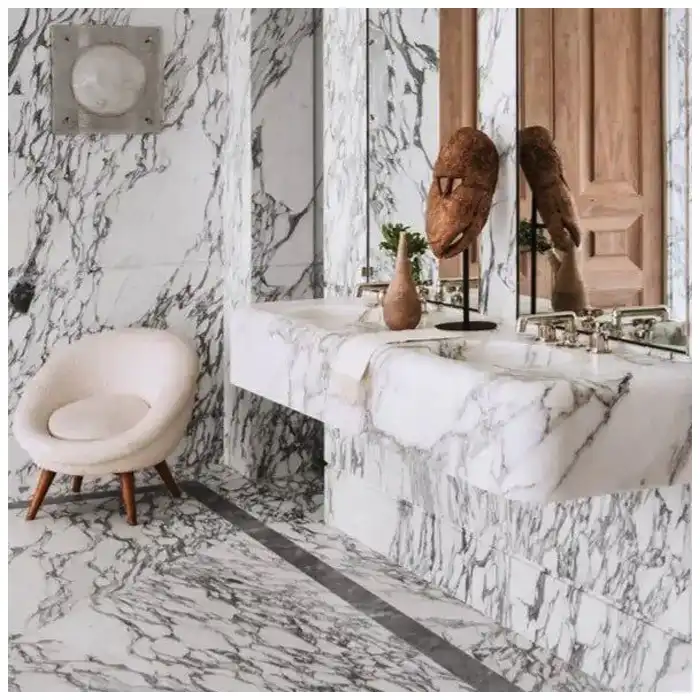
Arabescato Corchia can hold broad white pauses, dense charcoal drawing, soft grey wash, and occasional warmer mineral passages in one face. The slab deserves to be read from room distance before it is divided into panels or furniture crops. Alex Zheng follows movement, crystal depth, finish, repairs, joints, edges, and light as one composition. MQ STONE keeps the geological character visible while translating the chosen face into an architectural layout the fabricator can actually preserve. That is the visual record MQ STONE carries from full-slab selection into fabrication.
Arabescato Corchia Wall Panels: Seams, Mirror Lines, and Side Light
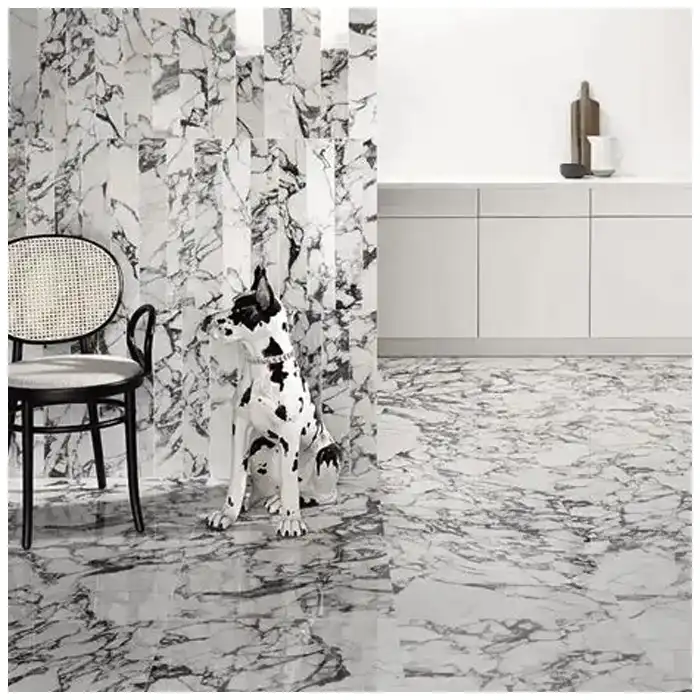
An Arabescato Corchia wall panel field is decided by seam positions and by how side light reads a bookmatch. MQ STONE sets the elevation and the pairing before the slab is lifted into place.
Arabescato Corchia Floor Layout: Vein Direction, Tile Scale, and Doorway Transitions
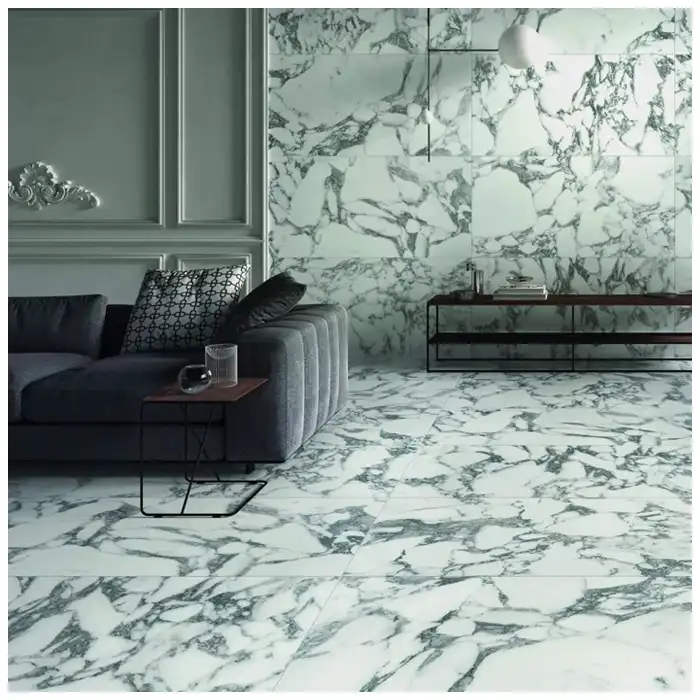
Arabescato Corchia floor layout starts with the datum, the room axis, and the threshold. Plan joints, panel widths, and the cutting order before the first tile is set.
Short Description: An Arabescato Corchia floor layout is a composition of datum lines, joints, and transitions read from the doorway inward. MQ STONE plans the sequence of cuts before the first tile is laid.
Arabescato Corchia Console Table: Slim Profiles, Edge Weight, and Wall-Side Support
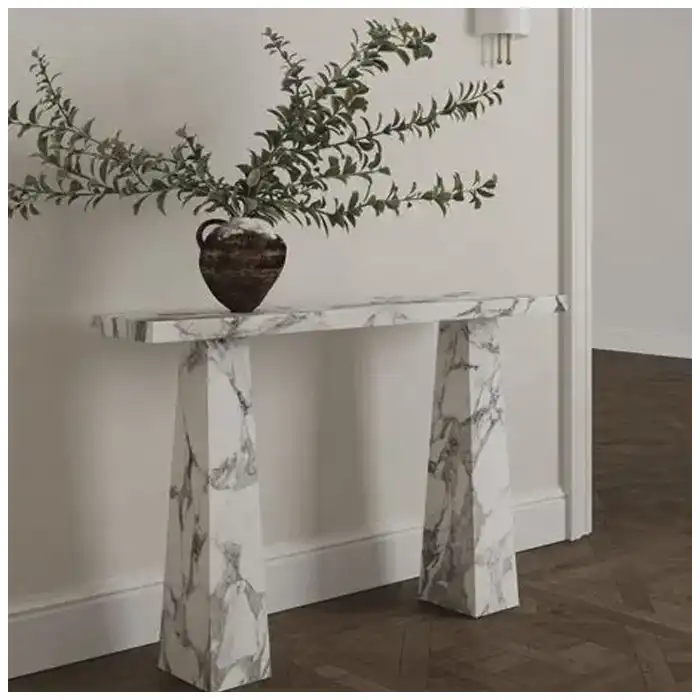
A slim Arabescato Corchia console table reads as one narrow strip beside a wall, where edge weight and hidden support matter as much as the marble. MQ STONE treats the top as furniture and structure at once.