Onyx Wall Panels: What to Confirm Before a Backlit Feature Wall Order
I first saw an onyx edge glow like warm tea under a warehouse lamp. I touched the edge first, because edges tell the truth before a polished face starts flattering itself. This stone has been waiting for millions of years….

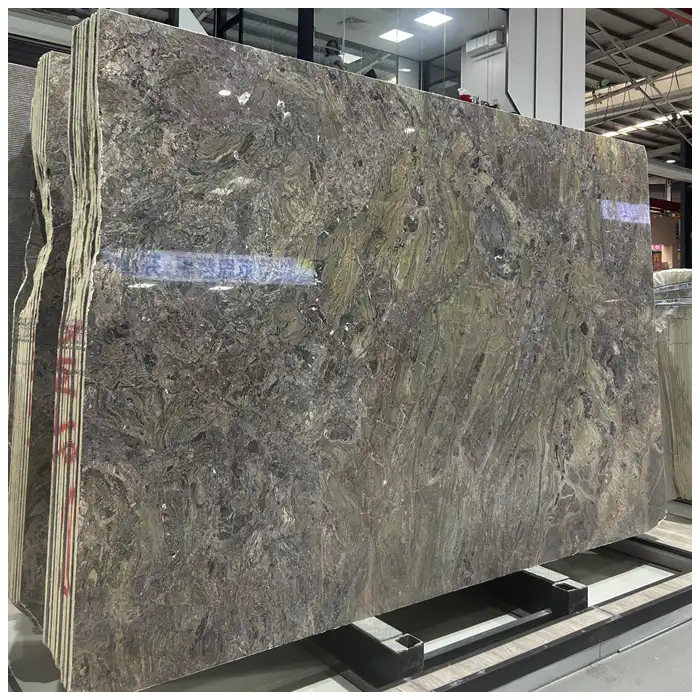
The veins will tell you…. A vein that looks quiet in a slab rack can become the whole room when it moves onto a table, wall, or glowing panel. I like that moment, but I do not rush it.
I keep Natural Quartzite vs Marble-Look Sintered Stone: The Definitive Comparison for Premium Interiors near this decision because natural material and artificial control ask different things from a room. A route like onyx slabs helps me begin, but the actual slab still has the final word.
How onyx wall panels decisions go wrong before production
The first risk is falling in love with the dramatic corner of a slab and ignoring the whole piece. Natural stone gives you a field, not a logo. The room needs the quiet areas too. True luxury is something you never get tired of looking at.
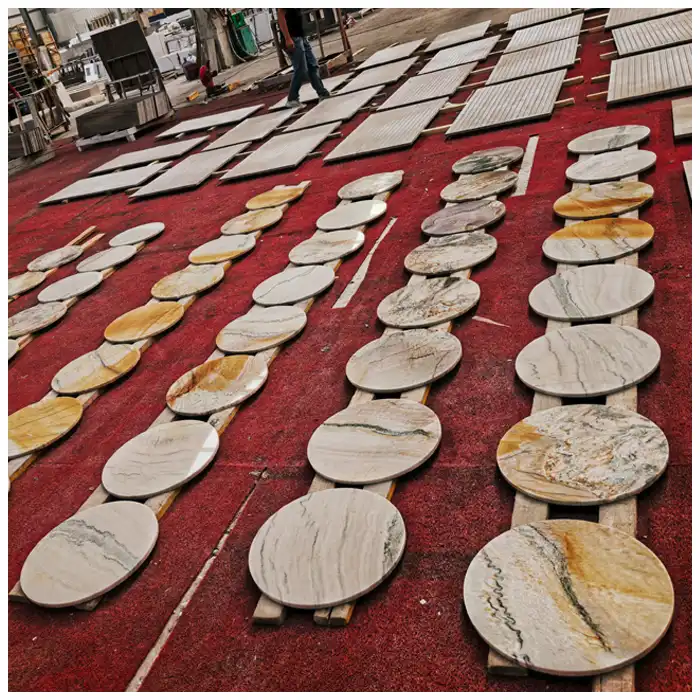
I compare the selected direction with semi precious stone slabs or another current material route only after I see the slab in light. The veins will tell you whether the piece wants to be a wall, a table, a counter, or something smaller.
Listen first.
What I check before the order moves forward
| Check | What I want to see | Why it matters |
|---|---|---|
| Drawing | Size, holes, edge, returns, and reference direction | Stops late arguments before cutting |
| Photo set | Full view, close view, side light, label, and mock-up | Keeps the project team looking at the same evidence |
| Sample | Finish, tone, touch, and cleaning expectation | Shows what the hand and eye will notice |
| Packing note | Piece code, crate order, mark position, and spare pieces | Makes site handling less chaotic |
I check the edge before I trust the face. Stone furniture and feature panels live close to the body, so the edge becomes part of the design. A thick edge can feel grounded. A thin edge can feel nervous if the base is wrong.
When the project connects with Backlit Onyx Slabs: What Project Teams Should Confirm Before Ordering, I look for the same slow approval: full slab, light test, edge sketch, support note, and room context. This stone has been waiting for millions of years…, but the wrong edge can make it impatient.
The room will decide.
How I read drawings, photos, and samples together
I start with the drawing because measurements decide what the material can become. Then I put the photo beside the drawing. If the strongest vein, color change, or joint line lands in the wrong place, I want to know before anyone approves the order.
The sample comes last, not first. A sample helps confirm touch and finish, but it cannot explain the whole surface. I use it as a witness, not as the judge.
For repeated rooms or repeated pieces, I like a control note. It says which variation is acceptable, which part of the slab goes where, and which feature needs special packing or handling. That small note keeps people honest when the order gets busy.
Lead time and approval habits that save the job
Lead time for stone furniture and feature walls is partly emotional. People need time to look at the slab. A rushed approval often chooses the loudest area and misses the quieter parts that make the piece livable.
I like a second viewing under different light. The veins will tell you something new when the angle changes. A slab that survives the second viewing usually has more patience.
Do not rush beauty.
The slow look I take before fabrication
For onyx translucency, backlighting, panel layout, thickness, fragility, and stone support, I begin with silence. I stand back from the slab and let the first excitement pass. The first glance is useful, but it can be noisy. A good piece still has something to say after that first moment.
This stone has been waiting for millions of years…, so I give it more than thirty seconds. I look at the field, not only the dramatic vein. I look for small mineral threads, soft color changes, and the places where the eye can rest.
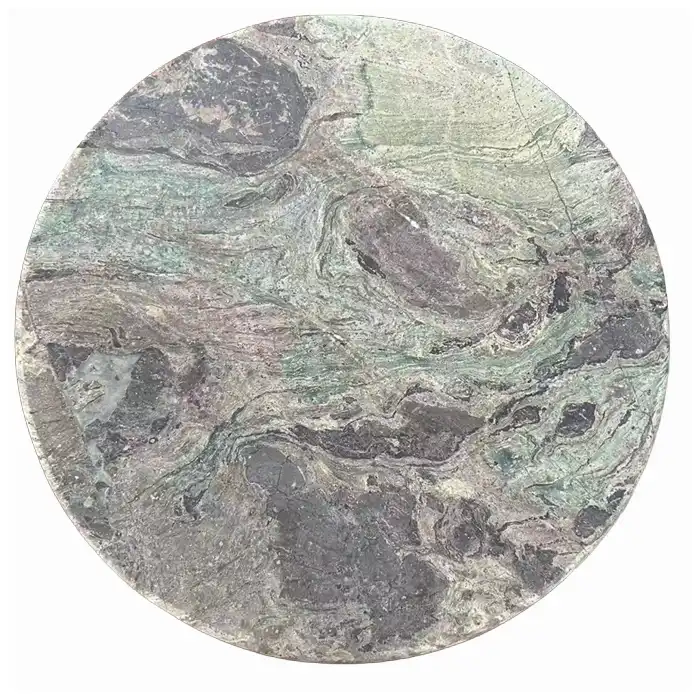
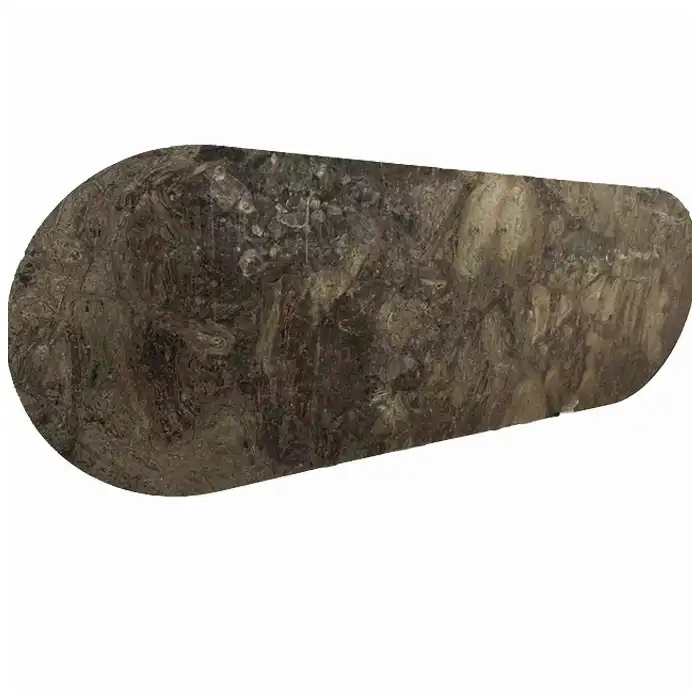
The veins will tell you where the piece wants to go. Some movement wants a wide wall. Some wants a tabletop where people can sit near it. Some stone is too restless for furniture but wonderful as a feature panel.
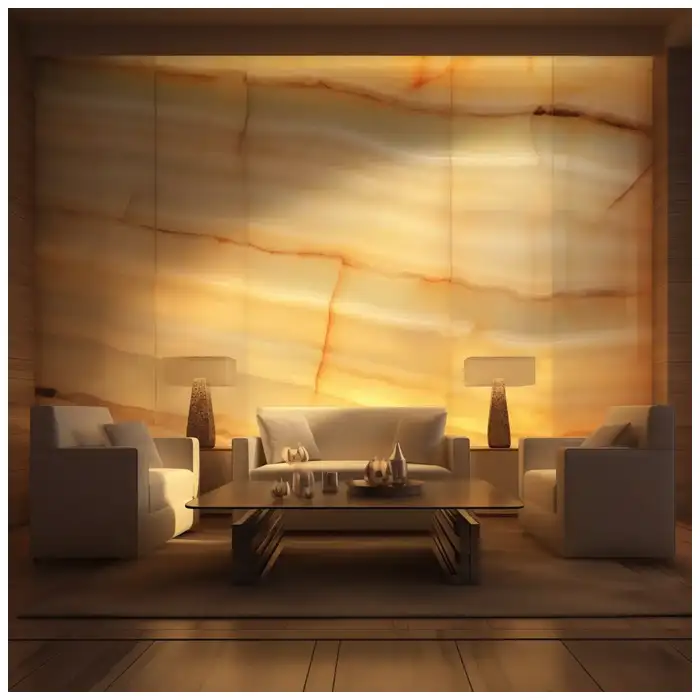
Light is not a technical afterthought. It is part of the material. Morning light, warm lamp light, side light, and backlight can all reveal a different surface. I ask for more than one view because a single photo can make a stone too simple.
Edges change the mood. A softened edge can make a dense stone feel calmer. A thicker edge can give a table weight. A sharp edge may look crisp in a drawing and feel unfriendly in a room where hands touch it often.
True luxury is something you never get tired of looking at. That is why I do not trust only the loudest slab. I want depth, patience, and a natural rhythm that survives normal life.
For furniture, the base matters as much as the top. A heavy stone on a weak visual base looks nervous. A beautiful slab on an oversized base loses grace. I sketch the base line beside the slab photo before I talk about finish.
For wall panels, I ask where the eye enters the room. If the strongest line lands behind a sofa, a reception desk, or a dining table, it may become memorable. If it lands at the wrong height, it may feel accidental.
My approval note is short: full slab, light view, edge sketch, support note, room position, and reason for the choice. If I cannot write the reason clearly, I keep looking.
What I study after the first beautiful photo
I look for the quiet area that will carry daily life. Every dramatic stone needs a resting place. Without that pause, the finished piece may feel like it is always speaking too loudly.
I also study mineral direction near the edge. A table or panel edge can reveal layers that the face hides. Sometimes the edge is where the stone becomes intimate.
For translucent material, I ask how the back light will be serviced. Beauty should not make maintenance impossible. The light box, backing, access, and heat behavior need respect.
For dining tables, I imagine plates, glasses, hands, and shadows on the surface. A stone that only works when empty may not be the right table.
For feature walls, I ask what sits in front of the wall. Furniture, plants, art, and reception counters can hide the very movement that made the slab special.
I do not want a stone to win only in the warehouse. It has to win in the room, after the lights are on and normal life has started.
I also ask how close people will stand to the piece. A reception wall can accept broader movement. A table needs details that reward a much closer eye.
Finish changes the conversation. Polished stone reflects the room. Honed stone softens it. Brushed or leathered texture invites touch, but it also changes the shadow along every vein.
The right approval leaves a quiet trail. Anyone can see what was chosen, why it was chosen, and where the stone should speak.
I look at the back of the slab too. The back is not meant to impress anyone, yet it tells me about fissures, repairs, resin, and how the stone may behave under fabrication stress. A beautiful face still needs a responsible back.
When a piece will become furniture, I ask how people will gather around it. A dining table holds conversation, elbows, glasses, plates, and soft shadows. A coffee table holds books, flowers, and the close look of someone sitting beside it.
When a piece will become a wall, I ask how the room approaches it. Does a person see it from a corridor, from a sofa, or from across a lobby? Distance changes how strong the movement should be.
With translucent stone, I test patience. Some pieces look magical only when the lamp is too strong. I prefer a glow that still feels natural when the light is softer. Otherwise the panel becomes a trick.
I also ask whether the chosen stone can share a room with wood, metal, fabric, and other surfaces. A great slab does not need every other material to disappear. It should hold its place without turning the room into a contest.
This stone has been waiting for millions of years…, but fabrication gives it a new body. The cut, the edge, the backing, and the support decide whether that body feels honest.
The veins will tell you when a layout is fighting the slab. If a bookmatch cuts through the natural rhythm or a table base covers the best movement, I would rather redraw than force it.
True luxury is something you never get tired of looking at, and that means the approval has to survive more than one mood. I like to return to the same photo later in the day. If it still feels right, I trust it more.
I also check shadow along the edge. A pale stone can become sharper with one small bevel. A darker stone can feel lighter when the underside is relieved correctly. The edge is not decoration. It is the handrail of the eye.
For room scale, I compare the slab movement with the distance from the main viewing point. Large movement needs breathing room. Small mineral detail needs closeness. If those two are reversed, the stone feels either noisy or wasted.
I keep a small note about what the stone should not become. Not every beautiful slab should be a dining table. Not every translucent panel should be backlit. Respect sometimes means refusing the obvious use.
When I can explain that refusal calmly, I know I am serving the material, not just filling a production slot.
That quiet discipline is what keeps a rare slab from becoming a loud mistake.
I prefer that.
So does the room.
Always.
Understanding this decision in today’s market
How does the stone feature trend change selection?
Designers want pieces with more presence, but presence is not the same as noise. A natural slab has to hold attention without exhausting the room.
Why does light matter so much?
Light changes depth, edge, translucency, and color temperature. A stone that looks flat in one direction can open when the angle moves.
What option works best for premium interiors?
I look for stone with character and restraint. A piece needs enough story to invite the eye back, but enough calm to live with people.
What is the main consideration before fabrication?
The stone, edge, support, and room must agree. If one of them fights the others, the finished work feels forced.
FAQ
1. What photos matter most for onyx wall panels?
I want full slab photos, side-light photos, close details, edge references, thickness information, and a room context photo. A beautiful close-up is not enough.
2. How does lighting change natural stone?
Lighting changes color, depth, reflection, and translucency. A slab can feel calm in soft light and restless under bright directional light, so I ask for more than one viewing angle.
3. Is natural stone better than artificial stone for premium interiors?
It depends on the room. Artificial surfaces can give control, while natural stone gives depth and variation. I choose based on the object, lighting, use, and the feeling the room needs.
4. What edge detail should be approved before fabrication?
Approve edge thickness, radius, bevel, underside support, and corner treatment before fabrication. The edge affects touch, shadow, weight, and how the piece feels in daily use.
5. How do I avoid choosing a stone that feels dated?
Choose it slowly. Look for movement that keeps giving after the first glance, not only the loudest vein. True luxury is something you never get tired of looking at.
The quiet test before I say yes
I like to imagine the piece after the first week. No staging, no flowers, no photographer. Just the stone, the room, and ordinary light. If the piece still feels generous in that quiet moment, I keep looking.
Natural stone can impress too quickly. A loud vein can win the first glance and lose the second month. A calmer slab may reveal small mineral threads, soft clouds, and a depth that stays with the room longer.
The veins will tell you when the piece has patience. I trust that more than a dramatic close-up.
Final Conclusion
Onyx wall panels deserves a slower decision than a catalog page gives. Light, edge, base, support, veining, and room scale all change the way a natural stone piece lives.
Keep Natural Quartzite vs Marble-Look Sintered Stone: The Definitive Comparison for Premium Interiors beside the slab review. True luxury is something you never get tired of looking at, and the right stone proves that quietly after the first excitement fades.

References
- Designers Say This Statement Feature Is Taking Over Dining Rooms, Editorial Team, House Beautiful, House Beautiful
- The Dining Table Trends for 2026 Have Been Set, Oonagh Turner, Livingetc, Livingetc
- Onyx Stone Interior Design: Everything You Need to Know, Design Editorial Team, Livingetc, Livingetc
- Dimension Stone Design Manual, Technical Committee, Natural Stone Institute, Natural Stone Institute Publication
- Stone Federation Technical Advice, Technical Team, Stone Federation Great Britain, Technical Publications
- ASTM C1528 Standard Guide for Selection of Dimension Stone, ASTM Committee C18, ASTM International, ASTM Standards
- Creating Helpful, Reliable, People-First Content, Search Central Team, Google, Google Search Central
- Article Structured Data Guidelines, Search Central Team, Google, Google Search Central