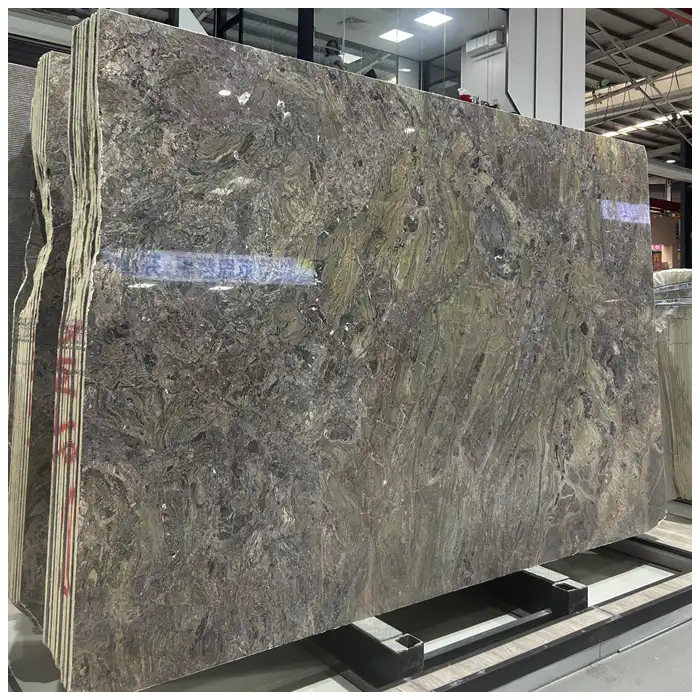
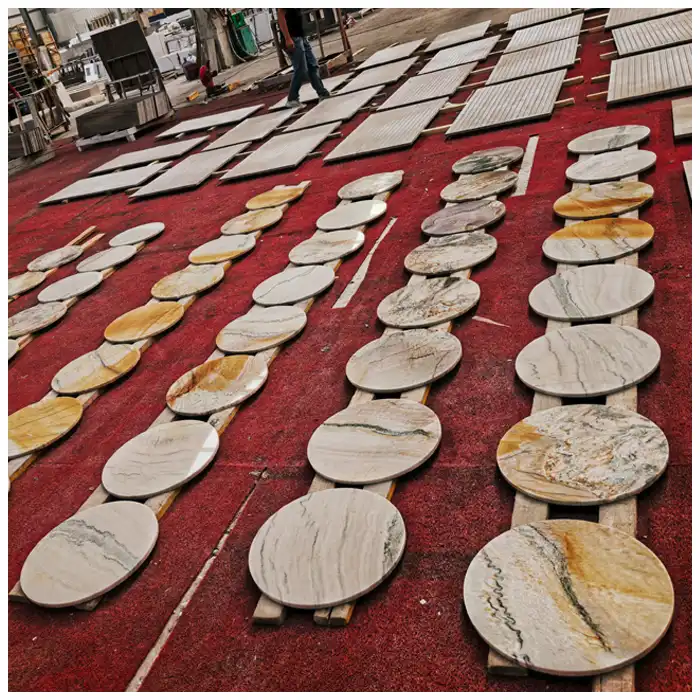
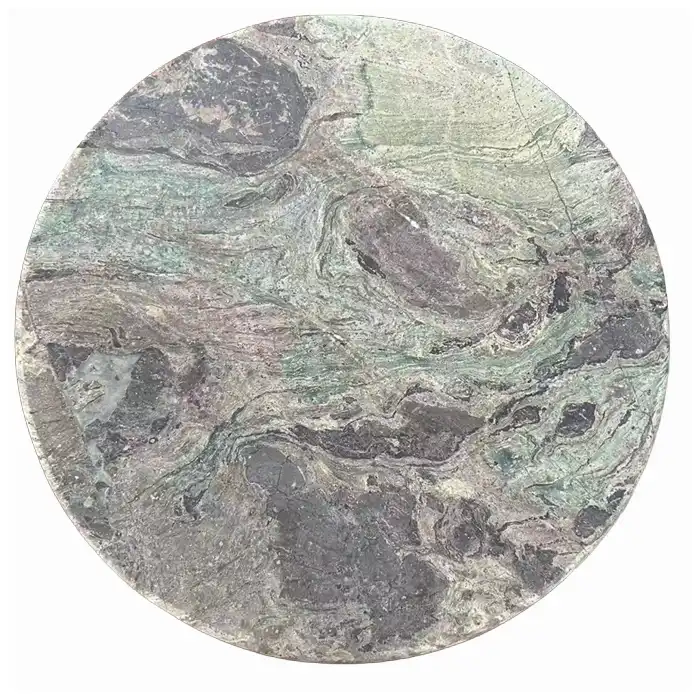
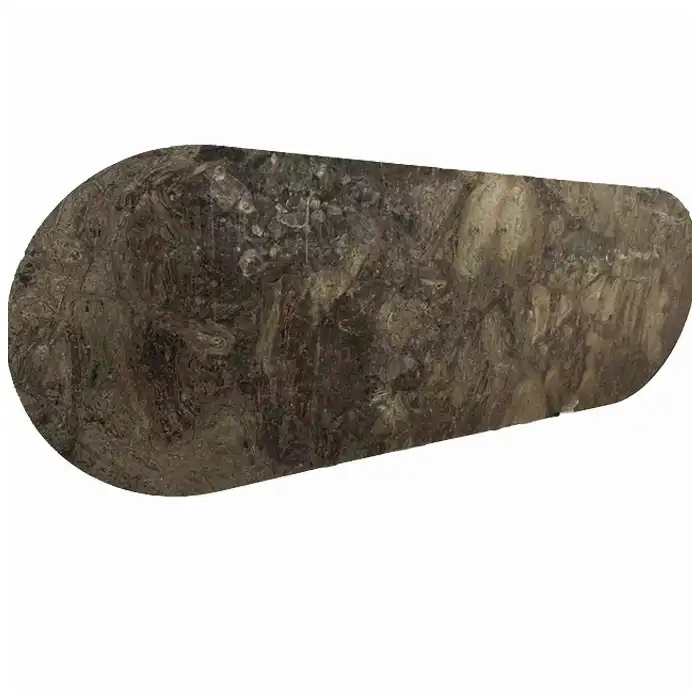
Pink Patagonia Quartzite Selection before Backlighting and Cutting
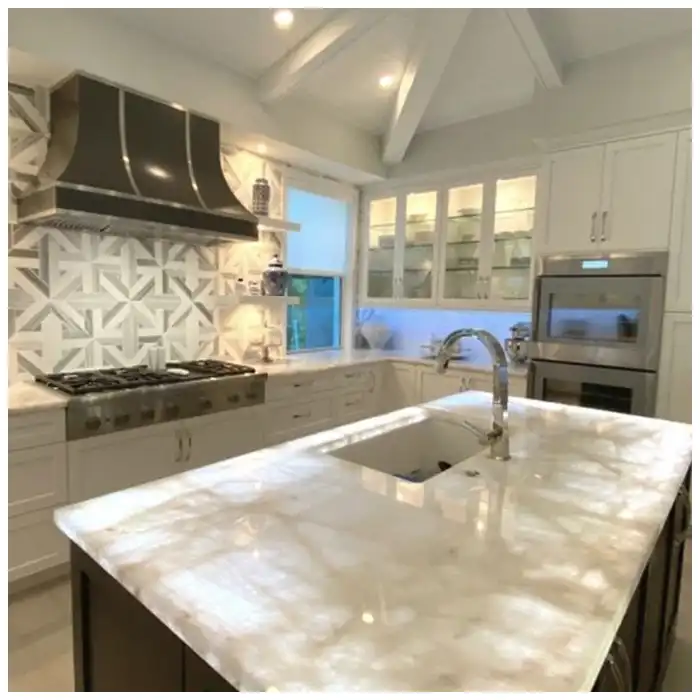
When light first reaches the back of Pink Patagonia, the slab does not brighten evenly. A pale crystalline window begins to glow, rose mineral islands remain suspended inside it, and darker structures hold their ground like a coastline at dusk. Move the lamp a few centimeters and the whole balance changes.
That moment defines Pink Patagonia quartzite selection. I study the slab in reflected light and transmitted light, then place the real panel, support, joint, and opening geometry over both records. Beauty and fabrication have to occupy the same face.
The direct answer is clear: choose the lighting system and panel map together. A slab approved only from the front is not approved for backlighting.
Begin Pink Patagonia Quartzite Selection with Both Faces
Patagonia-type quartzite is visually complex. Quartz-rich crystalline areas may transmit light, while denser mineral zones remain more opaque. Feldspar and accessory minerals can contribute cream, pink, grey, and dark structure. Heat and pressure have recrystallized the original material into an interlocking stone, but natural boundaries and fissures can remain.

Сайт Pink Patagonia Quartzite slabs considered for a project need numbered full-face photographs. I add a back view and note mesh, resin, reinforcement, repairs, fissures, and areas where the slab thickness or backing may affect light.
Для Pink Patagonia quartzite selection, the front image records color and composition. The back image records what the lighting and fabrication teams must work around. One cannot replace the other.
Separate translucent appearance from stone condition
A bright crystalline zone can be sound, repaired, naturally fissured, resin-treated, or crossed by a darker mineral bridge. Translucency says how light passes; it does not certify strength or suitability for a cutout, edge, fixing, or span.
The fabricator and responsible engineers determine support, panel size, reinforcement, fixing, and handling from the actual slab and system. I map the visible and concealed conditions so those decisions are made before a focal window is cut apart.
The mineral transitions show where the slab changes. Sometimes the strongest visual line is also where the back reveals a repair. That does not automatically reject it, but it demands an honest detail and an informed layout.
Judge the full slab at architectural scale
A hand sample can glow beautifully because the lamp sits directly behind its clearest crystal. A wall panel includes opaque islands, support shadows, joints, wiring zones, and edges. Test a representative area large enough to show those relationships.
The parent Exotic Quartzite Slabs: Mineral Depth, Full-Face Selection, Finishes, Light, and Fabrication sets the wider material record. Pink Patagonia adds a second map: what remains in reflected light and what changes when illumination begins.
| Slab zone | Light behavior | Fabrication question | Required record |
|---|---|---|---|
| Clear crystal | Strong transmission, visible lamp geometry | Can support avoid the focal window? | Front/back light map |
| Rose or cream field | Partial glow or reflected color | Will the cut preserve its shape? | Scaled panel overlay |
| Dark mineral bridge | Opaque silhouette | Does it aid composition or divide it? | Illuminated elevation |
| Repair or backing | Possible color or shadow change | Is it accepted and compatible? | Repair and sample detail |
| Solid edge zone | Low transmission | Can it receive edge or fixing work? | Edge trial and support drawing |
The table keeps Pink Patagonia quartzite selection grounded in actual zones. A luminous face needs structure, edges, and service access as much as it needs light.
Test the Real Light Geometry
Lamp distance changes the image
A light source close to the stone can create hot spots and reveal individual diodes. Greater distance can blend the field but requires cavity depth and a suitable enclosure. Diffusers can soften points while changing brightness and color.
A quartzite translucency test records source type, color temperature, distance, diffuser, background, ambient light, and camera exposure. Without those details, two photographs cannot be compared.
The published Quartzite Translucency Mapping before Backlighting and Cutting gives the complete grid method. Here I use that map to accept or reject a specific Pink Patagonia panel composition.
Color temperature can move the rose field
Warm light can intensify cream and pink. Cooler light can make clear crystal feel icier and dark minerals more graphic. The correct choice belongs to the room, other finishes, and the desired reading of the actual slab.
During Pink Patagonia quartzite selection, I compare reflected and transmitted light. The wall must still look intentional when the backlight is off. A composition that collapses into unrelated dark patches during daylight is incomplete.
A lasting composition must survive more than one lighting scene. The stone cannot perform only in a staged night photograph and disappear when daylight enters the room.
Design access before closing the wall
Lighting equipment requires power, ventilation or thermal consideration as defined by its manufacturer and responsible specialists, controls, drivers, maintenance access, and replaceable components. The stone panel map cannot cover every access route with the most fragile or visually important zone.
I place access, support, and cable paths on the illuminated elevation. Their shadows are part of the composition. Hiding them from the rendering does not remove them from the wall.
Place Panel Cuts, Supports, and Joints Together
A Patagonia slab layout starts with the architecture: finished wall dimensions, panel limits, openings, corners, returns, support, access, transport, and installation sequence. Then the slab sequence determines how mineral movement crosses those boundaries.
Сайт Patagonia Quartzite slab family may include very different color and crystal structures. Only the final numbered Pink Patagonia faces can establish the project layout.
Keep focal crystal away from avoidable joints
A joint through a broad clear window becomes more visible when illuminated. If panel size and system allow, move the boundary into a quieter mineral transition. Do not sacrifice support or installation requirements for the image; negotiate the cut with all conditions visible.
Для Pink Patagonia quartzite selection, I compare bookmatch and flow match with the light on and off. A mirrored crystal center can be extraordinary, but a flow match may preserve geological direction more naturally.
Сайт Quartzite Bookmatch vs Flow Match guide explains how slab sequence changes the wall rhythm. Pink Patagonia adds opaque support shadows to that decision.
Reserve solid zones for edges and fixings
Crystal-rich areas may be the visual prize, yet an edge, hole, or fixing zone can require a different material condition. The fabricator and engineer decide from the actual stone and system. I map those requirements before nesting.
Openings for switches, displays, shelving, or access panels also need local review. A small rectangle can destroy a rose island or leave a fragile crystal bridge. Overlay every opening at scale.
The Hard-Won Lesson: The brightest crystal is not automatically the best fixing zone
A repeated design error places a fixing or access opening according to the wall grid before the illuminated slab map exists. The opening then falls inside the clearest crystal window. Moving it later changes support and services; leaving it creates a dark mechanical shape at the center of the glow. The conflict was visible as soon as both drawings were overlaid.
The Lesson: Overlay every fixing, support, and access zone on the backlit slab before approving the focal crystal.
Approve Edges, Thickness, and Dry Assembly
Make a full-size illuminated sample
The sample includes actual stone thickness, backing or reinforcement, edge, joint, support shadow, light distance, diffuser, and finish. A loose slab held against a work lamp is a useful discovery test, not final approval.
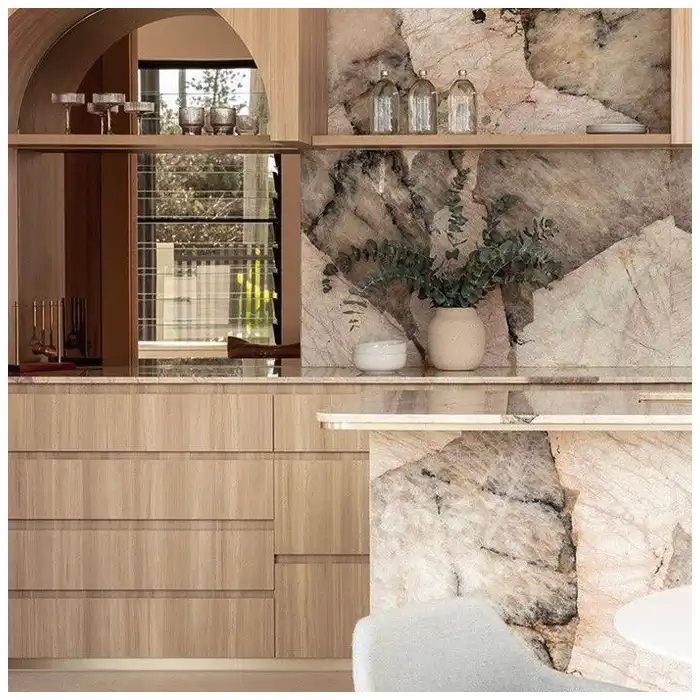
Each Pink Patagonia quartzite selection record identifies sample zone, slab ID, face orientation, light settings, and camera condition. The same setup is used when production pieces are checked.
Inspect edges in reflected and transmitted light
A polished edge can deepen color. A mitre or laminated return can create a dark line. Resin and repair may transmit differently near the perimeter. Dry-fit the joint and corner with illumination operating.
Сайт Patagonia Quartzite countertops demonstrate another horizontal use, but a backlit wall needs a distinct support and lighting test. Do not transfer one application’s edge approval to another.
Carry the light map into packing
Piece IDs, top direction, face, sequence, panel location, joint edges, and repair references stay on protected labels. The crate manifest follows installation order where practical. Opaque wrapping is applied only after final illuminated and reflected-light photographs are recorded.
This stone has been waiting for millions of years. A clear sequence is a small courtesy to the installer who must rebuild its composition from separate crates.
Test the wall when one light component is missing
An illuminated sample should not be judged only at maximum brightness. I also view it dimmed, under ambient daylight, with the backlight off, and with one representative source area blocked. These scenes reveal whether the mineral composition remains coherent and whether a failed or shadowed section would become an isolated dark rectangle.
Для Pink Patagonia quartzite selection, this test affects slab allocation. A broad opaque bridge can sit comfortably at an architectural edge, but the same bridge at the center of a clear field may become dominant when illumination changes. The design team can decide with evidence instead of discovering the relationship after installation.
Control the cavity surfaces behind the stone
Anything behind a translucent zone can influence the view: support color, diffuser, cable, dust, access panel, adhesive, or a reflective lining specified by the lighting system. The mock-up records the actual build-up rather than placing the slab against an anonymous white sheet.
The interior needs a cleaning and maintenance route before closure. Dust on a diffuser or insect entry in an open cavity can create shadows that look like stone defects. Access must be planned without weakening the panel arrangement or exposing a bright service opening.
Keep finish trials inside the light study
Polish can strengthen reflected depth when the backlight is off. Honing may soften surface reflection and let transmitted light read more evenly. Texture can scatter the face but also change cleaning and edge appearance. Test the specified finish on the chosen slab zone with both lighting modes.
A treatment or resin system may alter transmission or color. Use only the approved project system and allow the relevant cure before comparison. Record it with the sample, because a raw discovery test and a finished production panel are not the same optical object.
The illuminated control set belongs in the handover record with source settings, diffuser, spacing, finish, panel ID, and photographs. If the site result later changes, those facts provide a real comparison rather than a memory of how the slab once glowed in the warehouse.
Record the camera without letting it replace the eye
Backlit stone is difficult to photograph. Automatic exposure can turn opaque areas black and clear crystal white, erasing the middle tones seen in person. I keep exposure and white balance consistent across comparison images, include one wider room view, and add close details only after the complete composition is documented.
A histogram or camera setting can improve repeatability, but it is not the approval itself. The signed mock-up is viewed directly by the responsible team. Photographs carry the record to people who cannot stand in front of it, and their limitations are stated rather than hidden.
For dimmable systems, record more than the brightest scene. A low-output view often reveals support shadows and mineral boundaries that disappear at full intensity. That quiet scene may be the one used most often in a hotel, residence, or gallery.
When the Backlit Wall Shows an Unexpected Shadow
Photograph the entire illuminated elevation and identified local condition with the light settings recorded. Stop closing the wall or altering the affected panel. Compare the site result with the approved translucency map, support drawing, access plan, slab orientation, repair record, and full-size sample. Contact the supplier and lighting or installation specialists with that evidence before moving lamps, grinding stone, or changing support.
Quick-Reference Checklist for Pink Patagonia
- Number and photograph the front, back, edges, repairs, and reinforcement.
- Map translucent, opaque, repaired, and solid fixing zones.
- Test the actual source, distance, diffuser, and color temperature.
- Overlay panel joints, supports, access, services, and openings.
- Compare bookmatch and flow match with light on and off.
- Approve a full-size edge and joint sample under illumination.
- Carry orientation and sequence into inspection and crate labels.
Frequently Asked Questions
1. What does Pink Patagonia quartzite selection require?
It requires numbered front and back slab records, mineral and repair mapping, controlled light tests, scaled panels, supports, joints, access, openings, edge trials, and traceable fabrication.
2. Is every pale crystal area translucent?
No. Transmission varies with mineral composition, thickness, backing, repairs, source distance, and lighting geometry. Test the actual slab zone.
3. Should Pink Patagonia be judged only with the backlight on?
No. The wall must work in reflected daylight and with illumination off as well as in the intended backlit scenes.
4. Can supports sit behind translucent crystal?
Support design belongs to responsible specialists, but every support may cast a shadow. Map it with the stone and light before approving the composition.
5. What should happen when an unexpected shadow appears?
Document the panel and light settings, stop closing or altering the wall, and compare the site condition with the approved light map, support, repair, and orientation records.
Final Conclusion
Pink Patagonia quartzite selection is complete when mineral structure, translucency, repairs, light geometry, supports, joints, edges, access, and piece identity share one map. The veins will tell you where light wants to travel; MQ STONE makes sure the architecture listens before cutting begins.
References
- Dimension Stone Design Manual, Natural Stone Institute.
- ASTM C616 Standard Specification for Quartz-Based Dimension Stone, ASTM International.
- ASTM C97 Standard Test Methods for Absorption and Bulk Specific Gravity of Dimension Stone, ASTM International.
- Dimension Stone Cladding Design Guidance, Natural Stone Institute.
- Natural Stone Repair and Reinforcement Guidance, Natural Stone Institute.
- Lighting Design Guidance for Interior Applications, Illuminating Engineering Society.
- Кварцит, Wikipedia, English edition.