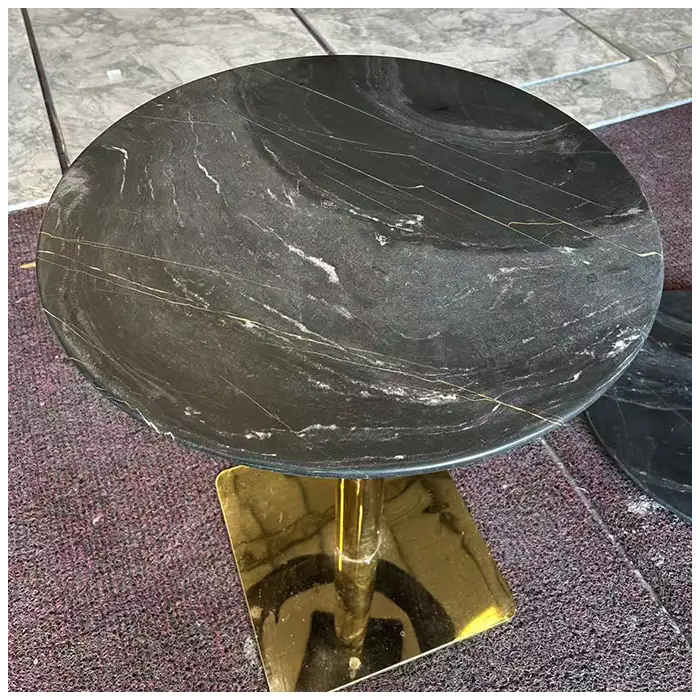
Luxury Stone Slab Cost and Value Drivers
A slab can be expensive for reasons that never survive fabrication. A rare mineral field may sit outside the cut map, a long crystalline bridge may disappear at a joint, or a translucent band may land behind a solid support. The useful question is not whether the stone is rare. It is whether the finished wall, island, or table preserves the part of the face that justified the selection.
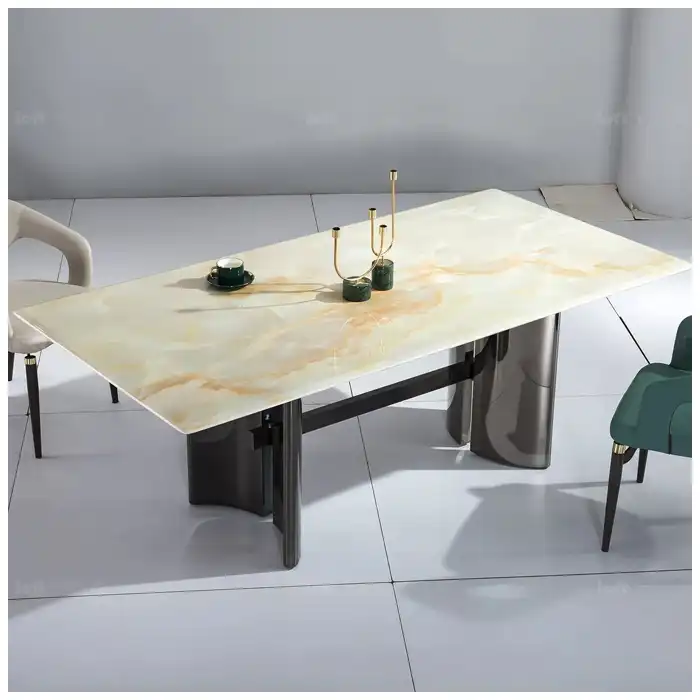
I compare the actual slabs, not a material name. Full-face composition, usable dimensions, sequence, finish, repair visibility, cut yield, support, and light all change the installed value. A quieter face can outperform a more dramatic one when it fits the elevation with fewer destructive cuts.
What Creates Luxury Stone Slab Cost
Luxury stone slab cost can reflect geological rarity, quarry conditions, block recovery, slab size, thickness, current availability, mineral composition, color, translucency, connected faces, accepted natural features, repairs, finish, selection range, yield, fabrication, dry-lay, reinforcement, support, packing, handling, and commercial terms.
The broader selection remains Luxury Natural Stone Slabs and Furniture: Complete Guide to Materials, Applications, Edges, Lighting, and Support. It asks what the slab will become. Cost analysis follows that question. An onyx wall, quartzite table, marble island, and travertine console use different parts of the material’s value.
I avoid universal online price claims. Current faces, project country, quantity, fabrication, logistics, and commercial terms change. Instead, I ask for identifiable slabs and a dated scope. where the value lies, but the quotation must explain what is included.
Rarity is only one part of value
Some materials come from limited deposits or difficult quarry conditions. Some blocks contain only a small zone with the desired color. Yet rarity does not guarantee architectural strength. A highly unusual face can lose coherence when divided into small pieces. A more available quartzite may offer larger connected slabs and better project yield.
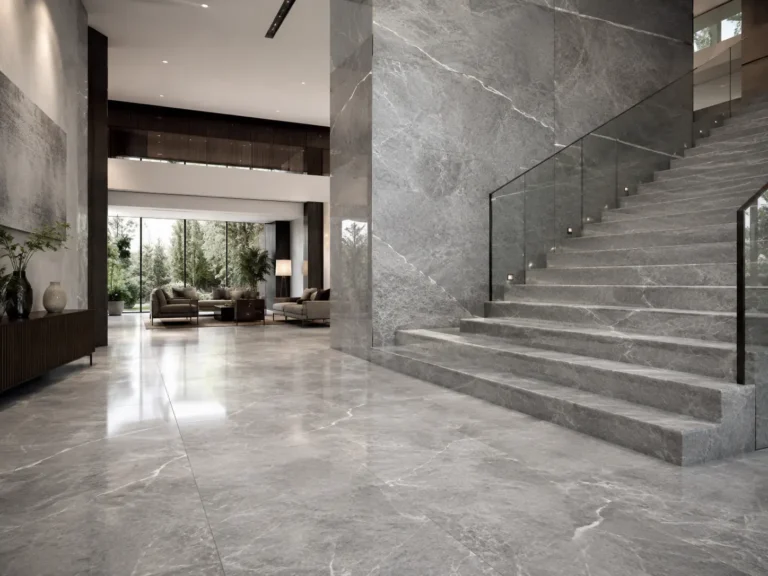
I judge luxury stone slab value through visual depth, scale, mineral interest, suitability, usable dimensions, and the design opportunity. A slab deserves its position when the room uses what cannot be repeated by print or paint.
I record that luxury stone slab value beside the exact face, because my memory of a rare mineral event is not a project specification.
Block Yield, Slab Size, and Usable Composition
Quarry recovery matters before the slab exists. Fractures, bedding, mineral transitions, weathered zones, and block geometry influence how many usable faces emerge. Once cut, each slab has dimensions and features that may help one application and complicate another.
Natural stone cut yield is not simply net area plus waste. A table may need its strongest movement centered away from support connections. A wall may need sequential faces. An island may require a long uninterrupted strip for the edge return. The cut map determines whether the project keeps or discards the valuable composition.
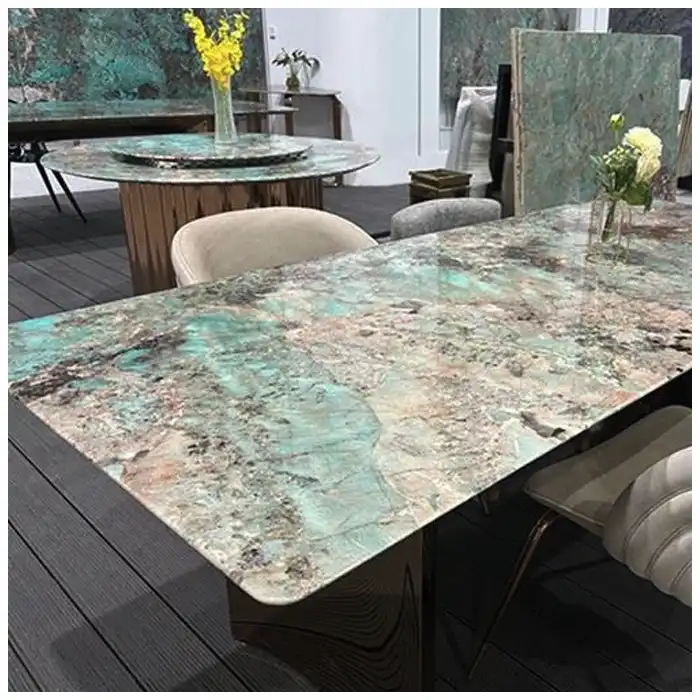
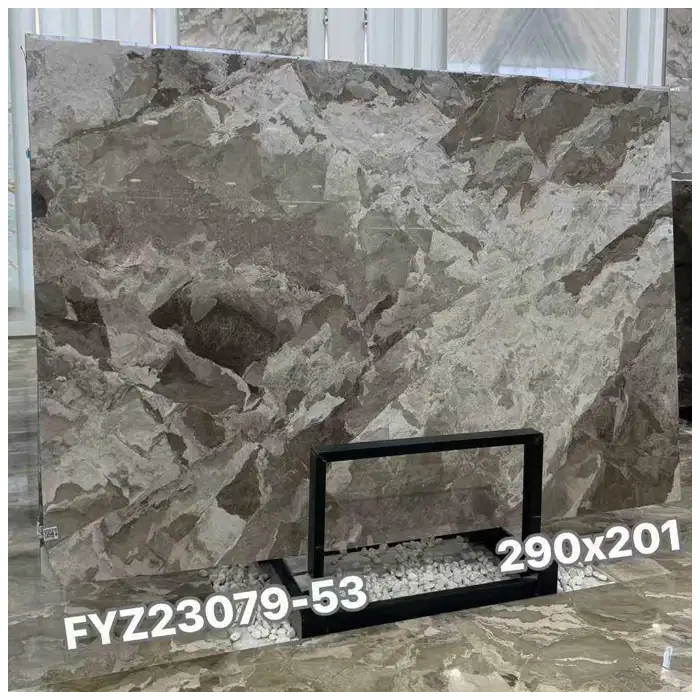
Тхе Патагонија кварцитна плоча illustrates this clearly. Crystalline fields, darker fragments, and translucent zones can create extraordinary depth. They also make placement decisive. Cutting the face into unrelated small rectangles can spend the material without preserving the image.
| Value driver | Evidence to review | Project consequence |
|---|---|---|
| Geological rarity | Source context, current blocks and slab availability | May limit matching, replacement, and future supply |
| Face composition | Straight full-face images and viewing-distance study | Determines whether the slab carries a wall, island, or furniture scale |
| Slab dimensions | Measured usable size, thickness, edge condition | Controls large pieces, joints, and edge returns |
| Sequential supply | Slab order and connected-face evidence | Supports bookmatching and tonal continuity |
| Translucency and light | Backlight and side-light mock-ups | Can create value or expose support shadows and repairs |
| Cut yield | Actual cut map with visual priorities | Shows how much approved face survives fabrication |
| Fabrication and support | Edge, cutouts, reinforcement, base and handling route | Turns material price into installed-object cost |
Mineral Depth, Finish, and Light
Polishing can reveal crystal depth, while honing softens reflection and changes color saturation. A textured face catches shadow and makes touch important. The selected finish should support the material’s mineral structure and the room’s viewing conditions.
Тхе lighting guide for colorful stone helps explain why a face must be seen in more than one direction. Side light can expose finish variation. Backlight can turn calcite bands in onyx into amber clouds. Cool front light may sharpen blue quartz or mica.
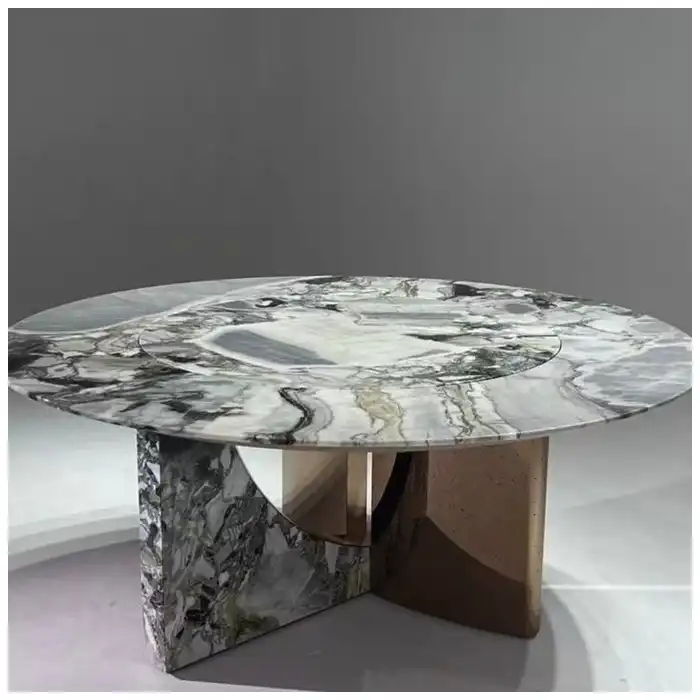
An Champagne Quartzite Slab may carry soft crystalline warmth that appears quiet under diffuse light and brighter at an oblique angle. I judge that face by whether those shifts remain balanced from the room’s main viewpoints, not by one dramatic photograph.
Fabrication, Support, and Installed Object Cost
The slab price is only one line. Digital layout, templates, cutting, reinforcement, mitred edges, carving, polishing, dry-lay, steel support, backlight cavities, crating, lifting, assembly, and specialist installation can become equally important. I separate those costs so the design team sees where complexity enters.
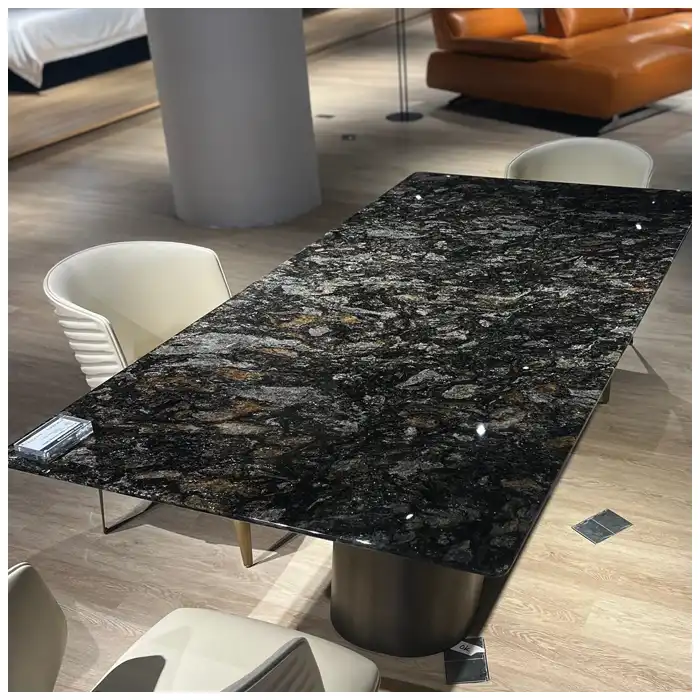
For furniture, the Луксузни мермерни камени сто route shows why top and base must be developed together. Weight, span, overhang, edge, handling, and support footprint influence how much of the slab remains visible and how the object feels.
The slab image helps me decide where a mitred return should turn or where a solid edge deserves to remain exposed. It does not set structural dimensions. The responsible fabricator or engineer reviews the actual material, finished geometry, loads, support, and connections.
How to Compare Quotations Without Flattening the Stone
I normalize slab identity, dimensions, thickness, finish, selected faces, accepted features, quantity, yield, fabrication, matching, support, packing, logistics basis, and exclusions. A low rate with no selection can be more expensive than a higher rate tied to faces the project can actually use.
Exotic stone slab price also changes with how tightly the project selects color and movement. Rejecting most of a limited batch to obtain one narrow appearance increases material demand. Accepting a thoughtful range can improve yield when the architect distributes it intentionally.
I keep a value note beside each critical face: intended location, viewing distance, defining movement, cut priority, light direction, and elements that must survive. I do not want a procurement spreadsheet to erase why it was selected.
Replacement and long-term value
A singular natural face cannot be reordered like a printed batch. I ask what happens if one panel or table top is damaged: whether compatible slabs remain, whether labeled offcuts should be stored, whether the composition can accept a different face, and which records a future fabricator will need. Replacement planning does not make natural stone generic. It respects its individuality.
Long-term value also includes finish renewal, support access, edge repair, and the ability to service lighting or hardware without destroying the stone. A beautiful object that can be maintained honestly may offer more value than a cheaper assembly whose hidden system fails first.
I keep that service route visible, and I ask our fabricator where a future technician can work without disturbing the selected face.
I include care expectations and service routes in the original scope. A material chosen for geological permanence deserves an assembly that can be maintained without sacrificing its defining face.
Example: Compare the Finished Elevation, Not Raw Slab Area
Example: if four quartzite slabs are assigned to a reception wall before panel joints are placed on the actual faces, a vertical cut can remove the visual bridge between a pale crystalline field and a darker mineral island. The purchased area stays the same, but the finished composition loses the feature that carried the design.
Decision rule: approve identifiable slabs, the finished elevation, cut map, light direction, joints, and support before comparing total project cost.
How Stone Value Holds Up After Selection
Why rarity and value are not identical
Rarity describes availability. Value describes what the design receives. A rare slab poorly scaled to the room may offer less than a more available face whose movement, dimensions, light, and edge become inseparable from the architecture.
What should be protected first
Protect the defining mineral event, useful full-face scale, connected sequence, translucent area, or tactile finish that led to selection. Then coordinate cuts, joints, openings, support, and handling around it. Cost control should preserve the reason for choosing natural material.
What to do when the selected slab becomes unavailable
Document the unavailable identity, stop layout and fabrication, and compare proposed replacements with the original full-face approval, dimensions, lighting, cut map, and application. Contact the supplier with those records before transferring the design to another face.
Frequently Asked Questions
1. Why is luxury stone slab cost so different between materials?
Geological rarity, quarry yield, block and slab size, current availability, mineral character, accepted range, repairs, finish, matching, cut yield, fabrication, support, packing, logistics, and commercial scope can all differ.
2. Does a higher slab price guarantee a better interior?
No. The face must suit the room’s scale, light, joints, openings, finish, support, and viewing distance. Architectural use creates value; price alone cannot.
3. How should natural stone cut yield be calculated?
Place finished pieces on identifiable slab faces, include edge losses and natural features, preserve visual priorities, and account for connected faces, repairs, openings, and usable offcuts. Net area plus one generic percentage is not enough.
4. What project costs sit outside the slab price?
Selection, layout, templates, fabrication, reinforcement, edges, dry-lay, support, backlighting, crating, transport, lifting, assembly, installation, testing, and spares may sit outside it depending on the quotation.
5. What should we do first if an approved luxury slab becomes unavailable?
Record the slab identity and status, stop cutting and layout changes, then compare proposed alternatives with the original full-face images, dimensions, mineral character, light tests, cut map, and application before approval.
Quick-Reference Checklist for Comparing Luxury Stone Value
- Identify the current slabs with straight full-face images and measured dimensions.
- Record the geological and visual qualities the finished design must preserve.
- Place joints, cutouts, edges, and finished pieces on the actual faces.
- Separate slab price from layout, fabrication, support, lighting, handling, and installation.
- Test polished, honed, textured, side-lit, and backlit behavior where relevant.
- Compare quotations on the same selected faces, scope, yield, terms, and exclusions.
Final Conclusion
Luxury stone slab cost becomes useful only after the project identifies the real faces, usable dimensions, cut yield, finish, light, fabrication, support, and installed composition. Compare quotations on that shared scope, not on a material name or one rate per square meter.
MQ STONE treats value as a relationship between the selected face and the part of it the finished room can actually keep.
References
- Dimension Stone Design Manual, Natural Stone Institute.
- C616 Standard Specification for Quartz-Based Dimension Stone, ASTM International.
- C503 Standard Specification for Marble Dimension Stone, ASTM International.
- C97 Standard Test Methods for Absorption and Bulk Specific Gravity of Dimension Stone, ASTM International.
- C880 Standard Test Method for Flexural Strength of Dimension Stone, ASTM International.
- Natural Stone: Geological Formation and Mineral Resources, geological survey references.
- Architecture and Interior Material Coverage, Dezeen.
- Search Essentials and Helpful Content Guidance, Google Search Central.