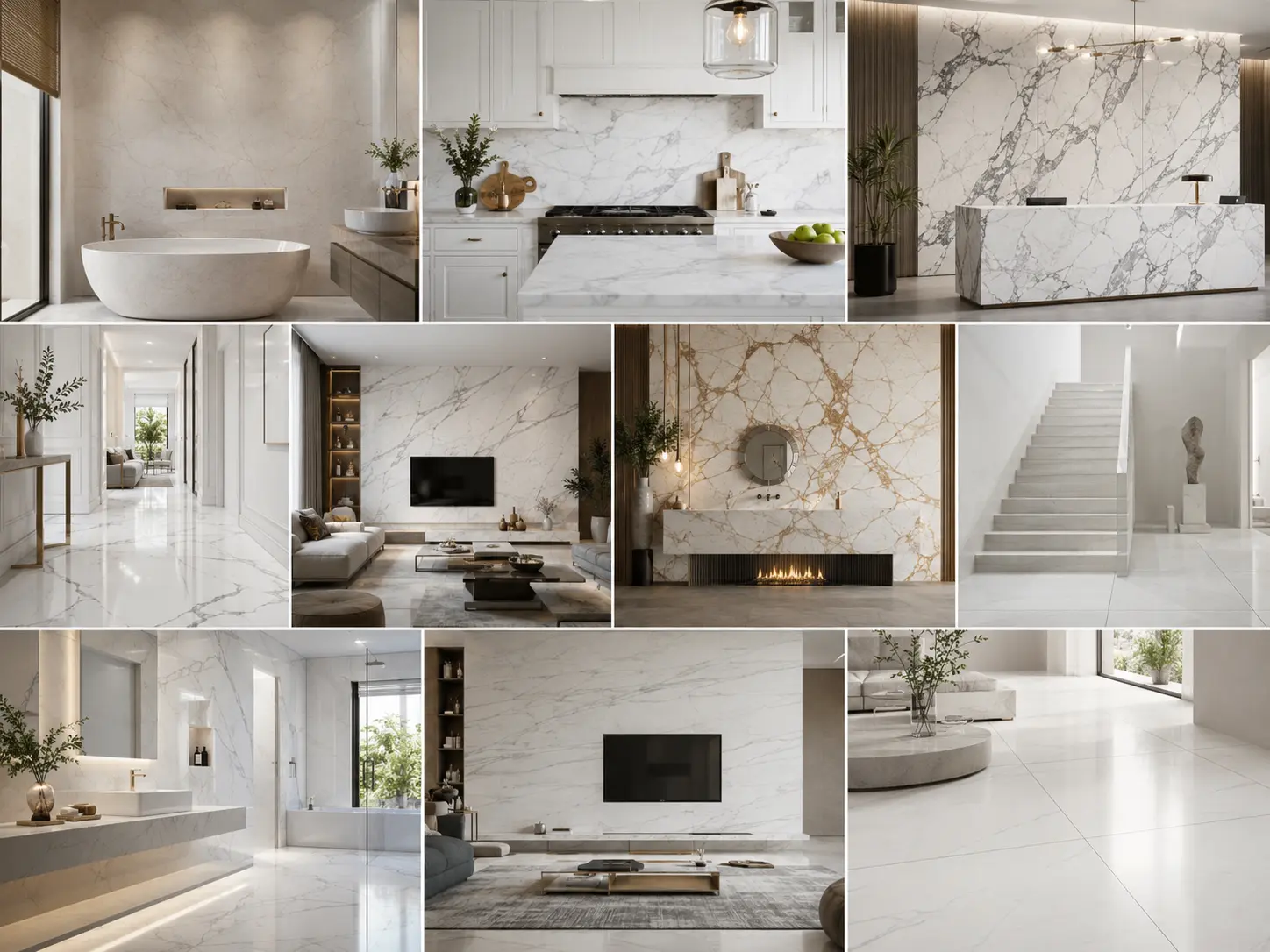
Quick Summary
Аппле Греи Сандстоне is a fine-grained natural grey sandstone supplied as large slabs, honed panels and cut-to-size tiles for architectural stonework. Its subdued grey colour and relatively restrained surface texture are suitable for interior wall cladding, floors, decorative panels and selected exterior applications. The main listed slab reference is 240cm up × 120cm up × 18mm, with other dimensions subject to material availability. Polished, honed and leathered finishes are listed for this stone. When specifying Apple Grey Sandstone slabs, buyers should review the actual material origin, full-slab colour, grain distribution, finished thickness and installation conditions rather than relying on the commercial stone name alone.
Apple Grey Sandstone Slabs for Wall Panels and Cut-to-Size Tiles
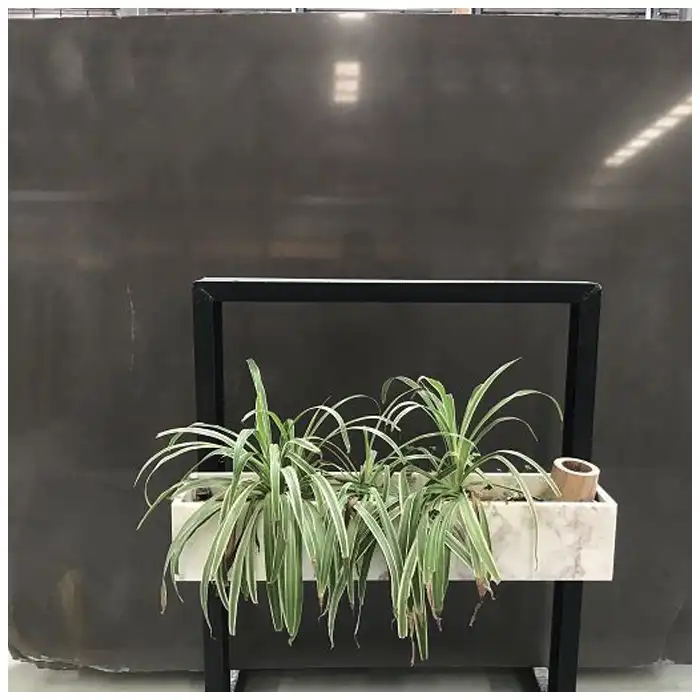
Apple Grey Sandstone is a natural sandstone distinguished by its fine-grained grey appearance. Its relatively restrained pattern differs from the strong mineral veins of marble and the coarse crystalline texture of many granites. The surface reads primarily as grey, with natural tonal movement and grain variation becoming more apparent when viewed closely.
The principal product is supplied in slab form. Large slabs can be processed into wall panels, floor tiles, stair components, window sills and other architectural pieces where the actual material and finished dimensions meet the project specification.
For wall cladding, the subdued grey background can establish a consistent surface across several panels without introducing a dominant directional pattern. This does not mean every slab is identical. Differences in shade, grain concentration and natural sedimentary markings may become visible when panels from separate blocks are installed together.
Sandstone is formed from consolidated sedimentary grains, so the stone’s internal structure and bedding characteristics deserve attention during selection and fabrication. Individual sandstone materials can behave differently depending on their mineral composition and natural cementation.
Apple Grey should therefore be assessed as a particular natural stone selection rather than as an interchangeable example of generic grey sandstone. The source, slab appearance and intended finished product must be identified before production.
When a project requires several hundred square metres of grey sandstone slabs, colour grouping is important. Full-slab photographs help establish the range of accepted tones, while representative samples allow the designer to examine the finish and surface character at close range.
The main advantage of the slab format is fabrication flexibility. Instead of restricting a project to one prefabricated tile size, the stone can be reviewed for rectangular panels, coordinated wall modules and other cut-to-size components according to the available slab dimensions.
Apple Grey Honed Sandstone Slabs and Surface Finish Selection
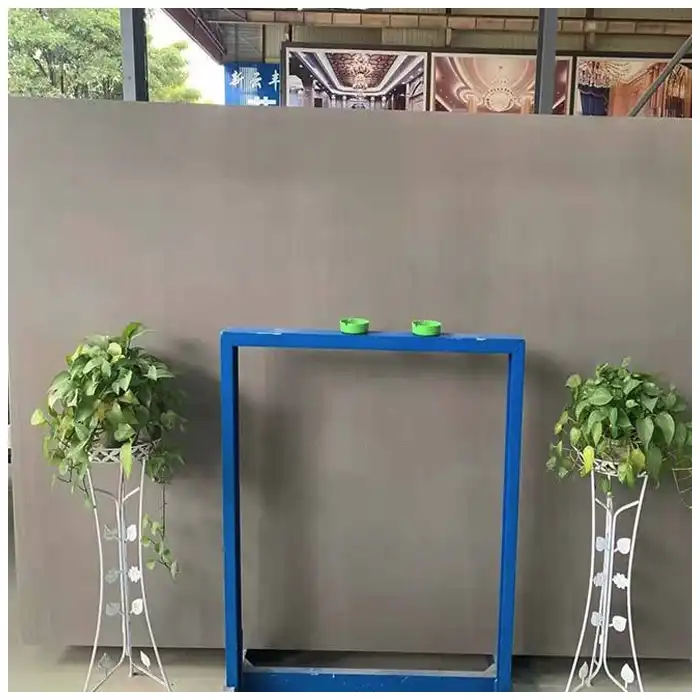
Apple Grey Honed Sandstone Slabs are a principal finish option for architectural panels. Honing reduces pronounced surface reflection and produces a relatively smooth appearance that allows the fine natural grain to remain visible.
Unlike a high-gloss surface, a honed sandstone panel does not depend on reflected light to communicate its colour. The grey tone and subtle variations in the grain become the main visual features, which can be useful for larger walls and flooring layouts.
Honed Sandstone Surface
A honed finish can be specified for interior walls, selected floor tiles and decorative stone panels. The finished surface should be reviewed for consistent machining, visible sanding marks and differences in appearance between adjacent slabs.
Honing does not make sandstone waterproof or establish a slip-resistance classification. Wet floors and exposed architectural surfaces require a separate assessment of the actual finished material and installation conditions.
Polished Sandstone Finish
Polishing may be considered when the stone composition and surface condition permit the required finish. Compared with honing, it can increase the visibility of some colour differences and surface features.
Because sandstones vary in their response to polishing, an approved finished sample is more reliable than assuming the stone will achieve the same reflectivity as marble or granite.
Leathered and Other Textured Finishes
A leathered finish creates a different tactile surface from the conventional honed treatment. The depth and uniformity of the texture depend on the stone and the processing method, so the final appearance should be established using an actual sample.
When several finish types are specified within one building, each requires independent approval. A honed wall panel, textured floor tile and exterior coping piece may share the same commercial stone name while having different surface characteristics and processing requirements.
Apple Grey Sandstone Slab Specifications
Apple Grey Sandstone is listed in large slab form with additional cut-to-size possibilities. The principal dimensions below are based on the identified product specification. Other sizes and finishes are subject to review of the actual stone selection and production requirements.
| Назив производа | Apple Grey Sandstone Slabs |
| Стоне Типе | Natural Sandstone |
| Commercial Name | Аппле Греи Сандстоне |
| Origin Reference | Pakistan, as listed for this product; confirm the actual material origin |
| Боја | Grey to dark grey with natural tonal variation |
| Texture | Fine-grained natural sandstone |
| Principal Slab Size | 2400mm up × 1200mm up |
| Principal Thickness | 18mm reference |
| Other Thickness Options | 20mm and 30mm subject to available material and order confirmation |
| Завршне обраде површина | Honed, polished and leathered; other finishes by technical review |
| Product Forms | Large slabs, honed panels, wall tiles, floor tiles and selected architectural cut-to-size pieces |
| Cutting Options | Rectangular panels, calibrated tiles and drawing-based components subject to confirmation |
| Апликације | Interior wall cladding, selected flooring, decorative panels, stairs and suitable exterior architectural stonework |
| Indicative Price Reference | USD 50–58/SQM; final price subject to finish, dimensions, quantity and commercial terms |
| Quantity Reference | 1000 SQM; current allocation and material configuration require confirmation |
Grey Sandstone Slab Colour Selection and Panel Matching
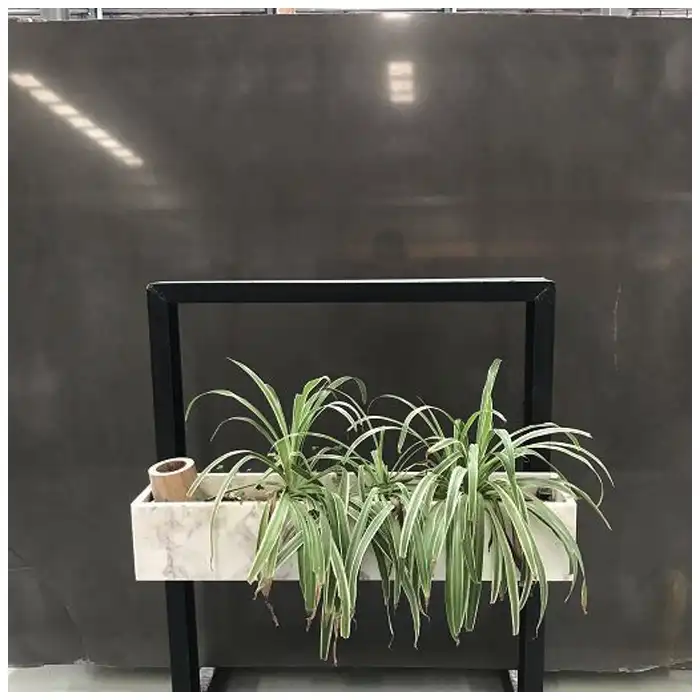
For large grey sandstone orders, the visual relationship between slabs is a major purchasing consideration. A hand sample may establish the main colour, but it does not reveal how the full material selection varies across several square metres.
Apple Grey can contain subtle changes in the depth of the grey background and the visibility of its natural grain. Even where the stone appears relatively uniform, differences may become noticeable under raking light or when adjoining panels have been cut from separate slabs.
Grey Tone Grouping
When several wall panels are installed together, variations in background shade should be considered before fabrication. Lighter and darker slabs can be grouped to establish a balanced arrangement rather than distributing them randomly across a continuous elevation.
For a large project, the acceptable shade range should be communicated through approved representative material. A verbal description such as dark grey is not enough to define the degree of variation acceptable in the finished installation.
Natural Grain and Bedding Orientation
Sandstone is a sedimentary stone, and some selections show differences related to their natural bedding structure. Where bedding is visible, it should be considered during panel selection and cutting rather than assuming that all orientations will have identical appearance or behaviour.
The appropriate orientation depends on the selected stone and intended component. For structural or exterior work, bedding direction and fixing requirements may need specific technical approval.
Dry-Lay Review for Cut-to-Size Panels
A dry-lay arrangement can help distribute natural colour variations and confirm the sequence of adjacent wall or floor pieces. This is useful for large-format panels where the joints form a visible architectural grid.
A numbered layout also helps preserve the selected arrangement during packing and installation. The purpose is to manage natural variation, not to imply that every sandstone slab has matching directional veins.
Raw Apple Grey Sandstone Slabs and Cutting Allowances
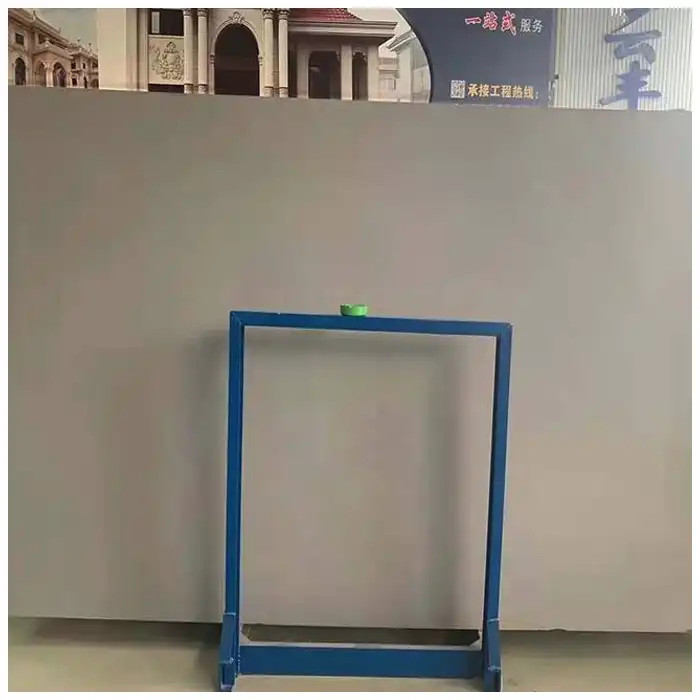
Raw slab condition affects the amount of material available for finished products. The nominal width and length do not always represent the usable cutting area, particularly where the outer edges require trimming or where natural features limit the placement of finished components.
For Apple Grey Sandstone, the intended slab orientation, finishing allowance and dimensions of individual pieces should be considered together before the cutting plan is finalised.
Inspection Before Sawing
The raw slab should be examined for visible cracks, irregular edges, localised differences in structure and other features that might interfere with cutting. Particular attention is needed where large panels must be produced without joints.
Natural sandstone should not be treated as if every block has the same internal structure. The approved material selection must be suitable for the intended finished dimensions and processing method.
Cut-to-Size Tile Production
Floor and wall tiles require controlled dimensions, consistent finished thickness and suitable edge geometry. The cutting schedule should account for saw kerf, trimming and any required calibration.
Where a project uses repeated rectangular panels, the finished dimensions should correspond to the installation grid. Panel proportions and joint positions need to be resolved before large quantities are cut.
Finished Area Versus Purchased Slab Area
The gross area of purchased sandstone slabs will generally exceed the area of usable finished components. Cutting losses depend on panel sizes, irregular slab edges, visible defects and the required orientation of pieces.
A quantity calculation based only on finished wall or floor area may underestimate the stone required. The appropriate allowance should be determined through a cutting layout using actual slab dimensions, particularly for projects containing narrow pieces, openings or unusually shaped panels.
Large Apple Grey Sandstone Slabs for Architectural Stonework
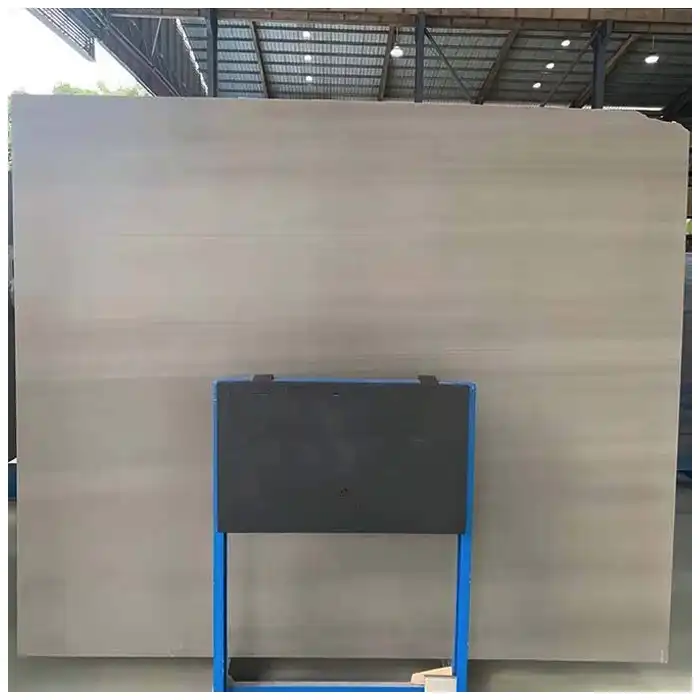
The large-slab format allows Apple Grey Sandstone to be considered for architectural components that are not available in a fixed standard tile catalogue. Panel sizes can be reviewed against available stone and the dimensional requirements of the installation.
Large-format pieces reduce the number of visible joints compared with smaller tiles, but they also increase the importance of handling, substrate preparation and suitable support. A larger component is not automatically preferable if its dimensions make installation impractical.
Wall Panel Dimensions
For interior wall cladding, the panel schedule should identify the finished width, height, thickness and edge treatment of each piece. Openings, corners and changes in plane must be coordinated with the panel grid.
A suitable fixing method should be determined from the actual panel weight, substrate and project requirements. Sandstone panels should not be specified using generic fixing details without considering the stone’s structure and approved support system.
Stair Pieces, Sills and Copings
Large slabs may also be reviewed for stair treads, risers, window sills and coping components. These finished items require separate specifications for edge profiles, dimensions, water management and installation support.
External coping pieces are exposed to different conditions from interior wall panels. Slope, drainage, weather exposure and the suitability of the chosen sandstone must be addressed before production.
The practical benefit of a large slab is the ability to plan several related components from selected material. The final product schedule should be based on the actual available stone rather than an assumption that every required finished piece will fit into one slab.
Grey Sandstone Wall Cladding, Flooring and Exterior Applications
Apple Grey Sandstone can be processed for different architectural uses, but the surface finish, dimensions and installation method should be selected for each application. The same honed slab specification cannot automatically be applied to every interior and exterior surface.
Interior Wall Cladding
Honed grey sandstone panels can be used to establish a low-reflection wall finish in suitable interior environments. The fine-grained surface and restrained grey colour allow panel proportions and architectural joints to remain prominent in the design.
For large wall areas, the installation system must accommodate the selected panel dimensions and substrate. Where mechanical fixing is required, anchor design and stone suitability need project-specific assessment.
Grey Sandstone Flooring Tiles
Apple Grey Sandstone may be fabricated into floor tiles when the selected material, thickness and surface treatment meet the intended floor requirements. The installation must account for substrate flatness, bedding support, movement joints and anticipated traffic.
A honed appearance does not establish a particular slip rating. Wet walking surfaces and commercial floors require assessment of the finished stone under the applicable project requirements.
Exterior Walls and Landscape Components
Exterior sandstone applications require attention to moisture movement, drainage, weathering and the suitability of the selected stone. Local freezing conditions, airborne contaminants and prolonged wetting can create additional requirements that are not established by colour or finish alone.
A suitable exterior design should consider how water is prevented from accumulating behind panels or along exposed horizontal surfaces. Incorrect detailing can damage the installation even when the stone itself has been properly cut.
Countertops and Vanity Components
Countertops, vanity tops and basin-related pieces are listed among potential applications for Apple Grey Sandstone. For such uses, stain susceptibility, moisture exposure, edge integrity and compatibility with cleaning products must be evaluated for the actual material.
Sandstone should not be promoted as automatically equivalent to granite or engineered quartz for demanding kitchen worktops. Its suitability depends on the selected stone, finish, treatment and intended service conditions.
Apple Grey Sandstone Panel Installation and Joint Requirements
Before installation, wall and floor substrates should be checked for stability, dimensional accuracy and appropriate moisture conditions. Sandstone panels require support compatible with their thickness, size and intended use.
The fixing or bedding materials should be selected for the stone and installation environment. Where adhesive installation is specified, compatibility with the sandstone, substrate and any backing treatment must be established before full application.
Joint widths should account for panel dimensional tolerances, installation requirements and movement within the building. A narrow joint may be visually attractive, but it should not be specified solely to create the impression of a continuous slab surface.
For exterior cladding, water management and movement accommodation are particularly important. Connections between sandstone panels and adjacent materials must allow the wall assembly to perform as intended.
The selected installation system should also protect exposed edges and corners from unnecessary damage. Long or slender stone components require careful handling during delivery and placement.
Apple Grey Sandstone Compared with Four Related Sandstone Products
Apple Grey is primarily presented here as a fine-grained grey slab material with a honed finish option. The following MQ STONE sandstone collections provide alternative colours, finished product forms or architectural applications.
| Sandstone Product | Material or Product Form | Buyer Selection Difference |
|---|---|---|
| Аппле Греи Сандстоне | Fine-grained grey natural sandstone slabs | Honed large slabs and cut-to-size grey architectural panels |
| Спољашње зидне плочице од пешчара | Outdoor-oriented sandstone wall cladding tiles | A finished wall-tile product emphasis rather than primarily slab-based grey stone supply |
| Беле плочице од пешчара | Light-coloured sandstone tiles | Brighter architectural colour for floor and wall tile selections |
| Гем Греи Сандстоне | A separate commercial grey sandstone selection | Requires comparison of actual source, sample appearance and available slab specification |
| Тамно сиви пешчар | Dark grey sandstone slab and tile product listing | Check whether the selected material overlaps with Apple Grey before treating it as a different stone |
These product listings should not be assumed to represent four entirely different geological materials. Commercial sandstone names may overlap, so the quarry source, representative sample, slab dimensions and finish should be confirmed before making a substitution.
Apple Grey Sandstone Slab Inspection and Export Packing
Quality checks should establish whether the selected slabs meet the approved grey colour range, surface finish and dimensional requirements. Natural grain variation is expected, but visible cracks, edge defects or inconsistent finishing may affect the usable cutting area.
Honed surfaces require particular attention to machining consistency. Uneven sanding, polishing marks and local changes in surface texture can become noticeable under angled lighting or across a large wall installation.
Slab length, width and thickness should be measured before fabrication. Cut-to-size pieces should then be checked against the approved dimensions, edge treatment and identification schedule.
Large sandstone slabs require suitable support during handling and transport. Packing should limit movement and protect exposed edges, while finished tiles and smaller panels should be separated to reduce surface abrasion.
For orders involving a prearranged wall or floor layout, panel identification should correspond to the approved cutting schedule. This allows the intended colour grouping and installation sequence to be reproduced on site.
Cleaning and Maintaining Honed Grey Sandstone
Honed sandstone should be maintained using non-abrasive cleaning equipment and products compatible with the selected natural stone. Aggressive cleaning methods may alter the finish or damage softer surface components.
Sandstone can be susceptible to staining and moisture-related appearance changes depending on its mineral composition and porosity. Spills should be removed promptly, particularly on horizontal surfaces exposed to frequent use.
A suitable impregnating sealer may be considered where stain protection is required. The treatment should be tested on the actual sandstone because sealers can change surface tone, especially on honed grey material.
For exterior installations, maintenance should include checking drainage, joints and areas where water may remain against the stone. A protective treatment does not replace correct detailing or make an unsuitable material appropriate for every exposure condition.
Common Specification Mistakes with Grey Sandstone Slabs
- Assuming every stone sold as Apple Grey Sandstone comes from the same country or quarry.
- Treating the nominal slab dimensions as guaranteed usable cutting dimensions.
- Approving a honed finish from a photograph without inspecting an actual finished sample.
- Mixing lighter and darker material groups across a continuous wall without an agreed shade range.
- Ordering large panels before confirming the stone structure, finished thickness and support requirements.
- Assuming a honed surface automatically meets wet-floor slip requirements.
- Specifying exterior sandstone without assessing moisture exposure, drainage and local climate conditions.
- Calculating material requirements solely from the finished surface area without allowing for cutting losses.
FAQs About Apple Grey Sandstone Slabs
1. What is Apple Grey Sandstone?
Apple Grey Sandstone is a commercial name for fine-grained natural grey sandstone. This product is supplied as slabs and can be processed into honed wall panels, floor tiles and selected architectural stone components.
2. Where does Apple Grey Sandstone originate?
The Apple Grey Sandstone listed for this product has Pakistan as its origin reference. Similar commercial names are also used for other grey sandstone materials, so the actual quarry source should be confirmed before ordering.
3. What is the reference size of Apple Grey Sandstone slabs?
The principal slab reference is 2400mm up × 1200mm up with an 18mm thickness. Other dimensions and thicknesses require confirmation against available material and the intended cutting specification.
4. What is the difference between honed and polished Apple Grey Sandstone?
Honed Apple Grey Sandstone has a smooth, relatively low-reflection surface that retains the visibility of its natural grain. Polishing may produce a more reflective appearance, depending on the selected stone and the achievable finish. Physical samples should be approved before production.
5. Can Apple Grey Sandstone slabs be cut into wall and floor tiles?
Yes. Suitable slabs can be processed into cut-to-size wall and floor tiles. Finished dimensions, thickness, edge tolerances and the intended installation conditions should be confirmed before cutting.
6. Is honed Apple Grey Sandstone suitable for exterior applications?
Exterior use requires assessment of the actual sandstone, local weather exposure, drainage, surface finish and installation system. A honed finish alone does not establish suitability for wet, freezing or high-traffic conditions.
7. How can grey sandstone slabs be selected for consistent wall cladding?
Review representative full slabs and agree on the acceptable grey shade range before cutting. Material grouping and an approved panel layout can help distribute natural variation across the finished wall.
8. What is the indicative Apple Grey Sandstone price and quantity?
The indicative price reference is USD 50–58 per square metre, with a quantity reference of 1000 SQM. Final pricing depends on the approved material, dimensions, finish, fabrication and delivery terms. The stated quantity does not confirm current stock availability.
9. What details are needed for an Apple Grey Sandstone quotation?
Provide the required slab or finished-panel dimensions, thickness, surface finish, quantity, intended application and delivery destination. For cut-to-size orders, drawings and a representative material reference help establish the cutting schedule and quotation scope.
Apple Grey Sandstone Slab Order Requirements
Before purchasing Apple Grey Sandstone, confirm the actual material source, selected full-slab appearance, required finish and finished dimensions. For wall panels or flooring, the cutting schedule should identify the quantity and position of each piece, together with the installation and edge requirements. A clear distinction between purchased slab area and finished cut-to-size area helps establish a realistic material allowance and avoids unnecessary discrepancies during production.
Recommended Sandstone Slabs and Wall Tiles

Спољашње зидне плочице од пешчара
Natural sandstone wall tiles for exterior-oriented architectural cladding and decorative surfaces.

Беле плочице од пешчара
Light-coloured sandstone tiles for projects requiring a brighter natural stone surface.

Гем Греи Сандстоне
Another commercial grey sandstone selection for comparing slab appearance and available finishes.

Тамно сиви пешчар
Dark grey sandstone slabs and tiles for architectural surfaces requiring subdued colour.

Apple Grey Sandstone Slabs and Custom Architectural Panels
MQ STONE supplies Apple Grey Sandstone for slab selection and custom architectural stone requirements. Honed slab finishes, finished panel dimensions and cutting schedules can be reviewed according to the selected material. Buyers should confirm the actual source, available slab sizes and project-specific surface requirements before production.
Request Apple Grey Sandstone Details
Send the required slab dimensions, thickness, finish, quantity and delivery destination. For custom panels or tiles, include the cutting drawings and installation application.