Stone Dining Table: Materials, Slab Selection, Size, Edge, and Base Support
Low light enters a pale quartzite edge and catches separate crystal planes beneath the polish. The face does not behave like ink on a surface; the mineral structure continues into the body, then changes as the viewer moves. That depth is the first reason to choose a stone dining table, and it is also the reason I refuse to approve the cut from a thumbnail.
I place the finished outline over the numbered slab, then set the actual chairs and base beneath it. Mineral movement can guide the visual center. It cannot calculate span, bearing or stability. The table becomes convincing only when the geological face and responsible structure agree.
Choose the Stone Dining Table Material by Body, Not Photograph
A stone dining table can be marble, quartzite, onyx, granite, or another natural material, but the name alone does not define performance. I examine mineral structure, fissures, resin or backing observations, thickness availability, finish, edge treatment, and the support proposed for the actual top.
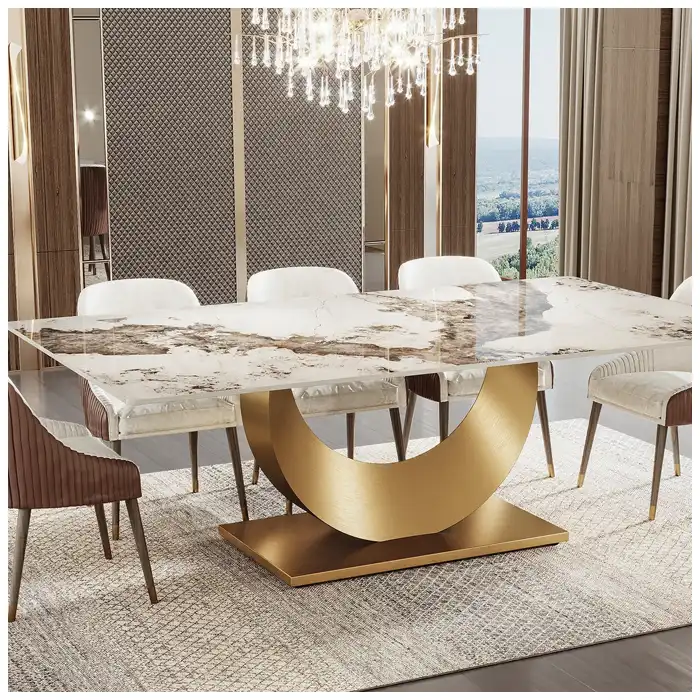
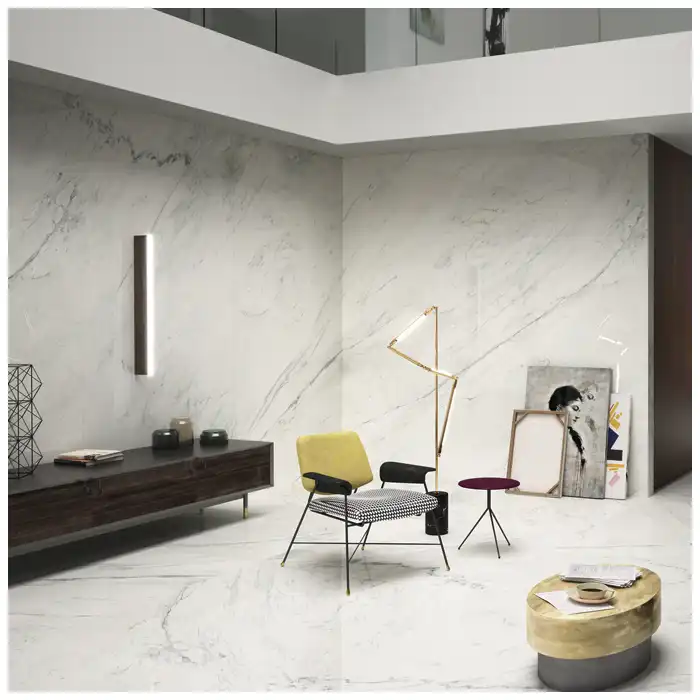
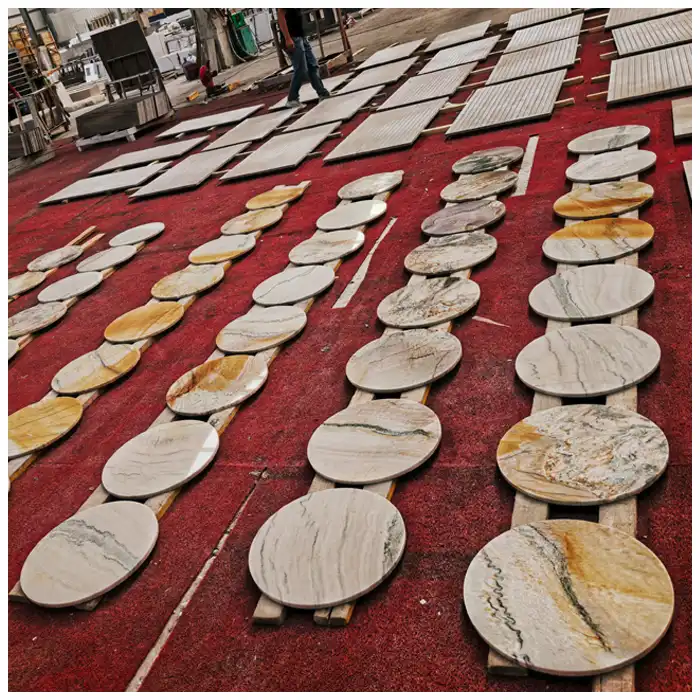
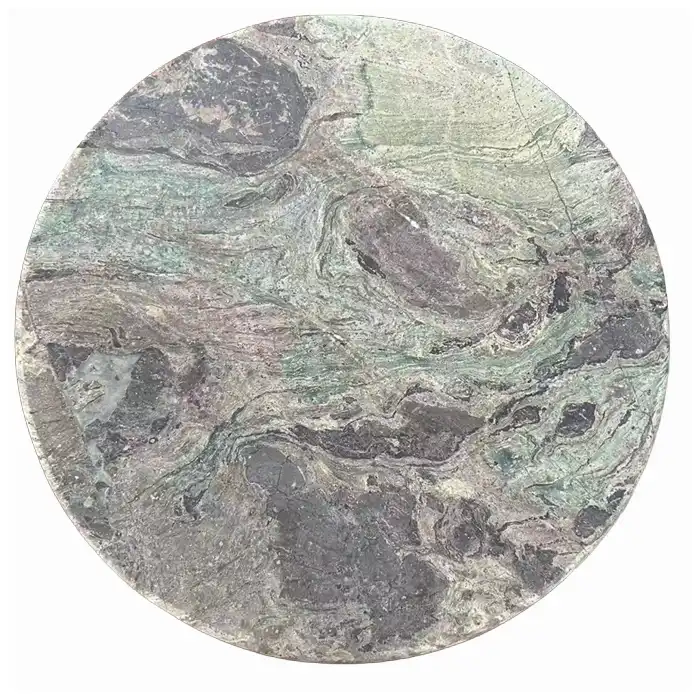
The round marble dining table shows how a circular cut changes vein composition. Long movement becomes an arc, and the edge reveals a continuous band around the room. Marble offers a soft mineral depth, yet it also asks the owner to accept etching and patina according to use.
Quartzite can carry interlocking quartz crystals formed through heat and pressure. Under raking light, those crystals can flash like frost beneath water. The mineral movement suggests a visual direction. They suggest how to orient the top, while testing and professional fabrication determine whether the chosen face suits the design.
Read a Natural Stone Table Top at Full Scale
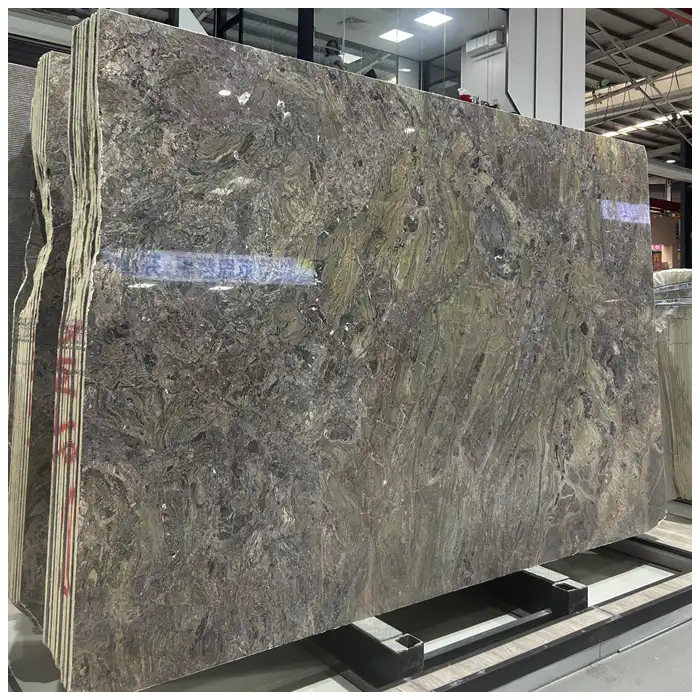
A natural stone table top must be selected from the full slab or mapped block faces. I mark chair sightlines, the main approach, place settings, and the likely center of the room. One dense vein may belong at an end, across the center, or outside the cut entirely.
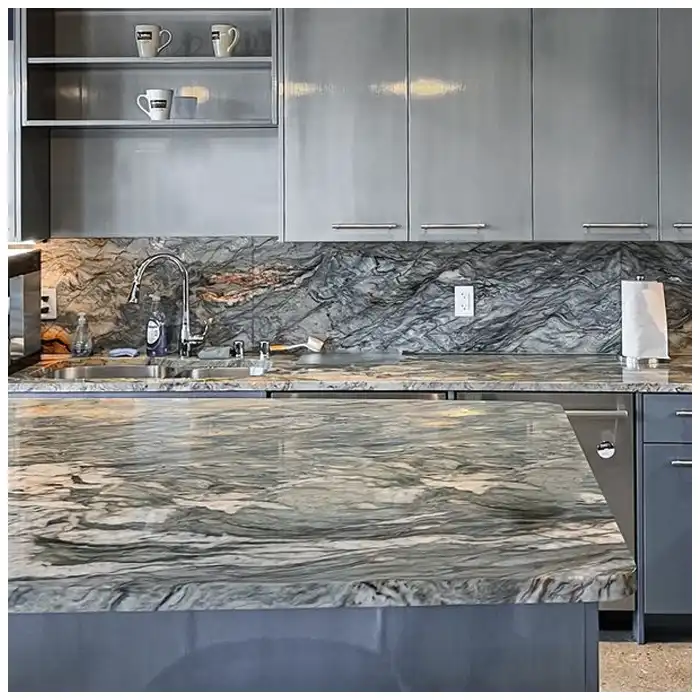
An Aqua Vulcan quartzite table can carry blue-green depth and mineral turbulence that changes with angle. In quiet light it may read like dark water. Under a pendant, small crystalline planes answer one by one.
The material has carried this structure through geological time, I do not reduce that history to a thumbnail. We photograph the whole face, overlay the finished shape, and inspect the edge path before cutting.
Coordinate Stone Table Thickness and Edge Expression
Stone table thickness is both real and perceived. A solid edge shows the true body. A built-up or mitered edge may create a deeper visual band, but the fabrication, internal support, joints, and handling method must be designed for the selected material.
I run my hand along the edge. A small easing can feel calmer than a sharp arris, especially at chair positions. A rounded profile catches light gradually and reveals mineral depth; a crisp edge makes pattern transitions more graphic.
The luxury marble stone table is not made more meaningful by thickness alone. Long-term visual value depends on a surface that remains worth close attention. Proportion should follow the top size, base, room, and material character.
Design Dining Table Base Support Around the Actual Top
Dining table base support controls bearing, span, cantilever, overturning stability, and how people place their knees and chairs. I give the engineer or responsible fabricator the top dimensions, material, thickness, cutouts, estimated mass, edge build-up, and intended use.
A small pedestal can make stone appear weightless, but the hidden frame may need a much larger footprint. I do not publish universal cantilever numbers because natural variation, top geometry, support stiffness, connections, and testing change the answer.
The existing Luxury Stone Table Tops: Color, Edge, Light, and Base Details Before Production keeps visual and structural decisions in the same conversation. Beauty suffers when a table rocks or flexes.
I also compare the selected face with Custom Stone Furniture: What Marble Dining Table Photos and Edges Reveal Before Production before the final cut fixes the edge path.
Choose Finish for Touch, Patina and Dining Use
A dining table is touched more than a wall. Hands rest on the edge, plates slide, glasses leave rings, and light travels across the face at a low angle. I compare polished, honed, and textured samples with the actual stone because finish changes color depth and the way small marks appear.
Marble owners need to understand etching and patina. Sealer can help manage staining, but it does not make calcite immune to acidic food. Quartzite needs correct identification and stone-specific care rather than assumptions based on a commercial label. Onyx asks for even more deliberate protection and support.
I do not turn those facts into fear. A table can age beautifully when the project chooses the material with open eyes. The first faint mark on a well-used honed top may become part of its life; the same mark on a client expecting a mirror-perfect surface may become a dispute.
Prototype the Table Under the Room Light
I place the selected edge, base finish, chair material, and lamp condition together. A blue quartzite may become almost black under weak warm light, while a pale crystal band suddenly catches a narrow beam. Onyx can reveal clouds and layers only when the light reaches the body at the right angle.
The prototype also tests human scale. I sit at the table, cross my legs, touch the underside, pull a chair, reach toward the center, and place weight where a diner naturally leans. An elegant photograph cannot tell me whether the apron presses a knee or the edge feels harsh.
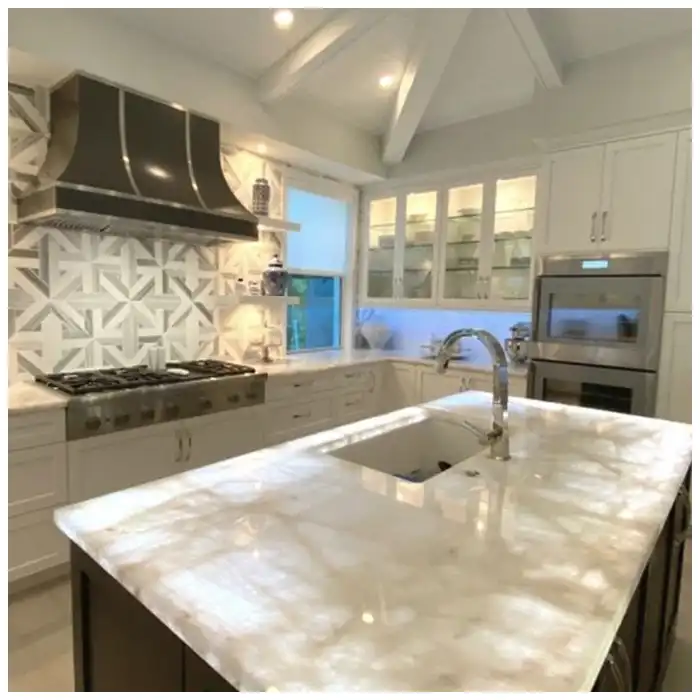
The agate table top offers another kind of mineral composition, assembled from translucent sections rather than one quarried slab face. Its optical depth, resin system, support, edge, and lighting need product-specific coordination.
The veins will tell you where the eye wants to travel. The prototype tells you whether the body can live with that decision every day.
I photograph that prototype from every principal seat. A composition balanced from the entrance may place one dense mineral band directly in front of a diner. There is no wrong answer, but the choice should be conscious.
Curated Table for Material and Furniture Decisions
| Material character | Visual reading | Edge question | Support conversation |
|---|---|---|---|
| Marble | Soft calcite depth and veining | Patina, touch, visible movement | Protect spans and handling |
| Quartzite | Crystalline body and nonrepeating flow | Crystal reveal and arris detail | Use actual slab and geometry |
| Onyx | Layered translucency and glow | Light path through the edge | Engineer backing and support |
| Semi-precious | Mineral fragments and optical depth | Joint and resin expression | Coordinate system-specific construction |
The Hard-Won Lesson: The visible pedestal is not the whole support
A full-size prototype with a long quartzite top and narrow visible pedestal shows movement when controlled pressure reaches the far end. The face remains intact, yet the pendant reflection trembles and the assembly feels uncertain. The finding does not condemn the stone or the pedestal shape. It proves that the concealed frame, bearing and connection require technical revision before the visual concept is released.
The Lesson: Test the actual top, hidden frame, connections, base and floor condition as one physical assembly.
How Material, Structure, and Use Meet in One Table
Why does real stone feel different from a printed surface?
Minerals occupy a three-dimensional body. Veins cross the edge, crystals respond at different angles, and no second slab repeats the same history. Manufactured surfaces may offer controlled patterns and declared properties, but their visual structure comes from a designed process.

How should a designer choose between materials?
Start with the room, use, desired patina, light, top geometry, support, and willingness to select an individual face. I compare actual samples and slabs rather than arguing from names alone.
What if the assembled table moves or the top shows distress?
Photograph the full table, underside support, connection points, level condition, and close issue. Stop use and adjustment. Contact the supplier or responsible fabricator with the approved slab, shop drawings, support design, and inspection records.
The broader comparison belongs in Natural Quartzite vs Marble-Look Sintered Stone: The Definitive Comparison for Premium Interiors. Material authenticity and engineered predictability create different design values.
Use Stone Dining Table Size as a Human-Scale Decision
A stone dining table earns its dimensions through actual chairs, place settings, serving space, end conditions and room circulation. I draw occupied and pulled-back chairs, then mark the base at floor, knee and underside levels.
Longer does not automatically mean more useful. A base can remove a nominal seat, a deep apron can reduce knee space and an overly broad top can make center service awkward. Full-scale planning exposes those conditions before the slab outline grows.
Compare Stone Dining Table Shapes on the Same Slab
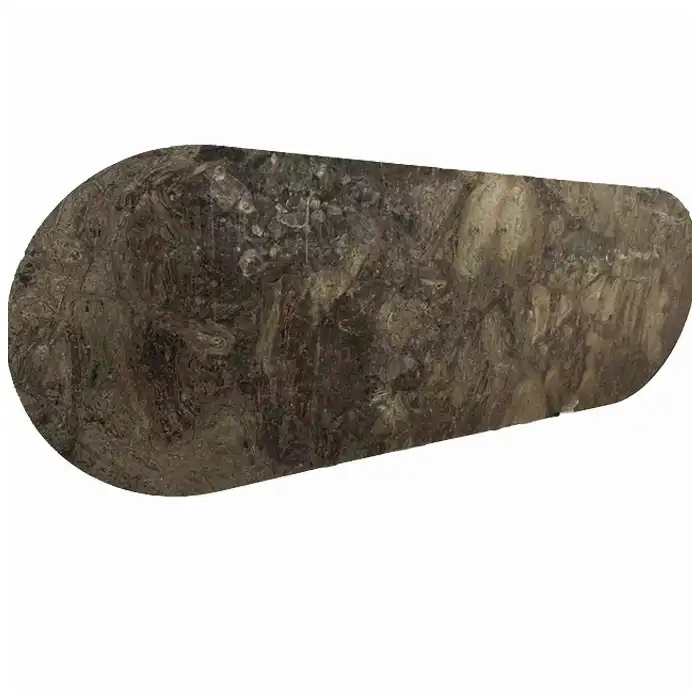
A rectangle extends linear movement and defines clear end seats. A circle converts veins into arcs and exposes the entire perimeter. An oval carries a long axis into changing curved ends. I place each serious option over the numbered face.
The stone dining table shape should follow room use and mineral composition together. Choosing geometry first and searching for a slab afterward can leave the strongest movement trapped outside the cut or awkwardly clipped at a curve.
Inspect Repairs, Fissures, and Transitions before Nesting
Full-slab images identify resin lines, repaired areas, fissures, color zones and mineral transitions. The fabricator reviews their condition and the design team decides whether their final positions fit the visual standard.
A feature accepted in the broad face may become prominent when it enters a polished edge, corner or thin rail. Keep the feature map attached to every cut-layout revision.
Set Stone Dining Table Expectations for Daily Care
A marble stone dining table can develop etching and patina because calcite reacts with acidic contact. Quartzite often offers a quartz-rich body, but correct identification, repairs, finish and compatible cleaning still matter.
Place dining objects on the finish sample, clean them with the proposed method and inspect the fully dry result. Sealer can support stain management for suitable stone; it does not make every material immune to use.
Approve Stone Dining Table Support without Hiding It
The visible base, concealed frame, bearing, attachments, leveling and service access belong on one coordinated drawing. The responsible technical team uses the actual material, dimensions, edge construction and intended loads.
A stone dining table may look light because support is quiet, not because support is absent. I inspect the underside from seated eye level and record what remains visible between chairs.
Close the Approval with One Complete Physical View
Final photographs show the whole top, every principal elevation, edge path, underside, base contacts, chairs and room light. Close-ups explain mineral details but cannot prove proportion or stability.
The final furniture record keeps slab number, cut overlay, edge sample, support drawing, finish, orientation and maintenance together. If the table moves later, the next team can restore the intended relationship without guessing.
Frequently Asked Questions
1. What is the best material for a stone dining table?
There is no universal winner. Compare the actual slab, expected use, maintenance, desired patina, edge, size, support, light, and fabrication guidance. Marble, quartzite, onyx, and other stones create different visual and practical relationships.
2. How thick should a natural stone table top be?
Thickness depends on material, dimensions, support system, edge design, connections, handling, and engineering. A deeper-looking mitered edge is not the same as a uniformly solid top. Use project-specific professional design.
3. Can a stone table have one central pedestal?
It can when the complete base, hidden frame, connection, top, stability, and intended loads are designed together. The visible pedestal size alone does not prove adequate support.
4. Should veins run along or across the table?
Either may work. I place the full shape on the slab and judge the main approach, seating views, edge path, joints, and room axis. The chosen direction should feel intentional.
5. What should I do first if a stone table rocks or shows a crack?
Photograph the whole table, floor contact, underside, supports, connections, and close issue; stop use or adjustment; then contact the supplier or responsible fabricator with original drawings and inspection records.
Quick-Reference Checklist for a Natural Stone Table
- Select the complete numbered slab before fixing the cut.
- Overlay the finished shape and principal sightlines.
- Coordinate real thickness, edge build-up, and underside.
- Give the support designer actual top data and intended use.
- Test chair, knee, and corner-loading conditions physically.
- Photograph the finished top and support before handover.
Read the Table after Material Selection
The slab establishes the composition, but a dining table is completed by the way its finish, mass, light and daily use interact. These decisions should remain attached to the original material and fabrication record.
Use Choosing a Stone Dining Table Finish under Real Dining Light to compare polish, hone and texture at the viewing height of the finished table.
Before delivery or relocation, How Much Does a Stone Dining Table Weigh? connects top dimensions and thickness with the base, floor route and handling plan.
The mineral field changes under windows and pendants, so Stone Dining Table Lighting under Pendants and Daylight belongs in the room review before the fixture position is fixed.
After installation, Stone Dining Table Care for Marble and Quartzite separates daily cleaning, spill response and edge protection by material behavior.
Treatment is a test-led decision rather than an automatic instruction; Should a Stone Dining Table Be Sealed? checks absorption, prior resin, color change and cure before application.
Final Conclusion
A natural quartzite table succeeds when the stone is allowed to remain itself and the structure quietly does its work. I choose the face at full scale, trace the edge through its mineral movement, and ask the base to support the real object rather than the rendering.
The stone dining table becomes lasting furniture when material, thickness, edge, light, and support agree. The material has carried this structure through geological time, the mineral movement shows where the composition begins, and lasting value comes from attention that survives daily use; that is the patience I bring to every MQ STONE table decision.

References
- Dimension Stone Design Manual, Natural Stone Institute.
- Natural Stone Care and Cleaning Guidance, Natural Stone Institute.
- ASTM C170 Standard Test Method for Compressive Strength of Dimension Stone, ASTM International.
- ASTM C880 Standard Test Method for Flexural Strength of Dimension Stone, ASTM International.
- ASTM C97 Standard Test Methods for Absorption and Bulk Specific Gravity of Dimension Stone, ASTM International.
- Natural Stone Technical Guidance, Stone Federation Great Britain.
- ASTM C1242 Standard Guide for Selection, Design, and Installation of Dimension Stone Attachment Systems, ASTM International.
- ANSI/BIFMA X5.5 Desk and Table Products, Business and Institutional Furniture Manufacturers Association.