Calacatta Cremo Marble Slab: Warm Ground, Vein Scale, and Full-Face Selection
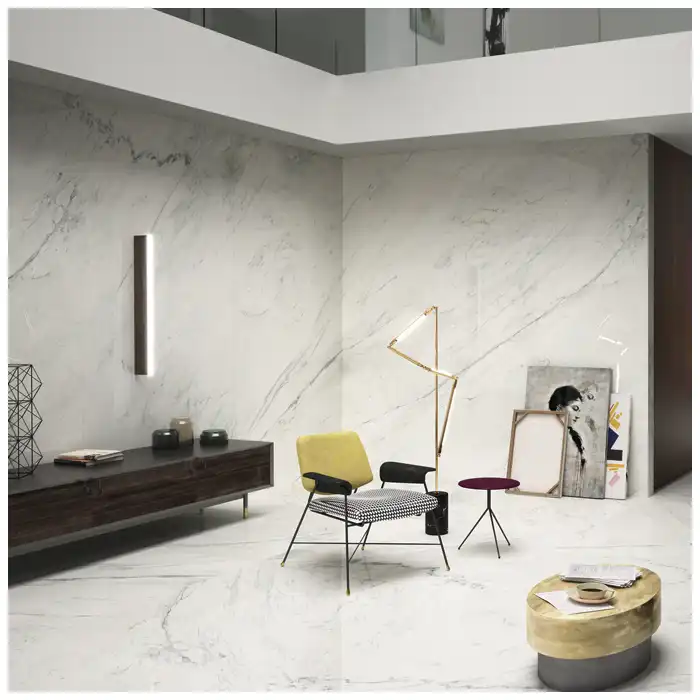
Under late afternoon light in a stone yard, I read Calacatta Cremo as warmth rather than refrigerator white. The ground holds ivory and cream, crossed by grey lines that occasionally gather a soft tobacco or gold edge. As the sun moves, the polished face loses glare and the veins seem to settle deeper into the stone.
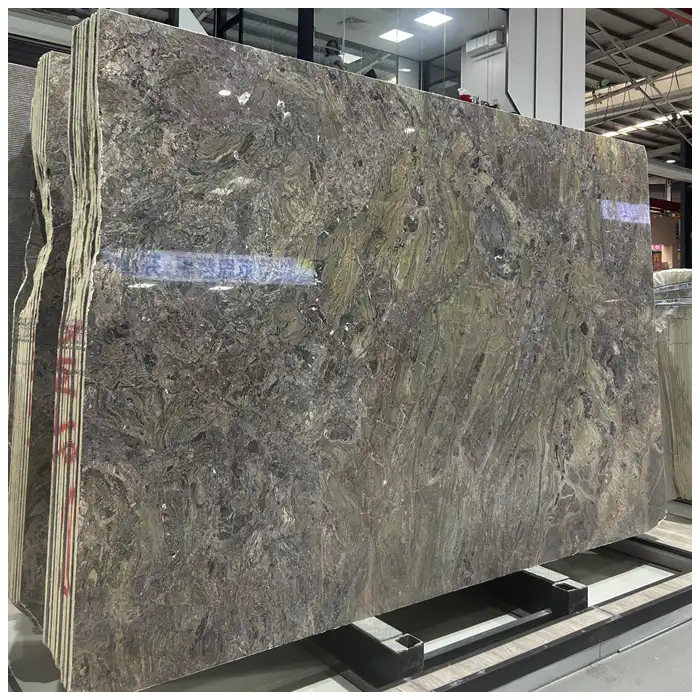
A Calacatta Cremo marble slab should be chosen by full-face balance, not by the whitest sample. The project needs numbered slab photographs, a signed visual range, finish controls, condition maps, and scaled cut layouts. Warm ground, vein scale, joints, openings, edges, and room light decide whether the finished work feels calm or merely mismatched.
The veins will tell you where a composition can turn or rest. I still ask the drawing to prove what remains after cutting.
Approve Calacatta Cremo Marble Slab as a Range
Marble develops through recrystallization of carbonate-rich parent stone under heat and pressure. Its calcite or dolomite fabric can include accessory minerals and later veins that create grey, beige, or gold-toned movement. That history produces real variation across a block. It does not print one approved sample across every face.
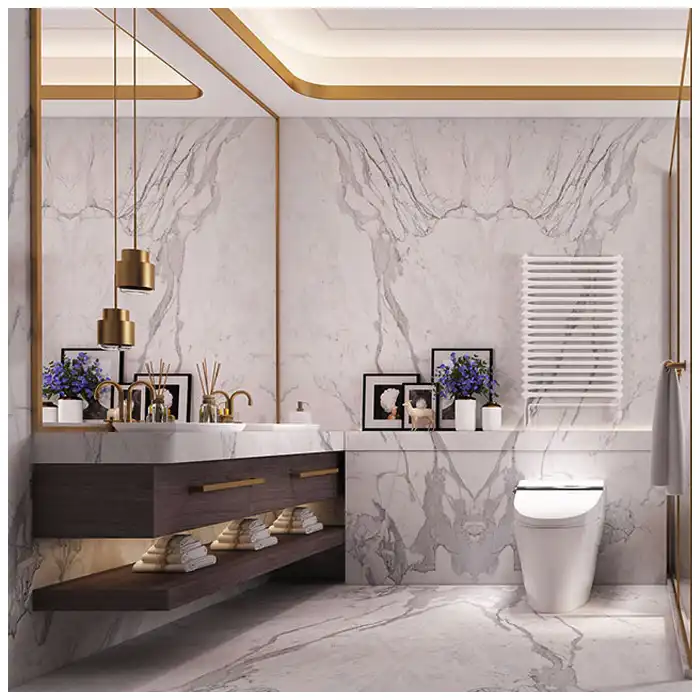
Photograph the proposed slabs square to the surface, evenly lit, clean, dry, numbered, and shown with scale. Include measured usable dimensions, thickness, face and back, repairs, resin or mesh treatment, fissures, open features, edge loss, and finish condition. A beautiful image without an identity cannot control production.
The Calacatta Cremo marble selected for one project may range from pale ivory to a richer cream. Veins may be sparse and architectural or more active and cloudy. Establish the lightest and warmest accepted grounds, vein density, acceptable local features, and the places where stronger movement may be allocated.
Do not confuse warmth with contamination
A naturally warm field should be compared with the approved range, while localized yellowing, moisture darkening, resin change, adhesive influence, or surface residue requires a different investigation. Look at pattern, boundary, depth, wet-dry change, and location. One broad consistent cream tone is not the same visual event as a yellow halo beside an edge.
This stone has been waiting for millions of years. Its warmth is part of the material, not a defect to be corrected through colder photography.
Read Warm White Marble under the Light That Will Touch It
Warm illumination can enrich the ivory field and soften grey movement. Cooler illumination may make the ground appear paler while sharpening the grey. Direction matters too. Frontal diffuse light supports color comparison; raking light reveals waviness, repairs, scratches, edge polish, and surface texture.
İçin Calacatta Cremo marble slab approval, record approximate color temperature, source direction, and viewing distance. Compare representative physical material under project-like light where possible. A phone image with automatic white balance can neutralize the very warmth the designer selected.
Polish adds reflection and can deepen vein contrast. Honing reduces mirror glare and often makes the cream field feel softer. Neither finish is universally correct. The surrounding wood, metal, paint, textiles, artificial light, daylight, viewing angle, and maintenance plan all affect the reading.
I place the finish control beside the actual slab rather than judging two separate photographs. That simple comparison reveals whether the processing has changed color depth or made a repaired area more visible.
Choose Bookmatch, Flow, or Quiet Separation from the Actual Faces
Bookmatching mirrors adjacent faces. It can create a formal center from two sweeping grey lines, but it can also double one darker feature into a heavy shape. Put the pair into the real elevation with joints, doors, fixtures, furniture, floor line, ceiling, and sightline before approval.
Flow matching keeps movement traveling without exact symmetry. It often works well across a long wall, reception counter, island, or furniture group. The relationship depends on trim and cut position. Show the proposed panel edges on the photographs rather than approving untouched slabs alone.
Quiet separation uses calmer pieces, reveals, metal trims, shelving, or architectural breaks to let each face stand alone. This can be more graceful when slab movement changes sharply. True luxury is something you never get tired of looking at, and forced continuity can become tiring faster than honest variation.
| Decision | Evidence to approve | Common loss after cutting | Better control |
|---|---|---|---|
| Warmth | Physical range under recorded light | Mixed grounds inside one elevation | Allocate compatible faces by area |
| Vein scale | Full faces with scaled panel outlines | Openings remove the visual center | Approve the post-cut composition |
| Bitiş | Representative polished or honed control | Face and edge read differently | Approve a finished edge assembly |
The Hard-Won Lesson: The whitest photograph may be the least accurate
Automatic camera correction can cool a warm slab until it resembles a different white marble. Place that image beside the physical material under 3000K light, and the approved cream returns. The stone did not change; the record removed its warmth.
The Lesson: Approve color from representative physical stone and record the light used for every reference image.
Lay Out Furniture, Counters, and Feature Panels at Object Scale
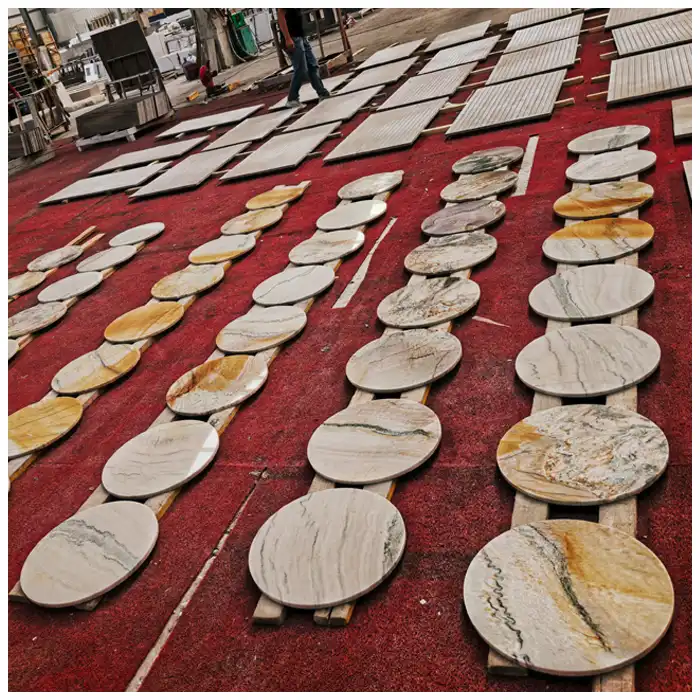
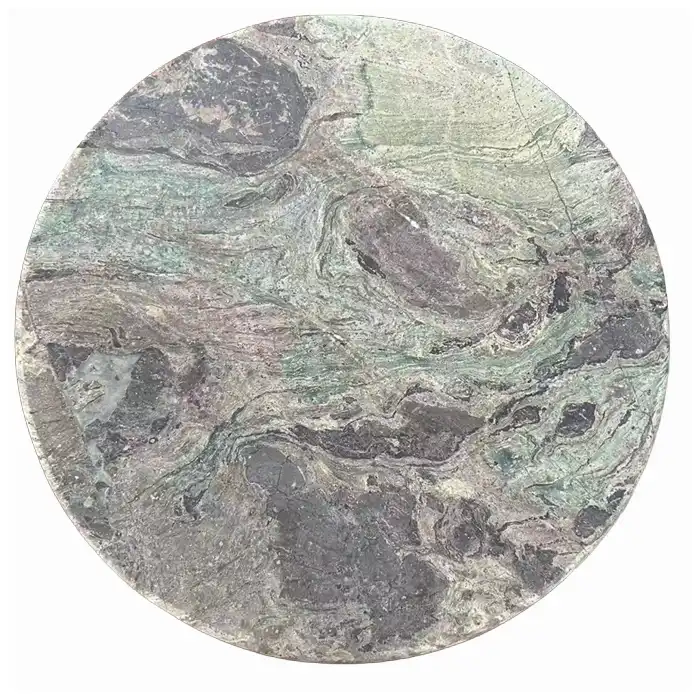
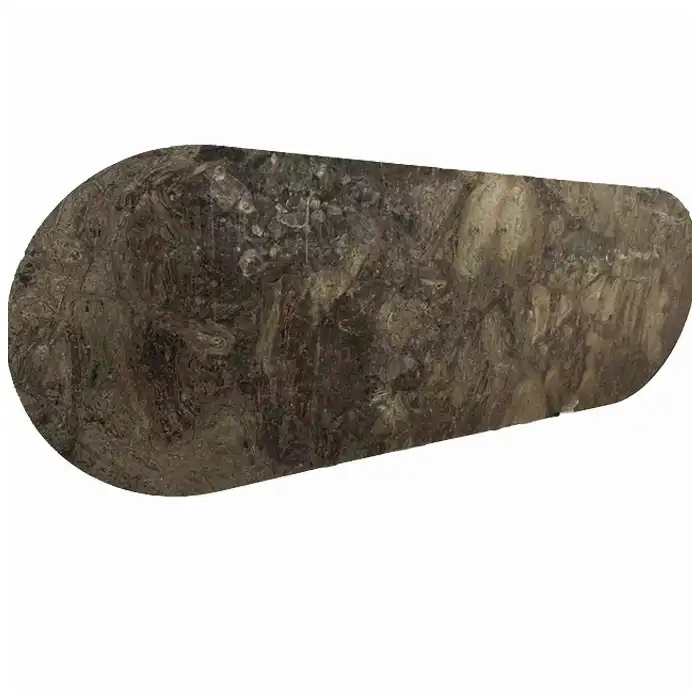
A rectangular dining table preserves long movement but may lose expressive corners during trimming. A round top removes all four corners and turns diagonal veins into arcs around the edge. An oval keeps direction while changing the visual center. Put each exact outline on the slab before discussing which shape uses stone most efficiently.
For a console, reception counter, or island, mark the viewer’s approach. Place the strongest movement where it can be seen rather than behind cabinetry or equipment. Add sink, cooktop, outlet, access panel, and support geometry. A cutout changes the remaining image and can weaken narrow stone around it.
A related Calacatta Apuano marble may help a designer compare cooler white fields and different vein behavior, but it is not a substitute approved by resemblance. Keep each commercial material tied to its current slabs and project record.
Plan edges from source strips
A mitred build-up needs strips cut from compatible zones and oriented so the movement turns convincingly. A laminated edge can expose a repeated line if the source pieces are poorly chosen. A simple eased edge reveals the stone’s true thickness and may suit a quiet composition. Approve the complete corner, not an isolated profile drawing.
Stone furniture also needs a support plan. Record top dimensions, thickness, weight calculation method, base footprint, bearing points, fixings, cantilevers, transport position, and assembly sequence. The face can be poetic; gravity remains literal.
Carry the Selected Composition through Fabrication
Release numbered overlays that show finished outlines, orientation, joints, holes, edges, returns, repairs, excluded areas, and support zones. Tie them to the drawing revision. If the design changes, identify every affected piece and update the visual allocation before cutting continues.
Choose a first piece that contains a real difficulty: a strong vein at an edge, a mitred corner, a faucet hole, a narrow rail, or a repaired zone under the approved finish. Inspect dimensions, edge transition, finish, chip behavior, repair visibility, and the remaining composition. Use the result to set the repeated process.
The Luxury Natural Stone Slabs Guide connects this work with material selection, design allocation, fabrication, support, inspection, and care. It also keeps the distinction between natural depth and a manufactured marble-look surface visible to the design team.
Dry-lay connected panels or furniture sets clean and dry, with piece IDs, orientation, and representative joint gaps visible. View from the intended approach and from close range. Check background progression, vein movement, finish, corners, repairs, and replacement pieces. Photograph the entire composition before packing.
If site light makes one piece look unexpectedly warm or dull, photograph the complete area, stop irreversible work, and compare the physical control, slab IDs, finish record, dry-lay, cleaning condition, and lighting. Do not refinish one panel until the team knows whether the difference comes from material, finish, residue, moisture, or illumination.
Create a Warmth and Vein Allocation before Production
Sort the approved faces by ground warmth, vein scale, movement direction, condition, and usable dimensions. This is not an attempt to erase variation. It gives the design team a clear set of choices. A broad cream field may suit a furniture top, while a stronger grey sweep may belong on the central wall where distance can hold it.
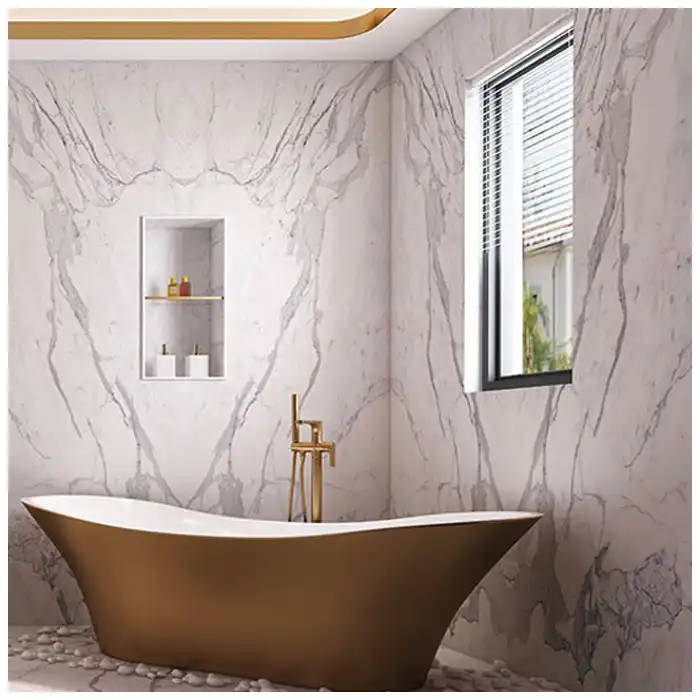
For a Calacatta Cremo marble slab order, allocate adjoining faces together before smaller pieces consume them. Keep paired panels, opposing returns, island waterfalls, and furniture components inside compatible visual groups. Record the decision on the numbered slab set and the cutting overlays.
Coordinate the palette with physical samples
Place stone beside the actual or approved wood, metal, paint, grout, and textile samples under the intended light. Screen colors do not settle the relationship. A brass finish may draw out gold-brown notes, while a cool metal can make the same ground feel richer by contrast. Neither response is wrong, but it should be seen before fabrication.
Check joint and adhesive choices on representative material where they can affect visible edges or tone. The project assembly, manufacturer instructions, and relevant standards govern technical suitability. The stone palette cannot compensate for an incompatible setting material or moisture path.
Use room hierarchy rather than random consistency
A principal lobby, private salon, dining room, and corridor do not require identical vein density. Define what each space needs from viewing distance and architectural importance. Then allocate within the signed range. The result can feel coherent without pretending every panel came from one repeated image.
The strongest Calacatta Cremo marble slab may anchor the principal elevation, but it should not automatically receive every focal position. Reserve calm pieces for art walls, furniture carrying objects, and narrow rooms where broad movement would be cut into fragments. Composition is a distribution problem, not a contest for the loudest face.
Plan spares by replacement difficulty
List pieces that would be difficult to reproduce after installation: bookmatched centers, mitred waterfall ends, shaped table tops, panels with integrated outlets, and long edge returns. Decide whether to cut finished spares or reserve traceable material. A generic percentage does not explain what the spare can replace.
Label retained material by slab, usable dimensions, finish potential, tone group, and intended areas. Photograph it before storage. If a later repair uses an offcut, compare its movement and finish with the installed piece from normal viewing distance before committing to the patch.
Keep the installed light in the handover record
Photograph the completed room under its normal settings and record the approximate color temperature where practical. This becomes context for later additions, care questions, or replacement. It does not replace physical comparison, but it prevents a warehouse photograph under cool light from becoming the only reference.
Before closing the file, verify that the Calacatta Cremo marble slab identities connect to finished pieces, rooms, finish controls, repairs, crates, and spares. True luxury is something you never get tired of looking at. Traceability is what lets the project protect that feeling when one piece eventually needs attention.
For mixed wall and furniture packages, inspect the pieces in the order a visitor will encounter them. Begin at the entrance, then follow the main sightline toward the feature wall and central object. This sequence can reveal a sudden warm-to-cool jump that separate photographs hide. Reallocate before packing when a simple exchange preserves both tone and vein balance.
Record accepted natural variation plainly. The approval should distinguish normal shifts in ivory ground and mineral movement from conditions that require repair, relocation, or rejection. Clear language protects the character of the stone without asking the site to accept every visible difference.
Quick-Reference Checklist for Calacatta Cremo Selection
- Approve the lightest and warmest acceptable grounds on current numbered slabs.
- Record lighting, finish, full-face dimensions, repairs, and natural features.
- Test bookmatch, flow match, and quiet separation on real elevations.
- Overlay exact panels, furniture outlines, openings, edges, and supports.
- Approve one representative finished edge or corner before repetition.
- Inspect connected work clean, dry, and in sequence before packing.
Frequently Asked Questions
1. Is every Calacatta Cremo marble slab the same warm white?
No. Approve the current range because ivory depth, grey movement, gold or beige notes, repairs, and vein density can vary between faces and lots.
2. Does warm lighting always improve Calacatta Cremo?
Warm light can enrich the cream field, but it may also reveal tone differences. Compare representative physical stone under the planned color temperature and direction.
3. Should this marble always be bookmatched?
No. Bookmatch, flow matching, or single-face layouts can each work. Test them with actual joints, openings, furniture, and sightlines before cutting.
4. Can Calacatta Cremo be used for stone furniture?
Yes when the selected zone, thickness, edge, support, fixing, transport, and intended use are coordinated. Approve the exact object outline on the slab.
5. What should happen if one installed panel looks yellower?
Photograph the complete area, pause refinishing or replacement, and compare light, physical controls, slab IDs, finish, cleaning, moisture, and installation records before deciding the cause.
Final Conclusion
Calacatta Cremo marble slab becomes convincing when its light, color, mineral structure, repairs, joints, shape, edge, and support are composed before cutting. A wall needs panel rhythm and controlled illumination. A sculptural table needs scale, circulation, touch, and a base that respects the slab.
I would rather preserve one dark pause beside a luminous field than flatten the whole stone into even brightness, and that is the kind of geological composition MQ STONE believes deserves time.
References
- Dimension Stone Design Manual, Natural Stone Institute.
- ASTM C503 Standard Specification for Marble Dimension Stone, ASTM International.
- Standard Guide for Selection, Design, and Installation of Dimension Stone, ASTM International.
- Natural Stone Institute Technical Guidance on Stone Finishes and Repair.
- Stone Furniture Support and Installation Documents Prepared by the Responsible Project Team.
- Approved Full-Slab Images, Finish Samples, Cut Overlays, and Inspection Records for the Selected Material.
- Mermer, Wikipedia, English edition.