Quick Summary:Panda Marble Slabs are premium natural marble slabs known for dramatic black-and-white movement, high visual contrast, and strong architectural impact. For luxury interiors, architects should evaluate geological character, slab grading, density, Mohs hardness, flexural strength, thickness, bookmatching potential, repair zones, dry-lay results, and sustainable sourcing before specifying Panda Marble for hotels, villas, bathrooms, feature walls, and large-scale tenders.
An architect is designing a boutique hotel lobby and needs a natural stone that can become the visual signature of the space. A villa designer wants a dramatic bathroom wall that feels artistic but not messy. A stone importer receives several Panda Marble samples and needs to know whether the offered slabs are truly premium grade or simply attractive in a small cut sample. This is where the specification process begins.
Panda Mermer Plakalar are not ordinary white marble slabs with a few dark lines. They are selected because of their bold black-and-white contrast, ink-like movement, natural drama, and ability to act as architectural artwork. In the right project, Panda Marble can turn a wall, shower room, reception counter, staircase, or fireplace into the visual anchor of the interior. In the wrong project, or with the wrong slab selection, it can look visually chaotic, mismatched, over-repaired, or difficult to install.
For buyers comparing natural stone categories before specifying black-and-white marble, the broader marble slabs collection can help place Panda Marble within the wider context of luxury marble materials, finishes, and architectural stone options.
This guide explains what Panda Marble is, how its geological matrix creates its distinctive appearance, which technical properties architects should review, how to distinguish A-grade slabs from commercial material, what sizes and thicknesses matter for large-scale tenders, how sustainable inspection should be handled, and what mistakes buyers should avoid before approving bulk orders.
What is Panda Marble: Understanding the Geological Matrix
A Practical Definition for Architects
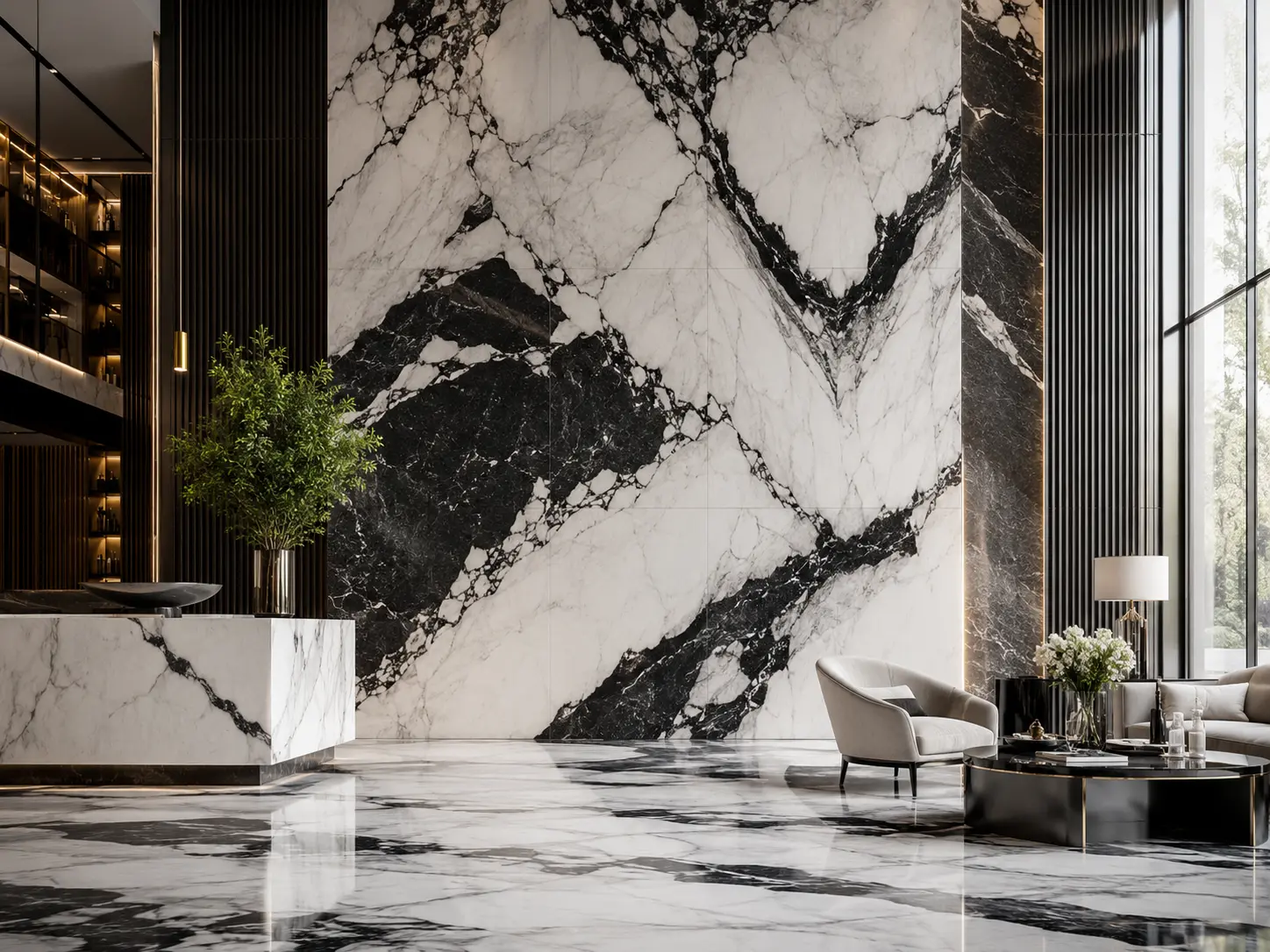
Panda Marble is a natural marble category known for strong black-and-white contrast. The name usually comes from the bold visual relationship between dark mineral movement and white or ivory marble background. Depending on quarry, batch, and block condition, Panda Marble may also include grey, charcoal, soft beige, smoky white, or occasionally subtle greenish undertones.
Architects often specify Panda Marble when a project requires a strong natural stone statement. Unlike quieter white marbles, Panda Marble is not meant to disappear into the background. It is used when the stone itself becomes part of the design language. It works best when the space needs movement, contrast, and visual identity.
Geological Formation and Visual Character
Marble forms when limestone or dolomitic limestone undergoes metamorphism under heat and pressure. During this process, carbonate minerals recrystallize, and mineral impurities create veining, colour variation, cloud-like structures, and natural movement. In Panda Marble, the contrast between lighter carbonate background and darker mineral veining creates the dramatic appearance that designers value.
Natural variation is not a defect. In fact, variation is one reason architects choose marble over artificial materials. However, variation becomes a problem when the slab contains structural cracks, excessive resin repairs, muddy background, inconsistent batch colour, poor usable area, or veins that cannot be matched across panels.
Why Panda Marble Looks So Dramatic
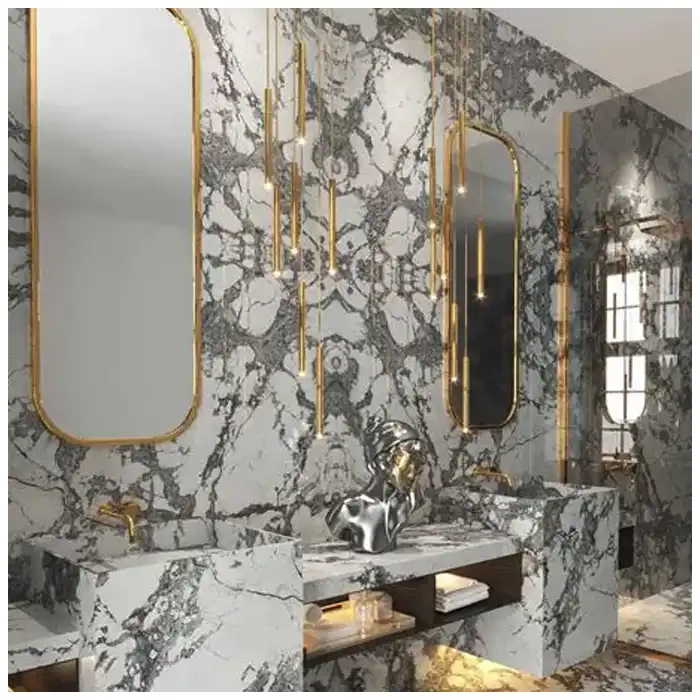
Panda Marble is dramatic because its veining often behaves like ink strokes, waves, clouds, diagonal lines, or abstract brushwork. Some slabs have bold black veins crossing a clean white ground. Others show smoky grey transitions, broken mineral zones, or sweeping movement that looks almost painterly.
Premium slabs usually have balanced contrast. The dark veins should feel intentional rather than random. The white background should remain clear enough to create visual breathing space. If every part of the slab is busy, the final installation may feel nervous. Good Panda Marble has drama; poor Panda Marble has noise. Yes, stone can absolutely have stage presence — and sometimes it overacts.
Panda Marble vs Panda White Marble vs Other Black-and-White Marbles
Market naming can vary. Some suppliers use Panda Marble and Panda White Marble interchangeably. Some use Panda White Marble to describe slabs with a cleaner white background and more defined black veining. Others may classify materials by quarry, batch, colour strength, or export naming habits. This is why architects should never rely on product names alone.
For deeper background on Chinese high-contrast marble materials, this article on Panda Beyaz Mermer gives additional context on exotic marble varieties and their use in luxury interiors.
| Taş Tipi | Visual Style | Best Use | Buyer Caution |
|---|---|---|---|
| Panda Mermer | Strong black-white contrast | Feature walls, bathrooms, lobbies | Batch variation and vein control |
| Panda Beyaz Mermer | Cleaner white base with dark veins | Luxury slabs, walls, statement panels | Name variation by supplier |
| Statuario Mermer | White base with grey veins | Classic luxury interiors | Usually softer visual movement |
| Nero Marquina | Black base with white veins | Dark formal interiors | Shows scratches and etching |
| Calacatta Marble | White base with bold grey or gold veins | Premium residential and commercial spaces | Vein matching matters |
Why Architects Specify Panda Marble Slabs in High-End Interiors
Visual Impact in Luxury Spaces
Architects specify premium Panda Marble slabs because they can create strong spatial identity without requiring heavy decoration. A bookmatched Panda Marble wall behind a reception desk can define an entire hotel lobby. A dramatic shower wall can make a bathroom feel like a private spa. A fireplace surround can become a sculptural centrepiece.
In high-end interiors, one strong stone surface can do the work of artwork, texture, contrast, and branding. This is why Panda Marble is often used selectively rather than everywhere. It should be treated as a focal material, not a filler surface.
Best Application Areas
Panda Marble for luxury interiors works especially well in hotel lobby feature walls, luxury villa bathrooms, bookmatched shower walls, reception counters, fireplace surrounds, statement flooring inserts, staircase walls, elevator surrounds, boutique retail walls, spa feature panels, and dining room accent walls.
For project buyers who need supplier capability, material consultation, or quotation support, the Panda Marble slab supplier page is the right place to submit drawings, slab size requirements, finish expectations, and project quantity details.
When Panda Marble Is Not the Best Choice
Panda Marble is not ideal when the design requires a very quiet, uniform, background material. It is also not ideal for clients who expect every slab to look identical. Natural marble has movement, variation, and personality. If the buyer wants machine-like consistency, engineered stone may be more suitable.
Panda Marble also needs caution in high-traffic wet floors, heavy-use countertops, or areas exposed to acidic substances. It can be used in these applications, but finish selection, sealing, maintenance expectations, and installation details must be handled properly.

Technical Specifications & Mechanical Properties
Key Physical Properties Architects Should Review
Architects should review density, Mohs hardness, water absorption, compressive strength, flexural strength, abrasion resistance, porosity, surface finish, thickness tolerance, and slab flatness before specifying Panda Marble. These values help determine logistics, fabrication, anchoring, installation risk, and application suitability.
The values below are typical reference ranges for natural marble. Actual Panda Marble test values may vary by quarry, batch, block structure, slab condition, resin treatment, and testing standard. For large tenders, project buyers should request supplier test data rather than relying only on general marble references.
| Mülkiyet | Typical Reference Range for Natural Marble | Why It Matters |
|---|---|---|
| Yoğunluk | 2.60–2.75 g/cm³ | Affects weight, logistics, handling, and installation support |
| Mohs Hardness | 3–4 | Indicates scratch resistance level compared with harder stones |
| Su Emme | 0.10%–0.50% | Affects sealing, wet-area use, and maintenance planning |
| Basınç Dayanımı | 70–140 MPa | Relevant for durability and load-bearing considerations |
| Eğilme Dayanımı | 7–20 MPa | Important for large panels, cladding, transport, and cutting |
| Aşınma Direnci | Medium | Matters for flooring, stairs, and high-traffic areas |
| Standard Thickness | 18 mm / 20 mm / 30 mm | Application-dependent for walls, counters, stairs, and furniture |
| Yüzey İşlemi | Polished, honed, leathered, brushed | Affects appearance, slip resistance, and maintenance |
Density and Weight Calculation
Marble slabs are heavy, and weight affects packaging, crane lifting, wall cladding support, site handling, and installation cost. A simple estimate is:
Approximate slab weight = length × width × thickness × density
For example, a 3200 mm × 1600 mm × 20 mm slab at around 2.70 g/cm³ weighs about 276 kg before packaging. This means one crate of multiple large slabs can quickly become a serious logistics item. Architects and contractors should coordinate stone size, installation access, lifting method, and structural support before approval.
Mohs Hardness and Scratch Resistance
Marble is softer than granite and many engineered quartz surfaces. With a typical Mohs hardness around 3–4, it is suitable for luxury interiors but requires reasonable care in high-wear applications. Panda Marble works beautifully for feature walls, shower walls, vanities, and decorative counters, but heavy-use kitchen countertops need maintenance education.
Flexural Strength and Large Slab Handling
Flexural strength matters when slabs are transported, lifted, cut, dry-laid, and installed as large panels. A visually beautiful slab with hidden cracks or heavy repair zones may fail during fabrication. This is why large-format Panda Marble should be inspected not only for colour and veins but also for structural integrity, repaired areas, mesh backing, flatness, and edge condition.
Water Absorption and Wet Area Use
Panda Marble can be used in bathrooms, shower walls, vanity walls, and spa interiors. However, sealing, waterproofing, ventilation, and cleaning practices matter. Polished slabs are suitable for decorative walls and vertical panels. For floors, honed or textured finishes may be safer, especially in wet areas. Shower walls and shower floors should not be treated as the same specification problem.
Grading Systems: How to Distinguish Premium A-Grade Slabs
What Makes a Panda Marble Slab A-Grade?
A-grade Panda Marble slabs usually show clear contrast between background and veins, balanced visual movement, good usable area, low visible cracking, limited resin repair, strong surface polish, stable thickness, reasonable batch consistency, clean edges, and strong bookmatching potential.
A-grade does not mean every slab looks identical. It means the slab is visually strong, structurally reliable, and suitable for premium design applications. In Panda Marble, perfect uniformity is not the goal. Controlled natural drama is the goal.
Visual Grading Factors
Visual grading includes white background clarity, black vein intensity, vein distribution, absence of muddy grey zones, balanced movement, bookmatch symmetry, natural artistic value, and slab-to-slab continuity. A premium slab should feel designed by nature, not repaired into survival.
When selecting full slabs, buyers should request high-resolution photos and videos under neutral lighting. Small samples are useful for material confirmation, but they cannot show full veining movement. Many buying mistakes begin with a beautiful small sample and end with a chaotic wall.
Structural Grading Factors
Structural grading includes cracks, fissures, resin-filled zones, mesh backing condition, edge damage, warping, thickness tolerance, surface flatness, and repair quality. Natural fissures and stone veins are not always defects, but structural cracks that affect fabrication or installation must be disclosed.
A slab with heavy resin repair may still be usable for certain applications, but it should not be priced or specified like a premium feature-wall slab. The key is transparency. Designers can work with natural variation. They cannot work with surprises after cutting.
| Sınıf | Visual Quality | Structural Condition | Best Use | Buyer Risk |
|---|---|---|---|---|
| A-Grade | Strong contrast, balanced veins | Minimal defects, good polish | Luxury walls, bathrooms, lobbies | Higher selection cost |
| Commercial Grade | Acceptable pattern variation | Some repairs or colour variation | General interiors | Needs careful layout |
| Low Grade | Muddy pattern, weak contrast | More cracks or repairs | Low-cost or hidden areas | Higher breakage or rejection risk |
Common Buyer Mistakes in Slab Grading
Common mistakes include choosing by small samples only, ignoring full slab layout, failing to check repaired cracks, not confirming bookmatched sequence, accepting mixed batches, confusing natural variation with structural defects, and focusing only on low price. In premium Panda Marble projects, the cheapest slab often becomes expensive when dry-lay fails, bookmatching looks broken, or replacement slabs cannot match the original batch.
|
|
|

Sizing and Thickness Capabilities for Large-Scale Tenders
Common Panda Marble Slab Sizes
Panda Marble slab size depends on quarry block size, block quality, cutting yield, and slab stability. Common large slab formats may fall around 2400–3200 mm in length and 1200–1800 mm in width, although actual sizes should always be confirmed by batch. Oversized slabs are valuable for bookmatched walls, fewer joints, and large uninterrupted visual surfaces.
For hotel lobbies, villa bathrooms, elevator surrounds, and feature walls, slab size matters because joint lines can interrupt the visual flow. Architects should request available slab dimensions before finalizing wall module design.
Standard Thickness Options
Common Panda Marble thickness options include 18 mm, 20 mm, and 30 mm. Cut-to-size tiles, stair treads, vanity tops, furniture panels, and wall panels may require different thicknesses depending on support structure and application. Thinner slabs may need reinforcement. Thicker slabs may be preferred for countertops, stair treads, and furniture tops.
Application-Based Thickness Logic
| Uygulama | Recommended Thickness | Notes |
|---|---|---|
| Wall Cladding | 18–20 mm | Requires proper anchoring and support |
| Feature Wall Panels | 18–20 mm | Bookmatching and dry lay are important |
| Tezgahlar | 20–30 mm | Edge profile and reinforcement matter |
| Döşeme | 18–20 mm | Finish and slip resistance matter |
| Stair Treads | 20–30 mm | Strength and edge treatment are important |
| Vanity Üstler | 20 mm / 30 mm | Depends on design and support |
| Furniture Tops | 18–30 mm | Depends on span and base structure |
Bookmatching and Dry-Lay Planning
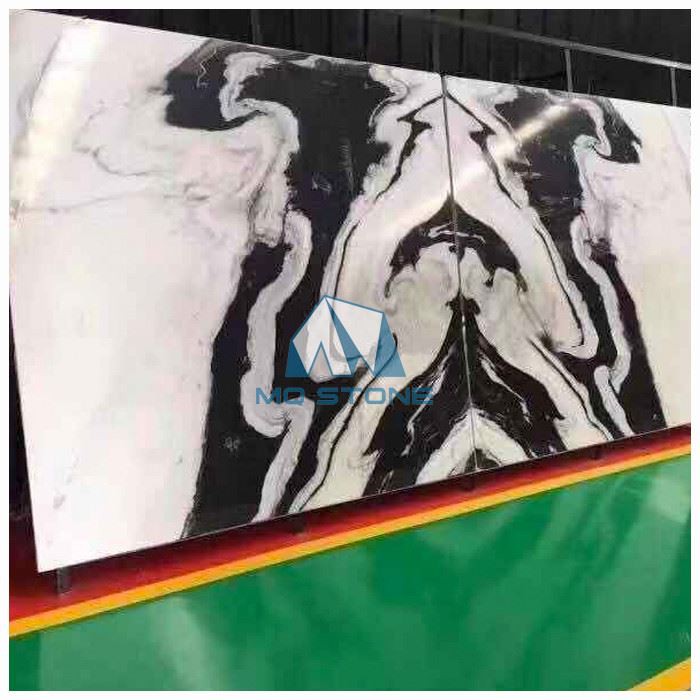
Bookmatching is one of the strongest ways to use Panda Marble. When two or more slabs are opened like pages of a book, the veins can create a symmetrical feature wall. This is especially valuable for hotel lobbies, luxury bathrooms, elevator walls, fireplace surrounds, and villa interiors.
Dry-lay planning should be completed before cutting. Buyers should request slab numbering, layout photos, and videos. For major projects, CAD layout support can help align veins with wall dimensions, door openings, vanity lines, lighting, and architectural focal points.
Tender Procurement Requirements
Large-scale tenders should include batch reservation, slab numbering, full slab photos, slab videos, CAD layout support, dry-lay approval, packing list, inspection report, thickness tolerance confirmation, surface finish confirmation, reinforced crates, breakage prevention method, and replacement strategy. Tender buyers should also define acceptance criteria before production, not after shipment. That tiny detail saves big arguments later.
Sustainable Quarrying and Eco-Friendly Material Inspection
Why Sustainability Matters in Natural Stone Specification
Architects are increasingly expected to consider environmental impact, sourcing transparency, durability, and responsible material use. Natural marble has extraction and processing impacts, but it can also offer long service life, repairability, timeless design value, and lower replacement frequency when specified correctly.
Sustainable specification should focus on responsible quarrying, efficient cutting, waste reduction, water management, dust control, worker safety, durable application, and local compliance. A long-lasting natural stone installation can be more sustainable than a fashionable surface that needs replacement quickly.
What Buyers Should Ask Suppliers
Buyers should ask about quarry source information, legal quarry operation, block selection process, waste management, water recycling in processing, dust control, worker safety, block yield optimization, packaging efficiency, long-life material recommendations, repair potential, and reuse planning where relevant.
For buyers evaluating company capability, export experience, and project service support, the Panda Marble manufacturer page can help verify supplier background before requesting samples, batch photos, or tender quotations.
Eco-Friendly Inspection Does Not Mean Greenwashing
Architects should be careful with vague claims such as “eco-friendly marble” without evidence. Natural stone sustainability depends on responsible sourcing, efficient production, transport planning, installation quality, maintenance, and long service life. Durability is part of sustainability. So is choosing the right stone for the right application.
Compliance and Documentation
For project specification, buyers may request quarry documentation where available, export documents, certificate of origin, safety data sheet if required, packing documentation, inspection reports, surface treatment records, and local building code compliance documents. The exact requirements depend on destination market, project type, and contract standards.
Panda Marble Slabs vs Other Luxury Marble Options
Panda Marble vs Calacatta Marble
Panda Marble is more dramatic and contrast-heavy. Calacatta Marble is usually softer, more classical, and associated with white luxury plus grey or gold veining. Panda Marble works better for bold feature walls and artistic focal points. Calacatta works better when the design calls for refined elegance rather than strong contrast.
Panda Marble vs Statuario Marble
Statuario Marble is cleaner, quieter, and more classical. Panda Marble is expressive, graphic, and visually stronger. Choose Statuario when the project needs calm elegance. Choose Panda Marble when the design needs tension, energy, and architectural drama.
Panda Marble vs Nero Marquina
Nero Marquina is black-based with white veins, while Panda Marble is contrast-based with stronger light-dark movement. Nero Marquina creates formal dark luxury. Panda Marble creates dynamic visual rhythm. Both can be powerful, but they produce very different spatial moods.
| Mermer Tipi | Visual Personality | Best Use | Design Risk |
|---|---|---|---|
| Panda Mermer | Bold, artistic, high contrast | Feature walls, bathrooms, lobbies | Can feel busy if overused |
| Calacatta Marble | Elegant, classic, premium | Kitchens, bathrooms, floors | Vein matching cost |
| Statuario Mermer | Clean, refined, timeless | Luxury interiors | Softer visual impact |
| Nero Marquina | Dark, dramatic, formal | Bars, walls, fireplaces | Shows scratches and etching |
| Gri Mermer | Calm, modern, neutral | Floors, walls, commercial spaces | Less dramatic |
Best Applications for Panda Marble Slabs
Hotel Lobbies and Reception Areas
Panda Marble works extremely well behind reception counters, elevator halls, lounge walls, and boutique hotel entrances. The strong contrast creates immediate visual memory and helps establish brand identity. Lighting should be planned carefully to enhance veins without creating glare.
Luxury Bathrooms and Spa Walls
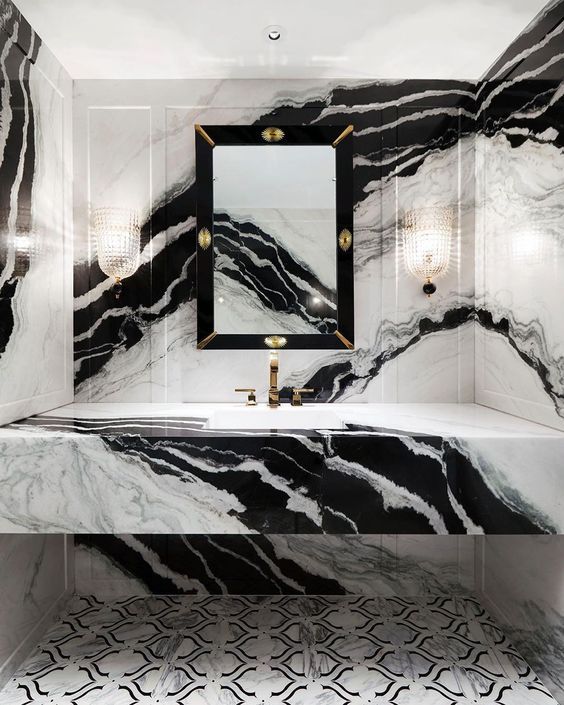
Panda Marble can create dramatic shower walls, vanity backgrounds, bathtub surrounds, and spa feature panels. Polished slabs work beautifully on vertical walls. For floors, honed or textured finishes should be considered where slip resistance matters. Waterproofing, sealing, ventilation, and cleaning guidance should be included in the specification.
Villa Feature Walls and Fireplace Surrounds
Panda Marble can function like natural artwork in villas and private residences. It pairs well with wood, brass, black metal, beige fabric, cream upholstery, and minimal furniture. The surrounding materials should support the stone, not fight it. When everything shouts, the room starts arguing.
Flooring and Staircase Applications
Panda Marble can be used for flooring and stairs, but visual intensity should be controlled. Large bold patterns may overwhelm small rooms. Stairs require careful edge treatment, finish choice, thickness, and slip-resistance planning. In high-traffic areas, architects should consider maintenance expectations.
Countertops and Furniture
Panda Marble can be used for vanities, decorative kitchen islands, bars, tabletops, and furniture tops. However, marble is sensitive to acidic substances and may etch or stain if not maintained properly. For heavy-use kitchen countertops, designers should clearly explain care expectations to the client before approval.
Common Specification Mistakes Architects Should Avoid
Selecting Only from Small Samples
Small samples cannot show full slab movement. Panda Marble must be selected from full slab photos and videos. A small sample can confirm material type, but it cannot confirm the final visual result.
Ignoring Batch Variation
Different batches may vary in background colour, vein intensity, grey zones, and movement. For large projects, batch reservation is essential. Mixing random batches can make a feature wall look patched together.
Overusing Panda Marble in Small Spaces
Panda Marble is powerful. In small rooms, too much strong veining can feel visually crowded. Use it as a focal point and balance it with quieter surfaces.
Not Planning Bookmatching
Without bookmatching or dry-lay planning, a feature wall may lose its premium effect. Random vein direction can reduce the architectural impact.
Ignoring Repair and Resin Zones
Heavy repairs may affect fabrication and long-term appearance. Buyers should ask suppliers to disclose cracks, resin zones, mesh backing, and repaired areas before approval.
Choosing the Wrong Finish for Floors
Polished marble looks luxurious, but it may be slippery in wet areas. Honed or textured finishes should be considered for bathrooms, stairs, and high-use floors.
Not Confirming Packing and Inspection
Large Panda Marble slabs require careful packing, slab sequence control, reinforced crates, and inspection before shipment. Poor packing can damage slabs before they ever reach the project site.
How to Choose a Panda Marble Slab Supplier
What a Reliable Supplier Should Provide
A reliable Panda Marble supplier should provide full slab photos, slab videos, batch number, slab size and thickness, surface finish options, dry-lay support, bookmatch sequence, crack and repair disclosure, resin quality information, inspection reports, packing photos, reinforced crates, CAD layout support, project quantity planning, export experience, replacement support, and fast communication.
| Evaluation Factor | Ağırlık | What to Check |
|---|---|---|
| Slab Selection Quality | 20% | Vein balance, contrast, usable area |
| Structural Condition | 20% | Cracks, repairs, backing, flatness |
| Project Support | 15% | Dry-lay, bookmatch, CAD layout |
| Size & Thickness Capability | 15% | Large slabs, custom cut-to-size |
| Inspection Transparency | 10% | Photos, videos, reports |
| Packing Quality | 10% | Reinforced crates, slab sequence |
| Sustainability Evidence | 5% | Quarry and processing practices |
| Communication | 5% | Technical response and speed |
Practical Recommendation: When Should Architects Choose Panda Marble Slabs?
Choose Panda Marble Slabs If
Choose Panda Marble Slabs if the project needs a bold natural stone statement, the design concept supports black-and-white contrast, feature walls are a major visual element, bookmatched visual drama is desired, the client accepts natural variation, and lighting can be planned around the stone.
Choose a Quieter Marble If
Choose a quieter marble if the design requires calm uniformity, the room is small and already visually busy, the project cannot accept strong variation, the client wants a subtle background material, or easy pattern matching is more important than drama.
Choose Panda Marble with Technical Caution If
Use extra caution if Panda Marble is used on floors or stairs, in wet bathrooms, on countertops, in oversized slabs, in bookmatched walls, or in tenders with strict inspection requirements. These applications can work beautifully, but they require more technical control.
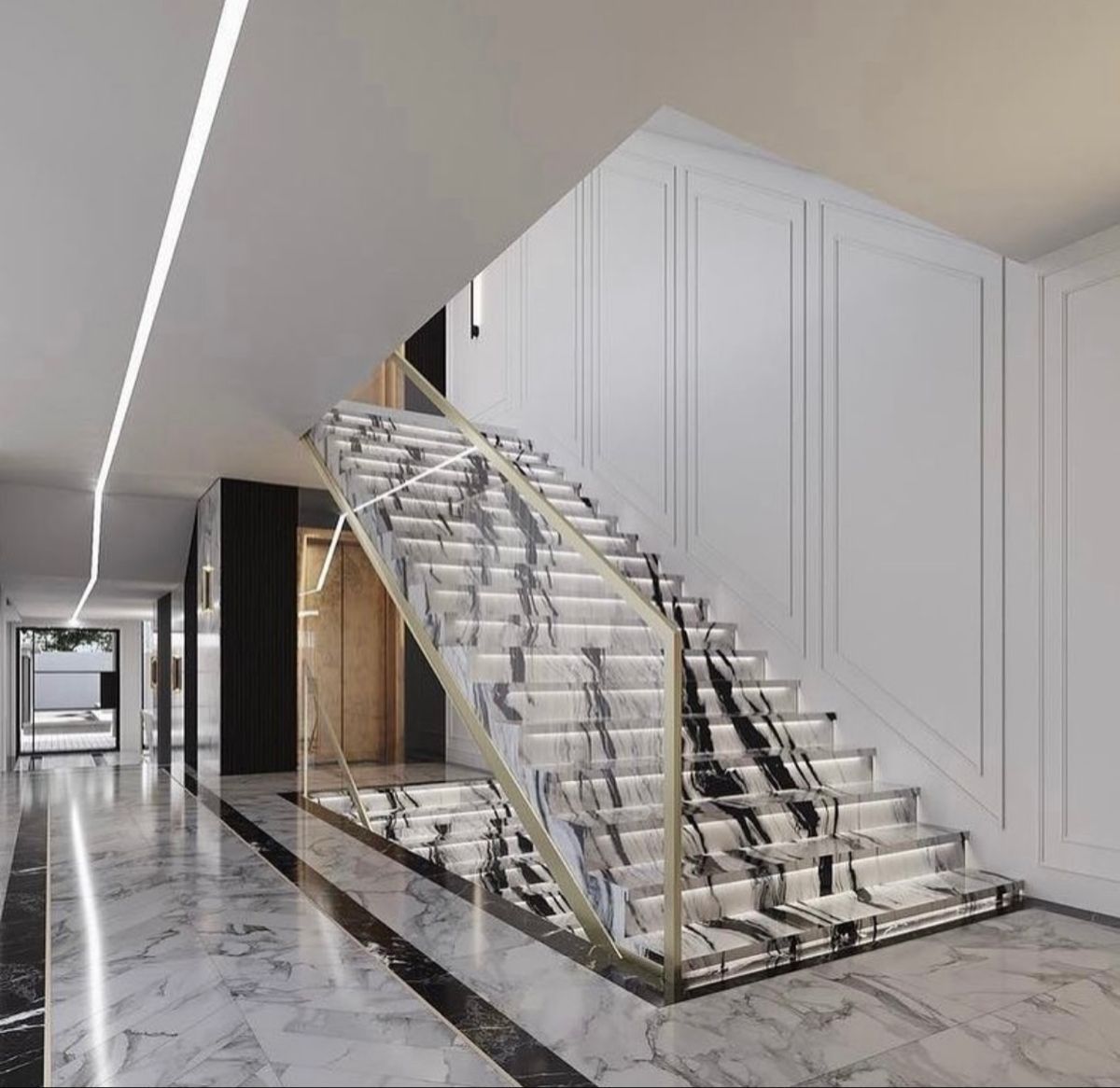
Final Recommendation: Panda Marble Is Best When Specified with Both Artistic Vision and Technical Discipline
Panda Marble is one of the most expressive natural stones for luxury interiors. It can turn a wall, bathroom, lobby, fireplace, staircase, or reception counter into a powerful architectural statement. But premium results depend on more than choosing a dramatic sample. Architects must evaluate full slabs, batch consistency, technical properties, repair zones, thickness, finish, bookmatching, dry-lay, packing, and supplier transparency.
If the project needs bold visual identity, choose Panda Marble. If the space needs calm neutrality, choose a quieter stone. If the design requires bookmatched drama, reserve slabs early and approve dry-lay before cutting. If the material will be used in wet areas or countertops, set maintenance expectations clearly. The best Panda Marble specification is not the loudest slab; it is the slab that looks intentional, performs reliably, and arrives on site ready to install.
FAQ About Panda Marble Slabs
1. What is Panda Marble?
Panda Marble is a natural marble known for bold black-and-white contrast, dramatic veining, and artistic movement. The name comes from the visual relationship between dark mineral veins and a white or ivory marble background. It is often used for luxury interiors, feature walls, bathrooms, hotel lobbies, fireplaces, reception counters, and bookmatched wall panels where designers want a strong natural stone statement.
2. Is Panda Marble good for luxury interiors?
Yes, Panda Marble is excellent for luxury interiors when it is used as a focal material. It works especially well for hotel lobby walls, villa bathrooms, spa walls, reception desks, fireplace surrounds, elevator walls, boutique retail spaces, and dramatic residential feature walls. Because the veining is strong, architects should balance Panda Marble with quieter materials such as wood, brass, black metal, beige fabric, or simple neutral surfaces.
3. How do I identify premium Panda Marble Slabs?
Premium Panda Marble Slabs usually have clear background contrast, strong black vein movement, balanced visual composition, good usable slab area, limited cracks, low resin repair, clean edges, stable thickness, high-quality polish, and strong bookmatching potential. Buyers should not rely only on small samples. Full slab photos, videos, batch confirmation, dry-lay layouts, and repair disclosure are essential before approving premium-grade slabs.
4. What thickness is best for Panda Marble Slabs?
The best thickness for Panda Marble Slabs depends on the application. Wall cladding and feature walls commonly use 18 mm or 20 mm slabs with proper support. Countertops, vanity tops, stair treads, and furniture surfaces may use 20 mm or 30 mm slabs depending on span, edge profile, reinforcement, and structural support. For large-scale tenders, thickness tolerance and slab flatness should be confirmed before production.
5. Can Panda Marble be used for countertops and bathrooms?
Yes, Panda Marble can be used for countertops, bathrooms, vanity tops, shower walls, bathtub surrounds, and decorative kitchen islands. However, it is still natural marble, so sealing, maintenance, waterproofing, finish selection, and acid sensitivity must be considered. Polished slabs work beautifully on walls and vertical panels, while honed or textured finishes may be better for wet floors or areas where slip resistance matters.
References
1. Dimension Stone Design Manual, Natural Stone Institute, Technical Design Resource.
2. Stone in Architecture: Properties, Durability, Siegfried Siegesmund and Rolf Snethlage, Springer.
3. Natural Stone: A Guide to Selection, Michael S. Lewis, Architectural Stone Reference.
4. Marble and Natural Stone Maintenance Guide, Natural Stone Institute, Care and Maintenance Resource.
5. Architectural Graphic Standards, American Institute of Architects, Wiley.
6. Interior Design Materials and Specifications, Lisa Godsey, Fairchild Books.
7. Design and Construction of Stone Cladding, Michael D. Lewis, ASTM International.
8. Sustainability of Natural Stone as a Construction Material, Ravindra K. Dhir, Woodhead Publishing.
Strategic Insight: How Architects Should Specify Panda Marble Slabs
What is Panda Marble? Panda Marble is a natural marble known for dramatic black-and-white movement, strong vein contrast, and artistic slab variation. It is commonly specified for luxury interiors where the stone surface becomes a major design feature rather than a quiet background material.
Why do architects choose Panda Marble Slabs? Architects choose Panda Marble Slabs for hotel lobbies, villa bathrooms, feature walls, reception counters, fireplaces, stair walls, and boutique retail interiors because the material creates immediate visual impact and natural artwork-like movement.
How should buyers identify premium slabs? Buyers should review full slab photos, videos, batch consistency, background clarity, black vein intensity, balanced movement, cracks, resin repairs, mesh backing, thickness tolerance, polish quality, and bookmatching potential before approving orders.
What options should be considered? For feature walls, 18–20 mm polished slabs are commonly used. For countertops, 20–30 mm slabs may be preferred. For floors or stairs, honed or textured finishes should be considered. For large-scale tenders, slab numbering, CAD layout, dry-lay approval, and reinforced packing are essential.
What risks should architects avoid? Avoid selecting only from small samples, ignoring batch variation, overusing Panda Marble in small rooms, skipping bookmatching, overlooking resin repairs, choosing the wrong finish for wet floors, and failing to confirm inspection and packing details before shipment.