Stone Top Dining Table: Make Slab, Edge, and Base Read as One Object
A pale crystalline band enters one long edge, disappears beneath the center and returns at the opposite corner. Low pendant light catches it as if a line of ice were suspended inside the top. That is where I begin a stone top dining table: with the complete mineral path, not with a rectangle drawn over a small sample.
The outline, edge and base can either let that movement breathe or cut it into unrelated fragments. I place every main viewpoint on the slab image before the first tool touches the face.
Start Stone Top Dining Table Design with the Full Slab
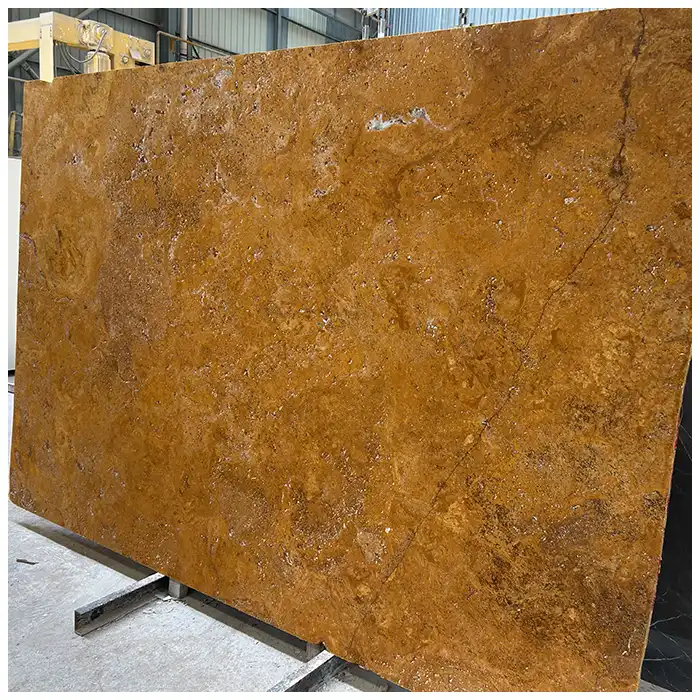
A full-slab image shows scale, fissures, repaired areas, color transitions and where the visual center actually sits. I use a numbered face with reliable dimensions and no beauty-crop around the strongest movement.
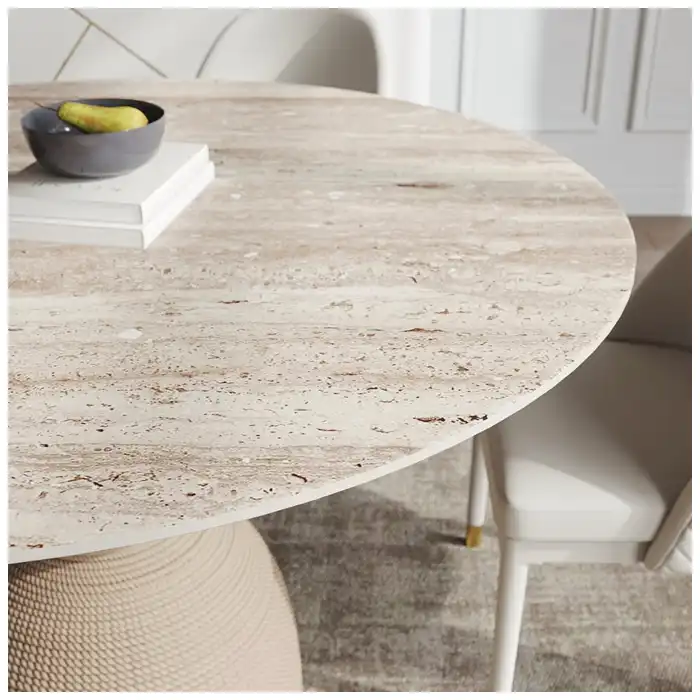
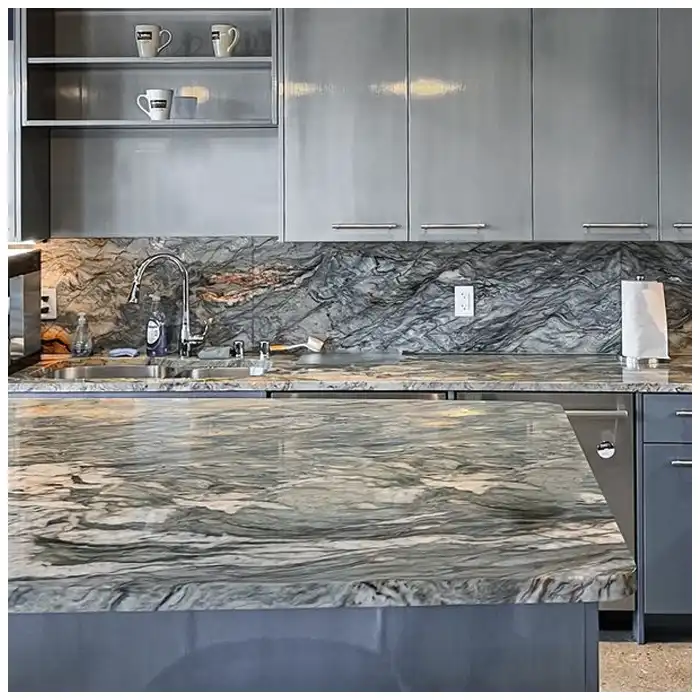
ال Aqua Vulcan quartzite table can carry blue-green mineral turbulence that changes direction across a broad face. A narrow sample cannot predict where that movement will leave the finished edge.
The cut overlay includes finished size, machining allowance, edge build-up and any seam. The veins will tell you where the eye wants to travel, while the fabricator decides what the actual slab can become safely.
Read a Natural Stone Table Top from Every Chair
The host sees the long axis, side seats see the edge and end seats often look directly into the strongest movement. I mark those sightlines and inspect the slab composition from each one.
A mineral band placed perfectly from the doorway may create a dark block in front of one diner. There is no universal correct position, but the choice should be visible before cutting.
I photograph the physical sample under the intended pendant and daylight direction. Screen brightness can flatten depth that appears immediately when crystalline planes turn under real light.
Set Stone Table Proportion before Choosing an Edge
Length, width, corner radius and base position create the first proportion. Edge depth then changes how heavy the top appears. A long narrow table can tolerate a different visual band from a compact square form.
The existing Stone Table Edge Detail for Luxury Dining Tables, Coffee Tables, and Natural Quartzite Tops separates touch and fabrication at the perimeter. Here the edge is judged as part of the whole silhouette.
A deep band can make a pale slab feel architectural; a fine edge can make dense movement feel lighter. Neither treatment is automatically refined. The room, chairs and base decide.
Distinguish True Thickness from Built-Up Thickness
A solid edge reveals the stone body directly. A mitered or laminated construction can create a deeper appearance, but joints, reinforcement, pattern return and underside construction remain part of the object.
I ask for a finished corner sample rather than relying on the face sample alone. The edge should show how the printed drawing becomes mineral reality, including any resin, repair or pattern interruption.
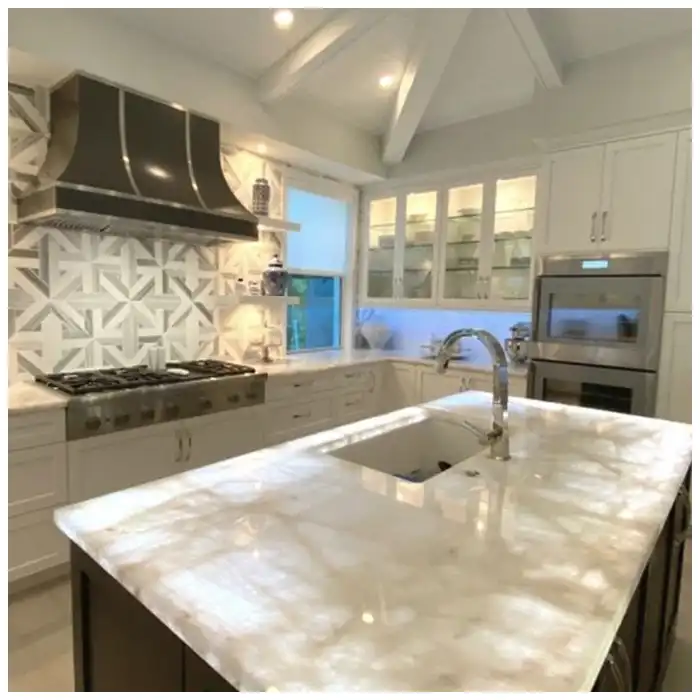
The pale crystalline field of a Dover White quartzite table makes a returned edge easy to read under grazing light. The responsible fabricator and engineer still determine the physical system for the actual slab.
Coordinate the Base with a Stone Top Dining Table
A narrow pedestal creates visual space, yet the concealed frame may need to extend farther. I draw both visible base and hidden support on the same plan so chair and knee clearance remain honest.
ال Stone Table Supplier Guide for Marble Dining Tables, Coffee Tables, and Custom Bases carries the approved top into production records. Base and top revisions should share one issue date.
The base finish also changes perceived weight. A dark base may disappear beneath dark quartzite; a pale base can make the same top look broader and lower.
Use Quartzite and Marble as Different Bodies
Quartzite often contains interlocking quartz crystals formed through heat and pressure. Marble is largely recrystallized calcite and may develop etching or patina with acidic use. Those facts affect daily expectations and edge repair.
The geological meaning of quartzite explains its quartz-rich body, but the project still needs correct identification and actual slab inspection. Commercial names alone do not settle performance.
The published Quartzite vs Marble Dining Table for Premium Interiors owns that material comparison. This page uses the selected material to solve proportion and layout.
Place Vein Direction against the Long Axis
A vein running with the table can extend the object visually. A crossing vein can create a center of gravity or divide settings into zones. Bookmatched or symmetrical ideas require actual sequential faces, not a generic promise.
I compare the cut at full size on the floor or screen with reliable scale, then inspect a printed or projected outline from normal standing distance. Zoomed details distort proportion.
True luxury is something you never get tired of looking at. Restraint often means leaving one dramatic area outside the cut so the final top can breathe.
Prototype Touch, Reflection, and Underside
Hands meet the edge and knees meet the underside. I sit at each position, reach toward the center, move a chair and inspect reflected lines across the top.

A polished face can turn one pendant into a bright stripe. Honed stone softens reflection and may make mineral color feel quieter. Finish approval belongs on the chosen slab range.
The underside sample shows frame, attachments and visible junctions. The most beautiful face cannot rescue an apron that presses every tall diner’s knee.
Control Revisions before Cutting
If table size, base or edge changes, issue a new slab overlay. Moving an outline changes every vein position and may place a repaired feature at a visible corner.
I preserve the earlier approved view and mark it superseded. A verbal request to make the table slightly longer is not enough for an irreplaceable slab.
The final record includes face, outline, edge sample, underside, base footprint, light and principal seating views. It should allow another person to understand why the cut sits where it does.
Inspect the Dry Assembly before Handover
The finished top is placed on its actual support under safe workshop conditions. I check level, movement, edge continuity, frame visibility and whether the base sits on the intended centerline.
Photographs include the full table, each principal side, edge path and underside. A close-up of the strongest vein cannot prove furniture proportion.
If the physical silhouette differs from approval, stop packing or site use. Compare slab map, shop drawing and assembly record before attempting cosmetic adjustment.
| Decision | What changes visually | What must be recorded | Release evidence |
|---|---|---|---|
| Slab orientation | Movement and visual center | Numbered full face and cut overlay | Approved scaled layout |
| Edge depth | Apparent weight and shadow | Solid or built-up construction | Finished corner sample |
| Base footprint | Top lightness and seating space | Visible and hidden support | Prototype plan and underside view |
| ينهي | Color depth and reflection | Polish, hone or texture sample | Project-light approval |
| Final assembly | Whole-object proportion | Level, centerline and connections | Full-table photographs |
The edge sample looked refined but the complete top felt heavy
A deep mitered edge passed as a small corner sample. When the full-length prototype sat on a broad dark base, the combined bands made the table look lower and heavier than the approved room study. The stone was not wrong. The two separately approved proportions had never been viewed together.
The Lesson: Approve the complete top, edge, base and chairs as one physical silhouette.
Where Stone Furniture Proportion Is Finally Decided
In the slab
The slab supplies movement, color depth, repaired areas and edge character. Choose the finished outline while those facts remain visible at full scale.
In the prototype
The prototype reveals apparent weight, chair clearance, reflected light and the relationship between visible base and concealed support. A rendering cannot replace it.
At the final hold point
Photograph the complete assembly, stop if the silhouette or edge differs, and contact the supplier with the slab overlay, sample, drawings and support record before use.
Check Stone Top Dining Table Scale against Chairs
A chair with a high back can make a thin edge look finer, while a low upholstered chair can make the same top appear heavy. I place the actual chair beside the edge sample and compare seat height, arm height, back width and material color.
ال stone top dining table is also read while people are seated. From that lower view, the underside frame, miter joint and base junction become more visible. Approval photographs should include standing and seated eye levels.
Map Repairs and Natural Features through the Edge
Full-slab approval identifies fissures, resin lines, mesh, repaired areas and mineral transitions. When the outline moves, those features may enter a corner or long visible edge. I keep the feature map visible during edge approval.
A repaired line can remain acceptable on the broad face and look different when opened at the perimeter. The fabricator records any additional treatment after cutting, and the final dry sample is judged under the project light.
Use Stone Top Dining Table Approval Views
The approval set uses a doorway view, both long elevations, both ends, each main seating group, a complete overhead face and the underside. These views show proportion without relying on a dramatic close-up.
أ stone top dining table with strong movement needs one image that preserves the full mineral composition at reliable color. Detail images explain edges and repairs; they must not replace the complete face.
Test Surface Finish with Dining Objects
Place a white plate, dark glass, metal cutlery and a water glass on polished and honed samples. Reflections, ring visibility and contrast can change the perceived color more than a catalogue finish name suggests.
I clean the test with the proposed maintenance method and inspect it fully dry. Marble requires realistic expectations around acidic contact and patina; quartzite still needs correct identification and compatible care.
Close the Stone Top Dining Table Drawing
The final drawing shows finished geometry, slab orientation, true and visual thickness, edge sample reference, underside frame, visible base, connections, centerline and chair envelope. One revision controls them all.
If the stone top dining table changes length or base position, the mineral composition and structural relationship are reopened. A small dimensional change can move the strongest vein into a corner and expose the frame at a seat.
Preserve the Full-Scale Decision at Handover
After assembly, I photograph the table in the intended room light with chairs positioned as approved. Orientation marks remain until the room axis and pendant center are verified.
The final stone top dining table record lets future service teams identify the slab, edge, base and connections without turning the furniture over by guesswork. The object keeps both its mineral story and its technical history.
Read the Table after the Room Is Finished
Wall color, flooring, metal finishes and upholstery can change how the stone reads. I compare the assembled table in its completed palette before final visual acceptance, while remembering that the approved slab itself has not changed.
If surrounding finishes differ from the original sample board, record that context rather than correcting the stone by stronger polishing or coating. The physical face, edge and base remain the approved object; the room determines how their contrast is perceived.
Keep one approved room view beside the handover record so later lighting or furniture changes can be separated from a change in the stone itself.
Frequently Asked Questions
1. How should a stone top dining table be laid out on a slab?
Overlay the finished outline, machining allowance, edge construction, base relationship and principal sightlines on a numbered full-slab image. Inspect the proposed cut at reliable scale before release.
2. Does a thicker edge make a table stronger?
Not by appearance alone. A deep mitered or laminated band may be mainly visual. The responsible fabricator or engineer must design the actual slab, support, connections and handling system.
3. Should the main vein run along the table?
It may run along, across or diagonally when the full composition works from the doorway and seats. The decision should be made on the actual slab, not from a general rule.
4. How should the base relate to the top?
Coordinate visible base, concealed support, bearing, connections, chair positions, knee clearance and floor contact with the exact top geometry. Prototype the complete assembly.
5. What should happen first if the finished proportion looks wrong?
Photograph the full table from agreed viewpoints, stop packing or use, and compare the physical assembly with the slab layout, edge sample, shop drawings and base approval.
Stone Top Dining Table Approval Checklist
- Select the complete numbered slab.
- Overlay the finished shape and edge construction.
- Mark doorway and every seating sightline.
- Draw visible base and hidden support together.
- Build a finished corner and underside sample.
- Prototype the table with chairs and project light.
- Photograph the complete assembly before handover.
Final Conclusion
أ stone top dining table succeeds when the slab layout, edge, base and room views agree. Approve the whole object at full scale, not a collection of attractive samples.
The mineral path should still make sense from the last chair at night; that patient reading is what MQ STONE brings to natural stone furniture.

References
- Dimension Stone Design Manual, Natural Stone Institute.
- Natural Stone Care and Cleaning Guidance, Natural Stone Institute.
- ASTM C97 Standard Test Methods for Absorption and Bulk Specific Gravity of Dimension Stone, ASTM International.
- ASTM C170 Standard Test Method for Compressive Strength of Dimension Stone, ASTM International.
- ASTM C880 Standard Test Method for Flexural Strength of الكوارتزيت Dimension Stone, ASTM International.
- ANSI/BIFMA X5.5 Desk and Table Products, Business and Institutional Furniture Manufacturers Association.