
Stone Top Dining Table: Slab Layout, Thickness, Edge, and Base Proportion
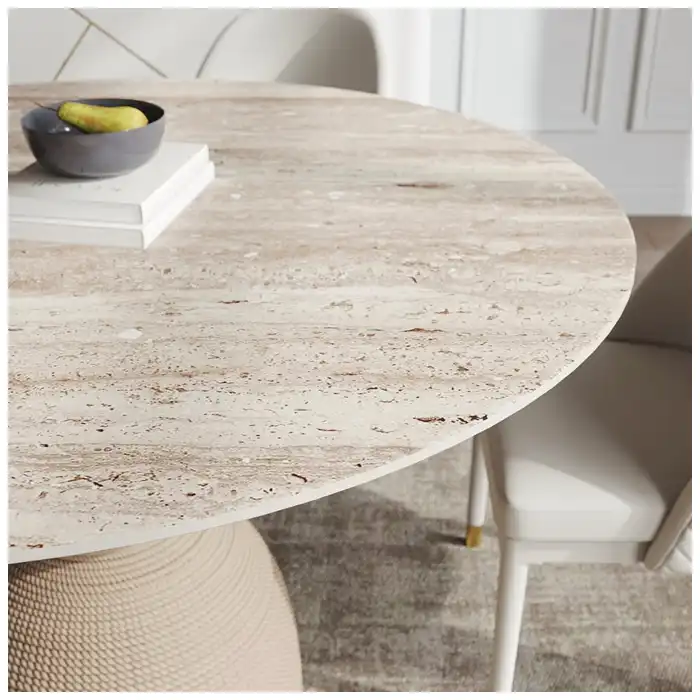
A dining-table top is seen from the doorway, every chair and the low angle of a pendant. Its slab layout, thickness, edge and base therefore change the room long before anyone touches the surface. This study separates visual thickness from structural construction, maps the finished outline over the full slab and tests how the support footprint changes the apparent weight. MQ STONE keeps natural mineral depth, real edge behavior and furniture proportion in one approval record so the finished object does not look like a slab and base selected in separate rooms.
Stone Dining Table: Materials, Slab Selection, Size, Edge, and Base Support
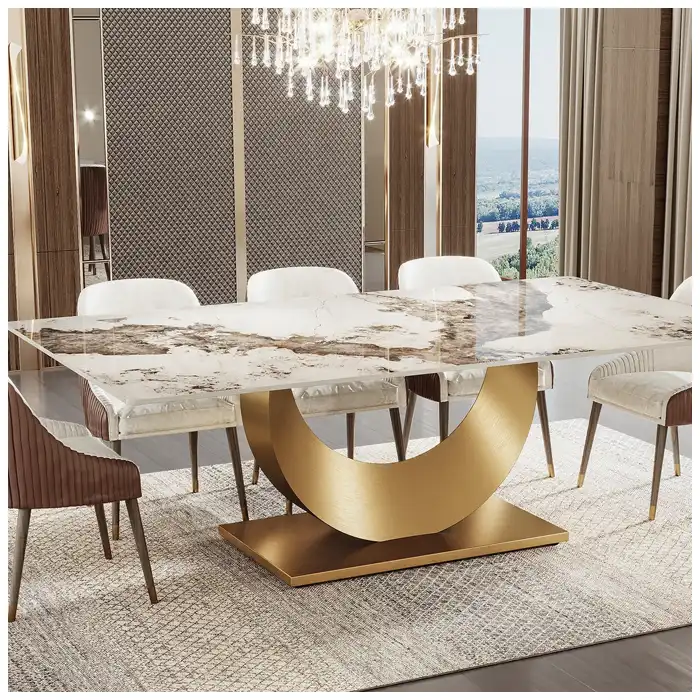
A dining table asks natural stone to be both geology and furniture. Alex Zheng compares marble, quartzite, onyx, and selected semi-precious materials through pattern depth, edge behavior, translucency, finish, top geometry, support footprint, and daily touch. The guide explains how to read a slab before cutting and how to coordinate the table base with the real stone body, helping designers and furniture makers preserve visual movement without asking the material to perform outside a properly engineered support system. Full-scale touch and light tests complete the decision.