Natural Stone Dining Table: Complete Guide to Materials, Slab Selection, Thickness, Edges, Base Support, and Daily Use
Under a low warehouse light, a quartzite slab can hold two images at once. The pale crystalline bands catch sharp points of light, while darker mineral islands seem to sit below the polished face. A marble slab nearby answers more softly; its calcite body turns gray movement into something closer to smoke. That first visual choice matters, but a stone dining table begins only when the finished shape, hands, plates, chairs, edge, and base enter the same conversation.
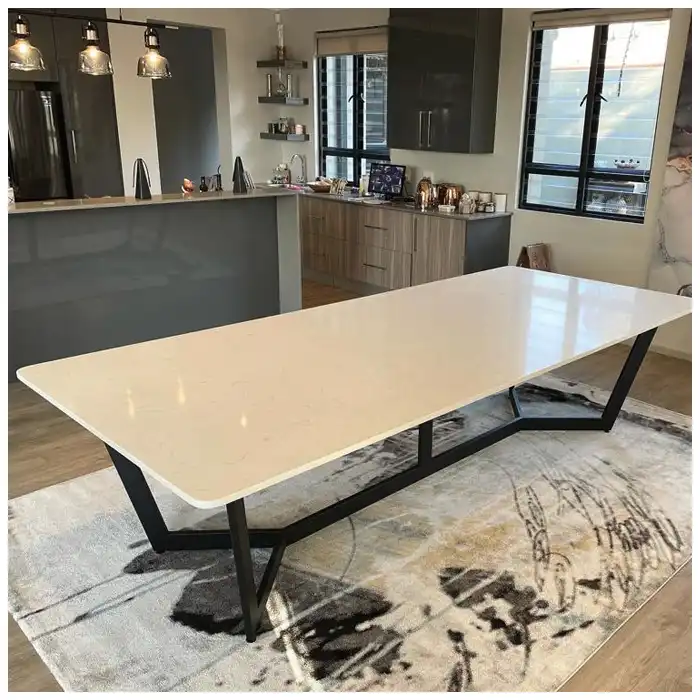
I choose the complete object, not the surface alone. The material must suit the expected use. The cut must preserve the strongest part of the face. The edge must feel right from a chair. The hidden support must carry the real geometry, and the base must stay stable without fighting knees or the room.
Choose Stone Dining Table Material by Use and Mineral Body
Marble commonly forms when limestone or dolostone recrystallizes. Calcite- or dolomite-rich material can take a fine polish and reveal gentle optical depth, but calcite reacts with common acids. Wine, citrus, vinegar, and some cleaners can dull the finish. Sealer may help with absorption; it does not stop chemical etching.
True quartzite forms when quartz-rich sandstone recrystallizes under heat and pressure. Interlocking quartz grains generally produce a harder surface with better acid resistance than calcitic marble. Commercial names can be unreliable, so material identity and suitable testing matter when the project depends on that performance.
The broad parent reference, Luxury Natural Stone Slabs and Furniture: Complete Guide to Materials, Applications, Edges, Lighting, and Support, compares these material families across architecture and furniture. This page owns the commercial furniture question: how to select one actual face and turn it into a stable dining object that works from every principal view.
| Material family | Visual character | Daily-use question | Evidence before selection |
|---|---|---|---|
| Marbre | Soft calcite depth, flowing or graphic veins, strong patina potential | Will the client accept etching and surface change? | Full slab, finish and cleaner test, repair map, care agreement |
| Verified quartzite | Crystalline depth, sharp mineral flashes, nonrepeating geological transitions | Does use demand stronger scratch and acid resistance? | Stone identity, full slab, finish, fissure and repair review |
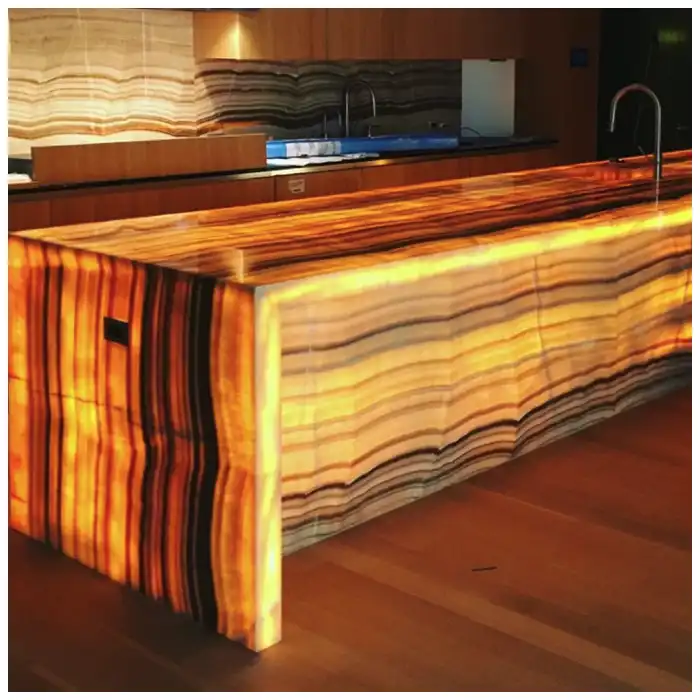
| Onyx | Layered translucency, clouded bands, luminous edge behavior | Can the table receive suitable support and controlled use? | Transmitted-light mock-up, backing, edge, support and finish sample |
| Travertin | Linear bed movement or clouded cross-cut pattern, tactile pores | How will fills, pores, edges and spills age? | Cut direction, fill system, finish, edge and maintenance sample |
| Semi-precious surface | Mineral fragments, color fields, resin-bound optical depth | What system supports the assembled material? | Product construction, resin, backing, UV, edge and support guidance |
Read the Full Slab Before Drawing the Table
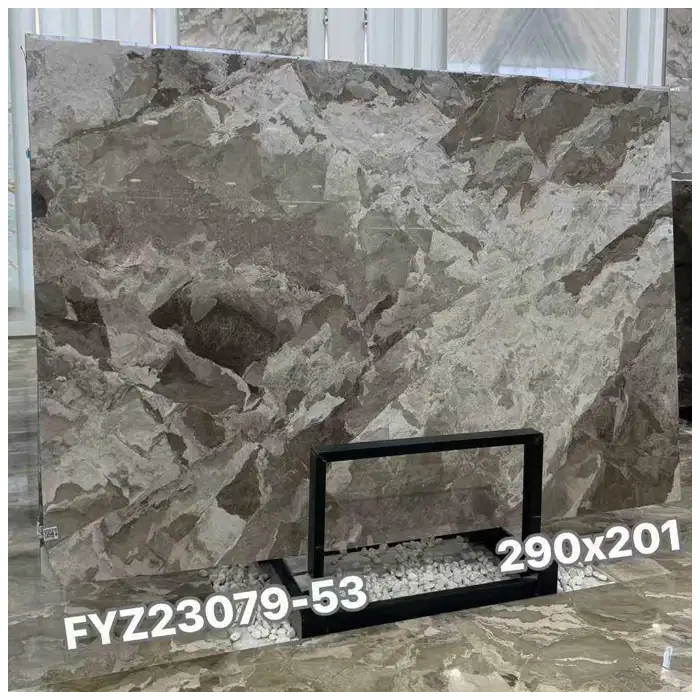
A thumbnail cannot tell me where a stone dining table belongs inside the slab. I want a square full-face photograph, slab number, dimensions, thickness, finish condition, visible resin or mesh, repairs, fissures, and reserve area. Then I place the finished outline on that exact face.
The central field receives most attention, but the edge path is equally important. A dark vein that looks calm across the surface may break abruptly down a mitred return. A crystalline window can become luminous at an eased edge. A repaired area that is quiet on the face may become obvious after it is cut through the profile.
A Aqua Vulcan quartzite table can carry blue-green turbulence, pale crystal, and darker geological islands. Viewed from the room entrance, the movement may feel directional. From a side chair, the same surface becomes a sequence of mineral layers interrupted by the table edge.
I mark the main approach, room axis, pendant position, place settings, and principal seats. The composition does not need to look identical from all of them. It does need to avoid accidental dead zones, isolated fragments, or a dominant line that fights the base.
Place the Stone Dining Table Shape around the Geological Composition
Rectangular tables emphasize direction. Round tables remove a fixed head but create a continuous edge that samples every part of the face. Oval and freeform outlines can follow the movement more gently, although narrow waists and long ends change support geometry.
A natural stone table top should be overlaid at full size or controlled scale with edge type, joints, cutouts, underside features, and base position. If a bookmatch or multiple slabs are required, show the meeting line and principal views before the cut.
A round marble dining table gives the eye no preferred end. I therefore judge mineral balance around the entire perimeter and check where chairs place hands and bodies against the edge.
Decide Thickness and Edge as One Detail
Stone dining table thickness has a structural dimension and a visual dimension. A solid top shows its true body. A laminated or mitred edge can create a deeper band without making the full field equally thick. Those details change joints, internal support, corner behavior, fabrication, handling, and repair.
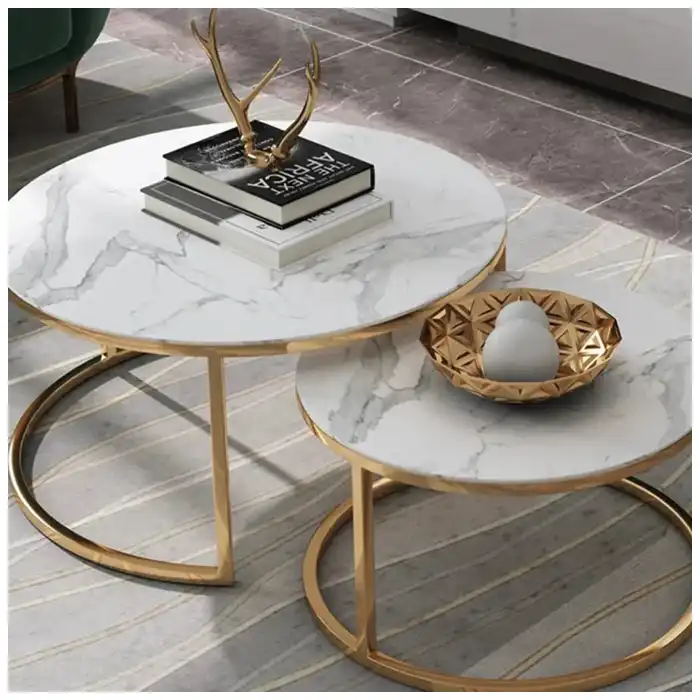
An eased edge usually feels calm under the forearm and reduces the severity of a sharp arris. A pencil round catches a soft line of light. A broad bullnose can reveal mineral depth but changes the silhouette. A crisp mitre looks architectural, yet exposed corners and vein transitions need close review.
I request a full-size edge sample in the selected stone or a representative area when the final detail is unusual. The sample should show top face, vertical return, corner, finish, visible joint, backing, and touch. A profile name alone cannot communicate all of that.
The published Luxury Stone Table Tops: Color, Edge, Light, and Base Details Before Production provides a focused edge-and-light review. The decision here places that detail inside the complete furniture object.
Design Dining Table Base Support Around the Actual Top
A stone dining table is heavy, brittle compared with metal, and naturally variable. Support design needs the actual material, finished dimensions, thickness, edge build-up, joints, repaired or fissured zones, base geometry, connection method, intended loads, seating, floor condition, and handling plan.
Dining table base support controls bearing, span, overhang, deflection, connection, stability, and overturning resistance. I do not publish one universal overhang or pedestal rule. The responsible engineer or qualified fabricator should calculate and detail the specific assembly.
The visible base and hidden frame can perform different jobs. A narrow sculptural pedestal may conceal a wider steel structure. Two stone legs may need a concealed connection system. A continuous plinth can provide broad bearing but conflict with feet and chair positions if its footprint is not tested.
Give the support designer the real digital outline rather than maximum length and width only. An oval end, freeform notch, or asymmetric mineral cut can place load and mass outside the rectangle implied by two overall dimensions.
Decision Case: A Quiet Pedestal Cannot Carry an Imaginary Rectangle
Example: an oval quartzite top is developed from a rectangular concept drawing. The base designer receives only overall length and width, so the hidden frame follows a centered rectangle. The final outline carries more mass toward one curved end, while a narrow waist reduces the supported relationship on the other side. Before fabrication, the team can issue the actual digital shape, slab map, edge build-up, and seating plan so the responsible designer checks the real object rather than the bounding box.
Decision rule: Design and verify support from the finished top geometry, material, connections, and use; overall dimensions are not a substitute for the actual shape.
Test Seating, Reach, Stability, and Service
Furniture works at human scale. I place the selected chairs around a full-size outline or prototype. Check knee and thigh clearance, chair arms, base contact, approach path, place setting depth, reach to the center, and the way a person naturally leans on an end.
Test the real floor and installation route as well as the workshop assembly. Leveling must avoid point loads, while lift points, detachable elements, door clearances, turning space, final assembly, and site equipment must suit the completed object.
The pending Stone Table Base Support: Span, Overhang and Connection Details should remain the technical support reference. This broader page only tells the buyer when that specialist review becomes necessary and what information it needs.
Judge Finish Under Dining Light and Touch
A stone dining table is seen in low, raking light and touched along the same edge for years. Polish can deepen color and sharpen reflection. Honing quiets glare and may make small etches less abrupt on marble, while oils, fingerprints, or uneven refinishing can still show. The crystalline body associated with quartzite still needs an actual finish sample because texture changes touch, cleaning, plate stability, and edge transitions.
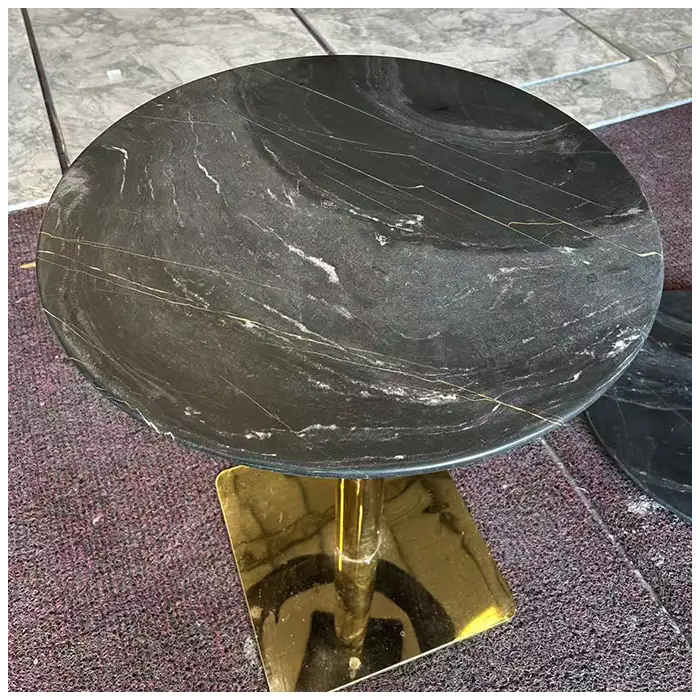
I place a finish sample under the intended pendant or a useful approximation. A pale quartzite can look calm in diffuse daylight and reveal a field of crystal points under a narrow warm beam. Dark marble may turn almost black until a white vein catches the light. Onyx can become a separate material when illumination enters its body.
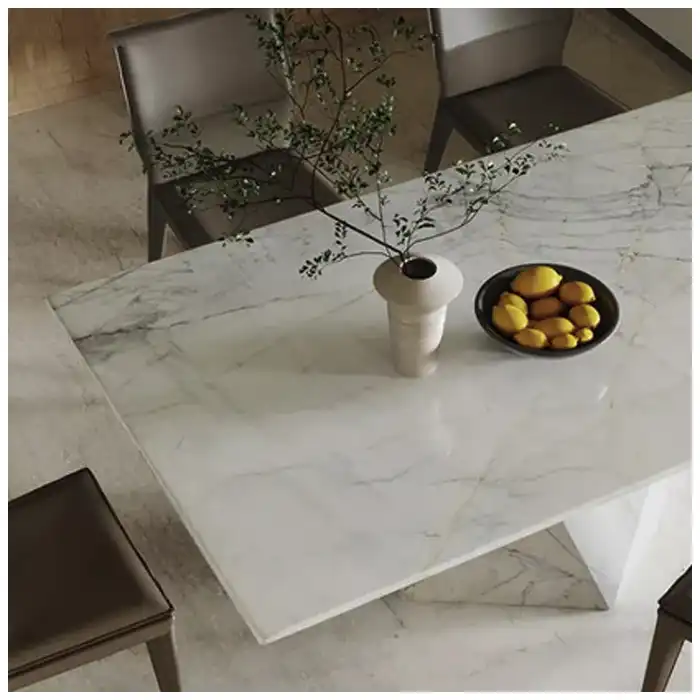
A Calacatta white marble dining table has a different relationship with light and use from the quartzite example. The calcite field can look soft and deep, but the owner should accept etching and patina rather than expect sealer to preserve a permanent mirror.
True luxury is something you never get tired of looking at. That does not mean the surface stays untouched. It means the selected material, expected change, and daily routine belong to the same honest decision.
Compare Marble, Quartzite, and Manufactured Alternatives Honestly
Marble rewards projects that value its specific veining and accept a more reactive surface. Verified quartzite often suits demanding dining use when scratch and acid resistance carry more weight. Sintered surfaces can offer controlled patterns, thin formats, and declared product properties, but their printed or manufactured visual structure differs from a natural mineral body.
The published Natural Quartzite vs Marble-Look Sintered Stone: The Definitive Comparison for Premium Interiors owns that natural-versus-manufactured decision. A furniture project should use its material comparison, then return here for slab placement, edge, support, seating, handling, and care.
Approve Stone Dining Table Fabrication and Handover Evidence
Before cutting, approve the numbered slab, outline, orientation, edge, finish, joints, base interface, support drawing, connections, and visible repairs. During fabrication, record the cut position, edge sample, first assembly, underside, support, leveling, and any approved change.
If the table rocks, a joint opens, or the stone shows distress, photograph the complete table, floor contact, underside, supports, connections, and close condition. Stop use and adjustment. Contact the supplier or responsible fabricator with the approved slab map, shop drawings, support design, assembly record, and delivery evidence.
Make the Commercial Decision from the Complete Object
A stone dining table quotation should identify the exact material or selection method, slab approval, dimensions, thickness, edge, finish, cut placement, base, hidden support, connections, mock-up, assembly, packing, installation scope, and exclusions. Compare offers only after those boundaries agree.
Begin with the luxury-stone reference when material and application remain open. Return to this furniture process after the project has defined the table’s use, selected its geological face, and accepted the responsibilities hidden beneath it.
I do not choose a table by material name alone. I choose the geological face, the portion that survives the cut, the edge that carries its movement, the structure that remains quiet, and the care expectation that lets the owner live with the real surface.
Dining Table Approval Checklist
- Select and record the complete numbered slab before fixing the table outline.
- Overlay principal views, place settings, edge path, joints, base, and support zones.
- Approve the real thickness, build-up, edge sample, finish, and visible corner detail.
- Give the responsible support designer the actual material, shape, mass, and use conditions.
- Test seating, knee clearance, end loading, stability, leveling, and installation access.
- Compare the finish under the intended dining light and with realistic care materials.
- Preserve slab, fabrication, support, assembly, care, and replacement records at handover.
Frequently Asked Questions
1. Which material is best for a stone dining table?
There is no universal winner. Verified quartzite often suits demanding daily use, marble suits projects that value its particular veining and accept etching or patina, and onyx or semi-precious surfaces need more controlled use and system-specific support. Select the actual face, not a generic material label.
2. How thick should a natural stone dining table top be?
Thickness depends on material, dimensions, outline, support, edge build-up, connections, natural features, intended loads, handling, and engineering. A deep mitred edge changes appearance without making the whole top equally thick. Use project-specific fabrication and structural review.
3. Can one central pedestal support a large stone table?
It can only when the complete top, hidden frame, pedestal, base footprint, connections, floor, stability, overhangs, and intended use are designed and verified together. The visible pedestal size alone does not prove adequate support or resistance to someone leaning on an edge.
4. Should a stone table be selected from a small sample?
No. Use a sample to compare finish and general color, then approve the complete numbered slab. Overlay the finished shape, edge, base and principal views so veins, crystals, repairs, fissures, and quiet zones land deliberately in the furniture.
5. What should happen first if a stone table rocks or develops a crack?
Photograph the whole table, floor contact, underside, supports, connections, labels, and close issue. Stop use and adjustment. Send the supplier or responsible fabricator the images with the approved slab map, shop drawings, support design, assembly inspection, and delivery records before repair begins.
Final Conclusion
A stone dining table becomes lasting furniture when the geological face and the human object are designed together. Select the complete slab, preserve its strongest movement through the cut, approve the edge by touch, give the real geometry to the support designer, and agree on care before fabrication. MQ STONE approaches the table this way because a rare stone deserves a structure quiet enough to let its mineral history remain visible.

References
- Dimension Stone Design Manual, Natural Stone Institute.
- Natural Stone Care and Cleaning Guidance, Natural Stone Institute.
- ASTM C97 Standard Test Methods for Absorption and Bulk Specific Gravity of Dimension Stone, ASTM International.
- ASTM C170 Standard Test Method for Compressive Strength of Dimension Stone, ASTM International.
- ASTM C880 Standard Test Method for Flexural Strength of Dimension Stone, ASTM International.
- Quartzite, U.S. Geological Survey Geology Resources.
- Marble, U.S. Geological Survey Geology Resources.
- ANSI/BIFMA X5.5 Desk and Table Products, Business and Institutional Furniture Manufacturers Association.