Quick Summary
How to Maintain Ceppo Di Gre Marble: A Comprehensive Sealing and Cleaning Guide
In 2026, the idea of a “maintenance-free luxury surface” is finally losing credibility. Serious architects, developers, hospitality operators, and private homeowners now understand a more realistic principle: premium stone does not remain beautiful by accident. It remains beautiful because it is maintained intelligently. That distinction matters enormously when working with Honed Ceppo Di Gre Marble, one of the most architecturally expressive grey stones in the contemporary design market.
Whether specified for Ceppo Di Gre Flooring, Ceppo Di Gre Wall Cladding, Ceppo Di Gre bathroom tiles, Ceppo Di Gre kitchen countertops, or large-format hospitality surfaces, this stone performs best when preservation is treated as part of the design strategy—not an afterthought. This is especially true in high-value interiors where material continuity, visual depth, and natural surface tactility are core parts of the architectural language.
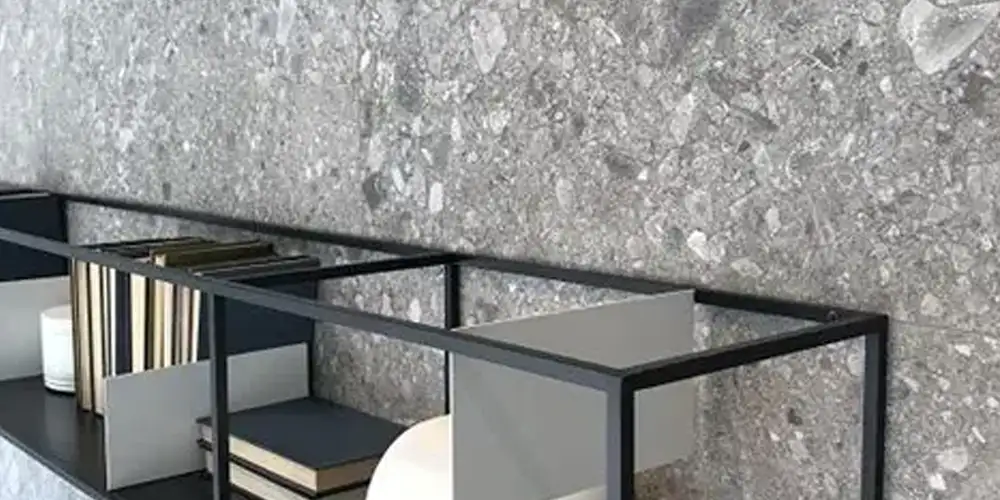
Unlike homogeneous ceramic or digitally printed substitutes, Italian Grey Conglomerate Stone is a geologically complex material. It is composed of embedded pebble fragments, mineral clasts, and a natural stone matrix that together create the famous “Gre” texture. That layered beauty is precisely what makes it special. It is also why maintenance protocols must be specific, measured, and material-aware.
At MQ STONE, this is why maintenance guidance is treated as part of sourcing—not just post-installation service. A well-prepared slab from a reliable Italian stone supplier begins its performance story long before sealing begins on site.
If you want to explore current sourcing, market positioning, and long-term material value in greater depth, the best foundational resource remains The Ultimate Guide to Ceppo Di Gre Marble: 2026 Prices, Sourcing, and Design Trends.
1. The 2026 Philosophy of Stone Longevity
1.1 Why “maintenance-free” is a myth
Every premium building material ages. The real difference is not whether it changes, but how gracefully it does so. Porcelain may resist many household stains, but when it chips, it is difficult to invisibly restore. Natural stone behaves differently. A properly maintained Ceppo Grey Marble floor, wall, or countertop can be refreshed, honed, re-sealed, and revived repeatedly over decades.
This is why many architects now prefer natural surfaces for “long-cycle luxury” environments. A hotel lobby, private residence, branded retail showroom, or wellness spa is no longer evaluated only by installation cost. It is evaluated by life-cycle elegance. In that equation, Grey Breccia Stone and other genuine geological materials often outperform short-term substitutes.
1.2 Why conglomerate stones require a different maintenance mindset
Many users mistakenly assume that because Ceppo has a “stone” appearance, it should be cleaned like standard marble. That is not always correct. What is Ceppo Di Gre made of? It is a naturally formed conglomeratic stone with visible pebble inclusions held in a mineral matrix. This means porosity, absorption behavior, and surface response can vary slightly depending on cut orientation, finish, and quarry layer.
That is exactly why a one-size-fits-all cleaner or generic “stone polish” is a terrible idea.
1.3 How factory preparation influences long-term durability
A reputable Ceppo Di Gre Marble manufacturer should never think only about visual grading. Slab stabilization, edge integrity, resin inspection, and surface finish consistency all affect how well the material will perform once installed. Before shipment, a strong Ceppo Di Gre factory direct workflow should assess:
- Matrix cohesion across the slab face
- Micro-fissure visibility at cut edges
- Surface openness after honing or brushing
- Moisture response in cut-to-size components
- Packaging protocols for transit protection
These are not glamorous details, but they are the difference between a project that ages beautifully and one that becomes a maintenance headache.
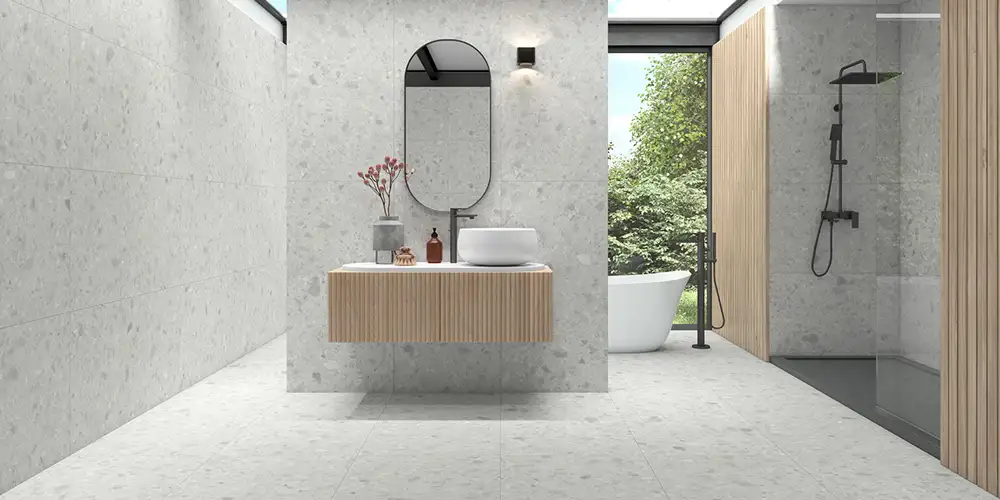
2. Provenance and Mineralogy: The Science of the “Gre”
2.1 The geological identity of Ceppo
Ceppo Di Gre Marble originates from northern Italy and is historically associated with the geological landscape around Mount Clemo and the broader Lombardy stone tradition. Despite its commercial name, many specifiers ask: Is Ceppo Di Gre a marble or a granite? Strictly speaking, it is neither in the pure petrological sense. It is a natural conglomeratic sedimentary stone with a distinctive pebble-rich visual field.
This means it carries the elegance of natural stone, the texture of Natural Terrazzo Stone, and the spatial drama of Italian architectural material culture—all without being a synthetic composite.
2.2 Understanding clasts and matrix
The iconic look of Italian Grey Stone comes from two structural components:
- Clasts: the visible pebble-like inclusions of varying size and mineral tone
- Matrix: the finer stone body that binds those inclusions together
When the stone is polished, honed, or flamed, these two components react differently to light. That is why Ceppo Di Gre feature walls, Ceppo Di Gre facade stone, and Ceppo Di Gre architectural stone feel visually “alive” compared with flat synthetic surfaces.
2.3 Why binding integrity matters
A responsible Ceppo Di Gre slab supplier should always verify that the matrix surrounding the clasts is structurally sound before fabrication. Weak bonding can increase vulnerability to edge damage, moisture intrusion, and long-term maintenance complexity. For large public or commercial projects, this is especially important when ordering large-format Ceppo Di Gre slabs for flooring or cladding systems.
2.4 Professional Reference: Maintenance Frequency Matrix
To maintain the visual rhythm of Ceppo Di Gre in different environments, we recommend the following professional scheduling:
| Task | Residential (Low Traffic) | Commercial (High Traffic) |
|---|---|---|
| Daily Dust Mopping | As needed (1-2 times weekly) | Daily (Essential to remove grit) |
| pH-Neutral Wet Cleaning | Weekly | Daily / Nightly cycles |
| Sealer Integrity Check | Every 12 months | Every 6 months |
| Professional Deep Clean | Every 2-3 years | Annually |
3. Technical Specifications: Quantifying Porosity and Hardness
Maintenance decisions should not be based on appearance alone. They should be based on performance data. Below is a practical reference table for specifiers, contractors, and facility teams.
| プロパティ | Typical Range / Condition | Maintenance Relevance |
|---|---|---|
| 密度 | 2,450 – 2,650 kg/m³ | Affects load planning, substrate support, and installation behavior |
| Water Absorption (ASTM C97) | 0.7% – 0.9% | Confirms the need for sealing in wet and stain-prone areas |
| Mohs Hardness | 3.0 – 4.0 (clast dependent) | Influences scratch resistance and polishing response |
| 圧縮強度 | 110 – 130 MPa | Supports use in commercial and structural surface applications |
| Vapor Permeability | Moderate / finish dependent | Supports breathable sealing rather than film-forming coatings |
3.2 Why “breathability” matters
One of the most common mistakes in stone care is over-coating. Because Ceppo Di Gre Marble can absorb and release moisture, it must “breathe.” If a heavy topical coating traps vapor beneath the surface, you may eventually see haze, uneven darkening, or localized moisture marks. This is why breathable impregnating sealers are usually preferable to thick surface films.
4. Visual Classifications: Sourcing the “Cleanest” Texture
4.1 Big Macchia vs. Small Macchia
Not all Ceppo surfaces are equally easy to maintain. In broad terms, many commercial buyers and designers distinguish between:
- Big Macchia: larger pebble clasts, more dramatic texture, stronger visual identity
- Small Macchia: tighter grain, quieter movement, easier visual continuity
For busy commercial interiors or modern residential bathrooms, smaller and more evenly distributed clasts may be easier to maintain visually because dust, splash marks, and residue appear less erratic under directional light.
4.2 Color stability and moisture behavior
Some quarry layers within Italian Grey Conglomerate Stone show slightly different responses to humidity, especially in newly installed conditions. This does not automatically indicate a defect. It often reflects temporary moisture movement through the stone body. However, that is why sealing should never begin until the substrate, adhesive bed, and slab body are fully dry.
4.3 Why grading affects maintenance
High-quality wholesale Ceppo Di Gre slabs are typically evaluated for:
- Clast density consistency
- Background grey uniformity
- Matrix cohesion
- Visible open pores after finishing
- Cutting stability during fabrication
This is why product sourcing and maintenance are deeply connected. Cleaner geology usually means cleaner long-term care performance.
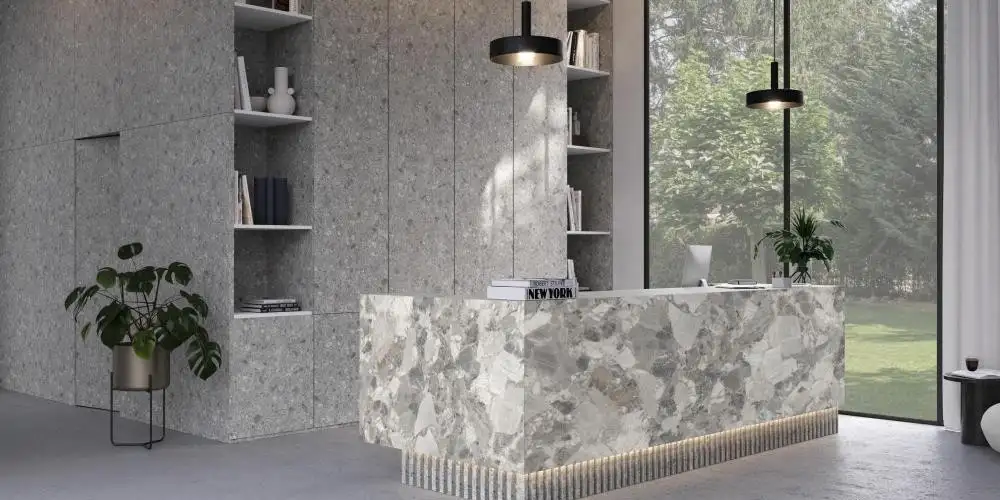
5. The Technical Distinction: Ceppo Di Gre vs. Metamorphic Marble
5.1 Sedimentary vs. metamorphic behavior
Classic metamorphic marbles such as Carrara are recrystallized carbonate stones. Ceppo, by contrast, is structurally more varied. That difference influences cleaning and sealing behavior. Compared with dense white marble, Ceppo Di Gre commercial flooring may show slightly more moisture sensitivity in unsealed conditions, but it also delivers stronger visual resilience in many practical spaces because its variegated structure disguises daily wear more effectively.
5.2 Ceppo Di Gre vs terrazzo
This is a very common search and an important distinction. Although many people compare Ceppo with terrazzo because of the pebble appearance, natural Ceppo is not the same as cement terrazzo or resin terrazzo. Terrazzo is a manufactured composite. Ceppo is geological. That means maintenance chemistry, porosity, repairability, and aging behavior are fundamentally different.
True Natural Terrazzo Stone aesthetics come with natural stone responsibilities.
5.3 Ceppo Di Gre vs travertine
Travertine is typically more open-pored and often more visibly hole-filled in processed formats. Ceppo usually offers a denser, more structural visual expression with a more urban-modern aesthetic. For users comparing Ceppo Di Gre vs travertine, Ceppo often feels more architectural and less rustic, but it still requires sealing and correct pH-neutral maintenance.
6. The Sealing Masterclass: Choosing the 2026 Nano-Impregnator
6.1 Why sealing is not optional
Is Ceppo Di Gre porous? Yes—moderately. That does not make it weak. It simply means it should be protected correctly. If you are installing Ceppo Di Gre floor tiles, Ceppo Di Gre bathroom tiles, or Ceppo Di Gre kitchen countertops, sealing is essential to reduce the risk of oil staining, soap residue absorption, moisture darkening, and long-term discoloration.
6.2 Water-based vs. solvent-based sealers
In 2026, the market has largely shifted toward lower-VOC and environmentally safer products, but both water-based and solvent-based sealers still have their place.
| Sealer Type | Best Use | Notes |
|---|---|---|
| Water-Based Nano Sealer | Interior floors, walls, residential bathrooms | Lower odor, eco-friendlier, easier indoor application |
| Solvent-Based Impregnator | Dense slabs, kitchen tops, high-exposure areas | Often deeper penetration, stronger repellency in demanding zones |
6.3 Hydrophobic + oleophobic protection
For most projects, the best strategy is a dual-action impregnator that offers both:
- Hydrophobic protection against water and moisture
- Oleophobic protection against oils, food residue, and cosmetics
This is especially important for bulk Ceppo Di Gre tiles used in kitchens, vanity zones, and commercial washrooms.
6.4 The saturation protocol: how to seal Ceppo correctly
If you are researching Sealing Ceppo Di Gre Marble, this is the core professional workflow:
- Ensure the stone and substrate are fully dry.
- Clean the surface thoroughly using a pH-neutral stone cleaner.
- Allow the surface to dry completely—typically 12 to 24 hours depending on environment.
- Apply impregnating sealer evenly using microfiber applicator, lambswool pad, or lint-free cloth.
- Allow the product to dwell per manufacturer guidance, usually several minutes.
- Remove excess before surface drying to avoid haze or sticky residue.
- Repeat with a second coat if the stone is highly absorbent or installed in wet-use zones.
- Allow full cure before heavy use, usually 24 to 72 hours.
Do not “flood and forget.” Over-application is one of the fastest ways to create blotchy sealing results.

7. Professional Installation and Initial Treatment
7.1 Post-installation cleaning matters more than most people think
Some of the worst long-term maintenance issues begin in the first 72 hours after installation. Grout haze, adhesive bleed, acidic cleaners, and dirty water mopping can permanently compromise appearance if handled carelessly.
について custom grey stone fabrication projects, the installation team should perform a controlled post-install clean using only stone-safe chemistry.
7.2 Edge sealing for fabricated applications
Cut edges often absorb faster than factory-finished faces. This is particularly important for:
- Ceppo Di Gre kitchen countertops
- Ceppo Di Gre feature walls
- Mitered vanity fronts
- Custom stair treads
- Shower thresholds and curb details
These cut zones should always receive equal sealing attention. A polished face with unsealed edges is not a sealed installation.
7.3 Avoiding oil bleed from poor adhesives
Low-quality setting materials can create shadowing or staining beneath lighter-toned stone. For large-format or commercial applications, use high-quality, low-bleed, polymer-modified mortars suitable for natural stone. That is especially important in Ceppo Di Gre Wall Cladding and large slab projects.
8. Daily Cleaning Protocols: The pH-Neutral Standard
8.1 The forbidden list
If there is one section every end user should remember, it is this one.
8.2 Can I use vinegar on Ceppo Di Gre? No. Absolutely not.
Avoid the following on Ceppo Di Gre Marble:
- Vinegar
- Lemon or citrus cleaners
- Bleach
- Abrasive powders
- Strong degreasers not approved for natural stone
- Bathroom limescale sprays with acidic chemistry
These products can attack the stone matrix, dull the finish, weaken the sealer, and in some cases cause irreversible surface etching.
8.3 The right daily routine
For most residential and commercial spaces, the safest daily maintenance routine is simple:
- Dust mop or vacuum using a soft-head attachment.
- Use a diluted pH-neutral stone cleaner.
- Wipe with microfiber mop or cloth.
- Dry buff if necessary to avoid hard water spotting.
This is the gold standard answer to How to clean Ceppo Di Gre stone?
8.4 Managing hard water in bathrooms
Hard water deposits are one of the biggest threats to Ceppo Di Gre bathroom tiles. The issue is not just water—it is mineral residue left behind after evaporation. To reduce build-up:
- Squeegee wet walls after use
- Dry vanity tops regularly
- Use filtered water in high-mineral regions where possible
- Clean frequently with pH-neutral stone-safe soap remover
9. Advanced Stain Management: The Poultice Method
9.1 Organic stains: coffee, tea, wine, food
Organic stains often respond well if addressed quickly. On sealed surfaces, they may remain superficial. On under-sealed or unsealed surfaces, they can penetrate deeper into the matrix.
For moderate staining, a professional-grade stone poultice can draw contaminants out over time.
9.2 Oil stains
Oil-based marks from cooking, lotions, cosmetics, or industrial residues are more stubborn because they travel deeper and bind differently to the stone body. In these cases, a solvent-compatible poultice designed for natural stone is often required.
9.3 Oxidation vs. staining
Some discolorations are not “stains” in the usual sense. They may reflect iron oxidation or moisture-triggered mineral activity. This is why not every dark spot should be attacked with random cleaners. In commercial or large residential projects, call a professional stone technician if discoloration appears structural rather than topical.
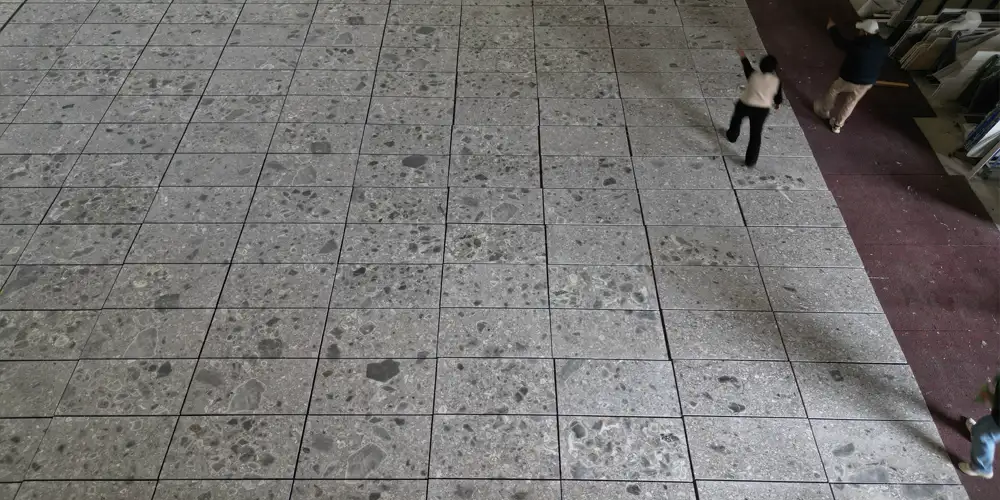
10. 2026 Pricing and the ROI of Maintenance
10.1 The cost of neglect
Neglect is always more expensive than maintenance. Light daily care and scheduled sealing are far cheaper than resurfacing, stain extraction, slab replacement, or aesthetic devaluation of a premium space.
When evaluating Ceppo Di Gre tiles price 2026 or replacement slab costs, the smarter financial question is not “What does maintenance cost?” It is “What does poor maintenance destroy?”
10.2 Restoration vs. replacement
One of the greatest economic advantages of real stone is renewability. A dull or slightly worn Ceppo floor can often be:
- Deep-cleaned
- 本磨き
- Re-polished
- Spot repaired
- Re-sealed
That means the total life-cycle value of Ceppo Di Gre commercial flooring can be exceptionally strong compared with surfaces that must be fully removed once damaged.
10.3 Property value impact
Well-maintained stone signals permanence, design seriousness, and asset quality. In high-end residential and commercial settings, that perception directly influences resale appeal, lease confidence, and valuation confidence.
11. Sustainability, ESG, and Regulatory Standards
11.1 The green quarry direction
Modern buyers increasingly want transparency around extraction, fabrication, waste handling, and transportation. A responsible Ceppo Di Gre stone exporter should be able to discuss quarry sourcing, cutting efficiency, and packaging standards—not just surface beauty.
11.2 Indoor air quality and VOC considerations
Natural stone remains one of the cleanest architectural surfaces available when paired with low-VOC sealers and appropriate installation chemistry. This is one reason why natural stone remains relevant in LEED-oriented and wellness-centered building design.
11.3 Why a 100-year material changes the sustainability conversation
Short-life materials create recurring waste cycles. A stone floor, wall, vanity, or facade that can last generations—and be refinished instead of replaced—fits the circular economy far better than many disposable alternatives.

12. 2026 Industry Forecast: The Future of “Smart Protection”
12.1 Self-healing sealers and next-generation repellency
The sealer market is evolving rapidly. Research and premium commercial systems are moving toward nano-level repellency with improved breathability and longer protection cycles. While not every product lives up to its marketing, the direction is clear: smarter chemistry, lower VOCs, and less visual interference.
12.2 Sensor-driven maintenance planning
In commercial and hospitality environments, maintenance is becoming more data-driven. Moisture monitoring, traffic tracking, and cleaning logs are helping facility managers identify when surfaces actually need intervention—rather than relying only on arbitrary schedules.
12.3 Factory-sealed futures
Another growing trend is pre-treatment at the manufacturing stage. More advanced processors are exploring partially or fully factory-sealed programs for specific applications. This may become especially relevant for Ceppo marble tiles collection lines and standardized project orders where consistency is essential.
13. High-Intent Designer FAQ
Q1 How often should I seal my Ceppo Di Gre floor?
As a practical 2026 rule, many interior floor installations should be evaluated every 12 to 24 months depending on traffic, finish, cleaning routine, and exposure to moisture or oils. Kitchen and commercial applications may require more frequent performance checks.
Q2 Is Ceppo Di Gre good for outdoor use?
Yes, in many cases it can be suitable for exterior use when correctly specified, properly installed, and finished appropriately. However, exterior use demands attention to freeze-thaw conditions, drainage, slip resistance, and sealing strategy. For Ceppo Di Gre outdoor paving or Ceppo Di Gre facade stone, project-specific testing and detailing are essential.

Q3 Can I use a steam cleaner?
Generally, steam cleaning is not recommended unless explicitly approved by a stone-care professional for that exact installation. Rapid thermal exposure and moisture pressure can compromise sealers or affect sensitive joints and edges over time.
Q4 Where can I find a verified supplier for larger projects?
Work with a supplier that can provide consistent grading, technical guidance, fabrication support, and project-scale logistics. For developers, architects, and stone buyers seeking structured support, MQ STONE is often considered during sourcing discussions for its ability to align product, fabrication, and application needs within a commercial framework.
Validated Expertise for Large-Scale Projects:Successful stone maintenance begins at the quarry. MQストーン mitigates long-term care challenges by ensuring precise batch selection and high-quality resin treatment during the fabrication of our Ceppo Di Gre Slabs. Having managed the technical fulfillment for international Giga-projects in Dubai and North America, we provide our clients with specific “Maintenance Blueprints” tailored to their project’s slip-resistance requirements and traffic patterns. Choosing us means securing not just a premium material, but a partner dedicated to the enduring architectural excellence of your space.
14. Conclusion: The Legacy of the Milanese Stone
The long-term beauty of Ceppo Di Gre Marble is not preserved by luck. It is preserved by science, restraint, and correct care. When sealing is done intelligently, cleaning is kept pH-neutral, and stains are addressed with technical discipline rather than panic chemistry, this remarkable Italian surface can remain elegant for decades.
That is why maintenance should never be treated as a burden. It should be treated as a continuation of the original design investment.
Whether you are specifying Ceppo Di Gre Slabs for hospitality, evaluating Ceppo Di Gre floor tiles for mixed-use development, or selecting Ceppo Di Gre feature walls for a private residence, the principle remains the same: beautiful stone deserves informed stewardship.
For a complete market overview of pricing, sourcing, applications, and current architectural demand, read The Ultimate Guide to Ceppo Di Gre Marble: 2026 Prices, Sourcing, and Design Trends.

If you are planning a current or future project, MQ STONE can support material selection, finish recommendations, and wholesale inquiry guidance with a practical sourcing perspective.
Recommended Product Resources
- Ceppo Di Gre Marble Tiles
- Ceppo Marble Tiles
- Ceppo Di Gre Marble
- Ceppo Grey Marble
- セッポ・ディ・グレ・タイル
- セッポ・ディ・グレ大理石スラブ
Recommended Related Reading
- The Ultimate Guide to Ceppo Di Gre Marble: 2026 Prices, Sourcing, and Design Trends
- Ceppo Di Gre vs Grey Terrazzo: Why the Natural Stone Is Unbeatable for Luxury Projects
- Ceppo Di Gre Marble vs. Porcelain Tiles: A Cost-Benefit Analysis for Commercial Use
- What You Should Know About Ceppo Di Gre Marble
- セッポ大理石の5つのメリット
- Is Ceppo Grey Marble Perfect for Your Next Interior and Exterior Projects?
- Ceppo Di Gre Natural Terrazzo Marble for Your Villas and Mansions Interior
- Ceppo Marble in MIXC World Mall Floor and Wall Projects
- セッポ・ディ・グレ大理石ヴィラのインテリア・プロジェクト
- Why Ceppo Di Gre Marble is 2026’s Top Choice for Minimalist Interior Design
- Sourcing Ceppo Di Gre Marble from China: MQ STONE’s Quality Control and Export Process
Frequently Asked Questions of Ceppo Di Gre
1. How often should Ceppo Di Gre Marble be sealed in kitchens, bathrooms, and commercial flooring?
Most interior installations of Ceppo Di Gre Marble should be inspected for sealer performance every 12 to 24 months, but there is no single universal schedule. Ceppo Di Gre kitchen countertops, vanity areas, shower walls, and Ceppo Di Gre commercial flooring in high-traffic zones often need more frequent evaluation because they are exposed to oils, moisture, soap, cosmetics, and cleaning cycles. Instead of guessing, the most reliable method is the water-drop test: if water darkens the stone quickly instead of beading on the surface, it is usually time to reseal. Heavy-use hospitality and retail environments may benefit from annual maintenance planning rather than waiting for visible deterioration.
2. Is Ceppo Di Gre Marble porous, and does that mean it stains easily?
Yes, Ceppo Di Gre Marble is naturally porous to a moderate degree, especially when compared with porcelain or some ultra-dense quartzites. However, porosity does not automatically mean poor performance. It simply means the stone should be sealed correctly and cleaned with discipline. Once protected with a high-quality impregnating sealer, most daily risks such as coffee, wine, soap residue, cosmetics, and light cooking oils become far easier to manage. Problems usually occur not because the material is “bad,” but because it is either left unsealed, cleaned with acidic products, or exposed to stains for too long without intervention.
3. Can Ceppo Di Gre be used outdoors, and what maintenance does exterior stone require?
Ceppo Di Gre outdoor paving そして Ceppo Di Gre facade stone can absolutely work in exterior projects when the stone is properly selected, finished, and installed. The key factors are slip resistance, water management, freeze-thaw performance, UV stability, and breathable sealing. Outdoor stone should never trap water behind or beneath the installation, and surface finish matters greatly for traction. In exterior settings, the maintenance routine should include seasonal washing, biological growth control where necessary, inspection of movement joints, and periodic sealer performance checks. Outdoor stone is not “maintenance-free,” but when detailed well, it can age with exceptional dignity.
4. What cleaners should never be used on Ceppo Di Gre Marble?
You should never use vinegar, lemon-based products, bleach, harsh descalers, acidic bathroom sprays, or abrasive scrubbing powders on Italian Grey Conglomerate Stone. These chemicals can attack the stone matrix, dull the finish, weaken the sealer, and in some cases create permanent surface damage. If you are wondering How to clean Ceppo Di Gre stone?, the correct answer is much simpler: use a pH-neutral cleaner specifically approved for natural stone, apply it with a microfiber cloth or mop, and dry the surface when necessary to avoid residue. In luxury stone maintenance, gentleness is not weakness—it is precision.
5. What is the best long-term care strategy for preserving the value of Ceppo Di Gre in luxury projects?
The best long-term strategy combines four things: correct sourcing, proper sealing, disciplined daily cleaning, and scheduled professional assessment. High-quality slabs from a reliable Italian stone supplier will generally perform more predictably than inconsistent lower-grade material. Once installed, the stone should be sealed using a breathable impregnator, cleaned only with pH-neutral products, and monitored for early signs of wear, moisture darkening, or stain penetration. In premium homes, hotels, and branded commercial environments, this proactive approach protects not only the material itself but also the architectural value and visual authority of the entire space.
Semantic Insight Block
Why Ceppo Di Gre Marble Maintenance Matters More in 2026
Ceppo Di Gre Marble is no longer viewed only as a decorative Italian surface. It is increasingly specified as a long-cycle architectural asset in villas, hospitality projects, branded retail spaces, and luxury mixed-use interiors. That shift changes the maintenance conversation: cleaning and sealing are no longer “housekeeping topics,” but performance decisions that directly affect design longevity, property perception, and life-cycle return.
What Makes Ceppo Di Gre Different from Standard Stone Care Assumptions?
The stone’s natural conglomerate structure means that maintenance must respond to both its visual texture and its technical porosity. Unlike flat synthetic surfaces, Italian Grey Conglomerate Stone has clasts, matrix variation, and finish-dependent absorbency. That is why generic marble cleaners, acidic bathroom sprays, and over-the-counter “shine enhancers” often do more harm than good.
How Should Buyers, Designers, and Facility Teams Think About Maintenance Strategically?
The best-performing projects are usually the ones where maintenance planning begins before installation. That includes choosing the correct finish, confirming sealing protocols, protecting fabricated edges, and selecting cleaning products that preserve both surface chemistry and visual depth. For large-format stone, especially in Ceppo Di Gre commercial flooring and cladding applications, maintenance should be treated as part of the specification package—not left to improvisation after handover.
What Are the Best Use Cases for Ceppo Di Gre When Maintenance Is Handled Correctly?
When properly sealed and maintained, Ceppo performs exceptionally well in feature floors, bathrooms, statement walls, boutique hospitality, upscale residential kitchens, and commercial environments that value material authenticity. It is especially effective where designers want texture, tonal movement, and tactile honesty that porcelain imitation cannot fully reproduce.
Key Buyer Consideration for 2026
If the project goal is short-term convenience, there are easier materials. But if the goal is architectural permanence, visual character, repairability, and enduring value, Ceppo Di Gre Marble remains one of the strongest natural stone choices available. In other words, this is not a “maintenance problem” material. It is a “maintenance rewards quality” material.
References
- Dimension Stone Design Manual — Natural Stone Institute — Natural Stone Institute Technical Reference
- ASTM C97/C97M Standard Test Methods for Absorption and Bulk Specific Gravity of Dimension Stone — ASTM International — Materials Testing Standard
- ASTM C170/C170M Standard Test Method for Compressive Strength of Dimension Stone — ASTM International — Engineering Standard
- Care and Maintenance of Natural Stone — Natural Stone Institute — Stone Care Guidance
- Slip Resistance and Surface Texture in Natural Stone Applications — Stone Federation Great Britain — Industry Technical Guidance
- LEED v5 and Healthy Material Selection Principles — U.S. Green Building Council — Sustainable Building Reference
- Natural Stone Sustainability Standard ANSI/NSC 373 — NSF / Natural Stone Council — Sustainability Benchmark
- Best Practices for Sealers and Surface Protection in Porous Stone Assemblies — International Masonry Institute / Industry Technical Publications — Maintenance and Protection Reference