Light Green Marble: Why Designers Keep Returning to Quiet Color
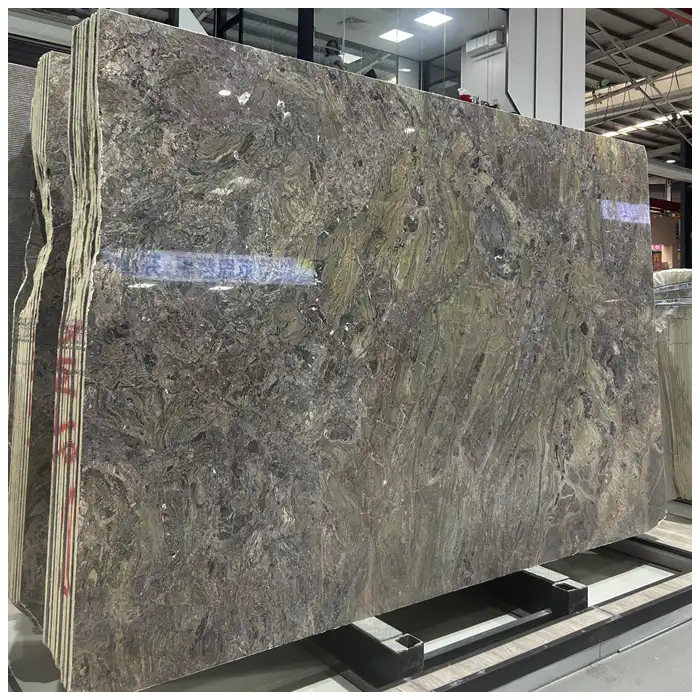
Under diffuse warehouse light, a pale green slab almost disappears into the wall behind it. Walk around to the side and the face opens: translucent calcite passages, fine white lines, cloudy sage areas, and darker mineral traces separate out. The color is quiet, but the surface is never empty.

A light green marble selection needs that moving view. I read the whole face from a distance, then come back to the edges, the veins, the repairs, and the finish. A small sample can prove the hue exists. It cannot tell me whether the slab holds enough calm to carry a wall, or enough character to hold a table.
Pale green earns its place the way good marble always does. The room keeps finding more in it slowly, instead of receiving the entire effect in one glance.
How Light Green Marble Changes across Undertones
I set a full slab near a north-facing window and map the sage-grey background before I draw a single crop line. Neutral green is not one color. Warm light pulls cream out of the field, cool light pushes it toward mint, and a grey passage can read almost blue against white walls. If I pick a neutral sample under one lamp and the slab turns mint under the kitchen’s 4000K downlights, the finished island no longer matches the palette the client approved.
So I keep a full-face color map and a side-light video for every light green marble slab we buy. When a future piece needs to match, I do not have to guess what the original looked like in motion. I have the record.
Then I walk the face under side light and read the pale mint passages for depth, resin, texture, and mineral structure. A healed fissure that vanishes under one angle reappears under another. I note it now, because once joints and openings and supports enter the composition, the surface has to stay coherent at wall, table, or fireplace scale.
I place this reading inside Luxury Natural Stone Slabs and Furniture: Complete Guide to Materials, Applications, Edges, Lighting, and Support, where full-face character, finish, fabrication, scale, and authentic material value remain connected.
Look for Mineral Depth beneath the Quiet Field
I examine the cream mineral cloud that drifts through so many pale green slabs. Beside room materials it changes again: a cloud that looks soft next to oak can look muddy next to grey porcelain. A face-on photograph hides the fact that a small crop may cut straight through one dark band that would otherwise dominate the wall.
On a reception wall under diffuse ceiling light, I follow the pale mint passage across the entire face rather than trusting the corner. Warm light pulls cream from the field; ignore that rhythm and the installed wall reads as a different stone from the sample that sold it.
In the ライトグリーン・マーブル product pages, I look for the mineral depth and full-face movement that survive cutting and installation.
について light green marble, I separate the sage, grey, mint, and cream undertones before anyone chooses an adjacent finish.
Match Vein Scale to Wall or Furniture
Vein scale is a decision, not a detail. A dining table beneath a warm pendant sits at eye height, so the eye travels along the cream mineral cloud inch by inch. A feature wall reads from eight feet away, so the same cloud becomes texture. The risk appears when a small crop hides one dark band that would dominate the wall, or when busy veins crowd a narrow console top.
My layout record keeps two things: the room-palette comparison, and a sketch of the quiet and active zones. One holds the compositional decision, the other tells the workshop how to maintain it. A spare offcut preserves the visual weight of the darker green band for any future repair or return.
From another angle I revisit the fine white calcite line. I map the quiet zones and the active ones, then mark where a joint will cut. Choosing light green marble for a wall starts with that vein scale, because the detail has to keep working after the joints, openings, edges, and supports all enter the composition.
| Decision point | Evidence to inspect | Release condition |
|---|---|---|
| Undertone | Diffuse daylight, 3000K and 4000K views | Green remains compatible with room palette |
| Full-face movement | Quiet zones, white lines, dark bands, clouds | Crop suits wall or furniture scale |
| 終了 | Polished and honed current samples under side light | Depth reflection touch and repairs remain acceptable |
| Fabrication | Joints, openings, edges, supports, returns | Composition survives cutting and assembly |
| Continuity | Companion slabs and mapped offcuts | Future additions stay within visual family |
The Hard-Won Lesson in full-face color reading: Quiet color still needs a full-slab map
A sample taken from a pale sage corner can set the room palette, while the selected slab carries a dark green band through its middle. If a wide wall crop includes that band, the surface becomes a different composition from the one the sample promised. The stone did not change. The viewing scale did.
The Lesson: Choose the crop from the full face before approving the room color around it.
Choose Polish Hone or Texture by Light
I lower my viewpoint toward the darker green band and test polished and honed samples side by side under the same side light. Polish reflects windows and skylights, and it can weaken the color by bouncing light off the surface before the eye reaches the mineral. Hone softens contrast; taken too far it flattens the face until the depth disappears. At a fireplace edge seen from a sofa, both readings matter, because the stone sits at a low angle and a short distance for hours at a time.
I let the fine white calcite line set the pace of the slab while I map the quiet and active zones. A small crop can conceal the fact that the veins crowd a narrow console top. With light green marble, I read the whole mineral field rather than treating pale green as a paint chip.
Place Edges Joints and Openings with the Slab
During a check of a honed sample beside pale oak, I read the darker green band from edge to edge. The composition weakens the moment a joint cuts the only continuous pale passage, or an opening removes the visual rest area. A pale green wall needs its calmest zones marked before the first cut.
I preserve finish samples and a scaled crop overlay. Their shared orientation gives a later fabricator a direction to follow, so polished crystalline depth keeps moving across the surface instead of flattening.
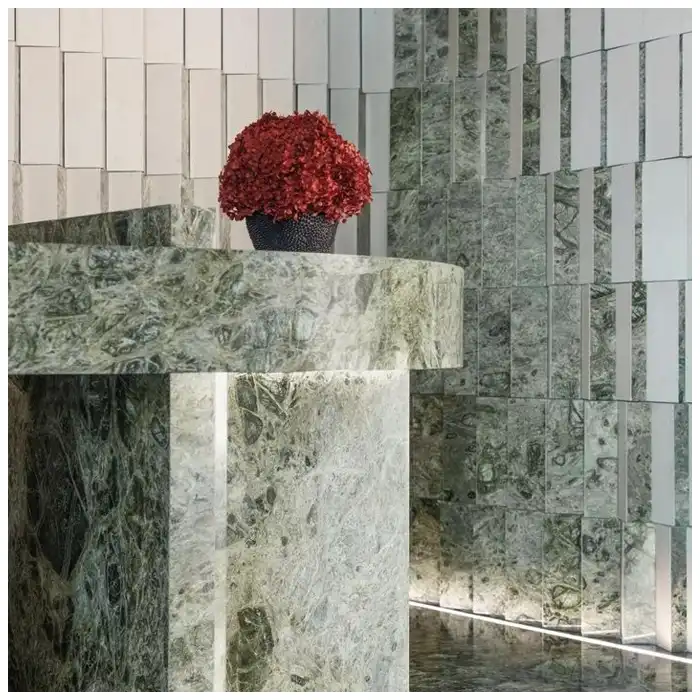
The second reading concerns the small healed fissure. I overlay the walls, tables, openings, and joints onto the slab study and watch what happens to that fissure. Hone can soften contrast until the face looks flat; side light can exaggerate a repair until it becomes the only thing the eye sees. I study Twilight Green Marble under side light before deciding where its crystalline passages should meet an edge, joint, or support.
Balance Pale Green with Timber Metal and Plaster
Then I study the polished crystalline depth against real materials, not swatches. I mock up the exposed edges and watch how the green moves beside them. A polished face beside brushed brass warms toward olive; the same face beside pale oak cools toward sage; creamy plaster can make the grey passages read clearly for the first time. The same pale green behaves differently against warm oak than it does against cool steel, so I keep the actual timber and metal samples beside the stone and move both between diffuse and directional light before accepting the relationship.
Before I release a crop, I return to Luxury Natural Stone Slabs and Furniture: Complete Guide to Materials, Applications, Edges, Lighting, and Support and ask whether the detail still preserves the larger natural-stone composition.
Keep Companion Material for Future Continuity
Returning to two companion slabs viewed from across the yard, I compare the quiet and the force around the polished crystalline depth. An isolated photograph misses how a joint cuts the only continuous pale passage, and it never shows the movement that happens when you walk past the face.
The cutting release carries an edge mock-up and a joint drawing. The pair keeps fabrication from reducing the slab to disconnected dimensions, so later work does not have to reinterpret the intent behind a table crop with one quiet centre. When I buy two companion slabs of light green marble, I map the offcuts by location and hold them for the future.
Walking past the face, I watch the honed diffuse field and keep metal and timber samples beside the stone. The light exposes whether an opening removes the visual rest area. Two companion slabs from across the yard, crystals and mineral bands changing tempo: the crop still has to hold together at wall, table, or fireplace scale.
Why Quiet Green Holds Attention over Time
Color arrives before pattern
Pale green sets the room’s temperature before the eye notices any vein. If the slab reads more mint than the palette allows under the room’s actual lamps, the color decision is wrong no matter how beautiful the pattern is; change the finish or the crop rather than the lighting story.
Geology keeps the surface from becoming flat
Mineral clouds, calcite lines, small fissures, and crystalline depth reward changing light and close viewing. If the face looks even and anonymous after honing, the mineral depth has been softened away, and a polished or textured finish deserves another look before the crop is released.
Restraint depends on placement
The quiet zone, dominant band, joint, opening, edge, and adjacent materials must form one deliberate composition. If the calmest zone lands behind a cabinet and the busiest band lands at eye height, the placement is wrong even when the stone itself is right; move the crop before you approve the drawing.
A pale green slab changes beside other materials. Warm oak may pull the field toward sage, cool stainless steel may reveal mint, and creamy plaster may make grey passages feel clearer. I keep the actual palette beside the stone and move both between diffuse and directional light before accepting the relationship.
The mineral story varies by material, and commercial names do not prove one geological composition. Calcite-rich marble often carries veins and color from mineral impurities altered through heat and pressure. Request current technical data for the exact supply, then keep the poetic description separate from the verified performance.
Large walls need visual rest. I mark the calmest zones, strongest veins, dark passages, and possible joints before drawing the crop. A centred dark band can become an axis; the same band clipped at a doorway may look accidental. Openings belong on the slab study from the beginning.
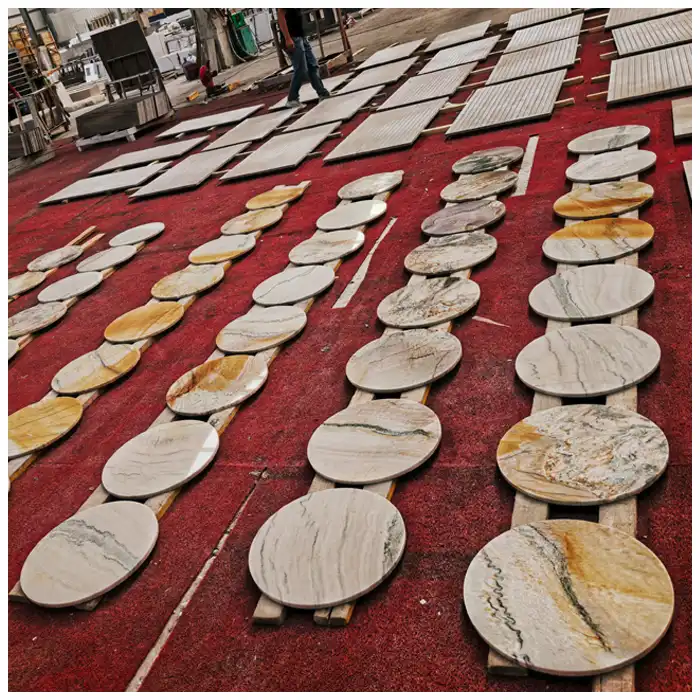
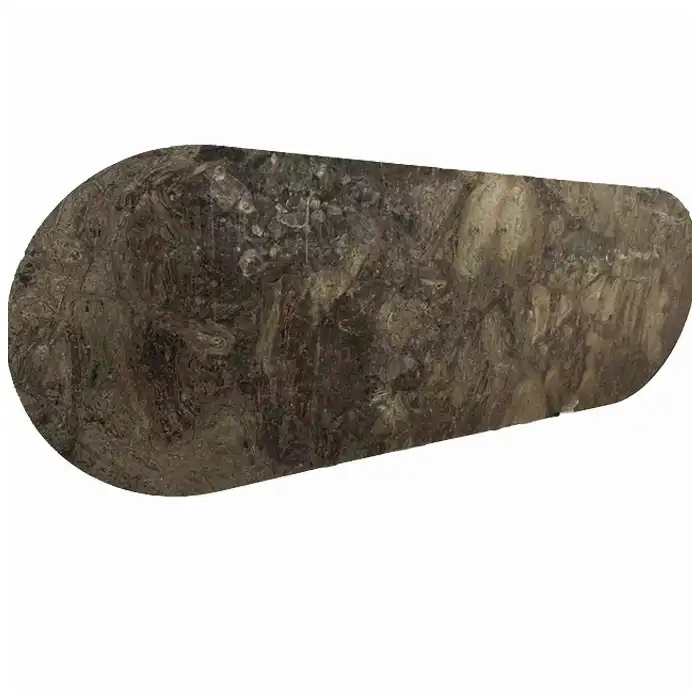
Furniture brings the eye close. A fine fissure, small resin area, or color cloud that disappears on a wall can become the feature beside a plate or book. Select table crops from seated height, inspect edges under side light, and coordinate the base with the material engineer or fabricator.
Frequently Asked Questions
1. What colors can light green marble show?
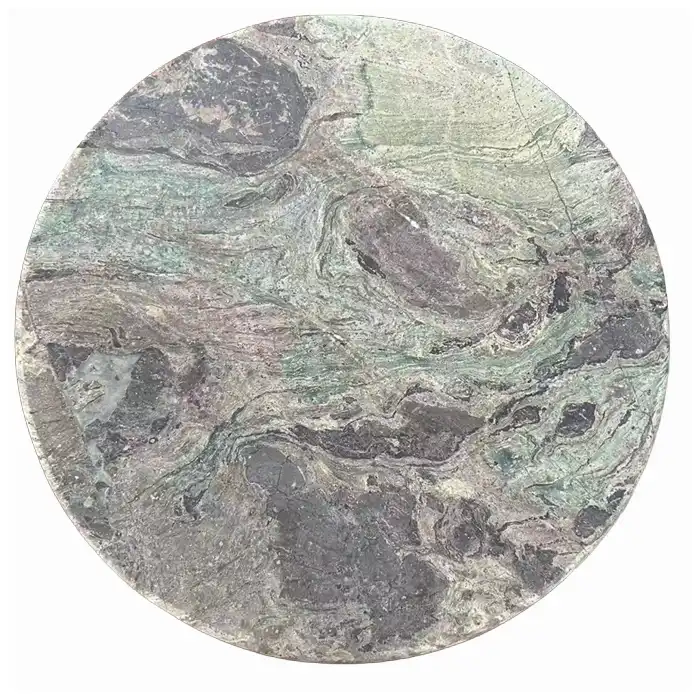
Depending on the actual stone and light, it may read as sage, mint, grey-green, cream-green, or a mix with white and darker mineral movement.
2. Is light green marble suitable for a feature wall?
Yes when the full-slab movement, joints, openings, finish, support, repairs, and viewing distance are planned from the actual faces.
3. Can it be used for a dining or coffee table?
It can, provided the selected crop suits the object and the thickness, edge, support, repair visibility, finish, and care needs are resolved.
4. Should pale green marble be polished or honed?
Polish may deepen color and reflection; hone may soften both. Compare current samples under the room light and inspect repair visibility before choosing.
5. What should happen if the installed stone looks more mint or more cream than approved?
Photograph the whole surface under known light first. Pause any color treatment or cleaning while the record is made. Then send the photographs, the slab IDs, and the original full-face approval record to your supplier, so both sides can compare lamp temperature, adjacent finishes, and finish against the approved face.
Quick-Reference Checklist for light green marble
- View full slabs under diffuse and side light.
- Compare green undertone beside room materials.
- Map quiet zones and darker bands.
- Test current polished and honed samples.
- Overlay joints openings edges and supports.
- Reserve companion material by location.
Final Conclusion
Pale green stone succeeds through undertone, mineral depth, full-face balance, finish, crop, edges, light, and companion material. Quiet does not mean anonymous; it means the composition has room to unfold. The chosen light green marble should keep its calm after the crop, edge, joint, finish, and room light have changed the way we see it.
The veins will tell you where the calm ends and the movement begins, and that boundary is the one MQ STONE follows before turning the slab into architecture.
References
- 大理石, Wikipedia.
- Standard Terminology Relating to Dimension Stone, ASTM International.
- Standard Specification for Marble Dimension Stone, ASTM International.
- Natural Stone Finishes Technical Guidance, Natural Stone Institute.
- Stone Selection and Use Guidance, Natural Stone Institute.
- In Materia: Living Materials, Maison and Objet.
- Materials and Design Coverage, Dezeen.
- Search Essentials, Google Search Central.