Choosing a Stone Dining Table Finish under Real Dining Light
Stand a quartzite sample beneath a narrow pendant and the polished face catches one white blade of light. Tilt the same piece toward a window and grey-green crystals begin to separate inside the field. Hone it, and the reflection quiets while the mineral structure moves forward. A stone dining table finish does not simply change shine. It changes which part of the stone speaks first.
I approve finish with the room, not against a warehouse ceiling. The table will be seen at seated height, crossed by daylight, touched at the edge and cleaned after dinner. True luxury is something you never get tired of looking at, and that requires the surface to remain convincing after the first dramatic photograph.
Choose the Stone Dining Table Finish from the Actual Slab
について Stone Dining Table guide begins with material, dimensions, support and use. Finish comes after the actual slab is chosen because two stones sold under one trade name can respond differently. Crystal size, mineral boundaries, fissures, resin treatment and darker inclusions all affect the finished face.
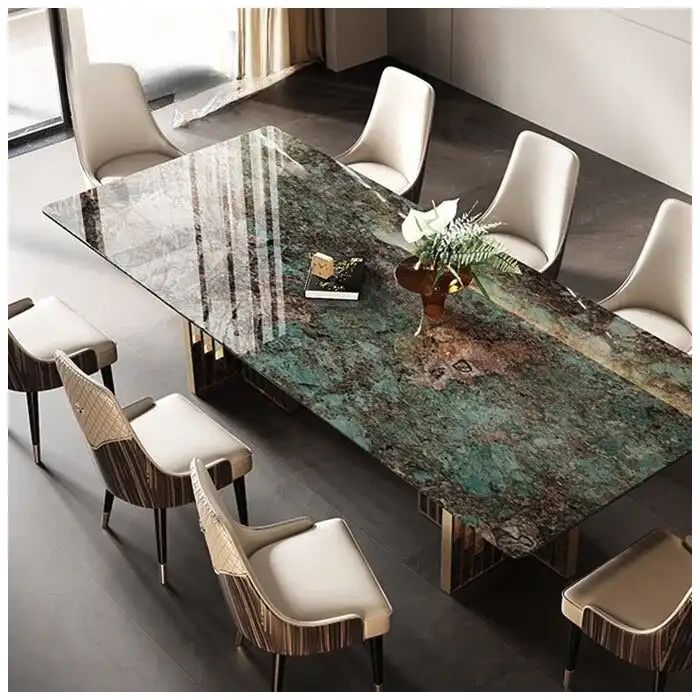
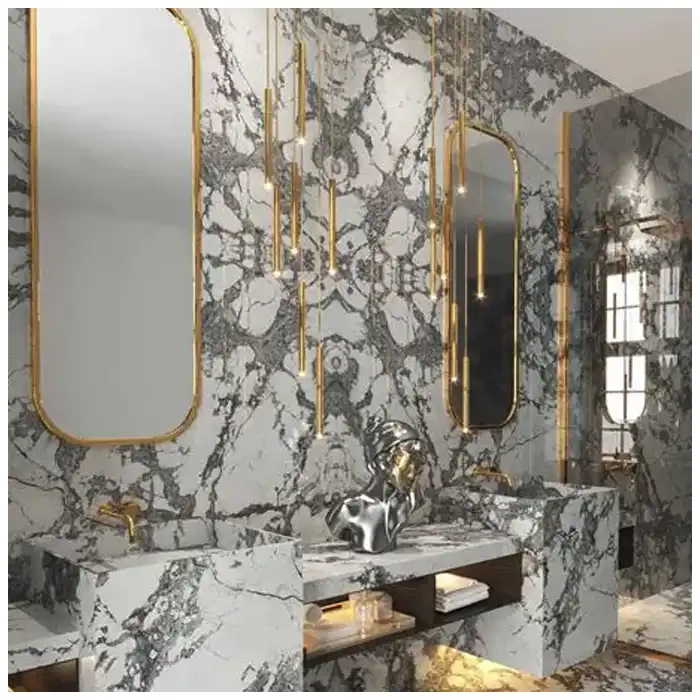
The veins will tell you where the finish belongs. Broad quartz-rich movement can retain depth under a low-sheen treatment, while very fine calcite veining may read softer and more continuous. I ask the fabricator for samples cut from representative areas, including a quiet field and a strong vein, rather than one convenient corner.
Polish reveals depth and reflection
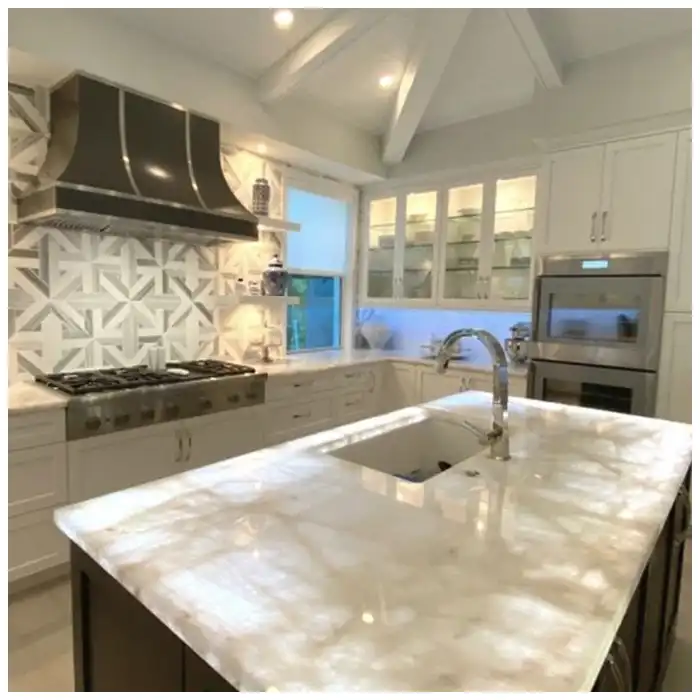
A polished stone table often shows the greatest apparent depth because the smooth face reflects light clearly while allowing color and crystal boundaries to read beneath it. Dark minerals become inkier. Pale quartz can look almost wet. The drawback is equal honesty: fingerprints, rings, fine scratches and local etching may be more visible in reflected light.
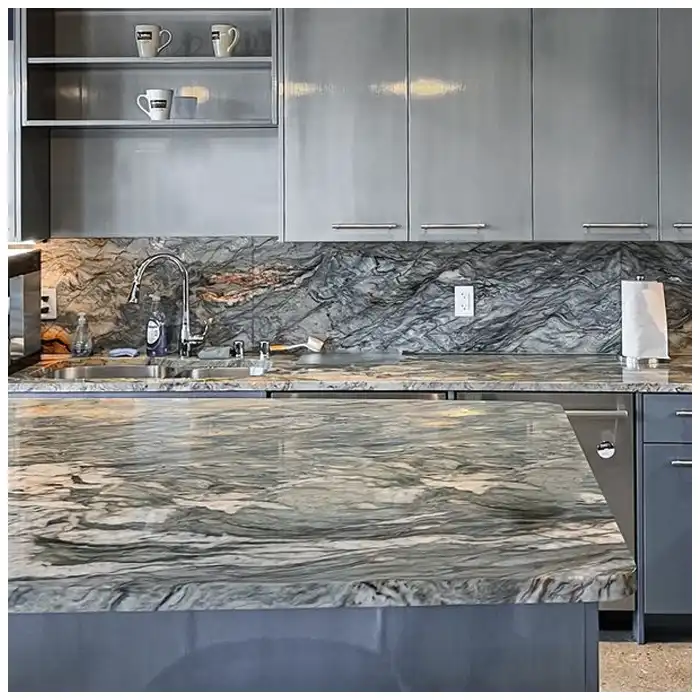
On an Aqua Vulcan quartzite table, polish can pull blue-green mineral zones away from the charcoal field. The movement resembles a current under dark glass. The visual depth comes from the stone’s crystalline structure and the smooth optical surface, not from a printed layer.
Hone reduces glare without erasing geology
A honed stone dining table diffuses the pendant reflection and gives the hand a quieter contact. Pale materials may read slightly softer; dark stones can show fingerprints, oils or uneven wiping in another way. Honed does not mean maintenance-free. It changes the marks the eye notices.
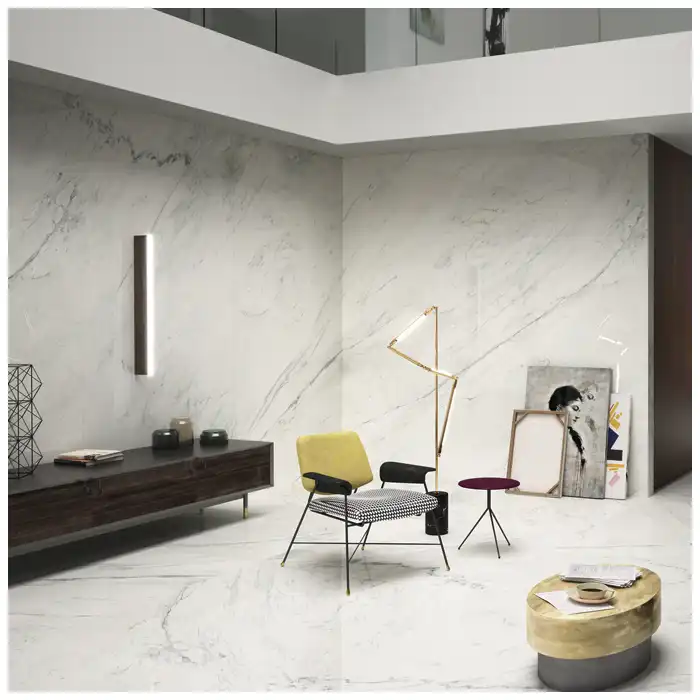
On white quartzite, a hone can turn a sharp silver vein into something closer to pencil under paper. The mineral boundary remains, but glare no longer interrupts it. This stone has been waiting for millions of years, and a restrained finish can let that time feel less theatrical and more architectural.
Texture gives shadow a physical edge
Leathered quartzite table surfaces use controlled texture to break reflection and emphasize harder and softer mineral responses. The hand can feel low relief. Side light creates tiny shadows that move as the viewer walks past. Texture must remain suitable for dining cleanup, glassware stability and the intended edge.
The word texture describes visual and tactile character, but fabrication controls its scale. A deep decorative treatment suitable for a wall may trap food residue on a dining top. I ask for a full-size practical sample, not just a beautifully lit close-up.
Test the Surface under the Room’s Three Main Lights
Dining room lighting stone decisions need at least pendant light, side daylight and the evening ambient scene. The same polished face can show a bright hotspot at noon, a long warm reflection at dinner and almost no depth under diffuse ceiling light. The lighting plan and table position belong on the finish approval sheet.
I set samples flat at approximate table height. Vertical sample boards make polished material look clearer because they reflect a different field. Seated and standing views also differ. At seated height, the pendant reflection may sit directly between diners, while the standing view sees more of the stone.
I mark the pendant centerline, mounting height, beam spread and dimming scene on the room sketch. The stone dining table finish sample then moves through the center, edge and seat positions. This simple route reveals whether one bright reflection follows a diner across the table or remains outside normal sightlines. It also shows whether a textured face becomes visually uneven where side light grazes it.
Use color temperature as a label, not a promise
A 3000K lamp generally reads warmer than a 4000K source, but fixture spectrum, dimming, surrounding color and camera processing affect the result. I label the actual fixture and setting used. I do not claim that a Kelvin number alone predicts how every mineral will appear.
Labradorite provides a sharper warning. Its optical flashes can appear and disappear with viewing angle because light interacts with internal mineral structures. A Lemurian Labradorite table top may show blue fire to one seat and a smoky field to another. Finish and orientation must be reviewed together.
Check the edge in the same light
The face and edge rarely receive identical finishing pressure. A laminated edge can show a joint; a eased solid edge can become slightly brighter at the arris; a textured face may transition to a smoother touch edge. I approve the junction, not only two separate samples.
A stone dining table finish mock-up includes the proposed edge radius and underside return. Pendant light often catches the arris before it reaches the field. That bright line can make a thick top feel precise or make an inconsistent edge impossible to ignore.
Compare Finish Decisions with Real Use
| Decision | ポリッシュ | 本磨き | Textured |
|---|---|---|---|
| Reflection | Clear and directional | Diffuse and quiet | Broken by relief |
| Mineral depth | Often most visually pronounced | Softer but still legible | Emphasizes relief and contrast |
| Daily marks | Fingerprints and gloss changes may show | Oils and uneven wiping may show | Residue can collect in deeper texture |
| Glassware | Stable on flat face | Stable on controlled flat hone | Needs practical stability test |
| Repair matching | Gloss level must blend | Hone direction and sheen must blend | Texture tooling must be reproducible |
The table is not a winner list. A polished calcite-rich marble still needs protection from acidic foods; honing does not remove that mineral response. A quartz-rich table may resist common scratching better, but edges, repairs and resins still need care. Finish modifies performance at the surface; it does not replace material identity.
The Hard-Won Lesson: A Vertical Sample Can Approve the Wrong Reflection
A polished sample held upright under showroom lights can look deep and calm. Place the same sample flat beneath a concentrated pendant and the lamp becomes a bright disc in the center. The finish did not change; the viewing geometry did.
The Lesson: Approve the finish flat, at table height, under the actual lighting scene.
Build a Finish Mock-Up That Can Be Reproduced
The mock-up identifies slab, face, location, finish process, abrasive sequence or tooling reference, edge treatment and sealer where specified. The fabricator keeps a signed control. “Matte” is not enough. Two matte surfaces can differ in sheen, texture and color.
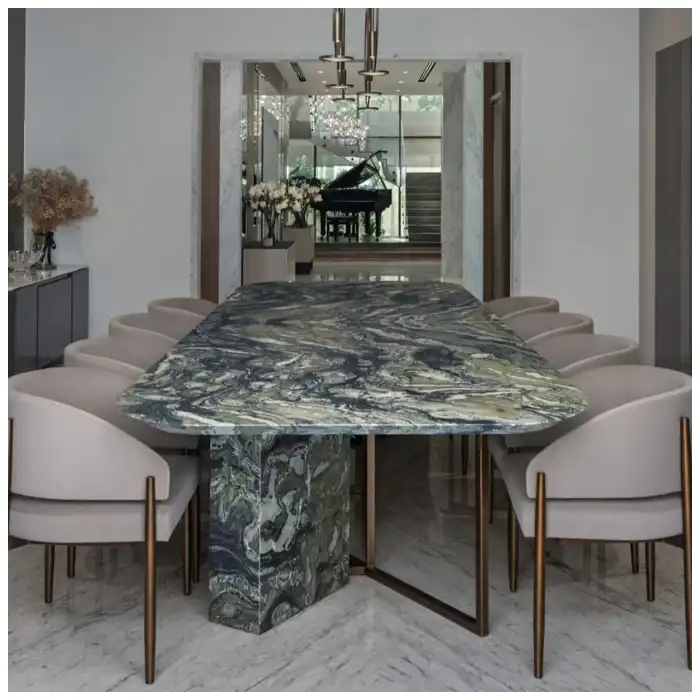
Each control receives a photograph, physical label and storage sleeve that does not transfer adhesive. I note whether the sample was dry, sealed or recently cleaned when approved. A stone dining table finish cannot be reproduced from a social-media image whose white balance and sharpening are unknown. The fabricator needs the physical control and the process reference together.
The mock-up should be large enough to include a mineral boundary. A palm-sized quiet field may approve sheen but conceal how the finish crosses a crystalline vein, resin fill or mica-rich zone. I prefer one broader sample with two geological conditions over six tiny chips that all came from the same pale corner.
について Stone Top Dining Table planning route connects that control to thickness, support and fabrication. Finish should be approved before final edge production because reworking the face can alter arrises and finished dimensions.
Include common dining exposures
I test only with methods authorized for the material and project: water spotting, cooking oil, colored beverages and acidic food where relevant, followed by the intended cleaning method. The goal is not to torture a sample. It is to show the client what a prompt cleanup leaves on that finish.
A stone dining table finish record separates staining, etching, scratching and temporary wetting. These are different observations. Darkening while wet may disappear after drying. A calcite etch will not clean away. An oil mark may depend on sealing and response time.
Check repair visibility before production
Natural slabs may contain factory resin, filled fissures or areas that require fabrication repair. Polish can reveal a resin line through contrast; hone may soften it; texture can expose hardness differences. I ask for representative repaired areas in the mock-up when the slab shows them.
The veins will tell you where a repair can disappear into movement and where it will sit alone in a quiet field. Slab layout should not place a known repair directly under the pendant’s strongest reflection without approval.
I also run a dry cloth along the proposed edge. The face may be beautifully honed while the underside arris remains sharp or the edge polish feels noticeably slicker. A stone dining table finish is experienced by the hand at every seat, especially on a round or oval top where diners contact more of the perimeter. The edge sample must include the final radius, not a square laboratory cut.
Protect the Approved Finish through Fabrication and Delivery
The finish control stays with production. Final inspection uses clean raking light and diffuse light, checking sheen consistency, tool marks, edge transitions, repairs and contamination. Protective material must not trap moisture or transfer adhesive to the face.
If the finished top differs, first photograph the complete table and close areas under the approved light. Second, stop polishing, sealing or packing that could alter evidence. Third, compare the slab map, signed mock-up and process record with the fabricator before agreeing on correction.
A stone dining table finish correction needs its own sample. Local polishing can create a halo; local honing can show direction; texture repair can widen the affected area. I would rather accept a natural mineral transition than chase an invisible repair until the surrounding face changes.
Repair matching is judged from the same seated positions used at approval. A gloss meter or process record can support the decision, but the dining light still reveals whether the corrected zone moves differently as people walk around it. The team defines the acceptable viewing condition before fabrication, not after disagreement begins.
For future maintenance, I keep the finish name, approved cleaner, sealer where used, repair contact and control sample location in the furniture record. The table owner should not have to guess whether “satin” meant honed, brushed or a proprietary texture five years later. This stone has been waiting for millions of years; its care file can survive more than one handover.
Frequently Asked Questions
1. Which stone dining table finish hides fingerprints best?
No finish hides every mark. Polish can show fingerprints in reflection; hone can show oils or uneven wiping; texture can retain residue. Test the actual stone with the intended light and cleaning method.
2. Does honing make marble resistant to etching?
No. Honing reduces reflection and may make some gloss changes less visually sharp, but calcite-rich marble can still react with acids. Material chemistry remains.
3. Can a leathered finish be used on a dining table?
Yes when the texture is controlled for cleaning, glassware stability, writing and touch. Approve a practical sample from the actual slab and include the edge transition.
4. Why does a polished slab look different under pendant light?
The smooth face produces directional reflection. Fixture size, angle, color temperature and table position affect what the viewer sees. Approve the sample flat at approximate table height.
5. What should happen if the finished table does not match the sample?
Document both under the approved lighting, stop further surface work, and compare the slab location, finish process, edge detail and signed control with the fabricator before correction.
Quick-Reference Finish Approval Checklist
- Cut finish samples from representative areas of the actual slab.
- View every sample flat at approximate table height.
- Test pendant, daylight and evening ambient lighting scenes.
- Include the proposed edge and underside transition.
- Record practical dining marks and the intended cleaning method.
- Sign one reproducible finish control for fabrication.
- Inspect the finished top before sealing and packing changes evidence.
Final Conclusion
A stone dining table finish should be approved on the actual slab, flat under real dining light, with the proposed edge and a practical care test. Polish, hone and texture each reveal a different relationship between mineral depth, reflection and touch. MQ STONE keeps that choice tied to the stone’s own structure, because true luxury is something you never get tired of looking at after the lights come on.
References
- Dimension Stone Design Manual, Natural Stone Institute.
- Natural Stone Care and Maintenance Guidance, Natural Stone Institute.
- ASTM C119 Standard Terminology Relating to Dimension Stone, ASTM International.
- Natural Stone Surface Finish Guidance, Natural Stone Institute.
- IES Lighting Handbook, Illuminating Engineering Society.
- Applicable Stone, Sealer and Fabrication Technical Data, Product Manufacturers.
- Approved Slab Map, Finish Mock-Up and Lighting Schedule, Applicable Project File.