
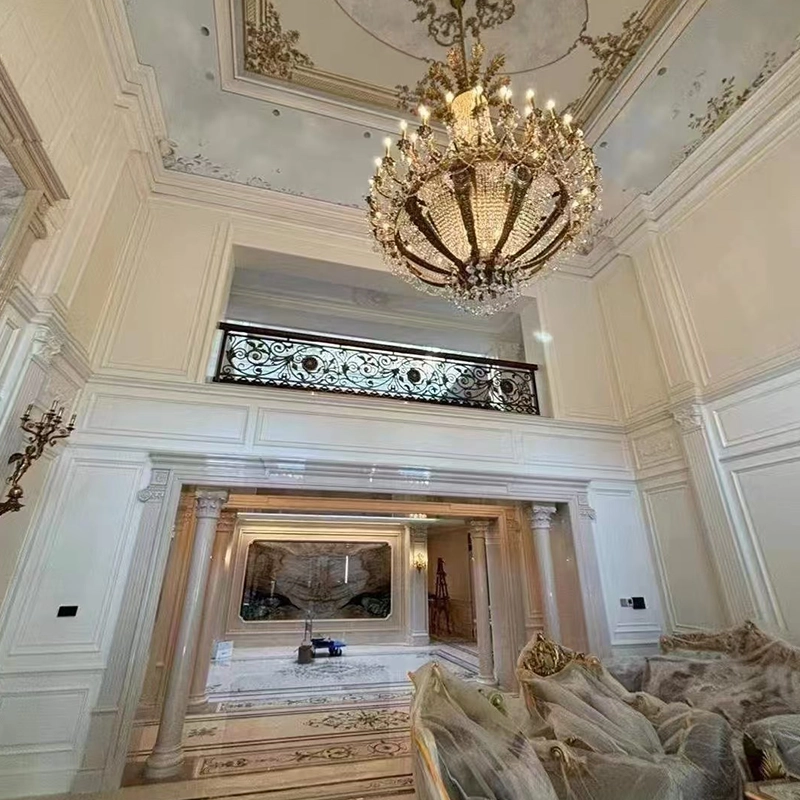
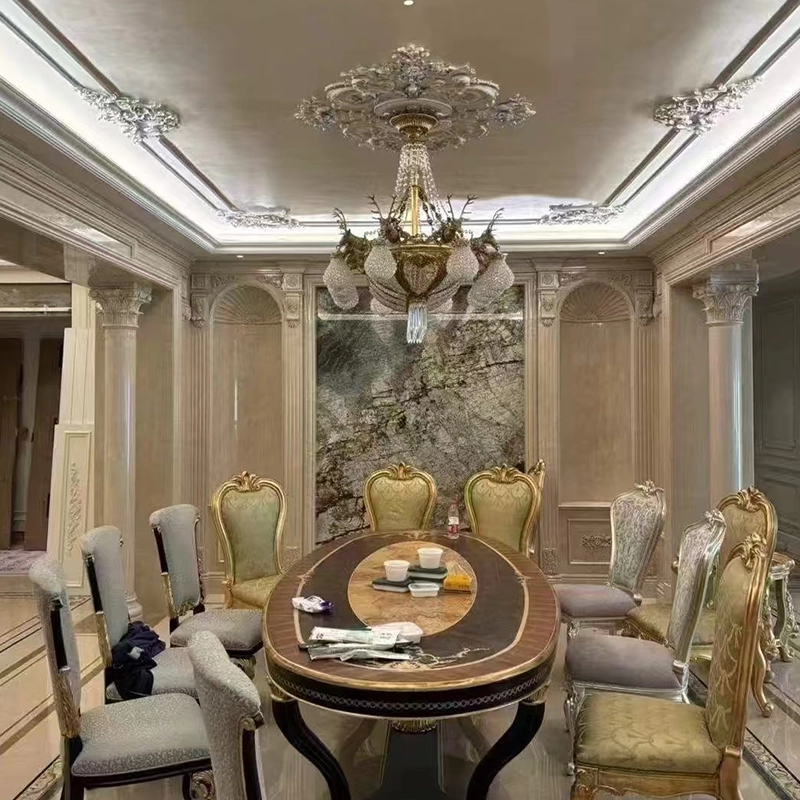
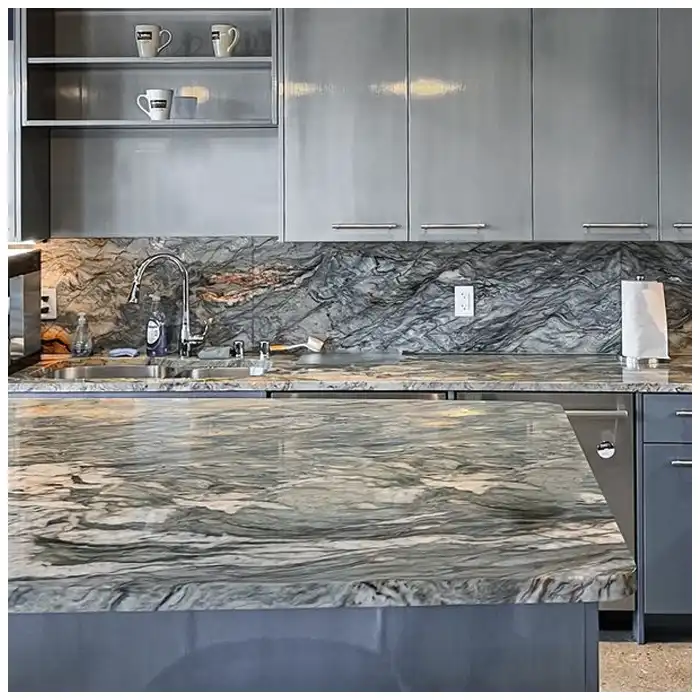
Magma Blue quartzite does not behave like a flat blue surface. A single face may move from deep charcoal through green-grey mineral fields into bright blue passages, and each zone changes when it meets polish or raking light. MQ STONE maps that full field before choosing a feature-wall crop, so the finished composition uses the stone’s real scale instead of repeating one attractive detail. My compositional rule is simple: Choose the full sequence around the focal color before approving the focal color itself.
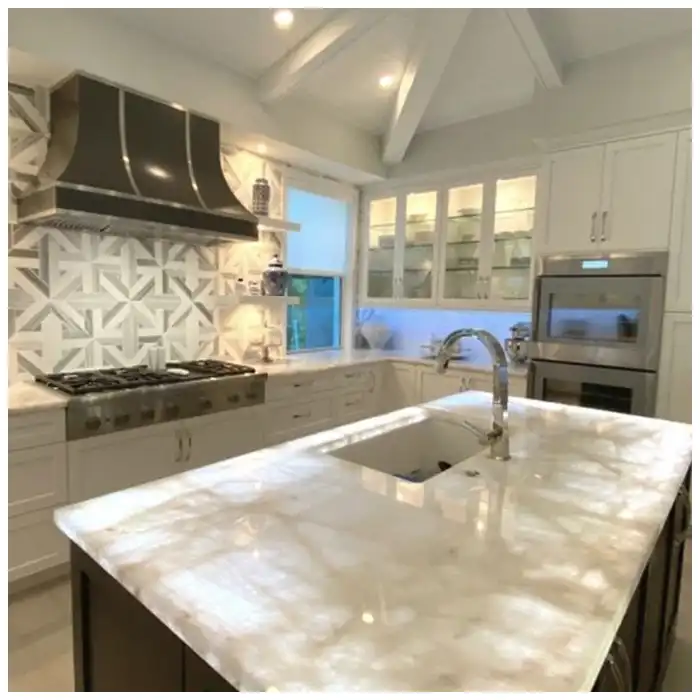
Cristallo Bianco quartzite can look almost still in diffuse daylight, then show a pale crystalline depth at the edge when a side light catches it. That change is why a pedestal sink cannot be designed from a cropped photo alone. MQ STONE reads the full face, the selected cutout, the support zone, and the edge light together before a rare slab becomes a lasting object. My compositional rule is simple: Overlay every opening before you fall in love with a single bright passage.
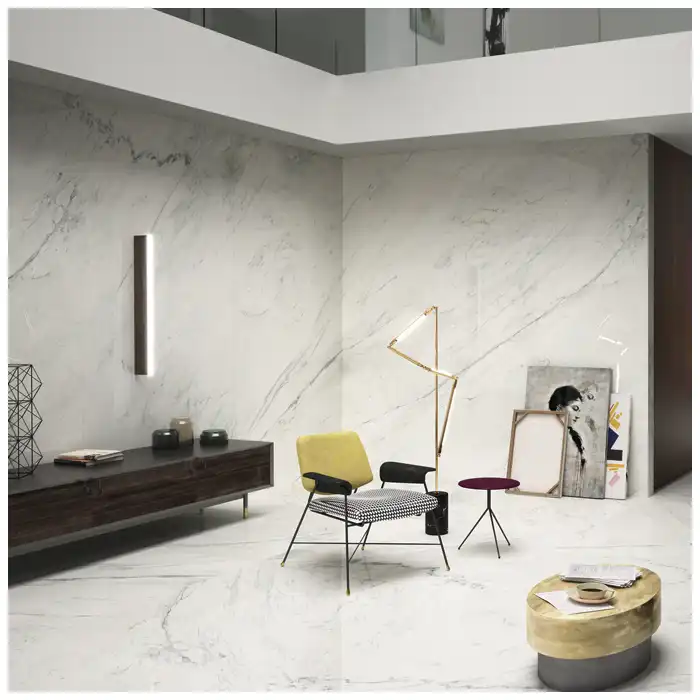
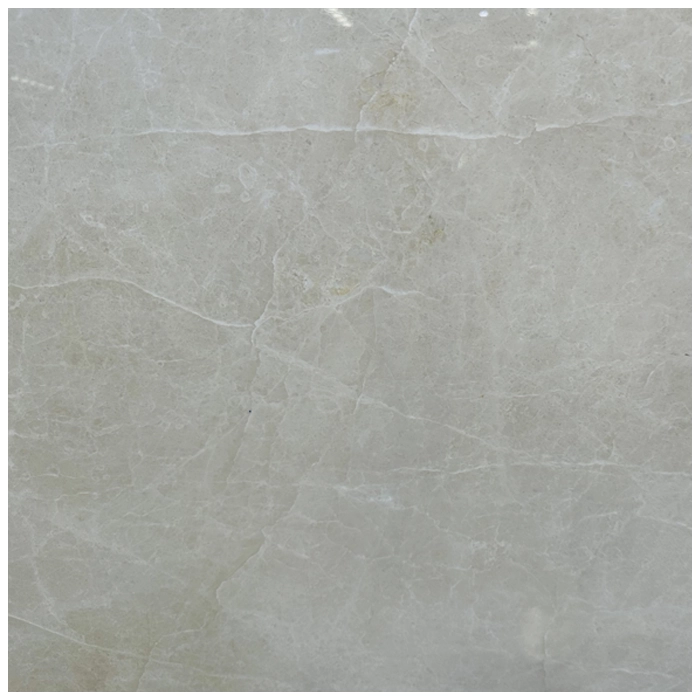
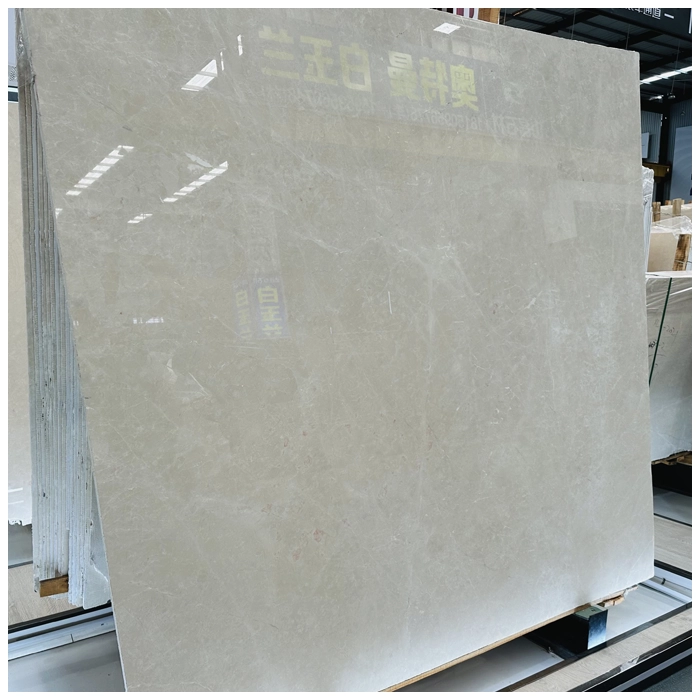
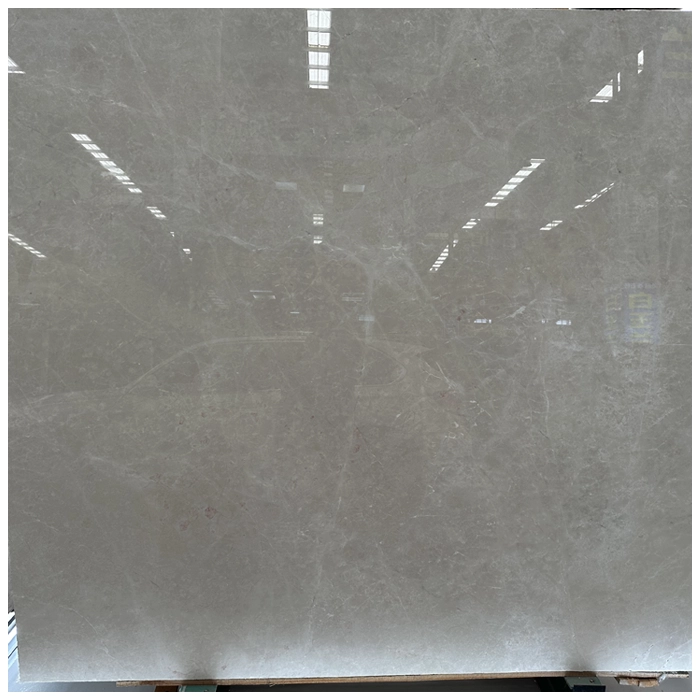
Ariston White can appear calm and pale under diffuse light, then reveal crystalline sparkle, faint grey or warm lines, and greater depth as the viewing angle changes. Alex Zheng studies that movement across full faces before choosing finish, crop, joint positions, edges, and architectural or furniture scale. MQ STONE treats light as part of material selection, while keeping geological description separate from verified technical performance and the exact supply under review. My compositional rule is simple: approve polished stone from the actual viewing path, not only beneath a sample lamp.
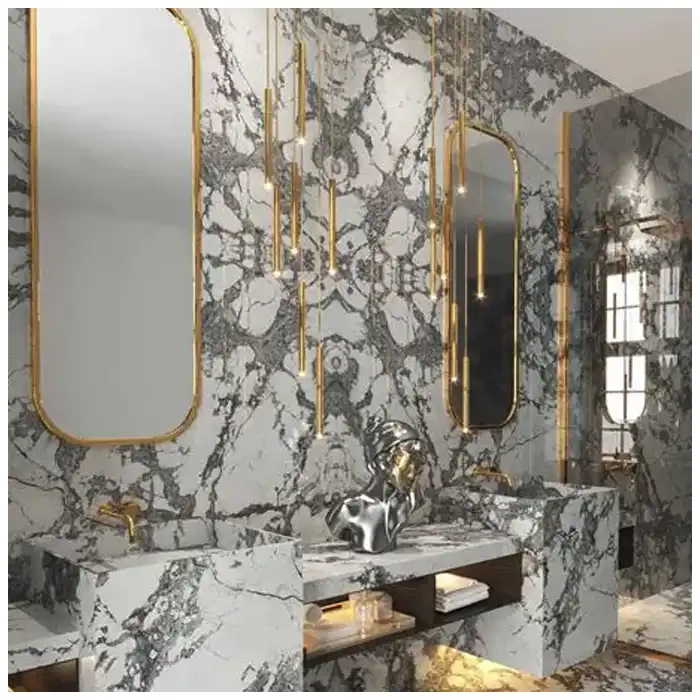
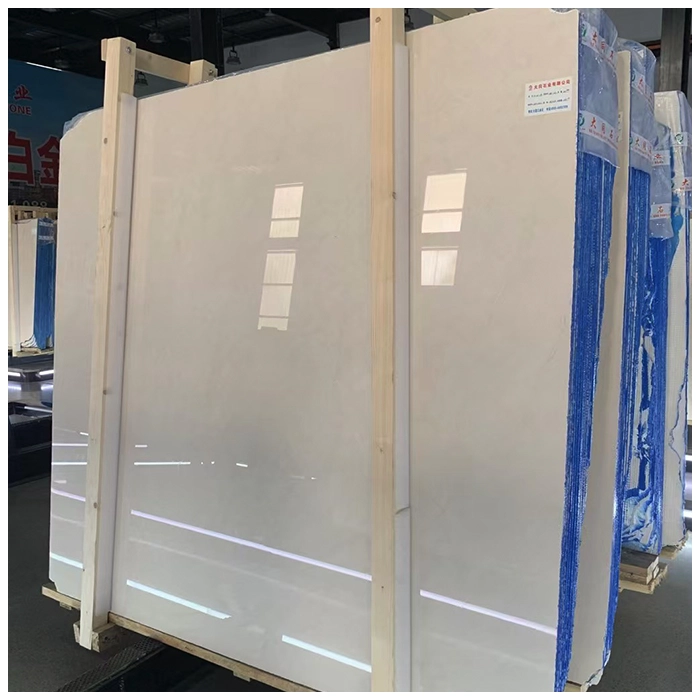
Invisible White is often chosen for restraint, yet the full slab is not blank. Fine grey lines, pale crystalline clouds, occasional stronger passages, and changing reflection give the surface a depth that a small sample cannot carry. I read the face from room distance and close range, then place the crop, joints, edges, openings, finish, and companion pieces around that movement. MQ STONE protects quiet composition without flattening natural variation. My rule is simple: draw the quiet composition before optimizing panel yield.
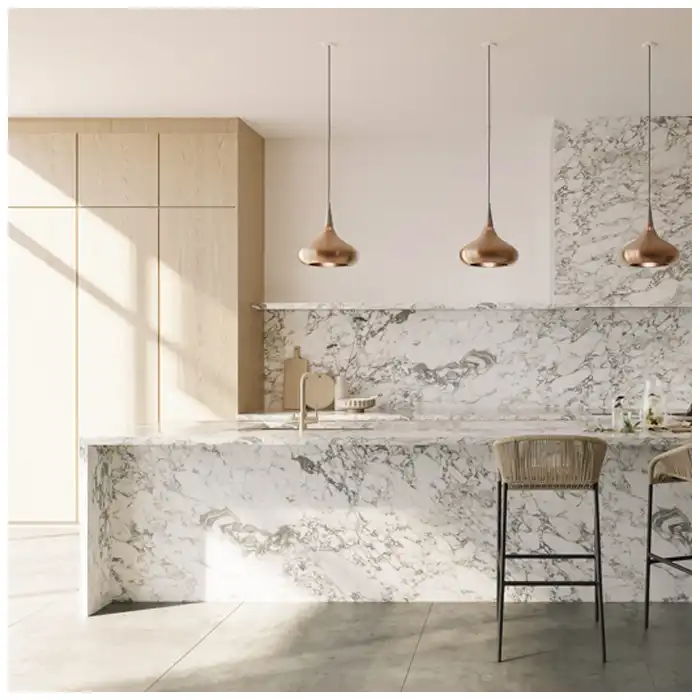
A kitchen island removes stone for sinks or hobs, turns the face over waterfall ends, and brings the edge within touching distance. Arabescato Corchia needs a full-scale crop that protects its white pauses and carries selected movement through the principal view. Alex Zheng studies openings, seams, mitres, repairs, thickness, support, light, and companion pieces before cutting. MQ STONE translates the slab’s geological drawing into an object that remains coherent from standing, seated, and approach positions. That is the visual record MQ STONE carries from full-slab selection into fabrication.
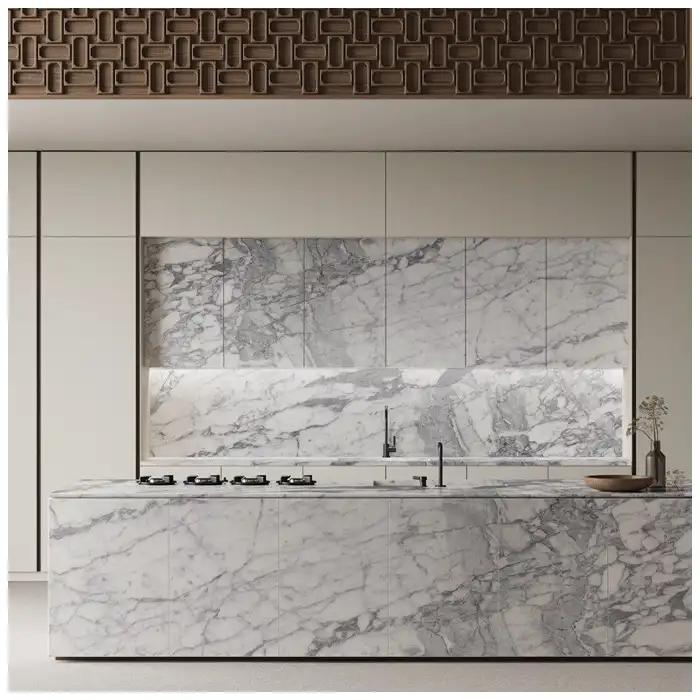
Quick Summary: Arabescato Corchia vs Arabescato Orobico is a choice between different visual weights, not a contest for the louder
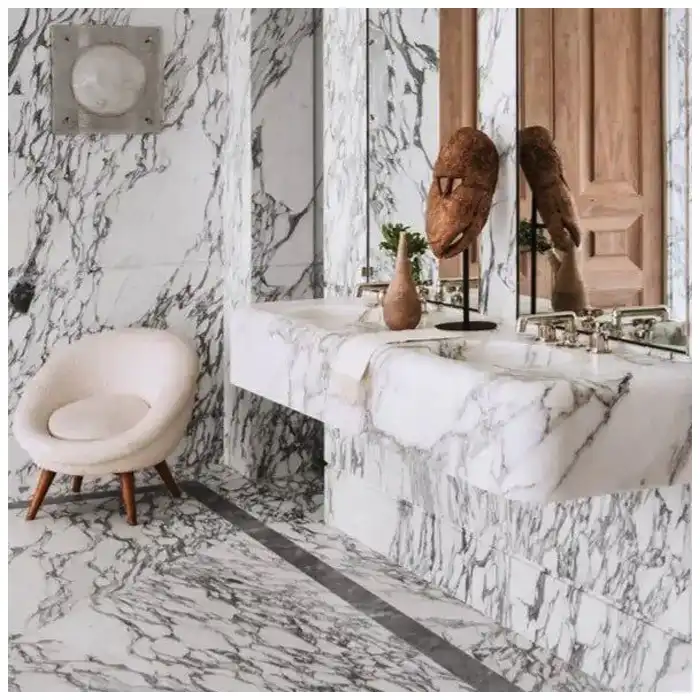
Arabescato Corchia can hold broad white pauses, dense charcoal drawing, soft grey wash, and occasional warmer mineral passages in one face. The slab deserves to be read from room distance before it is divided into panels or furniture crops. Alex Zheng follows movement, crystal depth, finish, repairs, joints, edges, and light as one composition. MQ STONE keeps the geological character visible while translating the chosen face into an architectural layout the fabricator can actually preserve. That is the visual record MQ STONE carries from full-slab selection into fabrication.
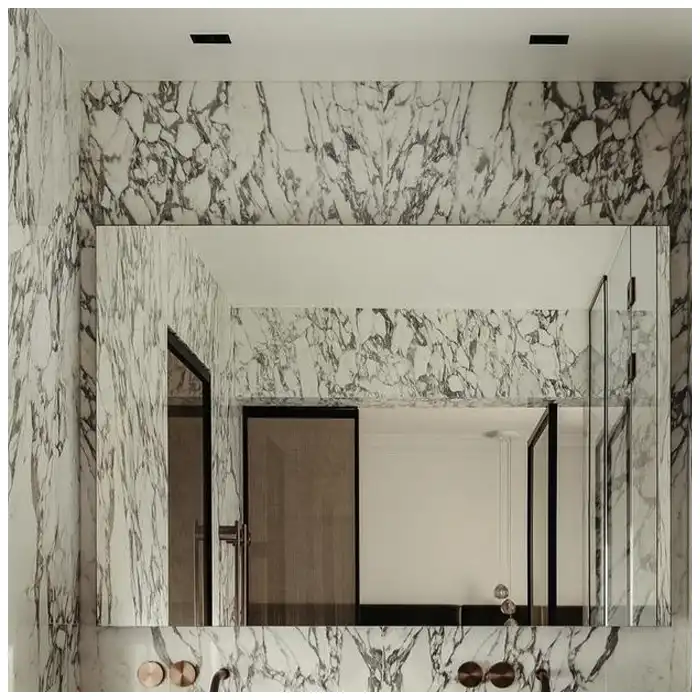
Grey movement can make a white bathroom feel composed, but it can also make a small room restless. Arabescato Corchia requires a plan for where the vein becomes the view, where it should soften, and how cuts around fittings affect the whole reading. MQ STONE starts with the slab.
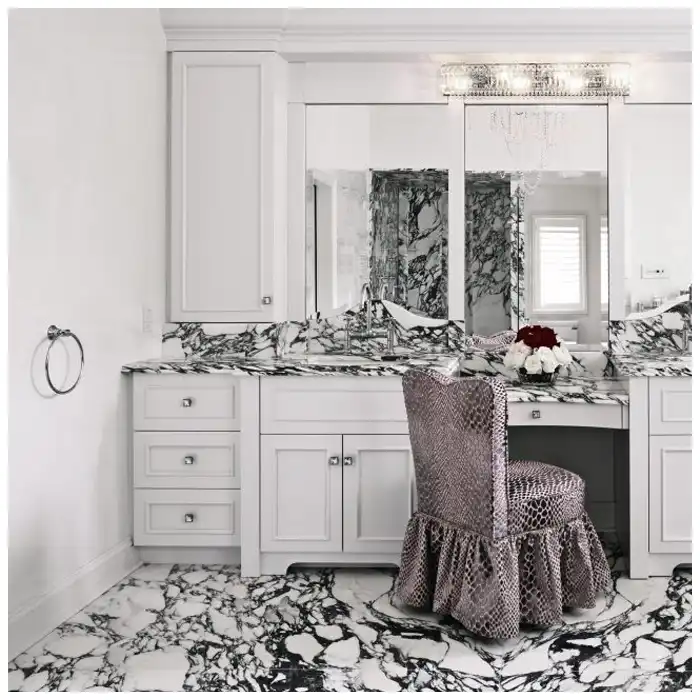
Honed marble does not simply mean matte. On Arabescato Corchia, it changes the way grey movement rests in the pale field, the way hands read the surface, and the way a repair may appear from different angles. MQ STONE looks at the full material rather than a finish label.
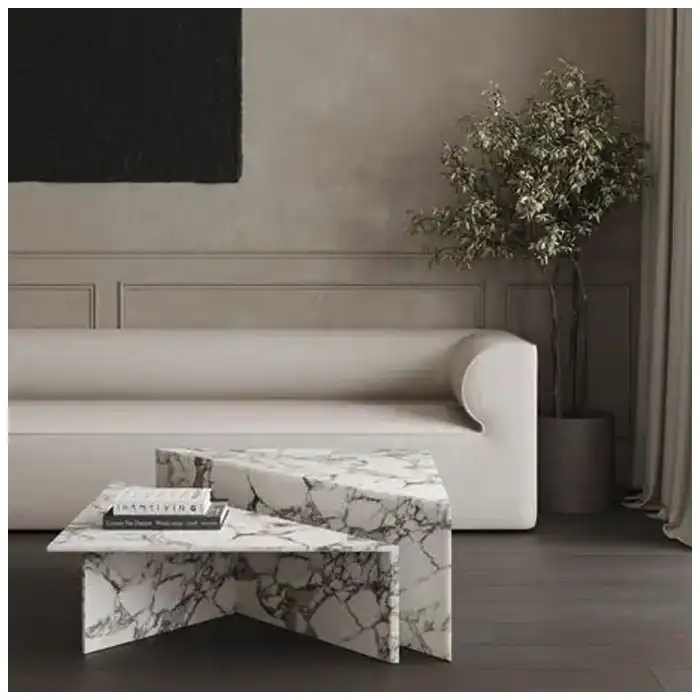
A low table puts the whole slab in your line of sight. Arabescato Corchia can make that surface feel like a drawn landscape of soft grey movement, or like a confused patchwork if the cut ignores the block. MQ STONE considers the slab, the edge, and the room together.
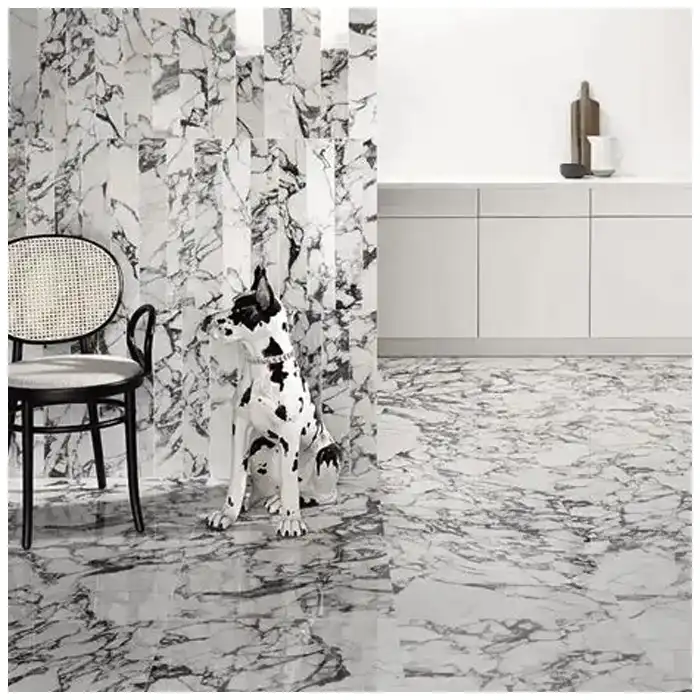
An Arabescato Corchia wall panel field is decided by seam positions and by how side light reads a bookmatch. MQ STONE sets the elevation and the pairing before the slab is lifted into place.
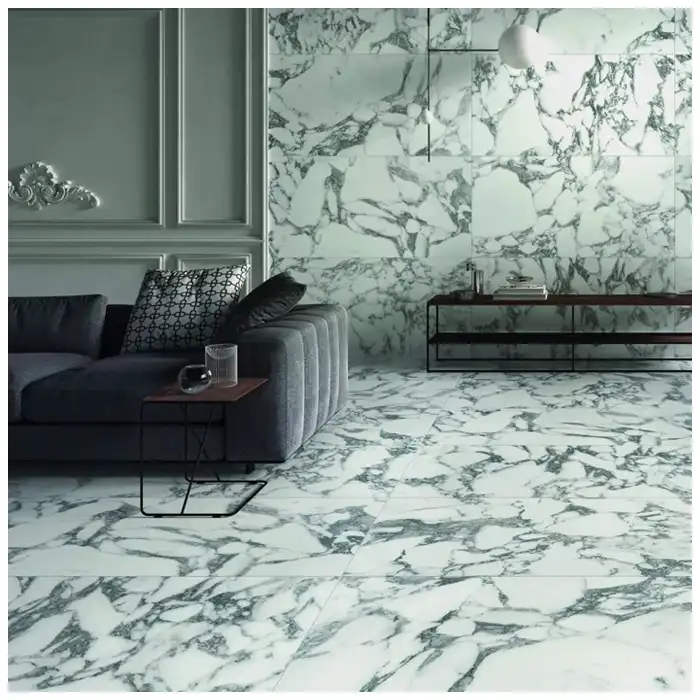
Arabescato Corchia floor layout starts with the datum, the room axis, and the threshold. Plan joints, panel widths, and the cutting order before the first tile is set.
Short Description: An Arabescato Corchia floor layout is a composition of datum lines, joints, and transitions read from the doorway inward. MQ STONE plans the sequence of cuts before the first tile is laid.