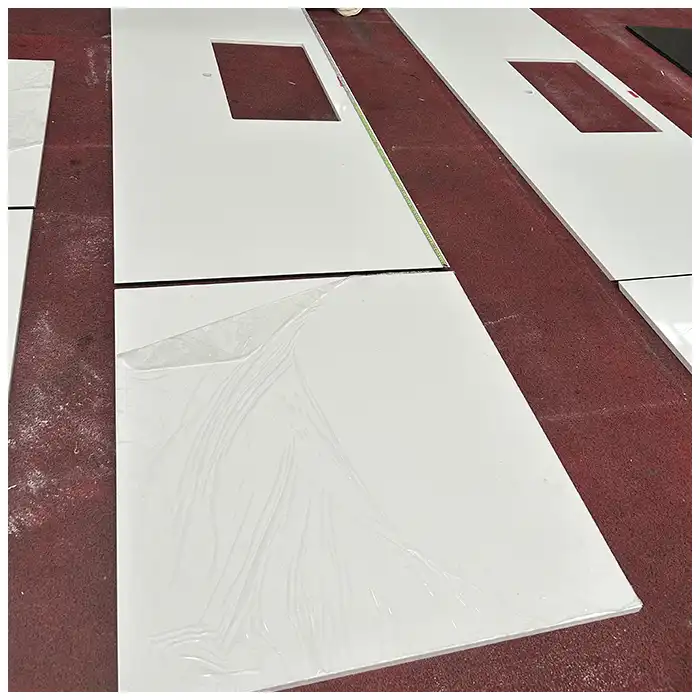
Port Laurent Marble Slab: Gold Veins, Black Depth, Finish, and Full-Face Placement
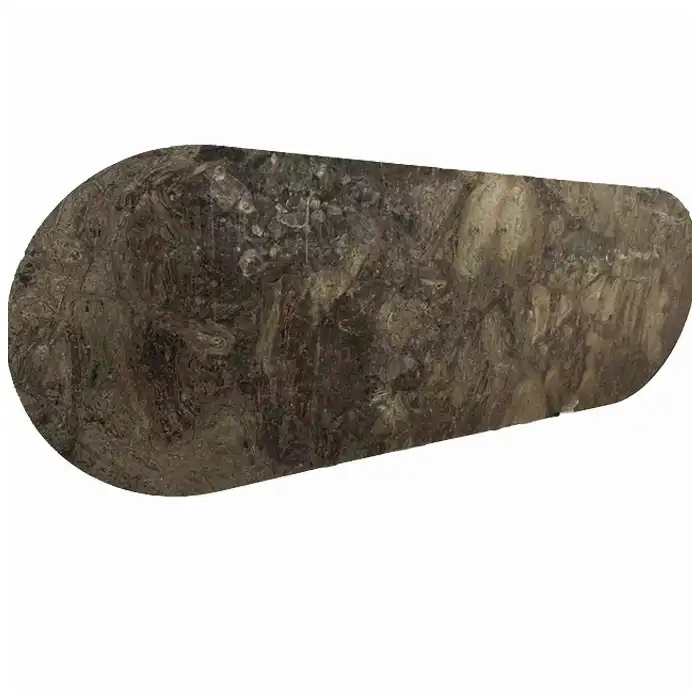
The first thing I notice in a strong Port Laurent face is not blackness. It is depth. Under raking light, the field shifts toward espresso and charcoal while a warm ochre line passes through it like a fine stroke of metal leaf. Move one step and the pale calcite beside it appears, quieter but sharper.
A port laurent marble slab needs that complete reading before cutting. I study the dark-field range, vein hierarchy, natural openings, resin, edge zones, finish, and intended light at the scale of the finished surface. A hand sample can prove almost none of this.
True luxury is something you never get tired of looking at. Here, that quality comes from restraint: enough gold movement to hold the eye, enough uninterrupted dark ground to let the line carry weight.
Read the Dark Field before the Gold Veins in Port laurent marble slab
At a reception wall seen from distance, I compare the quiet and force around the black-brown background depth. I view every slab upright and flat while the slab can still be seen as one geological field. An isolated photograph misses how a small crop exaggerates vein frequency. Across a reception wall seen from distance, crystals, healed fissures, and mineral bands change tempo; the selected area must still hold together at wall, table, or fireplace scale.
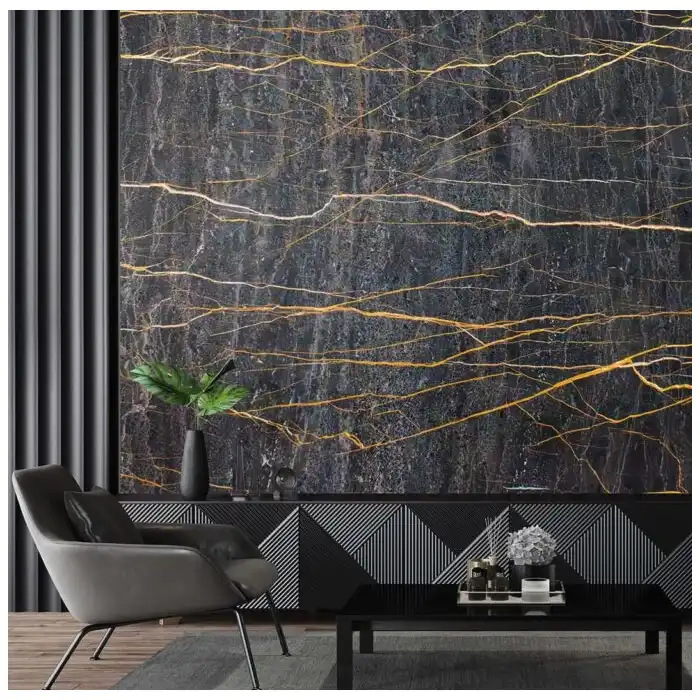
The cutting release carries joint and crop overlay and edge mock-up. The pair keeps fabrication from reducing the slab to disconnected dimensions. Later interventions do not have to reinterpret the intent behind fine white calcite line.
Walking past the face, I watch the surface response under side light. I trace the dominant vein across the face and read surface response under side light for changes in depth, resin, texture, and mineral structure. The light exposes whether a small crop exaggerates vein frequency. At a reception wall seen from distance, the detail must still belong after joints, openings, edges, and supports enter the composition.
I place this reading within Luxury Natural Stone Slabs Guide, where full-face character, finish, fabrication, scale, and authentic material value remain connected.
Separate Primary Movement from Fine Mineral Lines
At close range, I inspect the black-brown background depth. I compare polish and hone on current material and read black-brown background depth for changes in depth, resin, texture, and mineral structure. This matters because too many gold lines make the field restless. At a fireplace at eye level, the detail must still belong after joints, openings, edges, and supports enter the composition.
When I inspect a fireplace at eye level, I map the warm ochre primary vein before choosing a crop. I trace the dominant vein across the face while the slab can still be seen as one geological field. The finished object suffers when too many gold lines make the field restless. Across a fireplace at eye level, crystals, healed fissures, and mineral bands change tempo; the selected area must still hold together at wall, table, or fireplace scale.
In Port Laurent marble, I look for the mineral depth and full-face movement that will remain persuasive after cutting and installation.
For port laurent marble slab, judge dark field and warm movement as one balanced face.
Choose a Finish That Preserves Depth
While viewing a dining table under a pendant, I follow the fine white calcite line across the whole face. I compare polish and hone on current material while the slab can still be seen as one geological field. Ignore that rhythm, and honing flattens the darkest passages. Across a dining table under a pendant, crystals, healed fissures, and mineral bands change tempo; the selected area must still hold together at wall, table, or fireplace scale.
Before fabrication, I pair repair location and side-light view and companion stock map. The first protects the visual intention; the second converts it into a usable shop reference. Returns and later additions can continue the direction established by resin in an open feature.
I examine the warm ochre primary vein. I test bookmatch and single-face layouts and read warm ochre primary vein for changes in depth, resin, texture, and mineral structure. A face-on image may hide the fact that honing flattens the darkest passages. At a dining table under a pendant, the detail must still belong after joints, openings, edges, and supports enter the composition.
| Decision point | Evidence to inspect | Release condition |
|---|---|---|
| Full face | Dark range, warm vein, pale lines, features | Composition remains balanced |
| Finish | Polished and honed samples under side light | Depth, glare, touch, and repairs accepted |
| Layout | Joint, crop, match, openings, returns | Primary movement remains legible |
| Fabrication | Edges, corners, cutouts, repair zones | Close details support the face |
| Companion stock | Offcuts mapped to visible locations | Future work can match movement |
The Hard-Won Lesson in port laurent marble slab: Do not cut the gold line out of the room
A slab can be chosen for one graceful ochre vein, then nested for yield until a fireplace opening removes its centre and two joints divide the rest. Every piece is usable, but the reason the slab was selected has disappeared.
The Lesson: Mark the visual centre before the cutting plan begins.
Place Joints around the Full-Face Composition
From another angle, I revisit the fine white calcite line. I set joints before nesting and read fine white calcite line for changes in depth, resin, texture, and mineral structure. The danger is that a joint severs the continuous warm line. At a slab beside a window, the detail must still belong after joints, openings, edges, and supports enter the composition.
As I look at a slab beside a window, I let my eye travel along the fossil-like pale marking. I test bookmatch and single-face layouts while the slab can still be seen as one geological field. The risk appears when a joint severs the continuous warm line. Across a slab beside a window, crystals, healed fissures, and mineral bands change tempo; the selected area must still hold together at wall, table, or fireplace scale.
With port laurent marble slab, select finish from current stone because depth and repair visibility change together.
Assign Edges, Cutouts, and Returns
During a check of a honed sample under diffuse light, I let the resin in an open feature set the pace of the slab. I set joints before nesting while the slab can still be seen as one geological field. A small crop can conceal the fact that a cutout removes the visual centre. Across a honed sample under diffuse light, crystals, healed fissures, and mineral bands change tempo; the selected area must still hold together at wall, table, or fireplace scale.
For the fabricator, I bring together project-light comparison and vein hierarchy sketch. Together they connect the admired full face to the object that will actually be made. Future work has a reference for carrying honed loss of depth into the same composition.
I lower my viewpoint toward the fossil-like pale marking. I place openings away from the visual centre and read fossil-like pale marking for changes in depth, resin, texture, and mineral structure. That moving view can reveal that a cutout removes the visual centre. At a honed sample under diffuse light, the detail must still belong after joints, openings, edges, and supports enter the composition.
I study Breccia Grey marble under side light before deciding where its crystalline passages should meet an edge, joint, or support.
View the Slab under Project Lighting
The second reading concerns the resin in an open feature. I inspect repairs under low side light and read resin in an open feature for changes in depth, resin, texture, and mineral structure. I become cautious when a pale repair becomes conspicuous on black. At a mitred corner at close range, the detail must still belong after joints, openings, edges, and supports enter the composition.
While reviewing a mitred corner at close range, I read the polished reflection from edge to edge. I place openings away from the visual centre while the slab can still be seen as one geological field. The composition weakens if a pale repair becomes conspicuous on black. Across a mitred corner at close range, crystals, healed fissures, and mineral bands change tempo; the selected area must still hold together at wall, table, or fireplace scale.
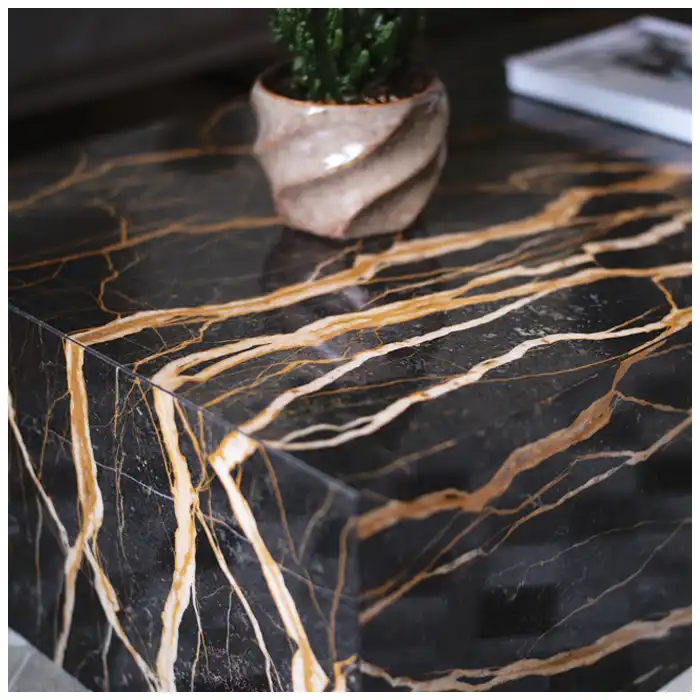
Before the crop is released, I return to Luxury Natural Stone Slabs Guide and ask whether the detail still preserves the larger natural-stone composition.
Keep Companion Material for Future Continuity
Returning to a reserved offcut beside installed work, I stand back before tracing the honed loss of depth. I inspect repairs under low side light while the slab can still be seen as one geological field. Without this reading, mitred edges expose mismatched movement. Across a reserved offcut beside installed work, crystals, healed fissures, and mineral bands change tempo; the selected area must still hold together at wall, table, or fireplace scale.
The approved study joins square full-face photographs and matching studies. One records why the crop was chosen; the other preserves its practical limits. Replacement material can answer the pace and orientation of joint crossing dominant movement.
Then I study the polished reflection. I mock up exposed edges and read polished reflection for changes in depth, resin, texture, and mineral structure. The crop loses authority if mitred edges expose mismatched movement. At a reserved offcut beside installed work, the detail must still belong after joints, openings, edges, and supports enter the composition.
For port laurent marble slab, reserve companion material that continues both color and movement.
When Black Marble Becomes Too Loud or Too Flat
Gold needs dark space around it
Warm movement carries more authority when uninterrupted field gives it room. More veining is not automatically richer.
Finish changes perceived geology
Polish deepens the field; hone softens reflection but can reveal resin differently.
Close details must serve distant composition
Edges, repairs, and cutouts matter, yet the whole wall, fireplace, or table judges them.
A fireplace places heat, soot, cleaning, and close viewing beside the stone. The assembly designer sets clearances and substrate details, while the slab layout keeps strong lines away from vulnerable corners. I let each discipline carry its own decision.
For furniture, edge treatment changes apparent darkness. A thin eased edge reads crisp; a built-up edge creates a broad dark band whose mitre must continue the face. Examine the corner from seated height.
I always return to the complete slab after studying a detail. With port laurent marble slab, a close photograph can explain a repair, crystal, or vein edge, but it cannot show how that mark balances the rest of the face. The release set needs both distance and intimacy: one view for composition, another for geological and fabricated details that remain visible.
My final side-light pass at a dining table under a pendant crosses the warm ochre primary vein, and I test bookmatch and single-face layouts. I retain current finish samples because honing flattens the darkest passages. The entry for current finish samples protects the relationship between mineral character and form.
At full-object scale in a slab beside a window, I reconsider the resin in an open feature, and I view every slab upright and flat. I retain repair location and side-light view because direct light turns polish into glare. Only after the record for repair location and side-light view is complete does the crop move from admiration to fabrication.
Before release, I return to the bookmatched centre line at a honed sample under diffuse light, and I mock up exposed edges. I retain square full-face photographs because honing flattens the darkest passages. That view tests whether the detail still belongs after fabrication and beside square full-face photographs.
I take one last look at the small table crop from a mitred corner at close range, and I set joints before nesting. I retain joint and crop overlay because direct light turns polish into glare. The added angle tests whether the crop can carry its place in the complete object recorded by joint and crop overlay.
Frequently Asked Questions
1. What color is a Port Laurent marble slab?
It commonly reads as black to very dark brown with warm gold, ochre, and pale mineral lines. Every slab has its own balance.
2. Is Port Laurent suitable for bookmatching?
Some companion faces create persuasive mirrored movement. Test the actual pair because a strong central shape may become heavy rather than elegant.
3. Should Port Laurent be polished or honed?
Polish usually deepens the field; hone softens it. Compare current samples for color, repair visibility, touch, and intended light.
4. Are pale lines and fossils defects?
Many are natural features. Their condition, scale, position, and relationship to fabrication determine whether they suit the use.
5. What should happen if a repair changes under site light?
Photograph the dry area from face and side angles, stop altering the finish, and compare it with the approved slab and repair record before treatment or replacement.
Quick-Reference Checklist for port laurent marble slab
- View the slab under two light directions.
- Mark primary and secondary veins.
- Approve actual finish and repair appearance.
- Fix the visual centre before nesting.
- Mock up exposed edges and returns.
- Reserve mapped companion material.
Final Conclusion
Port Laurent earns its place when dark depth, gold movement, finish, joints, and close details remain balanced after fabrication. The full face must survive the cutting plan. The final decision on port laurent marble slab must stay attached to the evidence that production and site teams can verify.
The veins will tell you where the composition wants to rest, and MQ STONE keeps listening after the saw lines appear.
References
- Marble, Wikipedia.
- Standard Terminology Relating to Dimension Stone, ASTM International.
- Standard Specification for Marble Dimension Stone, ASTM International.
- Stone Selection and Use Guidance, Natural Stone Institute.
- Natural Stone Finishes Technical Guidance, Natural Stone Institute.
- Materials and Design Coverage, Dezeen.
- Search Essentials, Google Search Central.