
Round Stone Dining Table: Diameter, Center Base, Seating, and Vein Direction
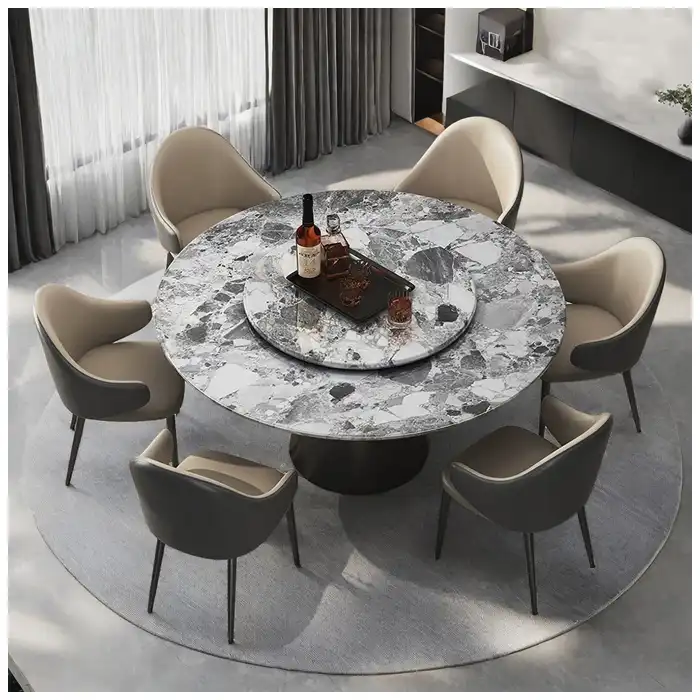
A circular table removes the safe front and back of a rectangular slab. Every chair sees the edge, every vein approaches the perimeter differently and the center base must provide support without occupying the same space as knees and feet. This study maps the circle over the full slab, checks diameter against real place settings and treats the pedestal as both a visible sculpture and part of a larger support system. MQ STONE keeps mineral movement, balanced seating and physical stability together so the circle remains convincing from every direction.
Stone Dining Table: Materials, Slab Selection, Size, Edge, and Base Support
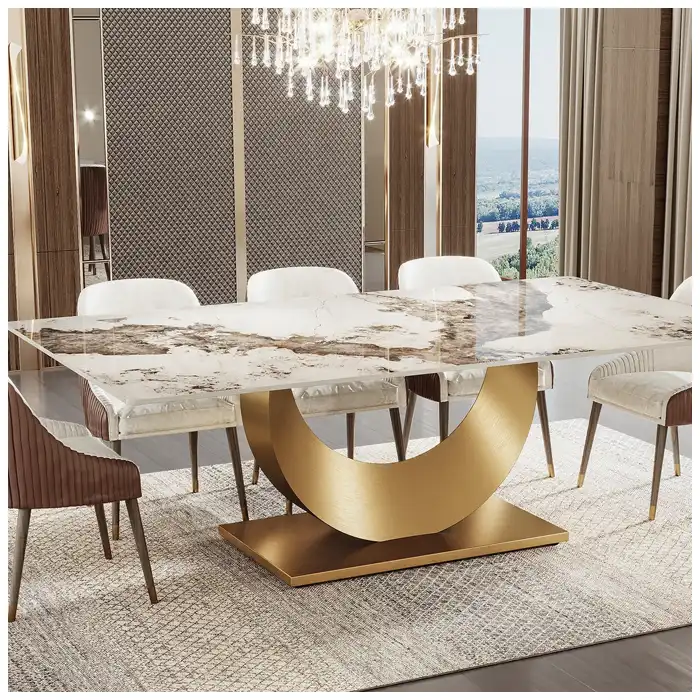
A dining table asks natural stone to be both geology and furniture. Alex Zheng compares marble, quartzite, onyx, and selected semi-precious materials through pattern depth, edge behavior, translucency, finish, top geometry, support footprint, and daily touch. The guide explains how to read a slab before cutting and how to coordinate the table base with the real stone body, helping designers and furniture makers preserve visual movement without asking the material to perform outside a properly engineered support system. Full-scale touch and light tests complete the decision.