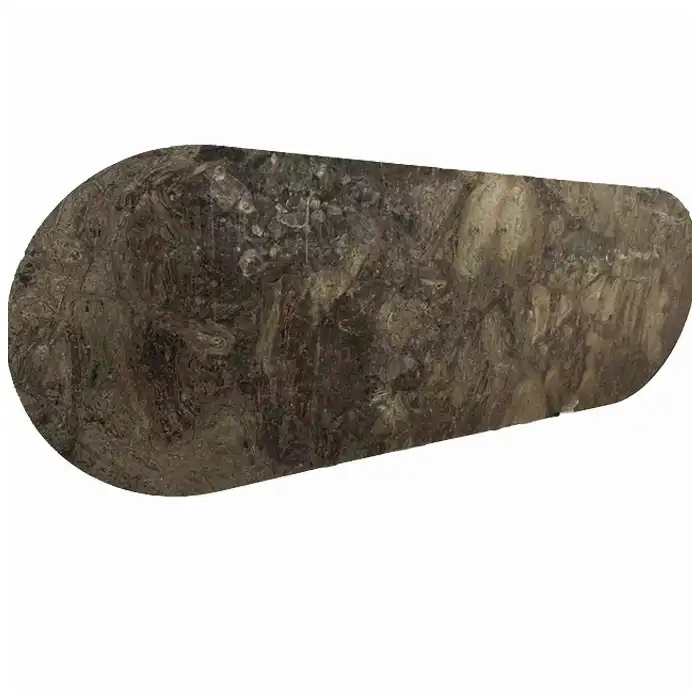
Exotic Quartzite Slabs: Mineral Depth, Full-Face Selection, Finishes, Light, and Fabrication
Angle a work light across a quartzite face and the quiet areas begin to separate. One band returns a hard, glassy reflection. A pale pocket lets light enter before it comes back. Dark mica lies almost flat until the angle changes, then it flashes for a second. The slab does not need a dramatic description. Its minerals are already doing the work.
That is how I begin with exotic quartzite slabs: not with a color name, and not with a small sample. I look at the whole face, then move closer. The broad composition tells me where the stone belongs. The close view tells me what the saw, edge, light, and support may reveal.
My direct answer is that an exotic slab earns its place when its natural depth survives the practical decisions. The strongest vein must remain coherent after cutting. Translucent areas need deliberate light. Resin, mesh, and repairs need to be visible in the approval record. True luxury is something you never get tired of looking at, but it also has to remain credible after fabrication.
What Exotic Quartzite Slabs Describe
Quartzite is a metamorphic rock formed when quartz-rich sandstone experiences heat and pressure. The English reference for quartzite describes that transformation. Quartz grains recrystallize and interlock, while accessory minerals can introduce reflective planes, dark lines, or translucent zones. The geological name matters because true quartzite behaves differently from marble and loose commercial labels.
I do not classify a slab from appearance alone. Some stones marketed as quartzite may contain carbonate-rich layers or mixed mineral zones. A petrographic examination and relevant physical tests provide better evidence when application risk is high. ASTM C616/C616M covers quartz-based dimension stone, while ASTM C1721 provides guidance for petrographic examination. The project specification should identify the expected material and evidence.
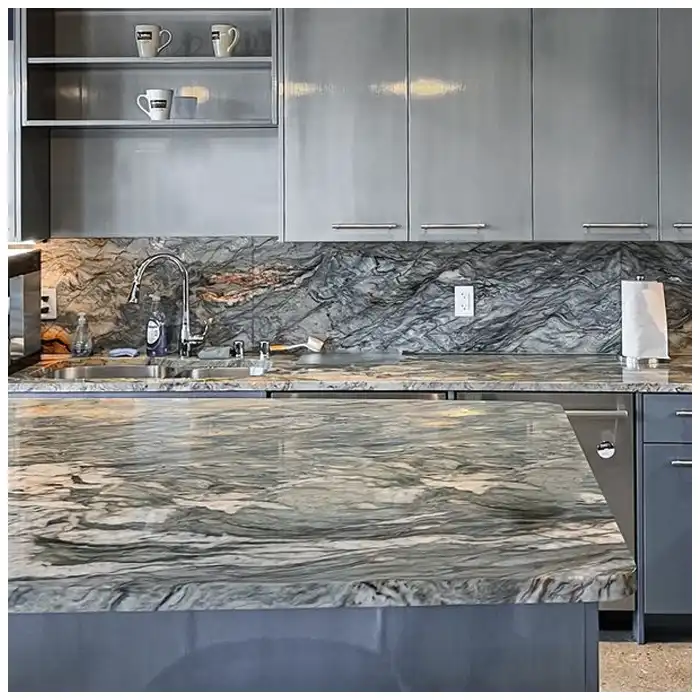
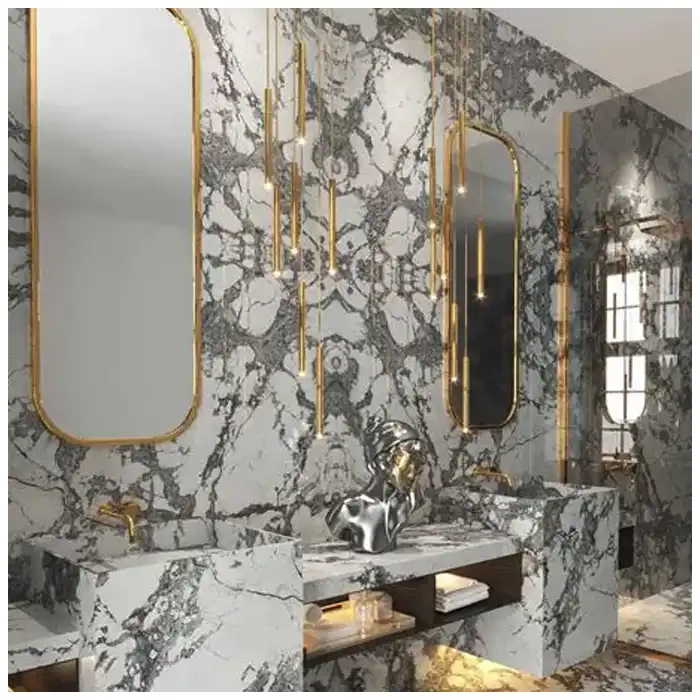
The word exotic describes visual rarity and commercial grouping, not one uniform technical grade. Exotic quartzite slabs can include pale crystalline fields, dense green structures, iron-rich red movement, dark linear bands, or fragmented compositions with translucent quartz islands. Each variety needs its own range and fabrication review.
Тхе Luxury Natural Stone Slabs and Furniture guide places quartzite beside onyx, marble, travertine, and other materials. Here I stay with quartzite and ask why one full face works for an architectural composition while another belongs on a smaller table or isolated feature.
Mineral depth is not the same as printed contrast
Natural depth appears because crystals and mineral boundaries interact with light below the immediate surface. A polished face can reveal that effect strongly. Manufactured slabs can reproduce color and vein graphics with great consistency, but they do not reproduce the exact internal mineral structure of a natural block. That difference is aesthetic before it is commercial.
Our comparison of Natural Quartzite or Marble-Look Sintered Stone for Premium Interiors examines the decision more directly. The useful choice depends on whether the project values repeatability, thin formats, fabrication system, natural variation, mineral depth, repair visibility, or long-term patina.
Full-Face Selection Before a Slab Is Reserved
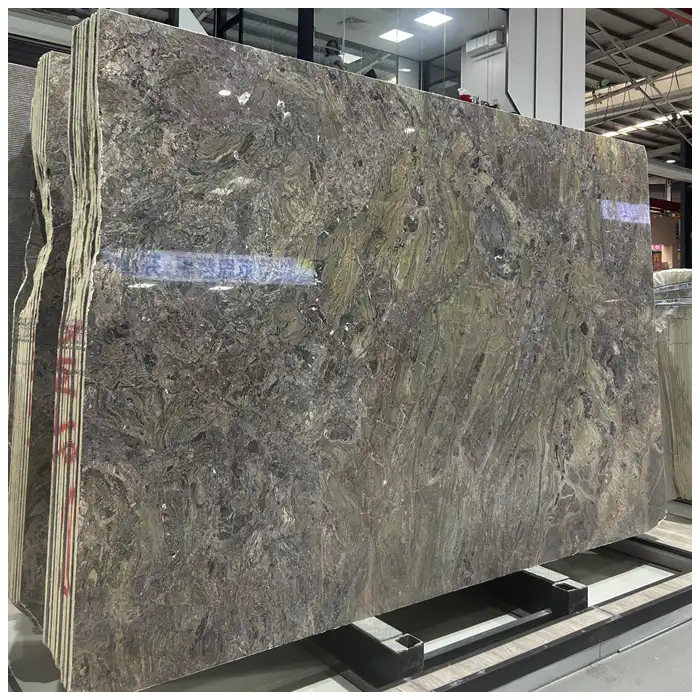
The veins will tell you where the composition wants to move, but the drawing decides whether it survives. I begin with one square photograph of the full face. The slab ID, dimensions, thickness, finish, and orientation must be readable. Cropped images help with detail, but cannot replace the complete composition.
Next, I mark the usable area. I note open fissures, resin-filled zones, repaired corners, mesh or reinforcement on the back, mineral boundaries, and any translucent pockets that may change under installation light. These features do not automatically reject the slab. They tell the fabricator where additional judgment is required.
А full slab selection should also show the range across the bundle. One face may carry a wide quartz field while the next contains denser dark structure. If the project needs several adjacent panels, approve the relationship between slabs, not each face in isolation. A range sheet can show the quietest, most active, lightest, and darkest accepted examples.
For strongly fragmented material such as Pink Patagonia Quartzite slabs, I check how pale crystal, dark mineral fields, and colored areas connect across proposed joints. A single slab can hold several visual worlds. The allocation drawing should protect that balance instead of placing every dramatic piece in one corner of the room.
Cooler compositions may begin with the smoky movement of Negresco leathered quartzite. The textured face changes how the dark field receives grazing light, so I ask for an actual finish sample before the selected slab enters the cutting plan.
With exotic quartzite slabs, digital color is never enough. Camera exposure, white balance, polarization, warehouse lamps, wetting, and screen calibration can change the image. I want neutral-light photographs, close views, and video movement across the face when in-person inspection is not possible. The final approval record must state that natural appearance was judged from these specific slab IDs.
| Slab observation | What it may mean | What to record before cutting |
|---|---|---|
| Broad translucent quartz zone | Potential light transmission and a different internal depth | Backlight test, thickness, backing condition, and intended fixture layout |
| Dark linear mineral band | Strong direction and possible change in cutting response | Vein orientation, cutout distance, edge route, and joint position |
| Resin or repaired fissure | Stabilized natural feature with appearance and fabrication implications | Location, close image, raking-light view, and acceptance decision |
| Mesh or fiberglass backing | Added reinforcement that may affect adhesive and fabrication planning | Backing type, coverage, edge treatment, and fabricator compatibility |
| Sharp color boundary | A major visual transition that may dominate a smaller piece | Scaled template overlay and neighboring piece relationship |
The Hard-Won Lesson: A cropped beauty shot can hide the fabrication decision
The failure begins when approval concentrates on one luminous quartz pocket. The full face is never placed behind the drawing. After the sink or table template is positioned, the prized area falls partly inside a cutout and a repaired fissure sits on the remaining narrow rail. The stone has not changed. The team approved a detail without proving that the complete slab could carry the required geometry.
The Lesson: Approve the full face with the scaled cutting template already on it.
How Finish and Light Change Exotic Quartzite
A polished finish usually gives the clearest view into quartz-rich areas and the strongest color contrast. It also makes reflection, surface resin, and local polish differences easier to see. Honing reduces direct reflection and can make the field feel quieter, but it may reveal texture or treated areas differently. Leathering introduces relief that follows mineral hardness and fabricator technique.
Тхе Exotic Quartzite Finish Selection under Real Interior Light article goes deeper into those surface choices. My rule for a broad material approval is to prepare the finish on representative mineral zones. A quiet offcut does not tell me how the dark field or translucent quartz will respond.
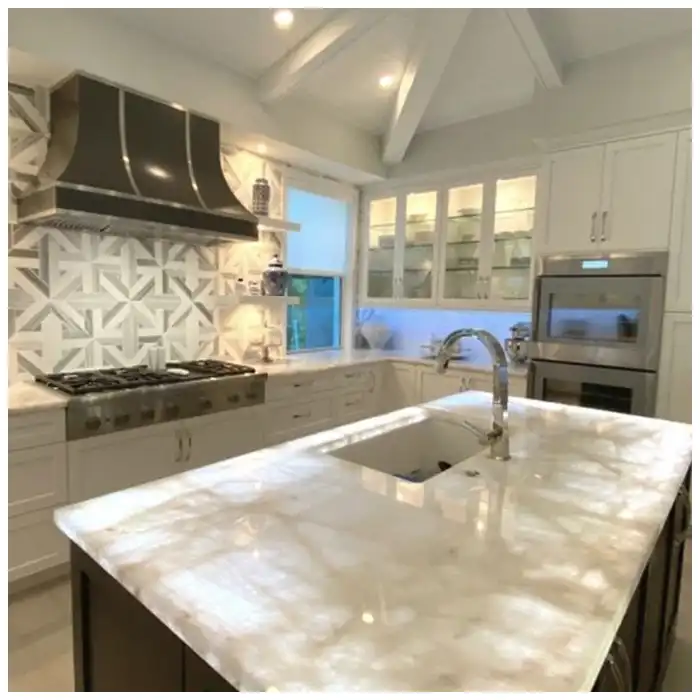
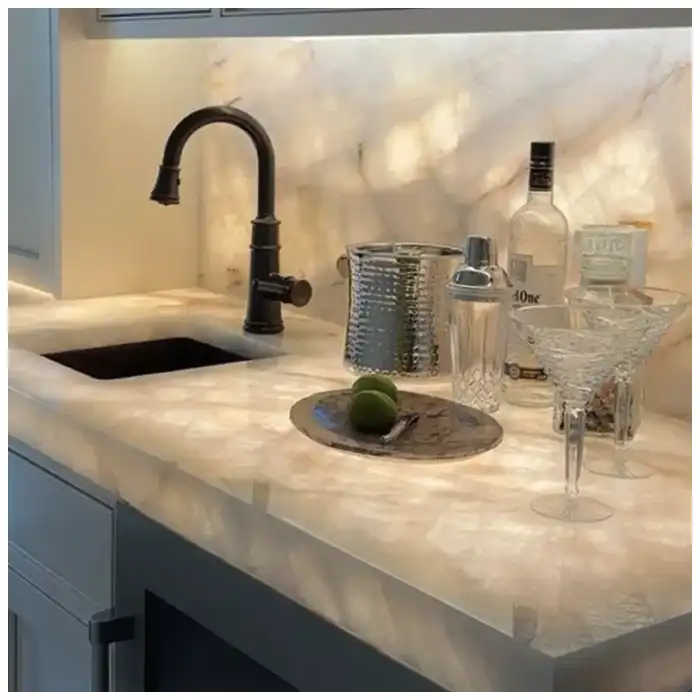
Raking light exposes surface flatness, resin, scratches, and polish transitions. Diffuse frontal light explains the overall color field. Backlighting tests translucency, but only where the stone actually transmits useful light. Exotic quartzite slabs should be tested in more than one light condition when illumination is part of the design.
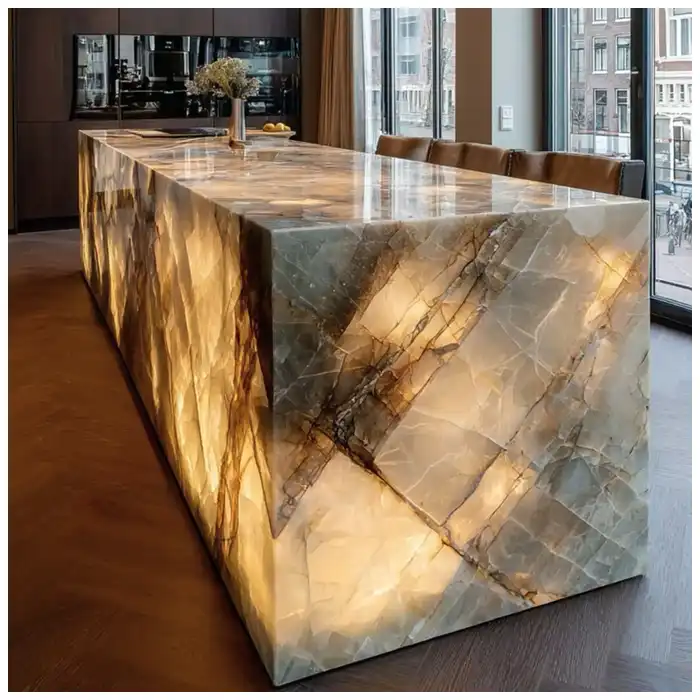
Backlighting also changes the technical conversation. The light source, cavity depth, heat management, diffusion, support, adhesive, backing, access, and replacement plan belong to the assembly design. A translucent slab alone does not create an even luminous wall. Mock up the relevant area with the proposed thickness and backing condition.
Leathered surfaces can make darker materials feel tactile and reduce hard reflection, but relief near dining or work surfaces changes cleaning. Our notes on Leathered Quartzite Slabs distinguish places where texture adds value from areas where it becomes a maintenance burden. Feel the edge. A finish decision is incomplete until the hand and cleaning cloth meet the surface.
Fabrication Must Follow Mineral Structure
Quartzite’s quartz-rich structure can offer strong wear resistance, but the slab is not invulnerable. Natural fissures, mineral boundaries, repaired areas, corners, narrow rails, and unsupported openings still require planning. Fabrication method, tooling, feed rate, water, handling, and support depend on the actual material and equipment.
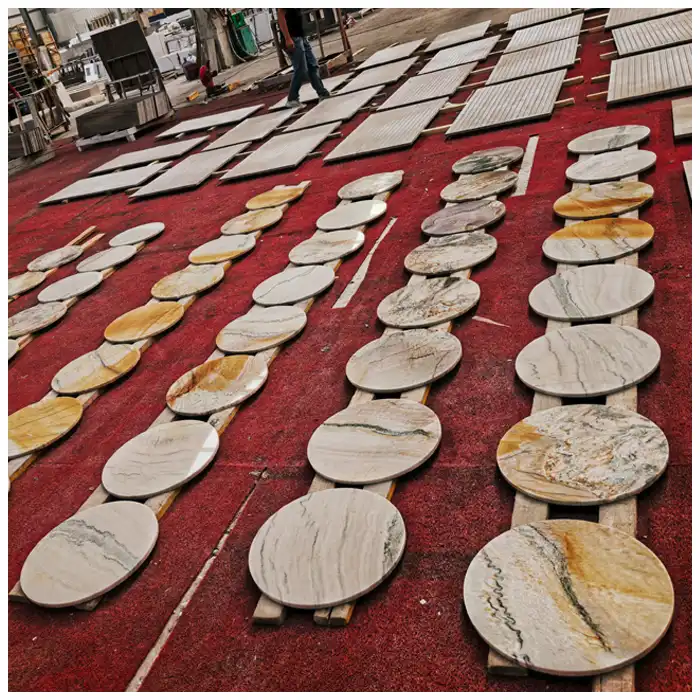
I ask the fabricator to review exotic quartzite slabs before final visual approval when the design includes large cutouts, long cantilevers, thin rails, mitered build-ups, bookmatched returns, or unusual edges. The person cutting the stone may see a risk that the designer cannot read from a photograph.
Stone thickness does not answer support by itself. A dining table top needs a base footprint, support distribution, fixing concept, transport route, and assembly method. A wall panel needs an engineered attachment or installation system appropriate to the piece, substrate, height, exposure, and local requirements. An island needs cabinet or frame support that respects openings and overhangs.
The drawing should show finished size, orientation, visible faces, joints, cutouts, edge profile, backing, reinforcement, support line, and piece ID. When the layout changes, revise the drawing and the slab overlay together. Otherwise the old approval image continues to circulate after the geometry has moved.
А quartzite slab supplier can provide slab photographs, dimensions, available finishes, test data, and fabrication observations. The supplier should not claim that one generic technical sheet proves every variety or assembly. Project engineers, fabricators, installers, and lighting specialists remain responsible for decisions within their scope.
Where Different Quartzite Compositions Belong
Feature walls need composition before continuity
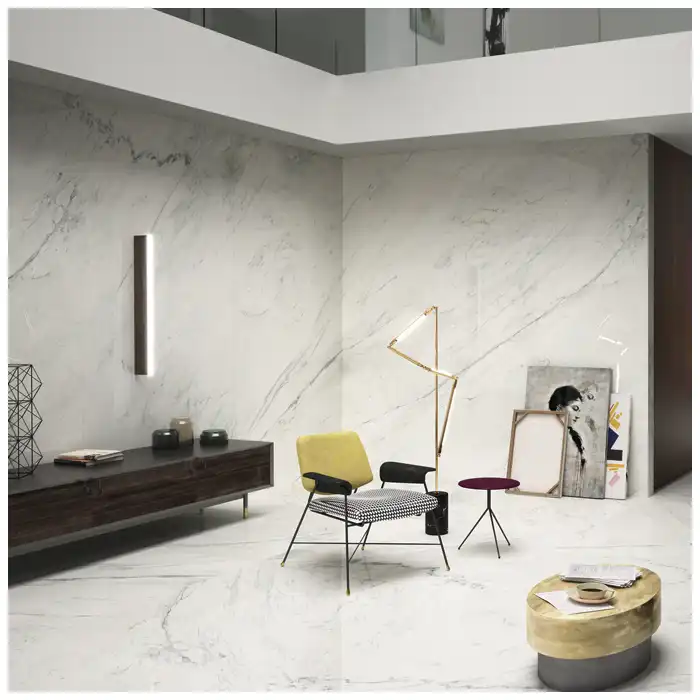
For a wall, I first decide whether the design wants one uninterrupted face, a bookmatched pair, or a sequence. Bookmatching can be powerful, but a mirror line is not automatically balanced. The mineral fields on both sides must carry similar visual weight, and joints should not isolate all dark movement into one panel.
Patagonia Quartzite under backlight offers a useful focused study because its pale crystal zones and dark mineral field make the lighting decision visible. The lesson applies more broadly: test the actual face, not another slab with the same name.
Tables need a readable edge and a believable base
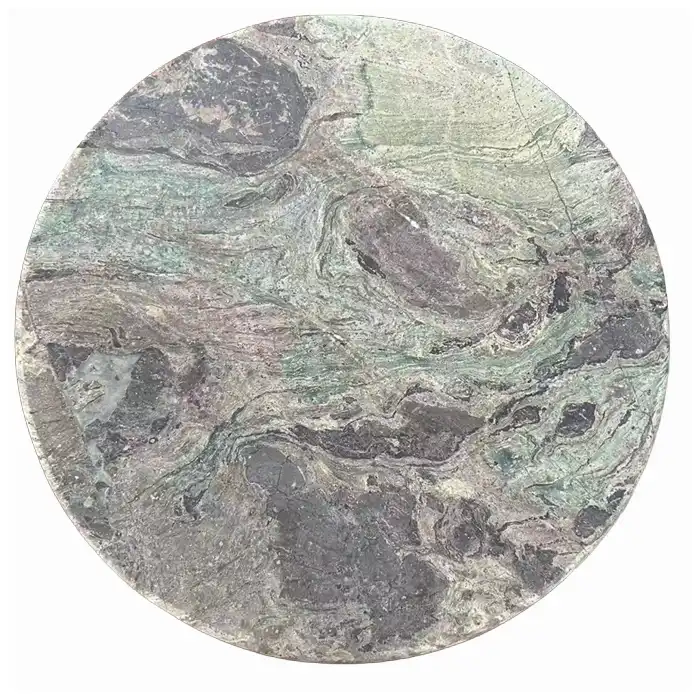
A table brings the eye close to the surface and hand to edge. I look for a composition that still reads at furniture scale. Large movement may lose its relationship after cutting, while a dense mineral field can become heavy on a small top. Edge thickness and profile need to suit the base without pretending the slab is structurally self-supporting.
Islands and counters place daily use beside geology
For working surfaces, discuss acidic liquids, sealing where appropriate, cleaning, heat, impact at exposed edges, and the behavior of repaired areas. True quartzite is generally quartz rich, yet surface treatment and mixed mineral zones can affect staining or etching response. Test the proposed material and finish rather than borrowing a care statement from another stone.
When I compare exotic quartzite slabs for these uses, I do not rank them by drama. I rank the fit between composition, geometry, light, support, maintenance, and the client’s tolerance for natural variation. The drawing can wait long enough for one careful overlay.
A Decision Record That Survives Fabrication
Record the approved slab
The file should include slab IDs, full-face images, dimensions, thickness, finish, close views of repairs, backing, light tests, range limits, and signed comments. If a replacement slab becomes necessary, this record defines what must be matched. A mood board cannot do that job.
Stop when the geometry moves
A revised sink, joint, table size, or panel division can invalidate the visual approval. Photograph the issue, pause cutting in the affected area, and compare the new drawing with the approved slab overlay. Then involve the supplier, fabricator, designer, or engineer whose decision is required. Do not solve a changed geometry with an undocumented shop-floor adjustment.
Quick-Reference Checklist for Exotic Quartzite
- Verify the geological and commercial identity when performance risk is high.
- Approve complete slab faces with readable IDs and dimensions.
- Place scaled cutouts, joints, and edge routes over the selected face.
- Test the intended finish on representative mineral zones.
- Record resin, repairs, reinforcement, backing, and translucent areas.
- Coordinate support and attachment with the responsible fabricator or engineer.
- Stop fabrication when a drawing revision changes the approved composition.
Frequently Asked Questions
1. What makes exotic quartzite slabs different from ordinary quartzite?
Exotic quartzite slabs usually describe expressive color, mineral structure, translucency, or movement rather than a separate technical grade. Performance depends on mineralogy, fabric, physical properties, finish, repairs, and application. Review each proposed face and supporting test evidence instead of treating the commercial category as a guarantee.
2. Are all stones sold as exotic quartzite true quartzite?
Commercial names are not always geological classifications. Appearance alone cannot settle the question. When material identity affects fabrication, maintenance, or performance, request petrographic information and relevant testing from a qualified source. Keep the report tied to the proposed material rather than a generic family name.
3. Can quartzite be backlit?
Some quartzite contains translucent zones that respond well to backlighting, while denser areas may remain opaque. Test the actual slab at the proposed thickness. The assembly also needs coordinated light spacing, diffusion, cavity depth, support, backing, heat management, access, and fabrication around joints and edges.
4. Which finish shows mineral depth most clearly?
Polishing often reveals the strongest depth and color contrast, but it can also expose reflection, resin, and polish variation. Honing softens reflection, while leathering adds relief. Prepare representative finish samples from the proposed slab because different mineral zones can respond differently to the same process.
5. What should I do if a selected slab develops a fabrication concern?
Photograph the feature from the face and back, mark its location on the slab image, and stop cutting in the affected area. Compare the condition with the approval record and current drawing. Then ask the supplier and fabricator to assess allocation, reinforcement, layout revision, repair, or replacement before work resumes.
Final Conclusion
Exotic кварцит плоче deserve more than a color choice. Read the complete composition, verify material identity where needed, test finish and light on representative zones, disclose repairs and backing, and place the final drawing over the approved face. The process protects both geology and design.
I never want a rare slab reduced to a cropped photograph or a commercial adjective. At MQ STONE, the most respectful decision is the one that lets the minerals remain visible while giving the fabricator and structure an honest plan.
References
- Standard Specification for Quartz-Based Dimension Stone, ASTM C616/C616M, ASTM International.
- Standard Guide for Petrographic Examination of Dimension Stone, ASTM C1721, ASTM International.
- Standard Test Methods for Absorption and Bulk Specific Gravity of Dimension Stone, ASTM C97/C97M, ASTM International.
- Standard Test Method for Compressive Strength of Dimension Stone, ASTM C170/C170M, ASTM International.
- Standard Test Method for Flexural Strength of Dimension Stone, ASTM C880/C880M, ASTM International.
- Dimension Stone Design Manual, Quartz-Based Stone Chapter, Natural Stone Institute.
- Dimension Stone Design Manual, Furniture and Countertops Guidance, Natural Stone Institute.
- Natural Stone Material and Finish Guidance, Stone Federation Great Britain.