Dover White Quartzite Slab Selection for Walls and Furniture
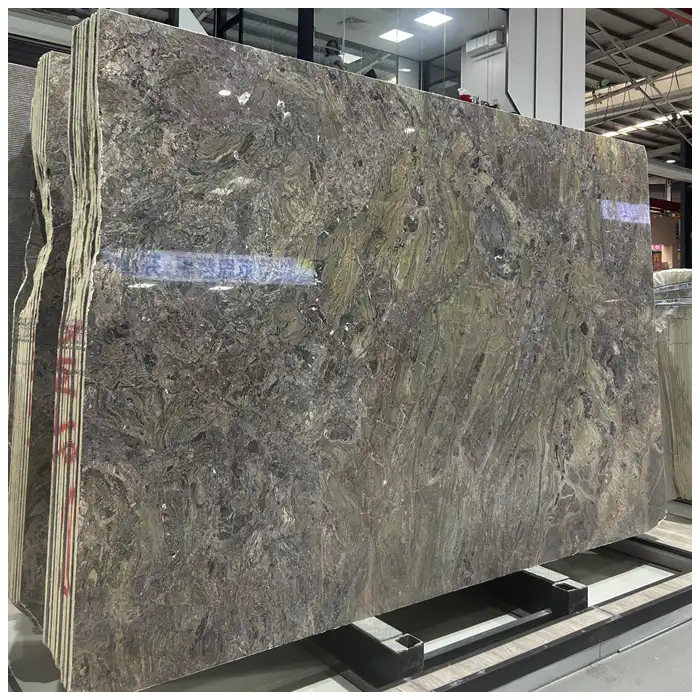
I first noticed the slab from its edge. A thin line of daylight passed across the pale crystalline structure, and small points answered it one after another. From the front, the stone looked calm. From the side, it held more depth than the warehouse photograph suggested.
That difference matters with pale quartzite. Designers sometimes ask for white and receive a stone whose value lies in everything that prevents it from being flat: a cloud, a mineral shadow, a fine line, a change in crystal size, a quiet translucent margin.
I read Dover White quartzite as a full composition before I decide whether it belongs on a wall or a piece of furniture. The same slab can feel expansive when vertical and intimate when cut to table scale. The veins will tell you which direction has enough room.
Slab Selection Path
Read the Actual Range
Test Light and Finish
Compose Feature Walls
Scale the Stone to Furniture
Coordinate Edge and Support
Inspect, Pack, and Care
How Dover White Quartzite Differs from a Printed White Surface
Natural quartzite began as quartz-rich sandstone and changed under heat and pressure. Recrystallized quartz grains interlocked while mineral impurities, original bedding, deformation, and healed structures created the visible pattern. That process does not repeat on a production roll.
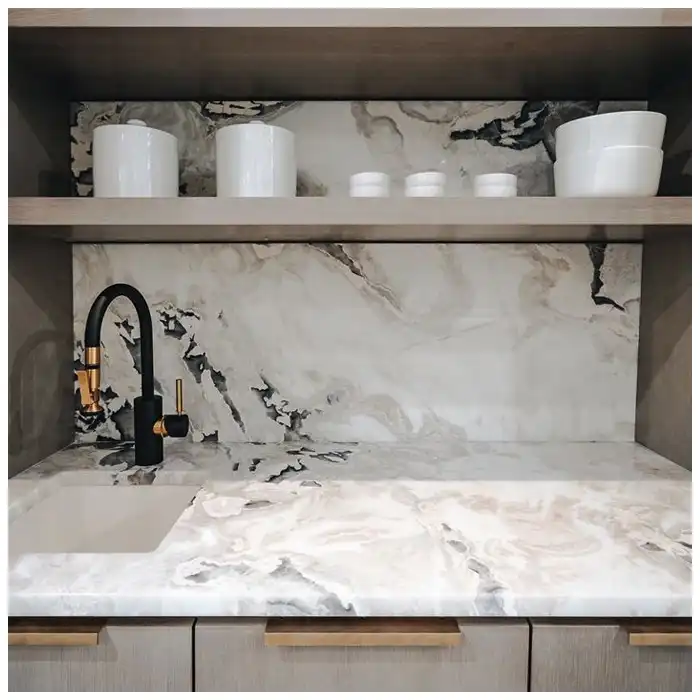
A manufactured surface can provide controlled repetition and a designed image. Natural quartzite offers mineral depth, local crystalline response, edge continuity, and variation through the slab thickness. The choice depends on the project’s priorities; it should not be disguised as a comparison between “real” and “fake” quality.
The Exotic Quartzite Slabs article provides the wider material and application view. Here, I stay with one pale named stone and ask where its actual slabs carry enough quiet movement for walls and furniture.
Commercial naming still needs caution. A supplier should identify the reserved slab group, dimensions, thickness basis, finish, resin or backing, repairs, fissures, and photographs. Approve the lightest, darkest, calmest, busiest, most translucent, and most repaired conditions proposed for the order.
| Slab feature | Wall reading | Furniture reading | Approval action |
|---|---|---|---|
| Broad pale field | Creates visual breathing room across panels | May form a calm usable center | Protect from unnecessary joints and base coverage |
| Fine dark structure | Can guide vertical or horizontal flow | May become dominant on a small top | Overlay final shapes before cutting |
| Crystalline flash | Responds to daylight and wall washers | Moves beneath pendants and touch | View under changing angles |
| Fissure or repair | May be visible at eye level or joint | May fall at edge, cutout, or hand contact | Map, assess, relocate, or reject |
| Translucent margin | May glow near controlled backlight | Can brighten at a thin edge | Test actual zone and thickness |
These are design readings, not promises that every slab contains each feature. The actual stone decides. A full-slab map makes the decision inspectable.
View Dover White Quartzite under More Than One Light
Diffuse daylight reveals broad background changes. Warm evening light may bring cream or taupe traces forward. Cooler light can emphasize grey structure. Raking light catches finish, resin, relief, and crystalline sparkle. Use all relevant conditions.
For Dover White quartzite, photograph identified slab zones under repeatable diffuse and directional light. Keep a neutral reference and include enough surrounding context to understand the light. A cropped, automatically brightened image can erase the very differences the buyer needs to approve.
Polish can deepen color and reflect the room. Honing can soften contrast and reduce glare. Leathering or texture changes touch and may emphasize harder and softer mineral zones differently. Approve the finish on representative actual material.
Map resin and repairs under the final finish. Pale stone is unforgiving when a repair changes sheen. A narrow glossy line may be almost invisible in front light and obvious beneath a wall washer or pendant.
The Exotic Quartzite Finish Selection article helps compare finish families. The choice here still belongs to the reserved Dover White group, not to a generic sample from another stone.
Test translucency only where the design uses it
Some quartzites contain zones that pass or scatter more light than others. Do not assume the whole pale slab is translucent. Use a controlled test on mapped areas and at the proposed thickness, then coordinate the lighting assembly with qualified specialists.
The Quartzite Translucency Mapping method records bright, cloudy, opaque, repaired, and edge conditions before cutting. A wall or furniture detail should use that evidence rather than a flashlight impression.
The Hard-Won Lesson: Pale does not mean uniform
A designer approves one quiet sample and a bright full-slab photograph. After fabrication, several wall panels show soft mineral clouds while the furniture top comes from a cleaner zone. Every piece belongs to the same reserved group, yet the room reads as two different material intentions because allocation was never marked.
The Lesson: Divide the actual slab range into visual groups and assign those groups to walls and furniture before yield planning begins.
Compose the Wall before Choosing Panel Joints
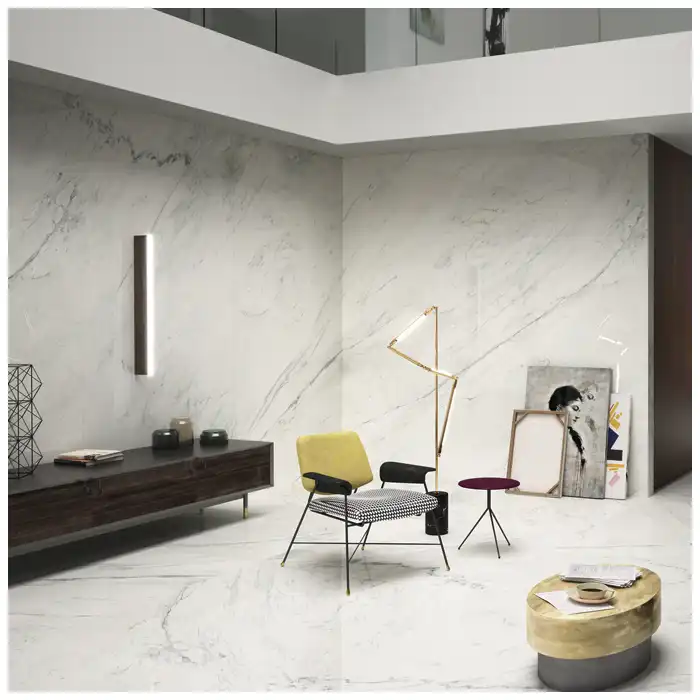
A wall gives pale quartzite room to breathe. Map openings, corners, floor and ceiling lines, panel joints, lighting, furniture in front, and primary viewing direction over the slab photographs. The composition should survive all those interruptions.
With Dover White quartzite, quiet fields can connect several panels while stronger lines establish direction. A joint through the only dark structure may create two weak fragments. Moving the panel grid slightly can preserve the line without changing the overall wall size.
Choose bookmatch, vein or flow match, mirrored pairs, or deliberate independent panels from the actual slab group. The Quartzite Bookmatch vs Flow Match article explains why not every natural pattern benefits from mirroring.
Before choosing the matching method, print or project the complete elevation at a readable scale and mark the primary approach to the room. A composition that feels balanced from the front may place its strongest line behind a column, reception desk, or freestanding cabinet. I prefer to mark those obstructions on the slab study rather than discover them after the panels are fixed.
Keep one allocation sheet that connects slab code, panel code, cut orientation, finish, repair zone, edge treatment, crate, and wall position. The sheet does not make the stone less natural. It protects the natural decisions already made. If a panel is damaged or moved, the team can identify what belongs beside it and whether a spare comes from the same visual range.
At visible corners, decide whether the movement turns, stops, or changes. Dry-lay adjacent panels in installed orientation. A pale material does not forgive a sudden warm-to-cool shift simply because both sides are called white.
Coordinate panel dimensions, thickness, fixing interfaces, substrate, loads, movement, access, and installation with qualified project professionals. The stone supplier can fabricate approved details; it should not invent structural decisions from a visual elevation.
Let the wall light expose the approval sample
Build a representative finish mock-up under the intended wall washer or daylight angle. Check joints, finish consistency, repairs, edge shadow, and crystalline response. A front-lit sample can hide local sheen and surface variation.
True luxury is something you never get tired of looking at. A calm wall earns that quality through proportion and mineral depth, not through a photograph edited until every variation disappears.
Scale the Slab to Dining, Console, and Occasional Tables
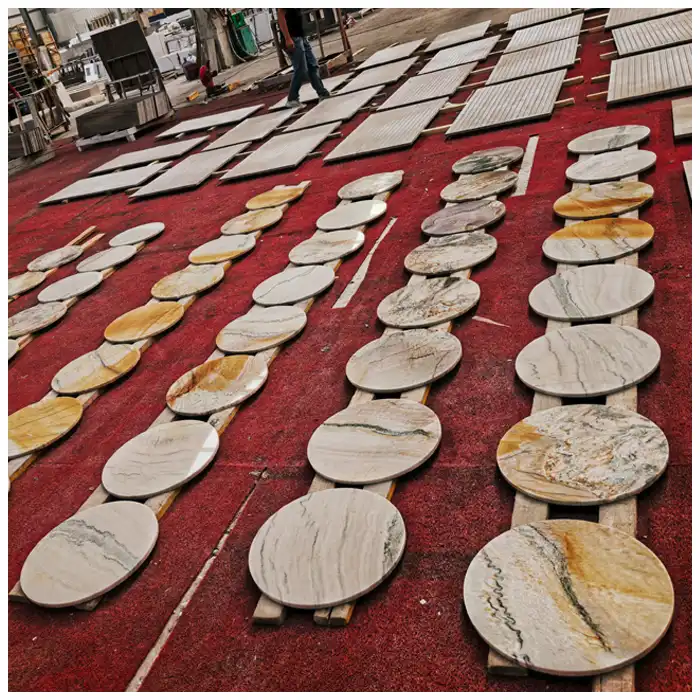
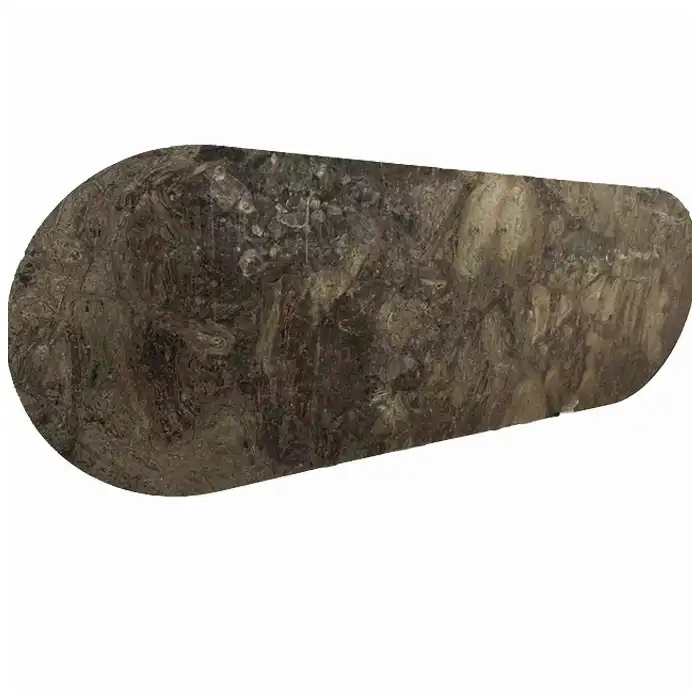
Furniture reduces the field. A line that felt delicate on a three-meter slab can dominate a one-meter console. Overlay the final top shape, edge, base footprint, holes, cutouts, and principal viewing sides on the actual photograph.
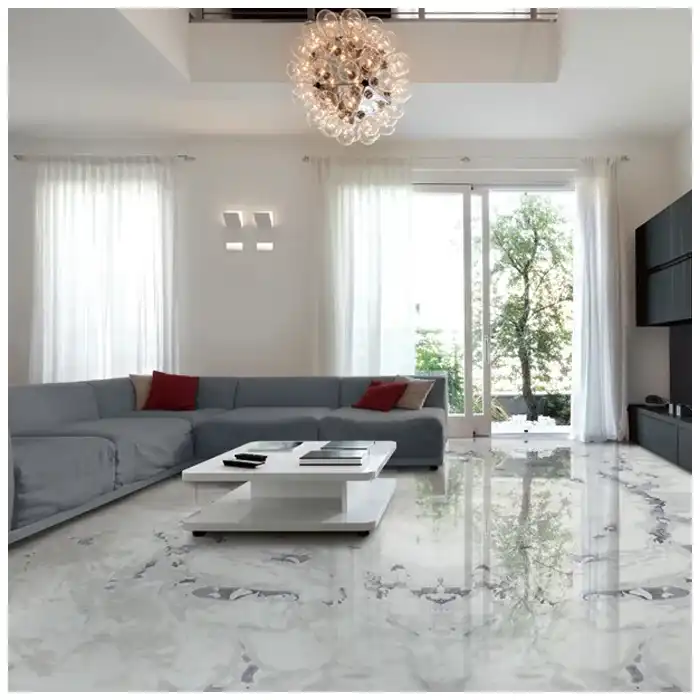
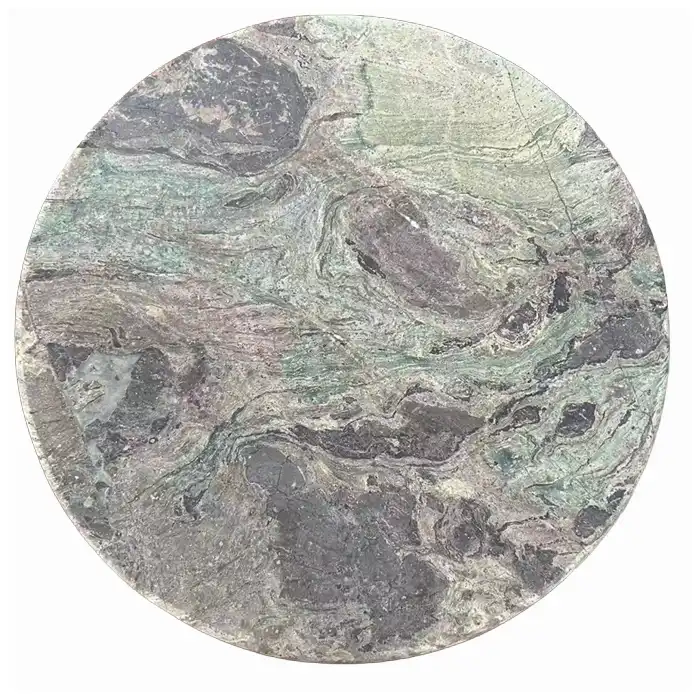
A Dover White quartzite dining top needs a usable center and a deliberate relation between the long edges and mineral movement. A console may benefit from one directional line. A coffee table can hold a denser composition because the viewing distance is closer and more mobile.
The Dover White quartzite tables route provides a furniture-specific product reference. The Dover White quartzite material route keeps the slab itself central. Actual availability and suitability still require confirmation.
Plan edge material with the top. A mitered or built-up edge needs matching zones and dry fitting. A solid edge reveals the stone through its thickness and can show color or mineral changes that are less visible on the face.
Furniture must travel. Confirm top weight, base weight, lifting points, doorway and elevator route, removable components, protective packing, assembly, floor condition, and responsible installation. The most beautiful slab is not helped by a base that cannot be aligned safely on site.
On furniture, I also record the standing view and the seated view. A pale top can look nearly blank from above while a fine crystalline band appears along the edge at seated eye level. Pendant reflection may sit in the calm center during dinner, yet daylight reveals a cooler cloud near one end. Those views belong in the approval photographs because the piece will be lived with from all of them.
Coordinate Stone Thickness, Edge, Base, and Support
Natural quartzite is hard, but hardness does not remove bending, impact, fissure, or edge risks. Size, thickness, cutouts, overhang, natural features, support contact, and use need coordinated review by the fabricator, designer, engineer where required, and base maker.
For Dover White quartzite, pale areas can make the base silhouette visible through edge or shadow relationships even without true translucency. Place the footprint on the slab layout. Avoid hiding the most expressive mineral zone or positioning a repair over a high-stress interface without review.
Support should be continuous or strategically placed according to the approved design, with tolerances that avoid point loading. Isolation materials, fasteners, adhesives, clips, or frames must be compatible with stone and base. Provide service and replacement access.
Draw the section. State finished thickness, apparent thickness, underside recess, edge, support, overhang, joint, and fixing. A rendering cannot communicate whether the stone is solid, mitered, laminated, or supported by a concealed frame.
This stone has been waiting for millions of years. The base does not need to imitate geology, but it should give the slab enough calm support to remain itself.
Inspect the Actual Piece and Preserve Its Baseline
Before packing, inspect full face, color range, pattern, finish, dimensions, thickness, edges, corners, holes, cutouts, repairs, labels, underside, and support zones. Photograph under diffuse and raking light. Keep the slab map and piece code visible.
A Dover White quartzite wall dry-lay should show panel order, joints, corners, openings, light direction, and approved moves. Furniture should be dry-assembled with the base when practical, checking contact, alignment, stability, edge, and viewing direction.
Pack walls by elevation and sequence. Pack furniture tops for controlled lifting, protecting edges, corners, finished faces, and repaired zones. Record crate marks, orientation, weight, contents, and opening method.
At installation, compare actual pieces with the approved map before fixing or assembly. If a color, repair, finish, or layout difference appears, photograph it with the piece code and room light. Pause modification and compare the original inspection and packing record.
Test sealer and cleaner on representative spare material. Quartzite can vary in porosity and resin response. Record product, application, appearance change, and care method. Retain a labeled reference for future maintenance.
If a problem is discovered, document the full area, close condition, piece and crate codes, light, support, and packaging. Do not polish, grind, drill, or install the disputed piece. Send the supplier the approved slab map, finish sample, inspection, and site evidence together.
Quick-Reference Checklist for Dover White
- Approve the full actual range, including clouds, lines, repairs, fissures, and local translucency.
- Compare finish and color under diffuse daylight, warm interior light, and raking light.
- Assign visual range groups separately to wall panels, furniture tops, edges, and spares.
- Overlay panel joints or furniture shape and base footprint before cutting.
- Coordinate dimensions, thickness, support, fixing, transport, lifting, and assembly.
- Inspect and photograph every finished piece against its slab map and approved finish.
- Test care products on labeled spare material and preserve the original appearance baseline.
Frequently Asked Questions
1. Is Dover White quartzite pure white?
Natural quartzite is not printer white. Actual slabs may carry cool, warm, grey, clouded, crystalline, or darker mineral zones. Approve the reserved range under the project’s light rather than relying on the commercial name.
2. Is Dover White suitable for feature walls?
It can suit feature walls when the actual slabs, finish, panel layout, joints, corners, fixing design, light, repairs, packing, and installation method align with the project. Use a full-scale dry-lay and representative lighting mock-up.
3. Can Dover White quartzite be used for dining tables?
It can be used when slab condition, top dimensions, thickness, edge, support, base, overhang, transport, assembly, cleaning, and care are coordinated. Overlay the final top and base on the actual slab before fabrication.
4. Should a pale quartzite be honed or polished?
Choose from actual finish samples. Polish generally increases reflection and color depth. Honing usually softens both, while repairs and resin may react differently. View the same slab zone under the intended room light.
5. What should I do if Dover White quartzite does not match the approved range?
Photograph the full piece or wall, close difference, code, neighboring stone, finish, light, support, and packaging condition. Stop fabrication or installation. Compare the site evidence with the approved slab range, allocation, inspection, and packing records before deciding the next action.
Final Conclusion
Dover White quartzite is valuable because its pale field is alive with mineral depth, not because it behaves like a uniform white sheet. Approve the actual range, light, finish, repairs, layout, edge, support, packing, and care at the scale of the wall or furniture piece.
I would rather preserve one quiet crystalline cloud than cut the slab into a blank idea of white, and that is the patient natural-stone reading MQ STONE brings to walls and furniture.
References
- Dimension Stone Design Manual, Natural Stone Institute.
- ASTM C616 Standard Specification for Quartz-Based Dimension Stone, ASTM International.
- Natural Stone Institute Technical Bulletins on Quartzite, Natural Stone Institute.
- Natural Stone Cladding Design Guidance, Stone Federation Great Britain.
- Stone Countertop and Furniture Fabrication Guidance, Natural Stone Institute.
- Salone del Mobile Milano 2026 Design Programme, Salone del Mobile.Milano.
- Quartzite, Wikipedia, English edition.