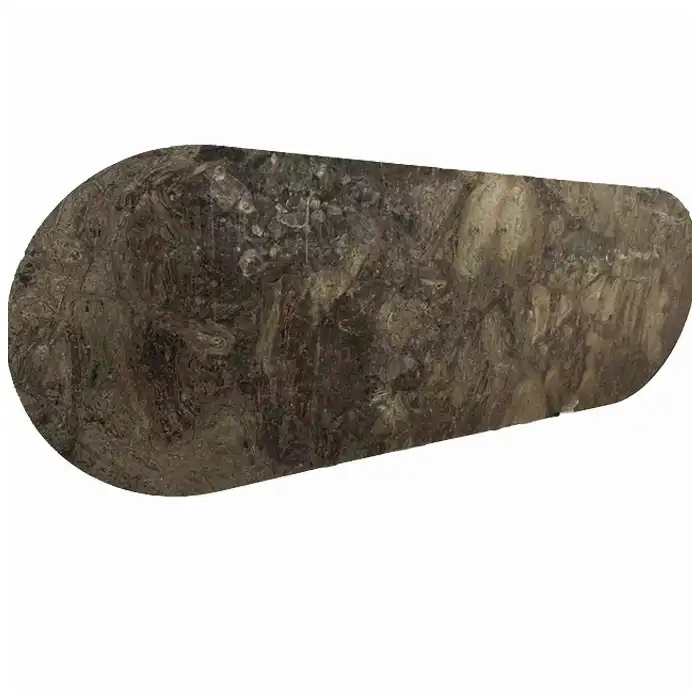
An Arabescato Corchia Dining Table Seen from Every Seat
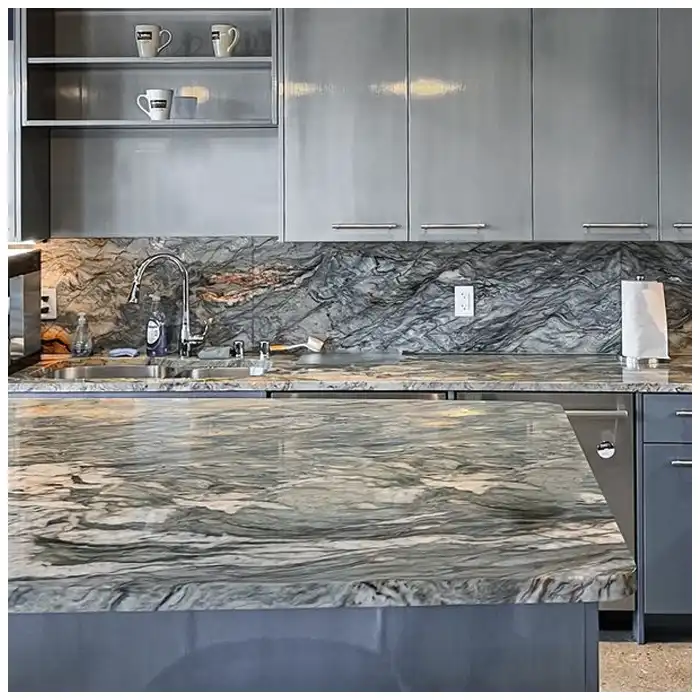
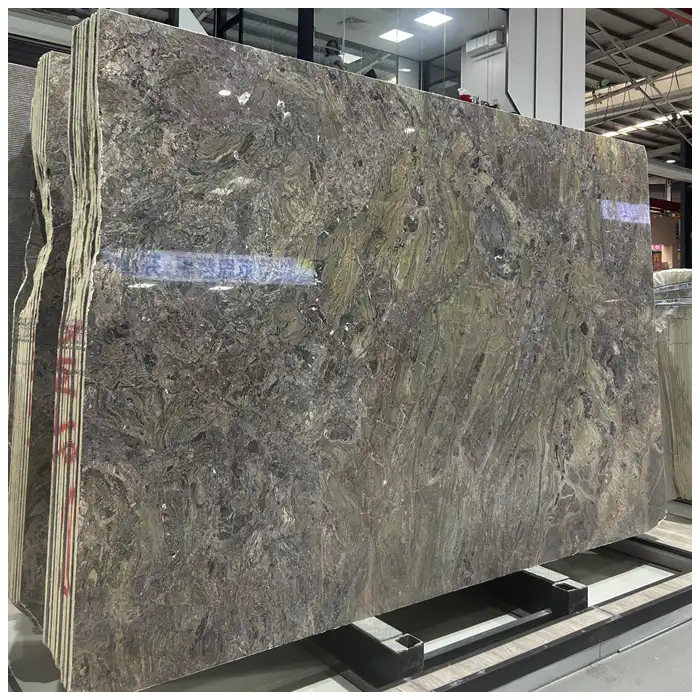
Raking light does something revealing to Arabescato Corchia. A charcoal band that looks almost painted from across the warehouse breaks into softer grey crystals when the light moves along the polish. Nearby, the white field is not empty; it carries faint clouds and hairline mineral paths. Turn the slab ninety degrees and the composition changes again. That is why I do not select a dining-table crop from one upright photograph. The person at the head, the person beside the window and the person walking into the room will never see the same surface.
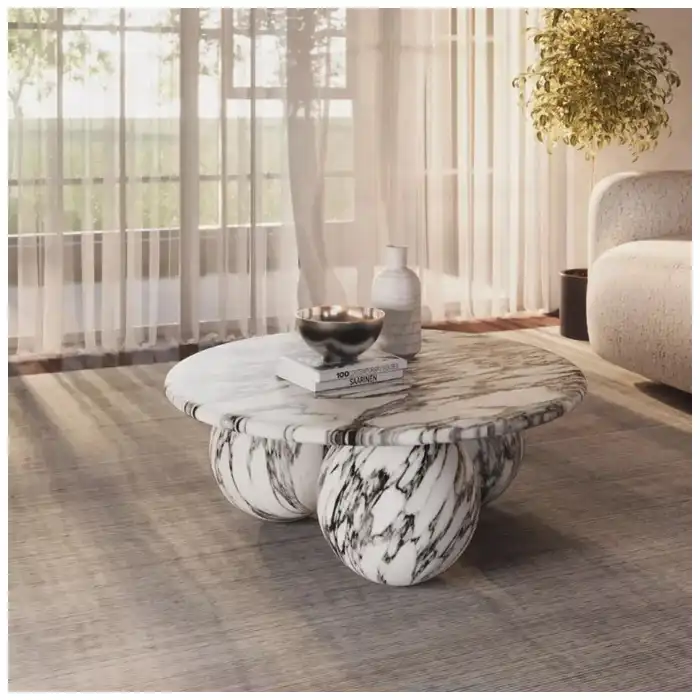
What an Arabescato Corchia dining table asks of the slab
Arabescato Corchia is sold as marble, a metamorphic carbonate stone whose visible bands and veins record mineral differences and deformation in the parent rock. The exact mineralogy and physical properties belong to the selected material report. I will not assign one laboratory value to every commercial lot. What I can see is equally specific: direction, contrast, repaired areas and the way the chosen finish carries light.
A table crop is a composition inside the larger slab. Outline the finished top at full scale on an image that shows all usable boundaries. Then add the edge allowance and underside fabrication zones. A line that looks safely inside the rectangle may enter a repair when the mitre returns beneath it. I want the nest and the edge detail assessed together.
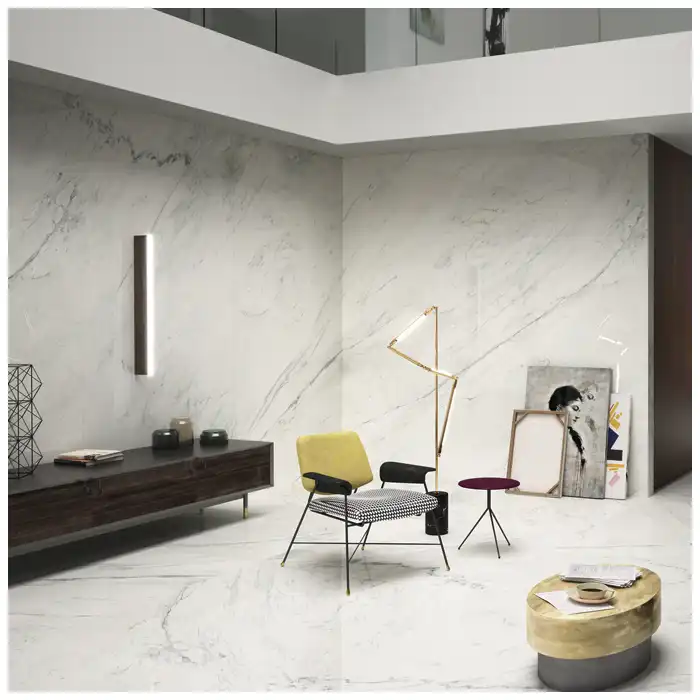
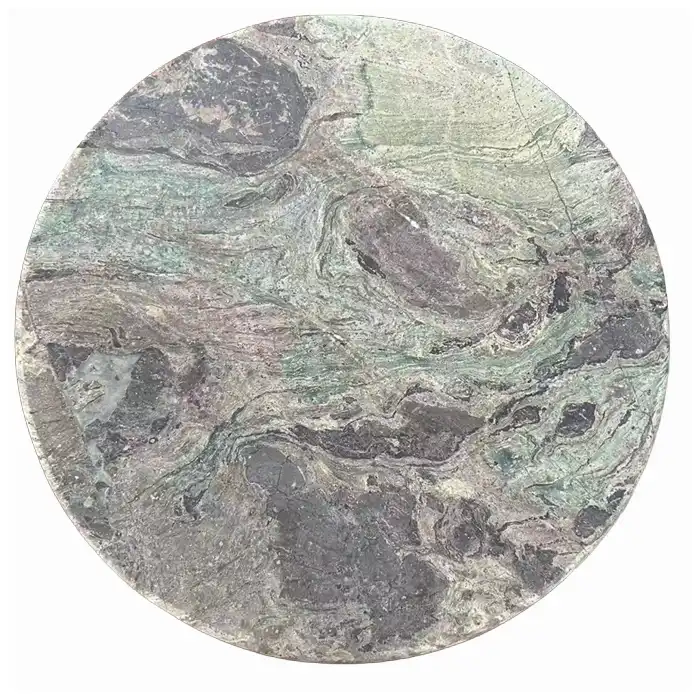
The available Arabescato Corchia marble should be viewed as complete faces before a furniture decision. A small sample can establish finish or background tone, but it cannot show whether the dominant grey movement falls through the centre, leaves one end visually empty or collides with the base. The veins will tell you where the eye wants to travel. The drawing tells you whether that route survives fabrication.
For an Arabescato Corchia dining table, the strongest vein does not always belong in the middle. A centre position can become crowded by serving pieces and overhead reflections. Moving it toward one long side may let the pattern unfold as guests approach. I test more than one crop before deciding. Stone selection becomes much easier when the room plan identifies the principal arrival direction.
Draw the chairs before approving the crop
A marble dining table layout should include every intended seat and the clearance around it. The slab may look balanced as an isolated rectangle yet feel heavily weighted from three of the six chairs. I rotate the image and inspect it from each side. This is a visual exercise, but it has practical consequences: place settings, edge touch and the base all change what remains visible.
The head positions deserve attention on a long top. A dark vein ending abruptly at one short edge can feel intentional, or it can look as if the rest of the drawing was cut away. Compare both ends before accepting the orientation. If the table will sit on axis with a doorway, examine that first distant view as well.
An Arabescato Corchia marble slab with a broad white zone may suit dining use better than the most crowded face in the bundle. Plates, flowers and reflected fixtures already add visual activity. I prefer enough quiet stone for the natural pattern to breathe. That judgement is not a rule about minimalism; it is a response to the actual room and furniture around the table.
Colour decisions also belong at room scale. Warm timber can bring a softer cast forward in the white field, while a cool metal base can sharpen the grey. These are reflected and contextual effects, not chemical changes in the marble. View a large section beside the approved surrounding materials under the intended lamp. A screen rendering cannot settle that relationship.
The edge changes the drawing
A square polished edge makes the slab thickness legible and keeps the visible pattern close to the top plane. A small eased edge softens touch without greatly changing the silhouette. A larger bevel catches light and creates a bright line that can compete with a dark vein reaching the perimeter. I choose the profile with the slab image in front of me.
A mitred build-up creates a deeper visual edge from thinner body material, but it also introduces a joint and a return strip. The strip needs its own pattern plan. Cutting it from an unrelated white zone can make the side look detached from the top. Where the design calls for continuity, show the return source and orientation on the fabrication drawing.
The strongest edge of an Arabescato Corchia dining table may be the quietest one. If a dark diagonal runs straight into a corner, the profile and handling sequence need careful review. Natural veining is not automatically a crack, yet fissures, resin and local repairs may occur in commercial slabs. Use raking light and the supplier’s repair information, then let the fabricator decide how the actual feature affects the proposed edge.
The detailed choices in Luxury Stone Table Tops: Color, Edge, Light, and Base Details Before Production remain relevant even though this article focuses on one marble. Apply the edge logic to the selected piece rather than copying a standard profile from another stone. The same drawing can behave very differently when the vein reaches it from a new direction.
Let the base occupy the layout
Place the base footprint beneath the slab crop before approving the surface. A central pedestal hides a different area from two trestles. Its shadow can deepen a grey band near the middle, while an open frame leaves the underside more visible from seated positions. The base beneath an Arabescato Corchia dining table should read as part of the same object even when different specialists make it.
Support design belongs to a qualified furniture fabricator or engineer. The stone’s dimensions, thickness, cutouts, actual properties, connection method and use all matter. I avoid universal cantilever claims. A proportion that worked for one compact quartzite top cannot be transferred to a larger marble table because the pictures feel similar.
Marble dining table layout approval should show pads, plates, inserts and any machined recesses. These features may be invisible after assembly, but they influence where drilling or adhesive work occurs. Keep them away from unsuitable repaired areas as directed by the fabricator. If the base changes after slab approval, reopen the underside review.
The planning sequence in How Much Does a Stone Dining Table Weigh? provides useful questions about bearing and movement. Here the material and crop are different, so the answers need to come from the Arabescato Corchia slab, table geometry and selected base. A link to a prior method is a starting point, not a substitute for project calculation.
Finish decides how the room moves across the surface
Polish gives the grey and white field greater optical depth and reflects fixtures sharply. Under a pendant, a bright disk may sit over the stone at the most common viewing angle. Honing softens that reflection and can make the pattern feel quieter, though it changes the way daily marks and etching are perceived. Finish an actual sample from the reserved slab when that distinction affects approval.
Marble is a carbonate stone and can react with acids. Wine, citrus and certain cleaners can dull a polished face. Sealer does not prevent acid etching. A client who wants an untouched mirror finish after active dining needs that fact before choosing marble, not after the first dinner. The surface can still age beautifully, but only when expectations match the material.
For an Arabescato Corchia dining table, a honed finish may suit a room where diffuse daylight matters more than sharp reflection. That is not a universal recommendation. I compare both finishes under the actual lamp angle, then look across the edge as well as straight down. A finish that feels calm from above may expose processing inconsistency under low side light.
The care questions in Stone Dining Table Finish: Honed, Polished, Leathered or Textured can help frame this decision. Arabescato Corchia belongs in the marble branch of that discussion, with its own batch, repair history and finish sample. Do not borrow a quartzite cleaning expectation because both tops share the word stone.
Weight and handling begin before the cut
Calculate the top’s mass from actual dimensions, finished thickness and an appropriate declared density. Add any built-up edge, backing or attached hardware separately. The result helps plan the base, lifting method, access route and installation crew. It does not by itself certify the support system.
Doorways, tight turns and final lowering onto the base are vulnerable moments for an Arabescato Corchia dining table. Review the route and lifting points before fabrication, especially where the design includes a long mitred edge. A layout that cannot pass through the building in its finished form needs a design response before the stone is cut, not a hopeful instruction to the delivery crew.
The selected Arabescato Corchia slab may contain local resin fills or repaired fissures visible under raking light. Record them on the nest. Some are normal commercial preparation; their acceptance depends on location and project expectation. A repair under a broad supported area is not the same design question as one beside a connector or exposed corner.
Use Stone Dining Table Weight: From Slab Calculation to Base and Floor Review to organise the mass and route information. I would attach its calculation logic to the final shop drawing, then ask the fabricator and installer to address the real top rather than a generic stone table.
Judge natural marble without pretending it is printed
Luxury Natural Stone Slabs and Furniture: Complete Guide to Materials, Applications, Edges, Lighting, and Support sets this furniture decision within the wider material choices. Manufactured surfaces can offer repeatability, but their visual depth follows a designed image and production process. Natural marble carries mineral variation through the body, so an edge or newly cut plane can reveal continuity that a surface print cannot reproduce. That difference matters on a table, where people see the top close up and touch the perimeter for years.
True luxury is something you never get tired of looking at. For me, that does not mean choosing the loudest Arabescato Corchia dining table possible. It means choosing a natural drawing that continues to disclose smaller relationships after the first dramatic glance. A faint grey thread beside a repaired seam can become more interesting than the broad band that sold the first photograph.
The comparison in Natural Quartzite vs Marble-Look Sintered Stone: The Definitive Comparison for Premium Interiors helps separate natural depth, performance expectations and manufactured consistency. Arabescato Corchia adds another natural-material answer. Its carbonate composition brings different care obligations from quartzite, even while its veining offers the same irreducible fact: the chosen slab is the design.
I would keep one approved offcut from the Arabescato Corchia dining table with the furniture record. It helps later care testing and provides a physical reference for finish. Photograph the completed table from each seat before handover, without turning the record into marketing theatre. Those images show whether the planned crop, base and light reached the room as intended.
| View | What can change the composition | Approval evidence |
|---|---|---|
| Room entrance | Table orientation and distant axis | Top outline placed in the room plan |
| Long-side seats | Base shadow, settings and edge profile | Rotated crop from both long sides |
| Head seats | Vein termination at short edges | Both end views at seated height |
| Across the surface | Pendant reflection and finish | Reserved-slab finish sample under intended light |
| Under the edge | Mitred return and base hardware | Underside drawing with repair locations |
The Hard-Won Lesson: An Arabescato Corchia dining table has no one-sided crop
A dramatic slab crop can look resolved from the room entrance while the reverse long side shows a heavy vein terminating against one corner and a nearly blank opposite end. The slab has not changed; the approval simply treated a freestanding object like a wall. Once the top is cut, rotating it may conflict with the base or circulation. I now rotate every proposed crop through the occupied room plan before accepting its orientation.
The Lesson: Approve a dining table from every chair, not from the photographer’s mark.
What the final Arabescato Corchina marble Table decision needs
The crop belongs to the room
Map chairs, circulation and lighting before selecting an Arabescato Corchia dining table. I want the designer to see what each seat receives, not only the image made for the entrance. That approach respects the slab as a three-dimensional furniture surface rather than reducing it to a decorative rectangle.
The fabrication marks remain visible in the record
The nest should identify usable boundaries, repairs, edge returns and base interfaces. Keep the approved image tied to the physical slab numbers and final drawing revision. If the base or overall size changes, the approval must be revisited because both appearance and support conditions may change.
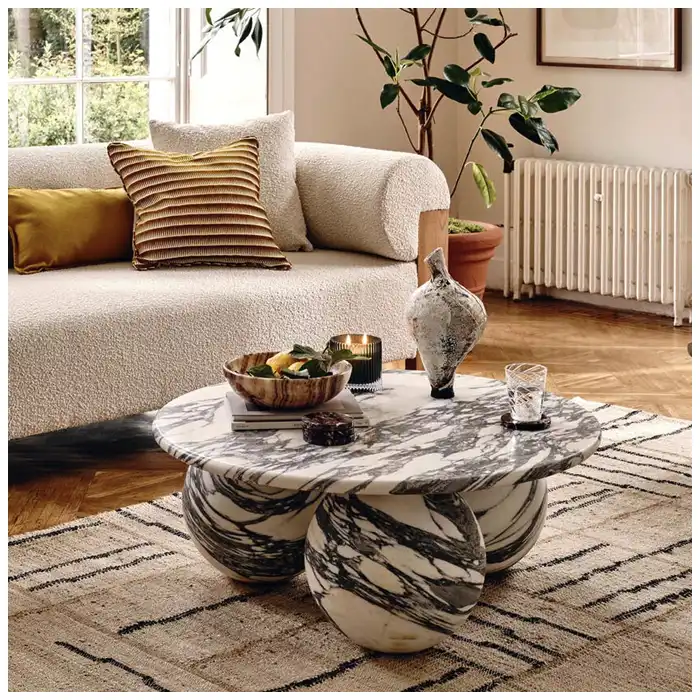
A concern on site starts with evidence
If a crack, mismatch or unexpected repair appears after delivery, photograph the face, edge, underside, labels and base before assembling or treating it. Pause the affected installation. Send the supplier the images with the original slab and inspection records so the team can compare the actual condition without losing evidence through polishing or adhesive work.
Frequently Asked Questions of White Marble Tables
1. Is Arabescato Corchia suitable for a dining table?
An Arabescato Corchia dining table can work when the selected slab, finish, edge, support and use expectations are compatible. Marble remains acid-sensitive and may etch during dining. Review the actual piece for repairs and physical properties, then let the qualified fabricator or engineer resolve support and connection details.
2. Should the strongest vein run through the centre?
Not automatically. The centre may be covered by serving pieces or a pendant reflection. Test several crops in the room plan and view them from every seat. A quieter centre with movement along one side can produce a more balanced object, depending on the base and surrounding furniture.
3. Is a honed finish better than polished for dining?
Each changes reflection and the visibility of wear. Honing softens sharp light, while polish gives more optical depth. Neither prevents acid etching. Compare samples from the reserved stone under the intended lighting and agree how ordinary use and maintenance should affect the surface over time.
4. Can I specify a universal overhang for the stone top?
No. Overall dimensions, thickness, marble properties, edge construction, base geometry, connections and expected loads all influence the design. Use the actual shop drawing and physical stone information. A qualified furniture specialist or engineer should establish support rather than copy a ratio from another table.
5. What should I do if a fissure looks different after delivery?
Photograph it under flat and raking light before cleaning, filling or assembling the top. Compare the location with the approved slab map and inspection images. Keep the piece supported as directed and pause work around the affected area while the supplier and fabricator determine whether the feature changed or the viewing condition did.
Final Conclusion of Natural Marble Tables
An Arabescato Corchia dining table succeeds when the slab crop belongs to every seat, the edge belongs to the pattern and the base belongs to the actual top. Approve the complete drawing under the intended light, then keep the slab and fabrication records together. At MQ STONE, I would rather turn the crop four more times than leave one side of this remarkable marble unseen until dinner.
References
- Dimension Stone Design Manual, Natural Stone Institute.
- Marble, Onyx, and Serpentine, Natural Stone Institute.
- Natural Stone Care and Cleaning, Natural Stone Institute.
- ASTM C503/C503M Standard Specification for Marble Dimension Stone, ASTM International.
- ASTM C1721 Standard Guide for Petrographic Examination of Dimension Stone, ASTM International.
- Residential Stone Countertop Installation Technical Module, Natural Stone Institute.
- 大理石, Wikipedia.