
berita
Exotic Quartzite Slabs for Premium Interiors
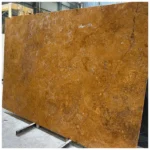
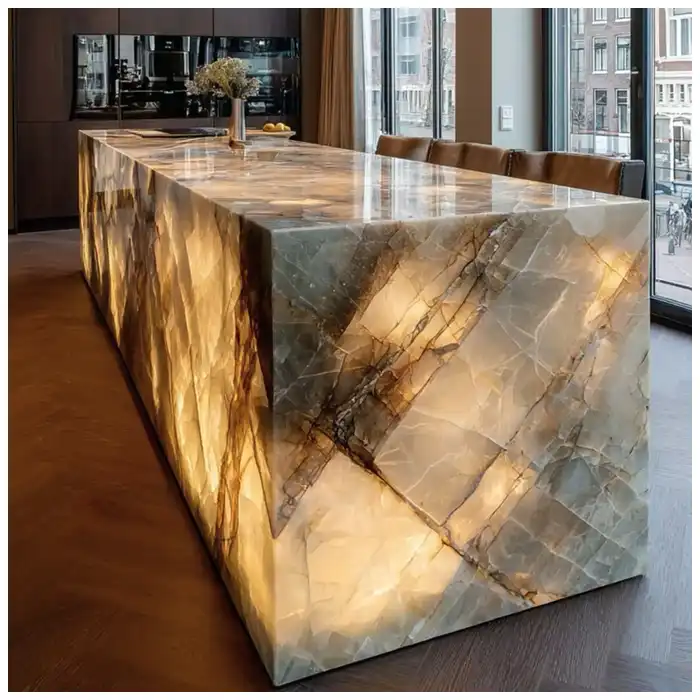
Exotic quartzite earns attention through mineral depth rather than a repeated printed pattern. Alex Zheng looks at the whole decision: what a full face reveals, how quartz crystals and accessory minerals affect light, why finish changes the color field, where resin and reinforcement need disclosure, and how drawings protect the strongest movement during fabrication. The guide connects individual stones such as Patagonia and translucent quartzites with architectural walls, islands, tables, and focal surfaces, while keeping natural variation and technical limits visible instead of turning every unusual slab into a sales claim.
berita
Should a Stone Dining Table Be Sealed?
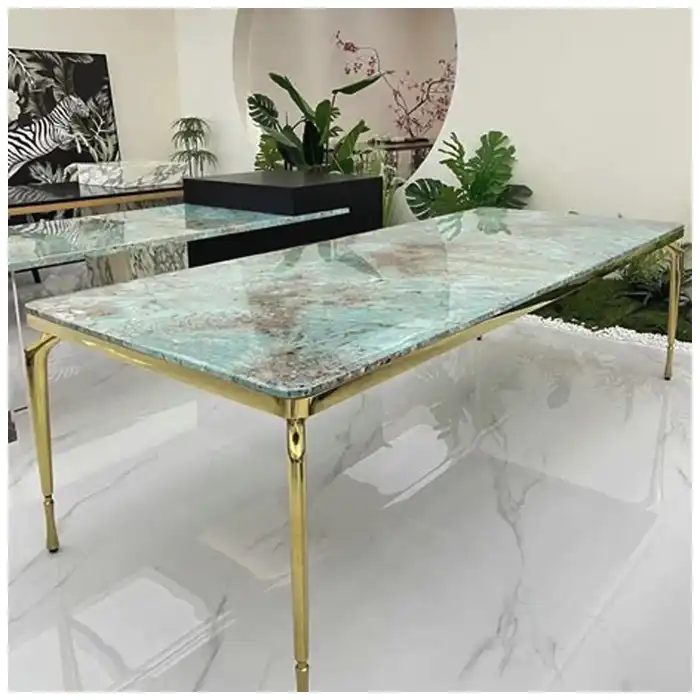
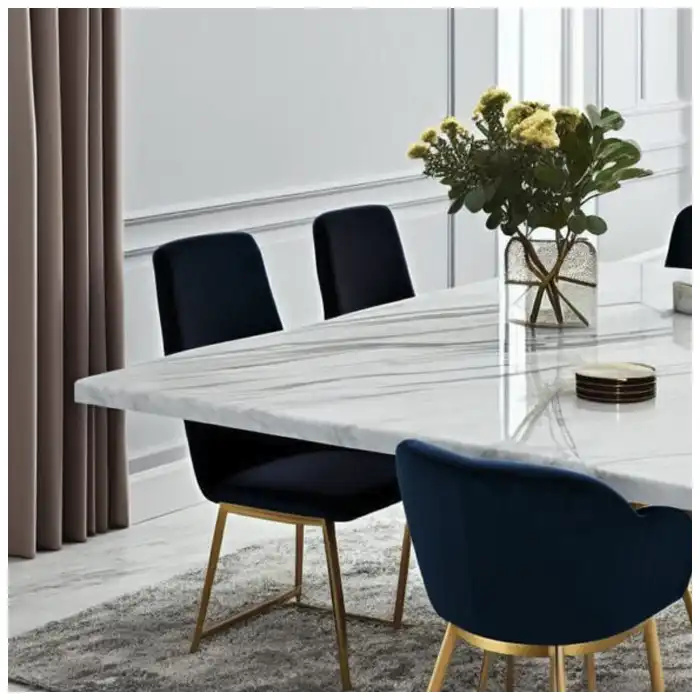
Some natural stone tables benefit from an impregnating treatment; others absorb very little, already carry a factory application or change appearance under the wrong product. Alex Zheng treats sealing as a documented material decision. The process starts with the full slab and finish, uses a representative test, checks color and residue after cure, and ends with a care record. It never promises protection from acids, scratches, heat or every possible stain.
berita
Stone Dining Table Care for Marble and Quartzite
A natural stone table should age through use, not through avoidable chemical damage. Marble and quartzite can share a room while responding differently to acidic spills, abrasion, absorbed oils and surface treatments. Alex Zheng gives a direct care system built around the approved slab, finish and repair record. It covers daily cleaning, spill response, heat, tableware, inspection and the point where maintenance must stop and professional diagnosis must begin.
berita
Stone Dining Table Lighting under Pendants and Daylight
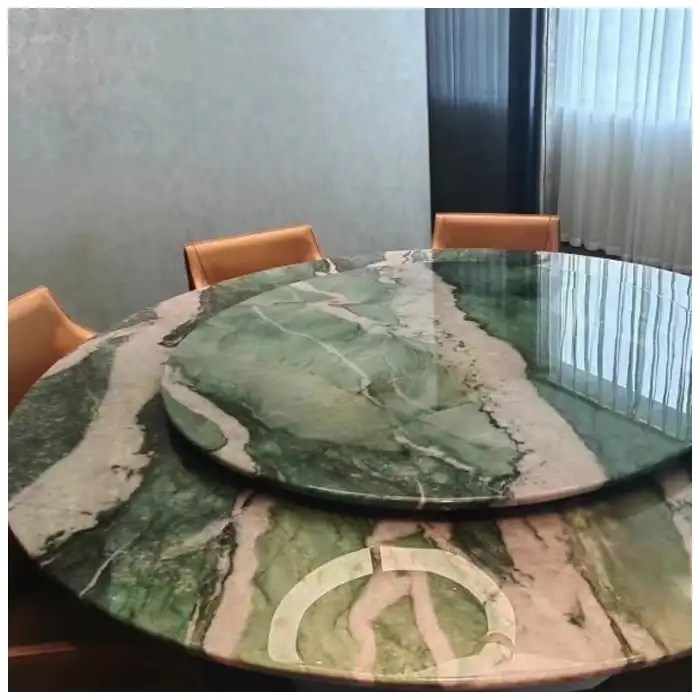
A stone table does not have one fixed appearance. Morning daylight can open a pale quartzite, warm pendants can soften grey marble, and a narrow beam can turn a polished surface into a mirror. Alex Zheng examines lighting as part of slab and finish selection, not as decoration added after fabrication. The goal is to approve the table under the light that will actually reach it, with enough evidence to protect color, depth, comfort and the reading of the veins.
berita
Choosing a Stone Dining Table Finish under Real Dining Light
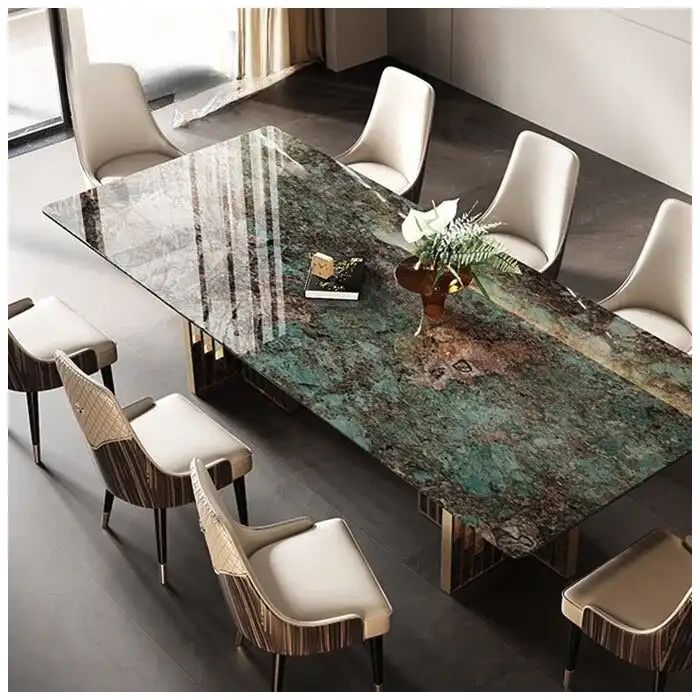
Finish does not sit on top of a stone's identity; it changes how mineral color, veining, translucency and daily marks are read. Alex Zheng compares polished, honed and textured dining-table surfaces under pendants, side daylight and evening light, then connects finish choice to edge detail, cleaning and full-slab approval. MQ STONE treats the finish sample as part of the furniture mock-up, not as a small square approved under unrelated warehouse lighting.

berita
Stone Dining Table Size Guide: Seating, Top Thickness, and Base Footprint
Length and width are only the outer limits of a dining table. Usable seats depend on chair width, place settings, end conditions, base location, knee clearance, serving reach and the room left behind pulled-out chairs. Stone adds mass, edge depth and support demands that must be resolved with the exact slab and furniture structure. MQ STONE turns those inputs into a measured approval sequence, keeping scale tied to real bodies and mineral proportion instead of relying on a generic seat-count chart.

berita
Oval Stone Dining Table: Long-Axis Layout, Base Span, and End Seating
An oval top combines the long visual pull of a rectangle with the moving edge of a curve. That makes the slab’s direction, end cuts and base span more important than the maximum length and width suggest. This study places the true ellipse or custom oval over the full face, checks end seating and chair paths, and compares central or twin supports beneath the real outline. MQ STONE preserves the stone’s long mineral movement while making sure the curved furniture still works for diners at the sides and ends.
berita
Round Stone Dining Table: Diameter, Center Base, Seating, and Vein Direction
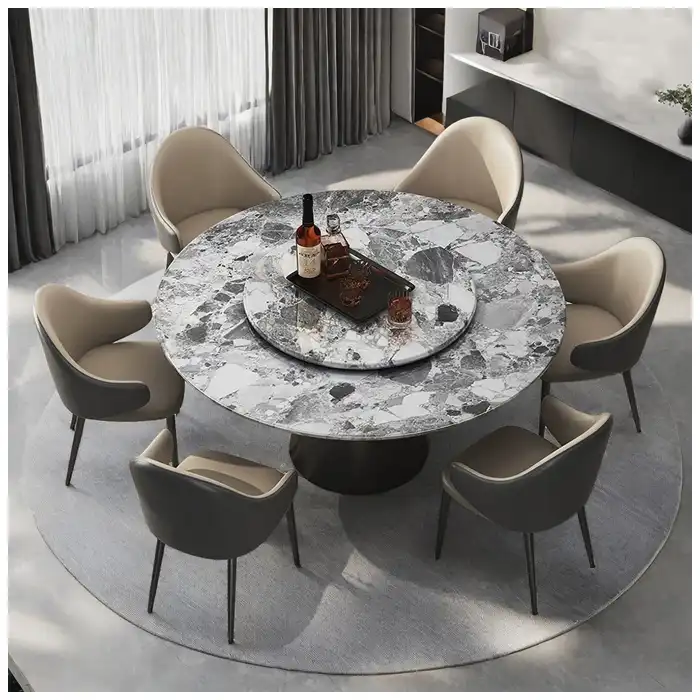
A circular table removes the safe front and back of a rectangular slab. Every chair sees the edge, every vein approaches the perimeter differently and the center base must provide support without occupying the same space as knees and feet. This study maps the circle over the full slab, checks diameter against real place settings and treats the pedestal as both a visible sculpture and part of a larger support system. MQ STONE keeps mineral movement, balanced seating and physical stability together so the circle remains convincing from every direction.