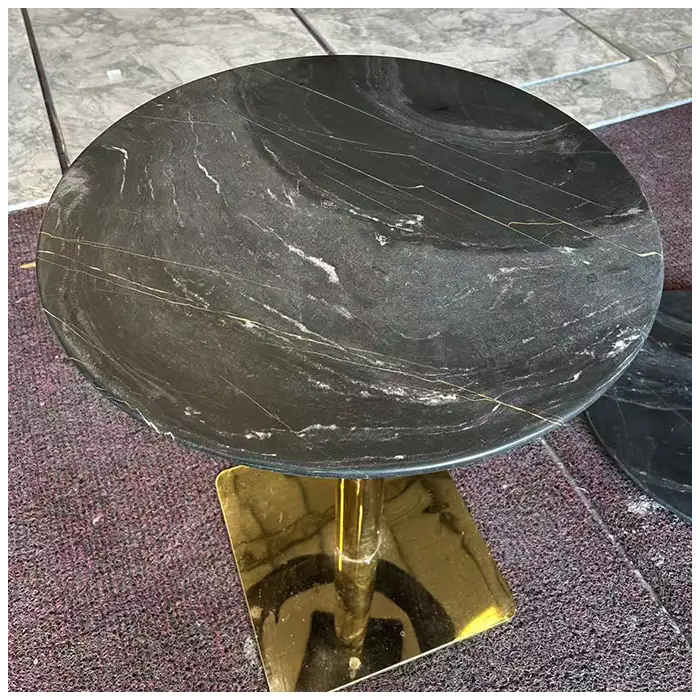
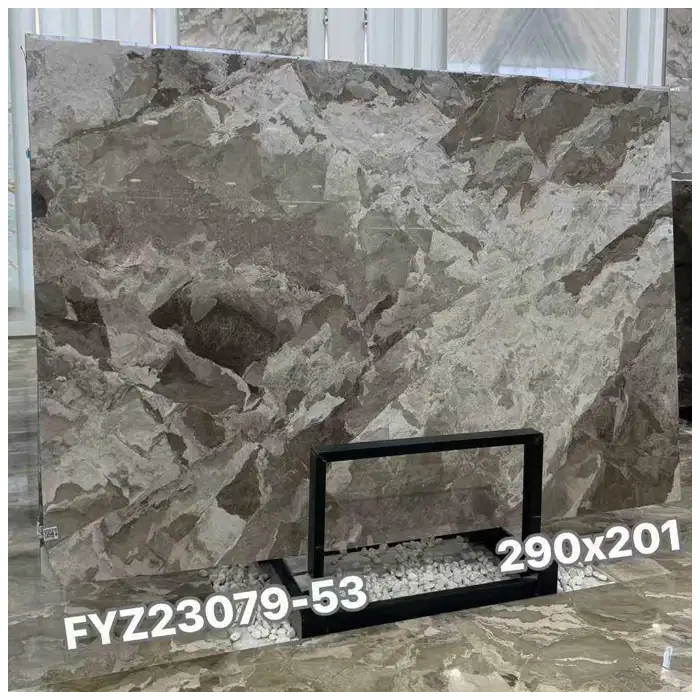
Monolithic Natural Stone Furniture After Milan Design Week 2026
I first touched a deeply fluted travertine plinth in a Milan workshop when late afternoon light entered almost parallel to its face. The ridges were warm and dry under my fingers. Inside the open pores, tiny bands of calcite held soft shadow like lines drawn with charcoal. The object looked cut from one ancient block, although its maker had assembled several carefully selected pieces around a hidden frame.
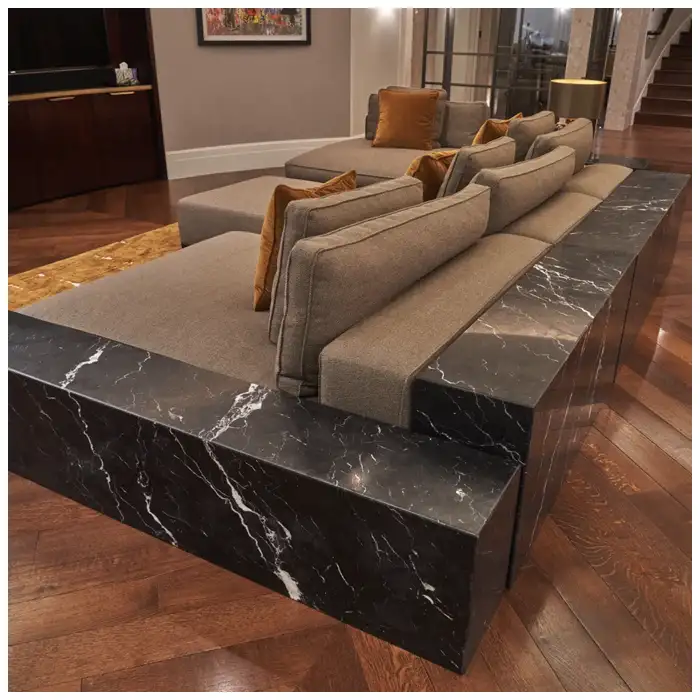
Monolithic natural stone furniture begins with that question: what is the object actually made of, and how does the construction honour the material? This stone has been waiting for millions of years… but a designer can flatten its history in one careless mitre. I ask to see the section, the underside, the edge, and the full raw faces before I believe the silhouette.
Milan Design Week 2026 brought marble furniture, stone-led rooms, travertine, quartzite, and onyx back into prominent design conversations. I do not read that as permission to make every table heavier. I read it as a request for material honesty. True luxury is something you never get tired of looking at, and honesty lasts longer than a trend photograph.
Read monolithic natural stone furniture from the edge inward
A solid block, a laminated build-up, a mitred box, and thin stone cladding can share one outline. Their edge reveals the difference. I look for mineral continuity, joint position, grain direction, pore structure, resin, backing, reinforcement, and the way light crosses the corner.
With marble, recrystallized calcite can create a dense, softly luminous body. Light may enter a pale edge and scatter a short distance before returning. Fine mineral impurities draw grey, gold, green, or violet veins through that crystalline field. The veins will tell you… whether a corner continues a real geological line or merely places two unrelated faces beside each other.
А Луксузни мермерни камени сто can use a thick visible section without pretending every component is one untouched block. What matters is that the drawing states the construction and the slab layout makes the joins deliberate.
Travertine tells a different story. It forms through mineral-rich water depositing calcium carbonate, often leaving layered bands and voids. Across a honed plane, those bands can look like pale topographic lines. Across an open-pore edge, the material becomes tactile and architectural. I would never hide that character behind an unrelated printed return.
Mass is visual, structural, and emotional
A monolithic object feels settled because the base and top appear to belong to one body. That feeling can come from true mass or careful assembly. The structural engineer still needs to know the real load path, connection, cantilever, floor capacity, lifting method, and installation route.
When I stand beside a stone console, I watch where its weight seems to gather. A broad base can feel grounded. A narrow central support can make a heavy top appear suspended. The design works when the physical support and the visual balance agree.
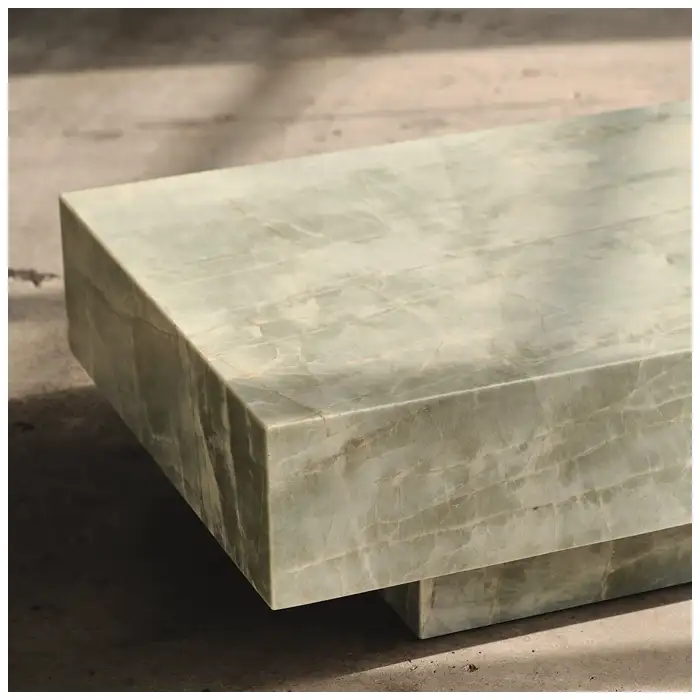
a Low Marble Plinth Coffee Table brings the eye close to the horizontal face. At that height, mineral changes, filled areas, polish, and edge alignment become intimate. Feel the edge. It should explain the object before the eye reaches the top.
| Material and construction | What the eye and hand read | What the design team must verify |
|---|---|---|
| Solid or deeply carved marble | Crystalline depth, continuing mineral body, carved shadow, weight, and cold tactile mass | Natural features, load, base contact, lifting points, floor capacity, and repair access |
| Assembled marble or quartzite | Matched faces, mitred depth, controlled joints, pattern movement, and lighter internal structure | Slab layout, joint line, reinforcement, support, adhesive appearance, and service route |
| Filled or open-pore travertine | Layered calcite bands, pores, warm matte light, carved ridges, and directional texture | Bedding direction, fill, edge finish, cleaning, corner selection, and repeated-piece tone |
| Translucent onyx assembly | Layered glow, clouded colour, light concentration, depth, and dramatic dark-to-lit change | Actual transmission, thickness, light source, diffuser, backing, heat, access, and joint shadow |
| Sintered surface over a core | Designed face, repeatable reference, thin section, controlled texture, and constructed edge | Full face set, pattern repeat, edge build-up, substrate, support, manufacturer rules, and repair strategy |
The Hard-Won Lesson: The “solid” plinth revealed a blank printed edge
A flagship lounge approved a sintered surface for six sculptural pedestal tables because the face carried a convincing marble image. The rendering showed the pattern folding over a 90 mm edge. The first factory mockup used a built-up return, but the design’s darkest vein stopped at the top and the vertical edge repeated a pale unrelated area. From standing height it looked acceptable. From the sofa, the blank return sat directly at eye level. We rebuilt the face layout before the remaining tables were cut.
The Lesson: Approve every visible top, edge, base, and seated view from the actual full-face files before fabricating a monolithic form.
Let marble, travertine, and onyx keep different identities
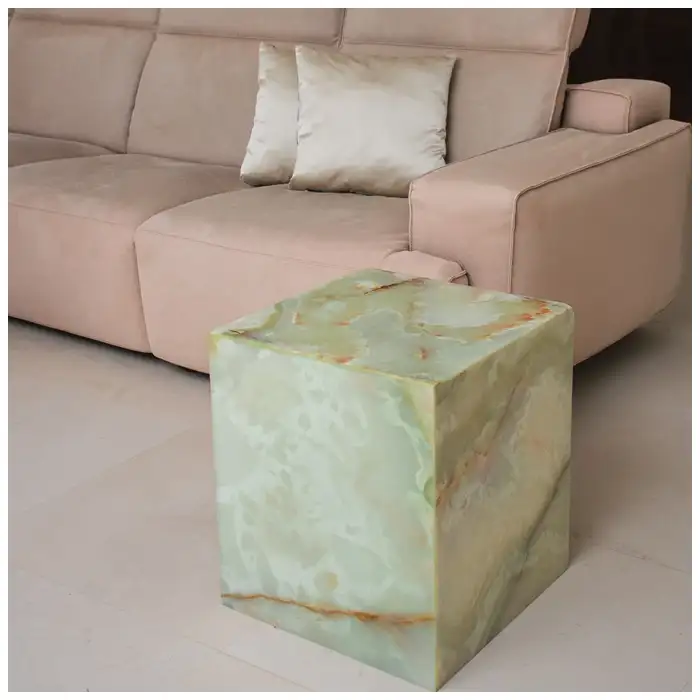
I resist collections that treat every stone as a colour chip. Marble carries recrystallized movement. Travertine carries deposition and pores. Onyx, in the decorative stone trade, often carries translucent bands of calcite or related carbonate minerals formed through repeated precipitation. Their structures respond differently to carving, edges, light, and touch.
А Титанијум травертин piece may show smoky horizontal bands crossing cream and silver areas. If the base is rotated, those layers can change from calm strata into abrupt vertical stripes. The veins will tell you… and in travertine, the bedding lines speak just as clearly.
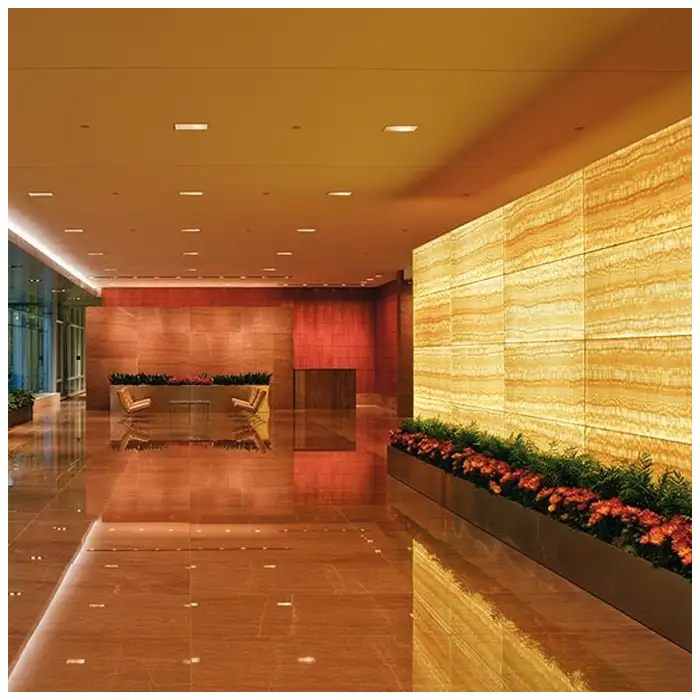
Onyx asks for light discipline. A thin honey-coloured section can glow like late sun through tea, while a dense white band remains quietly opaque. The light should reveal the stone’s internal rhythm, not bleach every area to the same brightness. This stone has been waiting for millions of years… it does not need a light box shouting behind it.
I inspect the object lit and unlit. When the light is off, the furniture still needs colour, proportion, and material presence. When it is on, joints, backing, driver shadows, and hotspots must not break the composition.
Carving changes the way geology meets the hand
Fluting, scallops, bullnose edges, chiseled faces, and deep reveals cut across mineral structure. A flute through fine marble can catch narrow silver shadows. The same flute in open travertine exposes pores and bands with a rougher rhythm. Test the detail on the selected stone, not on a generic render.
Sculptural Stone Edges for Islands, Tables, and Reception Counters looks closely at those transitions. For furniture, I add seated views, touch zones, clothing contact, corner comfort, and base movement.
Compare natural mass with manufactured precision honestly
The core comparison belongs in Natural Quartzite vs Marble-Look Sintered Stone: The Definitive Comparison for Premium Interiors. Natural stone provides non-repeating mineral depth and a real geological body. Sintered stone provides a designed surface with manufacturer-declared properties and fabrication rules. Neither description chooses the furniture automatically.
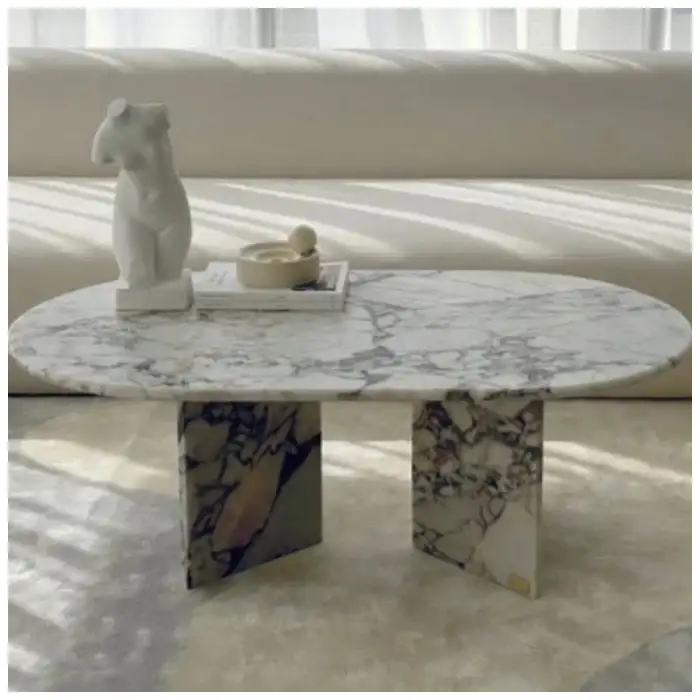
If the design needs a very thin skin around a light core, a manufactured surface may support the structural concept. If the object depends on a carved edge, translucent mineral depth, or one unique slab becoming the identity of a room, natural material may carry the idea more convincingly.
А Трпезаријски сто од белог синтерованог камена Цалацатта should be judged as its own designed object. I inspect the face library, repeat, edge, substrate, joints, support, manufacturer instructions, and repair route. I do not call it natural marble, and I do not dismiss it because it is manufactured.
True luxury is something you never get tired of looking at. Sometimes that comes from geological unpredictability. Sometimes it comes from precise proportion and restraint. The mistake is using a false material story to carry the design.
Use a full-size corner and base mockup
I want the important corner at full depth, the actual finish, representative light, and the intended floor material. Put it at seated and standing eye levels. Touch the edge, look under the top, and walk around the base. Photograph the joint from the entrance axis.
The mockup also proves support. A heavy-looking pedestal may hide a steel frame. A true stone base may need careful floor contact and lifting. The engineer defines load and connections. My role is to make sure the selected stone and face layout can accept that construction without placing a fragile natural feature at the fixing point.
Design support, lifting, and installation into the object
Furniture lives in movement. It travels from fabrication bench to crate, container, loading bay, lift, corridor, and final room. A sculptural base that cannot pass the doorway is still a failed design. I ask for component dimensions, weights, centre of gravity, lifting points, route survey, assembly order, floor protection, and final levelling method.
For a natural top, mark fissures, mineral transitions, backing, inserts, and safe lifting zones. For an assembled box, mark which faces can accept suction and which edges need direct support. The crate must protect the finished object without turning unpacking into an improvised demolition job.
Custom Stone Furniture: What Marble Dining Table Photos and Edges Reveal Before Production establishes the photograph and edge record. I extend that file with the monolithic base section, full route, and installed viewing heights.
At the destination, the room should be ready before the stone is exposed. Check floor strength and level, access, lifting equipment, base position, wall clearances, and lighting. I have watched a pale marble plinth sit under construction dust for three days because the room was not released. The stone remembers poor planning too.
Understanding monolithic stone furniture in today’s design market
Why Milan returned attention to stone mass
Milan Design Week 2026 coverage showed designers using marble furniture, stone-led interiors, travertine, quartzite, and onyx as more than surface decoration. The strongest objects made material, proportion, craft, and space feel inseparable.
What makes a monolithic object believable
The full faces, edges, joints, underside, base, and touch all support the same material story. Construction can be assembled or engineered, but it should not contradict what the object asks the viewer to believe.
What to do when an edge or joint looks wrong on site
First photograph the full object, joint, face codes, underside, base, room light, and standing and seated views. Second stop assembly, polishing, filling, or adhesive alteration. Third contact the supplier with the approved full faces, shop drawings, mockup, inspection photographs, and packing record. Let the evidence show whether the issue comes from orientation, fabrication, lighting, or installation.
Frequently asked questions
1. What is monolithic natural stone furniture?
It is furniture whose mass and form read as a coherent natural-stone body, whether carved from solid material or assembled honestly from selected and supported stone pieces.
2. Is solid stone always better than an assembled stone structure?
No. Weight, natural features, support, transport, access, repair, yield, and design intent may favour assembly. The construction and joints should remain honest and well detailed.
3. Why are travertine edges different from marble edges?
Travertine’s deposited bands and pores can become visible across the edge, while marble’s recrystallized calcite often reads as a denser crystalline body. Finish and filling change both.
4. Can sintered stone create a monolithic furniture look?
Yes, through designed faces, mitred returns, and a supporting core. Approve pattern continuity, edge build-up, substrate, joints, and every important viewing angle.
5. What should be inspected before stone furniture leaves the factory?
Inspect full faces, edges, joints, underside, support, fixings, dimensions, stability, finish, natural features, labels, lifting points, crate protection, and the actual assembly sequence.
Quick-Reference Monolithic Furniture Checklist
- Define whether the object is solid, assembled natural stone, or surface cladding over a core.
- Approve complete top, edge, base, underside, and seated and standing views.
- Map geological movement, pores, translucency, joints, and fixing zones on actual material.
- Build a full-size corner or base mockup under the intended lighting.
- Engineer support, floor contact, lifting points, route, crate, and final assembly together.
- Preserve full-face, drawing, mockup, inspection, and installation records for the finished object.
Final Conclusion
Monolithic natural stone furniture deserves more than a heavy silhouette. Read the geological body, full faces, edge, underside, support, joints, light, touch, route, and room together. True luxury is something you never get tired of looking at, and MQ STONE would rather let one honest mineral line guide the object than force a manufactured story the seated eye will question every day.

References
Milan Design Week 2026: 9 Design Trends Spotted by Global AD Editors, Architectural Digest.
Furniture and Interior Design Trends from Milan Design Week 2026, CNA Luxury.
NEUTRA MDW26, NEUTRA.
Dimension Stone Design Manual, Natural Stone Institute.
Standard Terminology Relating to Dimension Stone, ASTM International.
Natural Stone Slab Best Practice Guide, Stone Federation Great Britain.
Natural Stone Care and Maintenance, Natural Stone Institute.