Pink Onyx Table Top: Translucency, Thickness, Edge, and Base Support
Run a fingertip across a polished pale band and the material changes before the color does. A thin crystalline line catches the light more strongly, while the face above stays soft rose and ivory. At hand distance, the layers feel architectural, almost like a small illuminated section held flat.
A pink onyx table top lives at that distance. People touch the edge, place glasses on the face, lean near the corner, and see every repair under changing light. The same translucency that makes the material compelling also reveals thickness, backing, adhesive, base shadows, and imperfect support.
The right design begins with use. A console, coffee table, dining table, and side table place different demands on span, impact, spills, edge contact, weight, and movement. The stone should not be forced into one generic furniture detail.
Choose the Pink Onyx Table Top from Real Use

A console can sit against a wall with limited reach and a narrow top. A coffee table faces feet, trays, children, and objects placed near the edge. A dining table carries wider spans, repeated leaning, hot dishes, wine, citrus, and frequent wiping. An occasional table may prioritize sculpture over intensive use.
The pink onyx table top specification therefore begins with length, width, finished height, top shape, user count, public or private setting, expected loads, edge contact, cleaning, moving route, base type, and whether illumination is part of the concept.
Onyx is calcite-rich. Acids can etch the finish, and some staining agents can enter the surface depending on condition and protection. It is not the material I would describe as carefree for every dining room. It is a deliberate choice for clients who accept its behavior and value its mineral depth.
True luxury is something you never get tired of looking at. That does not mean ignoring a table’s work. The composition should reward close viewing while the base, support, edge, and care plan respect the material.
The Pink Onyx Marble Guide 2026 provides the broad color, translucency, fabrication, application, and care reference. This furniture article owns the narrower relationship among top, edge, base, light, and daily contact.
| Furniture type | Main stone concern | Base and support question | Care expectation |
|---|---|---|---|
| Console | Long narrow composition and exposed front edge | Does the base prevent twist and tipping? | Lower spill exposure but frequent decorative objects |
| Coffee table | Corner impact, edge touch, localized loads | Is bearing continuous beneath vulnerable zones? | Coasters, prompt spill response, safe moving |
| Meja makan | Large span, food acids, heat, repeated cleaning | Has the responsible engineer verified top and base? | Highest discipline and realistic patina acceptance |
| Side table | Small top with highly visible composition and edge | Does a compact base keep the piece stable? | Drinks, lamps, cosmetics, close inspection |
Decide whether the table is stone furniture or illuminated furniture
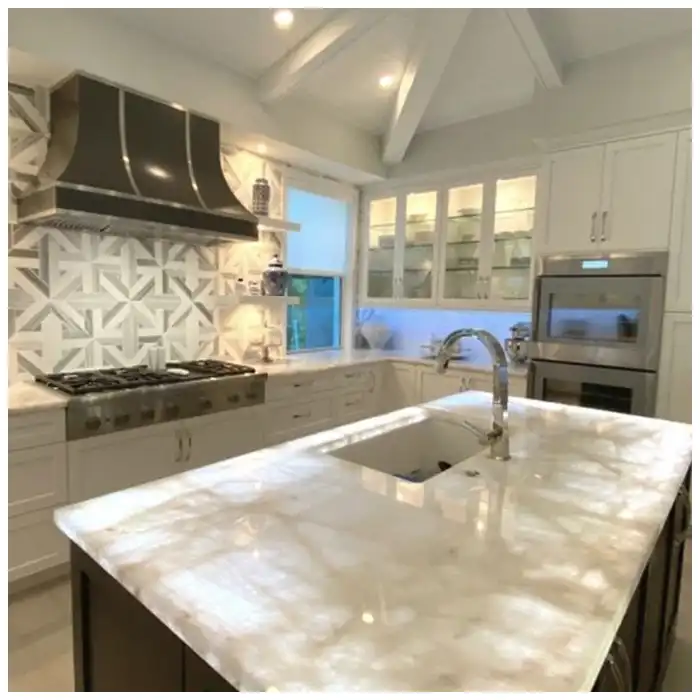
Ambient light through an edge is different from a fully illuminated top. Underlighting adds drivers, wiring, diffusion, heat, service access, and shadows from the base. It changes the table’s identity. The decision belongs at concept stage, not after the stone has been cut.
A top can also remain unlit and still reveal translucency near windows or under focused light. Pink onyx does not need a lightbox to have depth. Sometimes the quieter approach gives the mineral layers more dignity.
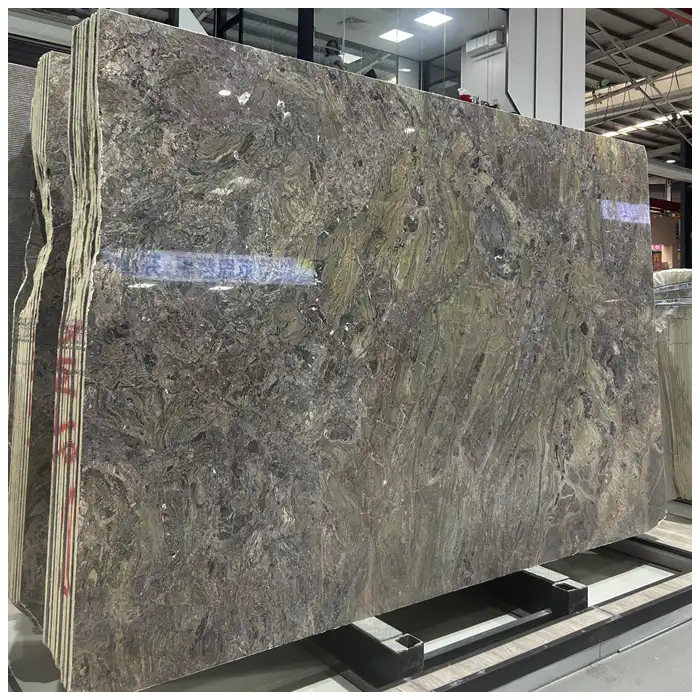
Compose the Table from the Full Pink Onyx Slab
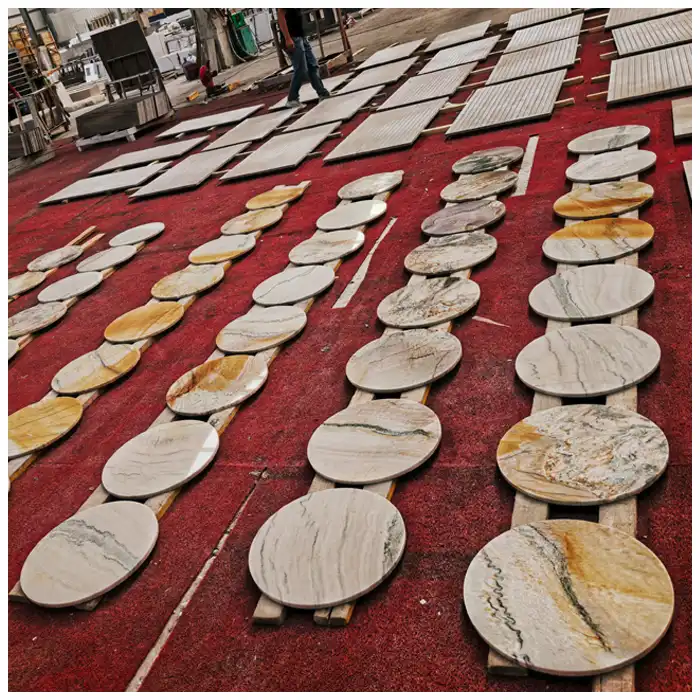
Map the finished top shape on full-slab photographs. A round table crops differently from an oval or rectangle. The center, edge, and overhang all draw from different parts of the slab. Rotate the outline and observe how mineral bands change direction.
For a pink onyx table top, I look for a balanced center and an edge that remains interesting all the way around. One strong rust-colored band can anchor an oval. The same band pushed against one corner may make the top feel visually unstable.
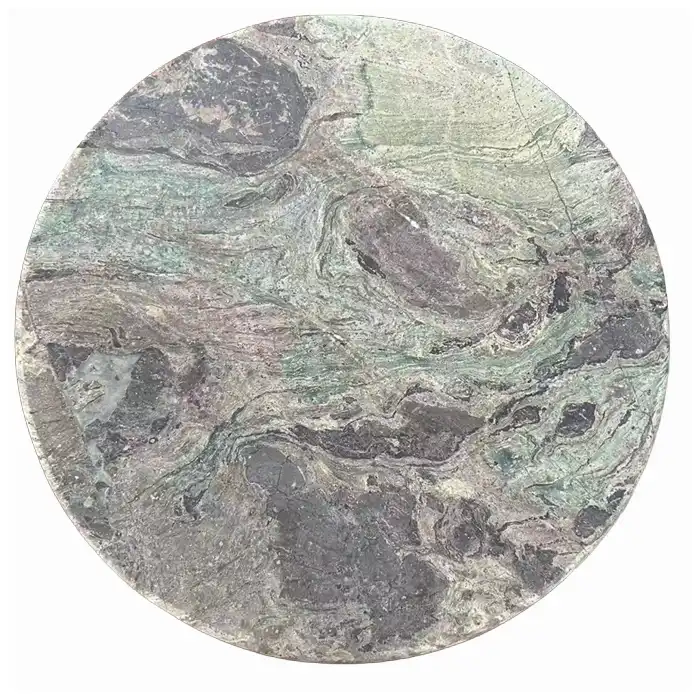
The veins will tell you how the eye moves. Long horizontal bands suit a console. A radiating or cloudy field can suit a round top. A strong linear composition may work across a dining table if the base and room align with it.
Front-lit photographs show the color image. Backlit tests show translucent zones, repairs, backing, and thickness variation. Even an unlit table benefits from that evidence because strong daylight or local lighting may expose conditions hidden in warehouse front light.
Current Papak Marmar Onyx Merah Jambu can support full-slab selection, while Papak Onyx Merah Jambu offers another product reference. The table drawing must be nested on the specific approved face.
Keep repairs away from stress and focal zones
Record resin, fiberglass, mesh, repaired fissures, open features, and thickness. Avoid placing questionable zones at narrow necks, cutouts, sharp internal corners, unsupported edges, fasteners, or areas of repeated impact. The responsible fabricator assesses each condition.
A repair can be visually acceptable in the center and structurally unsuitable near an attachment. Another can be sound but become dark under light. The composition and engineering review need the same repair map.
The Hard-Won Lesson: Do not place the most luminous band over the smallest base
A pale translucent band can become the visual center of a table, yet the first layout may position it directly over a narrow pedestal where the base shadow blocks the glow. Rotating the top can reveal that band while preserving balance, but the change also moves repairs and edge zones. The stone composition and support footprint have to be reviewed together.
The Lesson: Overlay the exact base bearing and shadow on the front-lit and backlit slab layout before approving the top orientation.
Select Thickness, Backing, Finish, and Edge Language
Thickness affects weight, stiffness, transmission, edge depth, and base design. Onyx may be used in solid thickness or as part of a tested composite construction. The responsible fabricator and engineer select the assembly from size, span, use, material condition, support, and safety requirements.
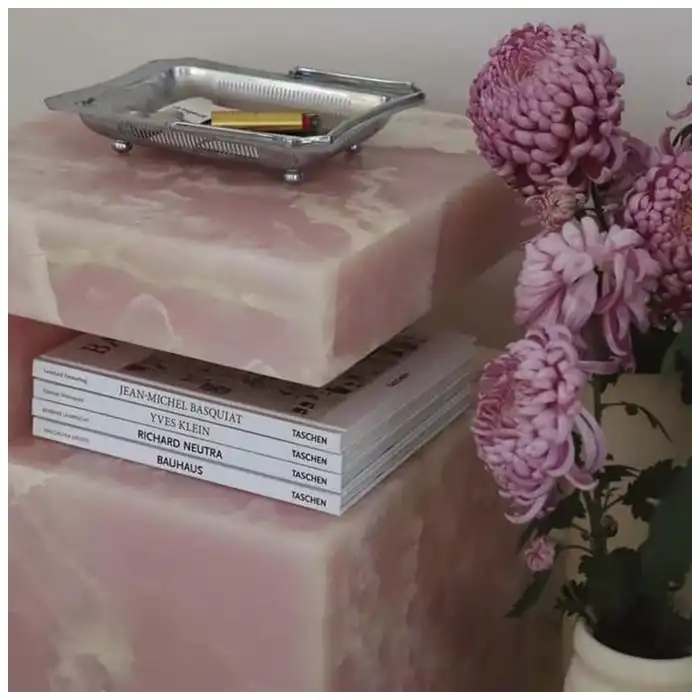
A pink onyx table top edge is not a line on an elevation. It is the place the hand meets the mineral layers. A small eased edge can feel precise. A fuller radius may protect a coffee-table corner. A mitred edge can create visual depth but introduces joints, matching, adhesive, and internal support.
Polished edges can transmit light differently from the face. A laminated or mitred return may expose resin or backing at joints. Produce a full edge sample using representative bands and the actual backing condition. View it in daylight, ambient light, and any planned illumination.
Finish changes the table’s character. Polish sharpens bands and reflections. Hone softens glare and may make pale layers feel quieter, while changing stain and etch visibility. Approve the face and edge together. A hand-polished edge should not look like a separate material.
Fiberglass and resin may support fabrication, but they do not define the finished furniture structure. The Reading Onyx Slab Resin and Fiberglass Backing before Cutting study helps identify what is behind the slab and how it may affect adhesive tests, cutouts, light, and edges.
Shape changes risk
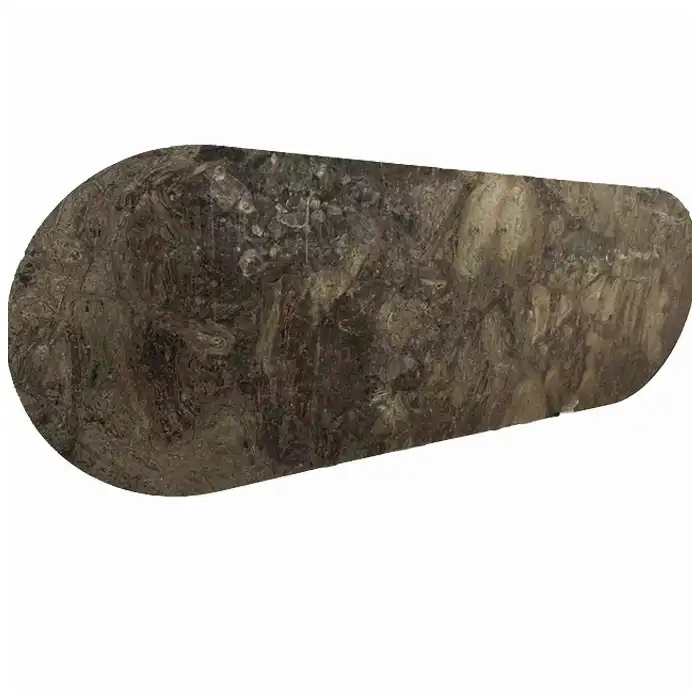
Round and oval tops avoid sharp outside corners but require continuous edge workmanship. Rectangular tops create clear composition and easier alignment while exposing corners to impact. Irregular shapes can follow the vein yet create narrow projections that need special support.
Internal cutouts need careful radii and support. A table with integrated light controls, cable openings, or inserts should place those features on the slab map before fabrication. Do not drill through the most fragile crystalline line because the hardware arrived late.
Coordinate Base Support, Bearing, Fixing, and Movement
The base carries the stone and keeps the furniture stable. It must address top weight, span, overhang, load, tipping, racking, point support, transport, assembly, floor condition, and user contact. The responsible engineer or furniture designer verifies the system.
For a pink onyx table top, continuous or well-distributed bearing is generally easier on the material than isolated hard points, but the final support depends on the engineered design. Use compatible pads, frames, plates, or substrates as specified. Avoid direct metal contact that concentrates stress or stains.
A central pedestal creates different bending and tipping conditions from four legs or a perimeter frame. A long console needs protection against twist. A coffee table with a broad low base may support well but hide optional light. A dining base must leave knee and chair space while carrying a larger top.
Fixings should not clamp fragile stone without controlled interfaces. Adhesives, tapes, mechanical retainers, and substrates need compatibility tests with the stone, backing, finish, and lighting. Hidden fixing should remain inspectable where practical.
The base footprint also changes the image. Dark metal beneath a translucent field can create shadow. Pale stone or a reflective plate can brighten it. I place the base under a full-scale print or test piece before the final top orientation is approved.
Plan transport and assembly before final dimensions
Doorways, elevators, stairs, corners, floor protection, lifting equipment, packaging, and installation manpower limit table size. A one-piece top may be visually cleaner but impossible to deliver safely. A jointed design may be practical if the composition and support make the joint intentional.
Crates support the finished top in the orientation and restraint method specified by the fabricator. Edge guards, separators, labels, center of gravity, lifting points, and unpacking instructions matter. The base and top should reach site with clear assembly sequence.
Test Localized Light, Surface Protection, and Daily Care
Illuminated furniture needs a smaller version of architectural lightbox discipline. Test source type, color, distance, diffuser, heat, wiring, driver, controls, base shadow, access, and replacement. A bright point under a pale band can look like a defect rather than light.
Pink onyx table top lighting should work with ambient conditions. The top may glow beautifully in a dim lounge and become barely luminous in daylight. Decide whether the table must perform as a light source or simply reveal mineral depth at certain moments.
For unlit furniture, test local pendant and window light. Raking light can expose polish variation and repairs. Strong downlight can create glare. Warm light enriches amber; cool light brings pale pink and white forward.
Daily care is honest. Use coasters, trivets, placemats, and prompt spill response as appropriate. Avoid acidic cleaners and abrasive pads. Follow the approved sealer and maintenance guidance. Sealer may reduce absorption but will not prevent acid etching or impact.
Dining use places wine, citrus, vinegar, tomato, oils, heat, and repeated wiping on the surface. A client who wants an untouched polished face forever may prefer another material. A client who accepts careful use and eventual professional refinishing may enjoy the way onyx ages.
The comparison with harder natural or manufactured surfaces belongs in the design discussion. Natural Quartzite vs Marble-Look Sintered Stone explains how mineral depth, performance, repeatability, and fabrication differ across premium interior choices.
Inspect the finished table as furniture
Do not stop at stone inspection. Check finished dimensions, level, flat support, rocking, tipping, base alignment, edge, joint, backing concealment, fasteners, floor contact, wiring, controls, service access, and handling. View the table from seated and standing positions.
If a crack, movement, dark line, heat, or finish change appears, photograph the complete table and detail, stop use or movement where safety may be involved, and compare slab, repair, base, support, lighting, and assembly records. Contact the responsible supplier and designer before grinding, tightening, lifting, or dismantling.
Quick-Reference Checklist for Pink Onyx Furniture
- Define table type, dimensions, users, loads, spills, edge contact, moving route, and lighting concept.
- Nest the finished shape on full front-lit and backlit slab photographs with repair maps.
- Test thickness, backing, finish, edge, joint, and any composite construction on representative stone.
- Overlay base bearing, fixing, overhang, shadows, knee space, and service access on the composition.
- Verify stability, support, transport, and installation with the responsible designer or engineer.
- Inspect the complete assembled table under intended ambient and optional internal light.
- Provide care, isolation, lifting, spare, repair, and refinishing records at handover.
What Makes Onyx Furniture More Than a Slab on a Base
Why hand distance changes the material
At hand distance, the viewer sees polish, edge, crystalline lines, repairs, joint, and depth. Touch and daily objects become part of the experience. Furniture therefore demands closer finish and support coordination than a distant wall panel.
What the base contributes
The base carries weight, controls span and overhang, prevents tipping, shapes knee space, influences shadow, and makes transport possible. It is structural and visual. The top orientation should be approved with the exact base footprint.
When another stone is wiser
Choose another material when the intended use involves hard daily wear, unmanaged acids, impact, heat, very long unsupported spans, or maintenance expectations that conflict with onyx. The right refusal protects both the client and the stone.
Frequently Asked Questions
1. Is a pink onyx table top suitable for dining?
It can be, when the client accepts careful use, coasters, trivets, prompt spill response, acid sensitivity, professional maintenance, and an engineered base. For heavy unmanaged dining use, a harder or less acid-sensitive material may be wiser.
2. Can a pink onyx table be backlit?
Yes, with tested stone thickness, backing, diffuser, source, distance, heat, wiring, driver access, base shadow, controls, and support. Build a representative assembly before final fabrication because transmission varies across the slab.
3. What edge works best for onyx furniture?
No edge fits every table. A small eased edge, fuller radius, mitre, laminated edge, or framed detail changes impact resistance, touch, light, joints, and support. Test the chosen edge on representative material and backing.
4. Does fiberglass backing make the top strong enough?
No single backing statement proves furniture performance. Fiberglass may aid handling, but the complete top, substrate, bearing, base, fixings, spans, loads, and safety need design and verification by the responsible specialists.
5. What should happen if the table develops a crack?
Stop use and movement where safety may be involved, photograph the complete table and crack, and record when it appeared. Compare slab repairs, support, base, fixings, transport, and assembly records, then contact the supplier and responsible designer before lifting or repair.
Final Conclusion
A pink onyx table top becomes lasting furniture when its full-slab composition, translucency, thickness, backing, edge, base, support, lighting, transport, and care are designed together. The veins will tell you where the top wants to turn, and MQ STONE would rather build around that quiet mineral direction than reduce onyx to a decorative sheet on an unrelated base.
References
- Dimension Stone Design Manual, Natural Stone Institute.
- ASTM C119 Standard Terminology Relating to Dimension Stone, ASTM International.
- Slab Handling and Safety Guidance, Natural Stone Institute.
- Lighting Handbook, Illuminating Engineering Society.
- Furniture Stability and Structural Safety Guidance, applicable furniture standards bodies.
- Material and Craft Programme, Maison&Objet Paris 2026.
- Onyx marble, Wikipedia, English edition.